Skip to content
A serious accident can change your life in seconds, but you don't have to face it alone.
If you're reading this after a crash in Houston, Dallas, Austin, San Antonio, or anywhere else in Texas, you're probably dealing with more than vehicle damage. You may be in pain. You may be getting calls from an insurance adjuster. You may be wondering whether your injuries are serious, whether fault will be disputed, and whether calling a lawyer now will help or just make things more stressful.
The short answer is this. If you were hurt, if fault is unclear, or if an insurance company is already involved, you should talk to a Texas personal injury lawyer as soon as possible. The full answer is more practical than a single date on a calendar. What matters is understanding the windows that affect your case: the first 72 hours, the first week, and the final legal filing deadline.
Texas is a fault-based state for car accident claims. That means the person who caused the crash is generally responsible for the losses that follow. But fault and negligence still have to be proved. Texas also uses comparative responsibility, which means the insurance company may try to argue that you were partly to blame so it can reduce or fight the claim. That's why timing matters so much. The earlier your case is documented, the harder it is for key facts to disappear.
Your Life Can Change in Seconds But You Are Not Alone
A crash happens fast. One moment you are driving to work, picking up your kids, or heading home. A few seconds later, you are on the shoulder of the road, your heart racing, your phone ringing, and your mind trying to catch up.
That first stretch after a Texas accident is disorienting for almost everyone. Pain may not show up right away. The other driver may start shifting blame. An insurance adjuster may call before you have even seen a doctor. Many injured people ask the same question at that point: when should I contact a lawyer?
The practical answer is sooner than generally assumed. Not because every case ends up in court, but because the calendar starts affecting your claim immediately. The first 72 hours often shape the evidence. The first week often shapes the insurance claim. The legal filing deadline matters too, but by then, some of the most useful proof may already be gone.
Texas law generally gives injured people two years to file most personal injury claims. You can review the statute in Texas Civil Practice and Remedies Code Section 16.003. That deadline is important, but it should not be treated as permission to wait. Skid marks fade. Vehicles get repaired. Surveillance footage is overwritten. Witnesses forget details. Medical gaps give the insurance company room to argue.
Fatal crash cases can be even more time-sensitive. The filing period for a wrongful death claim is usually tied to the date of death, which is not always the same as the date of the collision. Families dealing with that kind of loss should get legal advice early, especially if there are questions about fault, company vehicles, or missing evidence.
I tell clients to focus on two things first. Get medical care. Preserve information. If you need help with the immediate steps, this guide on what to do immediately after an accident in Texas is a good place to start.
What helps a case is early action: prompt treatment, photos, names of witnesses, the crash report number, and careful communication with the insurer. What hurts a case is delay. A wreck that looked minor at the scene can become a fight over injury severity, fault, or whether your treatment was related to the crash at all.
You do not need to have every answer before you call a lawyer. You only need to know that something feels off, you are hurt, or the insurance company has already entered the picture. That is enough to get advice and protect your options.
The First 72 Hours Your Most Critical Window for Action
The first three days after a crash are often the most important part of the case. Health comes first. Evidence comes second. Both start immediately.
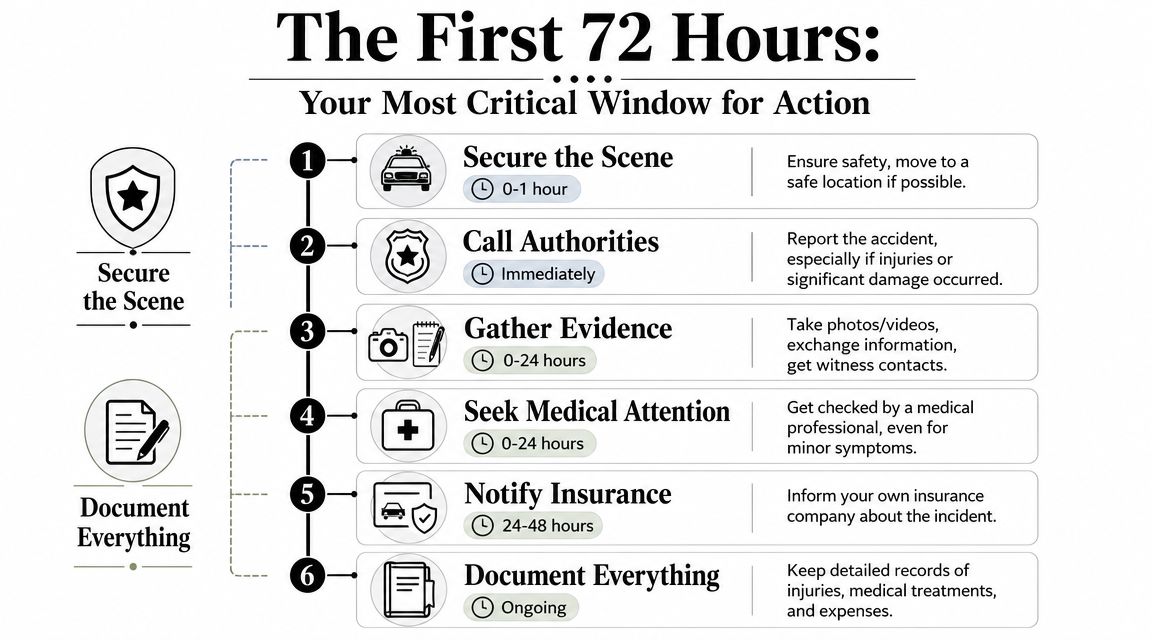
Texas accident guidance explains that the first 24 to 72 hours after a crash are critical because injuries such as whiplash and herniated discs may not fully show up right away, and because photos, police reports, and witness statements are freshest during that window, as noted in this Texas discussion of when to get a lawyer after a car accident.
Start with your health
A lot of injured people say the same thing after a wreck: “I felt okay at first.”
That doesn't mean you were okay. Adrenaline can mask pain. Soft-tissue injuries, neck injuries, head symptoms, and back problems often become clearer later. If you delay medical care, the insurance company may argue that you weren't really hurt or that something else caused your symptoms.
Use the first day to do these things:
- Get checked by a medical professional: Even if the crash seemed minor, get evaluated if you have pain, stiffness, dizziness, headaches, numbness, or any unusual symptoms.
- Describe symptoms accurately: Don't minimize what you feel. If pain appears later, report that too.
- Follow through with care: If a doctor recommends follow-up visits, imaging, or therapy, take that seriously.
A Houston freeway rear-end crash is a common example. A driver goes home after what seems like a minor impact, then wakes up the next day with neck pain radiating into the shoulder. By day two or three, they realize this is more than soreness. Without prompt documentation, the insurer may call it a delayed complaint instead of a crash-related injury.
Preserve evidence before it fades
The first 72 hours are also when your proof is easiest to gather.
A practical checklist looks like this:
- Save scene photos and video. Include vehicle positions, damage, road conditions, traffic signs, debris, and visible injuries.
- Get the police report number. If officers responded, keep that information in one place.
- Collect names and contact details. Witnesses are often easiest to reach right after the crash.
- Keep insurance details and repair records. Don't rely on memory.
- Write down what happened. A simple factual summary can help later.
If you need a more complete step-by-step guide, review these immediate actions to take after a Texas accident.
The best evidence is usually collected before anyone has time to forget, repair, or rewrite what happened.
Clear Signs You Should Call a Texas Personal Injury Lawyer Now
Some crashes can be handled without much legal involvement. Many can't. The dividing line is usually risk plus uncertainty. If the case could become contested, call a lawyer early.
Texas-focused legal guidance recommends immediate legal contact when there are injuries, disputed fault, a commercial vehicle, or a request for a recorded statement because evidence deteriorates quickly and early lawyer involvement helps preserve the claim, as explained in this Texas accident-lawyer timing guide.
Red flags that mean don't wait
Here are situations where I'd tell someone to call right away:
- You were injured: Once medical treatment enters the picture, the claim value and documentation needs change.
- The other driver denies fault: Negligence and comparative responsibility become central.
- More than one vehicle was involved: Multi-car crashes create finger-pointing fast.
- A company vehicle, delivery van, or semi-truck was involved: A truck crash lawyer Houston drivers call often deals with layered insurance policies and employer liability questions.
- You missed work: Lost wages can become part of the claim, but they must be documented correctly.
- Someone died: Families should speak with a lawyer quickly about a wrongful death claim and the evidence needed to support it.
- An adjuster wants a recorded statement: Avoidable mistakes often occur.
Why these cases get harder without counsel
A serious crash is never just about one bill. It can affect medical treatment, income, family life, and long-term care. A Texas personal injury lawyer helps tie those pieces together so the insurer can't treat the case like a small property-damage claim.
A Houston car accident attorney may also identify issues you don't see at first, such as whether road design, a commercial employer, or multiple insurance carriers are involved. In catastrophic injury and fatal crash cases, that early review can shape the entire direction of the claim. The same is true if you may need help with catastrophic injury claims or a wrongful death case.
If you're dealing with symptoms after the crash, headaches deserve attention. This guide on practical steps for post-injury headaches is a useful starting point for understanding when that symptom should be taken seriously and documented.
When the facts are still moving, silence and delay usually help the insurance company more than they help you.
How to Handle Insurance Adjusters and Early Settlement Offers
Insurance adjusters are not neutral. Their job is to evaluate the claim for the insurance company. Sometimes that process is straightforward. Sometimes it is not.
The problem is timing. Insurers often contact people before the injury picture is clear. That's why one of the most common mistakes after a wreck is talking too much, too soon, and settling before the medical case has stabilized.
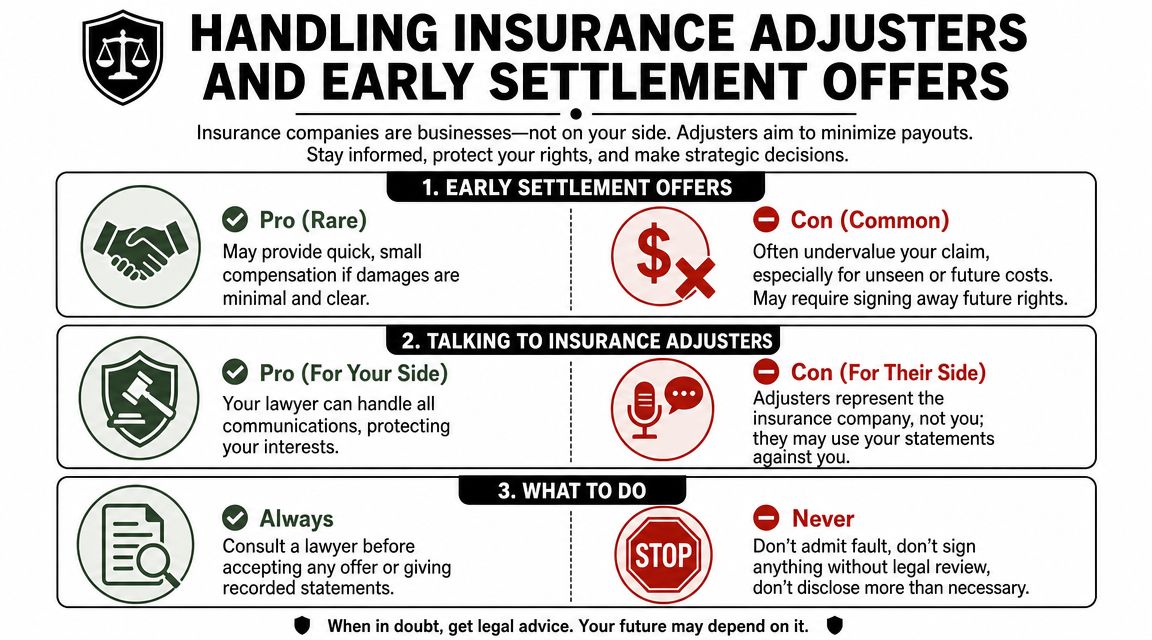
Texas practitioner guidance warns that accepting an early settlement before the full diagnosis is known can leave later surgery, rehabilitation, or wage-loss damages uncompensated. That is one reason legal help is especially important when there are serious injuries, missed work, or disputed liability, as explained in this Texas guide on whether you need a personal injury lawyer after an accident.
What you should and shouldn't say
You do need to report the crash to your own insurer. You do not need to volunteer a detailed narrative to the other side before you understand your injuries and legal position.
A safer approach is:
| Situation | Better response | Risky response |
|---|---|---|
| Adjuster asks how you feel | Say you are still being evaluated | “I'm fine” or “I'm probably okay” |
| Adjuster asks for a recording | Say you want to speak with counsel first | Giving a recorded statement on the spot |
| Adjuster sends documents | Review them carefully first | Signing releases immediately |
| Adjuster offers quick money | Wait until treatment and damages are clearer | Accepting before future needs are known |
If you want a plain-language guide before speaking with an insurer, read these common mistakes to avoid with a Texas insurance adjuster.
A real-world example
After a Dallas-area collision, a person may get a quick offer within days. It can feel like relief. The car needs repairs. Work has been missed. Bills are arriving.
Then the medical picture changes. Back pain worsens. The doctor orders more testing. Treatment lasts longer than expected. At that point, the early settlement that looked reasonable can become a trap, because it may close the claim before future losses are understood.
That is why the first week after a crash is often the insurer-decision window. Once the company starts building its valuation, every statement, gap in care, and missing record can affect the outcome.
What works: let treatment develop, document symptoms daily, and get legal advice before signing anything substantial.
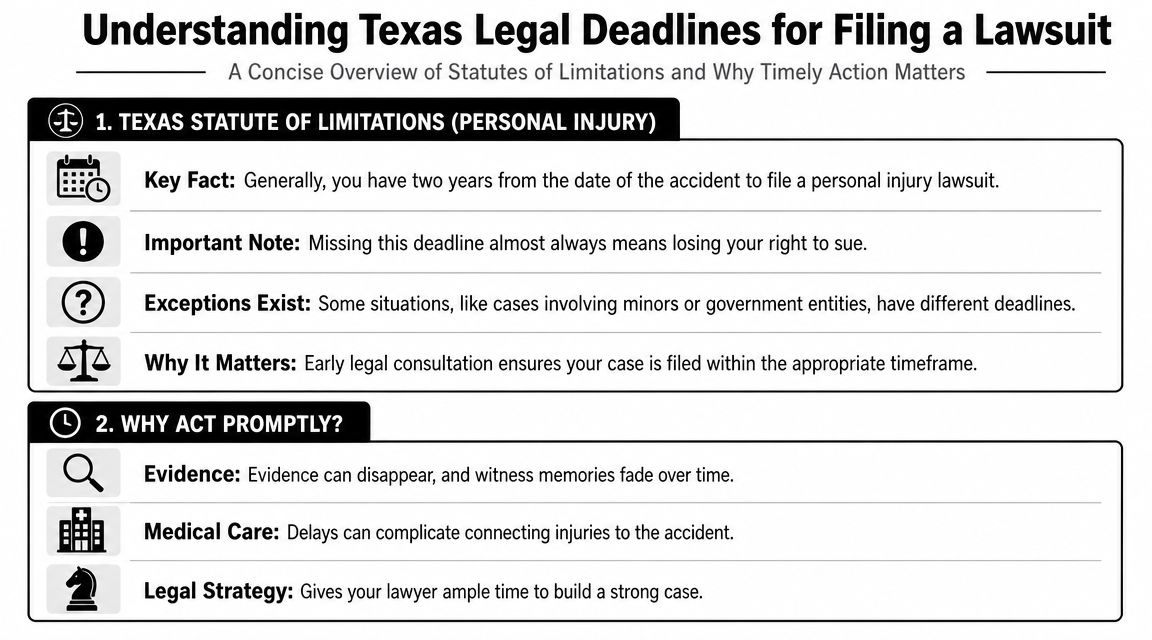
Understanding Texas Legal Deadlines for Filing a Lawsuit
Texas gives injured people a limited window to file suit, but waiting for the calendar to get close is one of the most common mistakes I see. The legal deadline is the outer boundary for many cases. Your practical deadline is usually much sooner.
The general Texas deadline
For many Texas personal injury claims, the statute of limitations is two years from the date of the accident. Wrongful death claims often run from the date of death. That sounds like plenty of time until treatment gets delayed, witnesses stop answering calls, or a defendant cannot be found for service.
Some deadlines are much shorter. Claims involving a city, county, school district, or other government entity can trigger early notice requirements that arrive long before the usual lawsuit deadline. If that notice is missed, the case can be damaged before it ever gets filed.
Why waiting hurts a case even before the deadline expires
The first 72 hours matter because evidence can disappear. The first week matters because insurance positions start forming. The months after that matter because the paper trail of your injuries, treatment, lost income, and fault evidence has to stay clear and consistent.
By the time someone calls my office close to the filing deadline, the problem is often bigger than the deadline itself. Skid marks are gone. Photos were never taken. Vehicle damage was repaired. Electronic data was overwritten. A witness who once wanted to help now says, "I don't really remember."
That is why "any time within two years" is not a safe answer to when you should contact a lawyer after an accident in Texas. It may satisfy the statute. It does not protect the case.
Cases with shorter timelines or added complexity
Some claims need immediate legal review because the timeline is tighter or the investigation is harder.
A fatal crash may require quick work to identify the proper claimants, preserve proof of damages, and secure evidence before it disappears. A wreck involving a commercial truck can require prompt efforts to preserve driver logs, onboard data, maintenance records, and employer records. A collision involving a government vehicle may involve special notice rules that do not wait for your medical treatment to finish.
Texas comparative fault rules also shape the timeline in a practical way. If the other side builds an early argument that you caused part of the crash, that argument can affect settlement value and, in some cases, whether you recover at all. Early legal work often focuses on preserving the facts before that version hardens.
For a fuller explanation of filing deadlines and exceptions, see this guide to the Texas personal injury statute of limitations.
Your Free Consultation What It Is and How It Helps
The first call should answer a simple question: what needs attention right now?
In a good consultation, a Texas personal injury lawyer listens to the sequence of events, checks the timing, and looks for early risks. That usually means figuring out whether evidence still needs to be preserved, whether the insurance company has already asked for a recorded statement, and whether your injuries may turn into a larger claim than they first appeared.
A useful consultation often covers four things:
- What happened and in what order: the crash, the scene, the report, witnesses, photos, and any communication with insurance
- Your medical picture so far: ambulance care, ER records, follow-up treatment, pain that showed up later, and how the injury is affecting work or daily life
- Pressure points in the case: disputed fault, gaps in treatment, commercial vehicles, government involvement, or signs that key evidence could disappear
- Your next decisions: whether to keep records, how to respond to the adjuster, and whether a lawyer should take over communication
You do not need a perfectly organized file before you call. Many clients contact a lawyer with a discharge sheet, a claim number, and a lot of questions. That is enough to start.
I tell people to use the consultation to ask practical questions. Should you give a recorded statement? Should you sign the insurer's medical authorization? What documents should you save? How long can you wait before a weak case becomes harder to prove? Those answers depend on facts, not slogans.
The meeting is also a chance to judge fit. You should leave with a clearer sense of the case, the timeline, and the lawyer's approach. If the conversation feels rushed or vague, keep looking.
If you were injured in a Texas crash or lost a loved one in a fatal accident, schedule a free consultation with Law Office of Bryan Fagan, PLLC. You can explain what happened, ask direct questions, and get an honest assessment of the next step, with no obligation to hire the firm.