Skip to content
A broken arm settlement from a Texas car accident typically falls between $20,000 and $90,000, and cases involving surgery, complications, or long-term impairment can rise to $75,000 to $175,000+. If you're reading this with your arm in a sling, bills arriving, and work on hold, the number you ultimately recover will depend in large part on what you do next.
A serious accident can change your life in seconds, but you don't have to face it alone.
After a Houston freeway crash, many people are dealing with the same questions. How much is a fair settlement? Should you talk to the adjuster? What if the other driver blames you? How do you keep a valid claim from turning into a cheap payout? Those questions matter even more when a fracture affects your dominant arm, your job, or your ability to take care of your family.
The good news is that a broken arm claim isn't random. Certain facts push a case toward the low end. Other facts move it higher. Strong medical proof, complete documentation, and careful handling of the insurance company can make a real difference. In Texas, victims with attorney representation consistently secure settlements 340% higher than unrepresented claimants, according to Lorfing Law's discussion of broken bone accident settlements.
A Car Accident Can Change Your Life in Seconds
You get hit at an intersection, brace for impact, and walk away thinking you were lucky. A few hours later, your forearm swells, your elbow locks up, and the ER doctor confirms a fracture. By the next morning, small tasks become a problem. Buttoning a shirt, turning a doorknob, driving, typing, lifting a child, or carrying groceries can all hurt.
That is also when insurance companies start sizing up your claim.
A broken arm case can lose value early if the injury is brushed off as routine, treatment is delayed, or the records never show how the fracture disrupted work and daily life. The opposite is also true. Cases usually move higher when the medical proof is clear, follow-up care is consistent, and the file shows what this injury cost you in pain, time, income, and independence.
Why this hits so hard
A fracture is more than one hospital visit. It can interrupt your paycheck, strain your household, and leave you relying on other people for basic tasks.
A warehouse employee in Houston may be unable to lift. A nurse in Dallas may struggle with charting or patient care. A parent in San Antonio may need help with meals, school drop-offs, and chores for weeks or months. If the broken arm is on your dominant side, the disruption is often worse.
Practical rule: Settlement value usually rises when your records show both the medical injury and the real-world limits it caused.
That is why two people with "a broken arm" can end up with very different results. One heals with a cast and returns to normal quickly. Another needs surgery, misses work, develops stiffness or nerve symptoms, and does not regain full strength. Insurers look for those differences immediately. You should too.
Early choices can raise or reduce the value of your claim
The first days and weeks after a crash matter. If you want to protect the upper end of your settlement range, focus on the steps that create proof.
- Get prompt treatment and keep every follow-up appointment. Gaps in care give the insurer room to argue you were not badly hurt.
- Report every limitation to your doctors. If you cannot grip, rotate your wrist, sleep well, drive, or do your job, make sure that appears in the chart.
- Document how the injury affects work and home life. Save missed time records, job restrictions, receipts, and notes about tasks you can no longer do without help.
- Be careful with adjusters. Casual comments like "I'm okay" or guesses about healing time can be used to shrink the claim.
- Do not settle too early. A quick offer often comes before the full picture is known, especially if surgery, therapy, or lasting weakness is still on the table.
If liability is disputed, your lawyer's timing and documentation matter just as much as your medical care. A car accident lawyer in Texas can help preserve records, deal with the adjuster, and keep a valid injury claim from being treated like a minor bump-and-bruise case.
The hard truth is simple. A broken arm claim is not valued by the X-ray alone. It is valued by what the fracture forced you to endure, and by how well that story is proved.
What Is a Fair Settlement for a Broken Arm in Texas
A fair settlement is the amount that reflects what this crash has cost you. That includes the money you've already lost and the human impact the injury has had on your life. There isn't one fixed payout because broken arm cases vary so much by fracture type, treatment, work limitations, and long-term outcome.
For moderate injuries such as broken bones, herniated discs, and concussions, typical Texas car accident settlements fall between $45,000 and $200,000, reflecting higher damages from surgery, physical therapy, and potential long-term impairment, according to SetCalc's guide to Texas car accident settlement ranges.
What goes into the number
Some losses are easy to count. Others require a fuller story.
| Type of Damage | What It Covers |
|---|---|
| Economic damages | Medical bills, follow-up care, imaging, prescriptions, physical therapy, lost wages, and other documented out-of-pocket costs tied to the crash |
| Non-economic damages | Pain, physical limitations, inconvenience, disruption to daily life, loss of normal movement, and the way the injury affects sleep, independence, and relationships |
A fair claim usually needs both categories. If the insurer looks only at the emergency room bill, the offer often lands low. If your records show surgery, therapy, missed work, trouble using your hand or elbow, and ongoing weakness, the claim carries more weight.
Details that move a claim higher
The arm involved matters. A fracture to the dominant arm can affect writing, driving, lifting, and job duties more than an injury to the non-dominant side. Joint involvement matters too. Damage near the elbow or wrist can create more stubborn problems than a straightforward break that heals without complication.
A Houston construction worker is a good example. If he can't grip tools, climb safely, or carry materials for an extended period, his wage loss and practical limitations may be much greater than someone with a desk job and a faster return to work.
A broken arm case gains value when the records show function loss, not just fracture healing.
Surgery often changes the settlement discussion as well. A cast and routine follow-up usually present one type of claim. Hardware placement, longer rehabilitation, reduced range of motion, or nerve symptoms present a very different one.
If you want informed guidance on how these factors fit into a claim, a Texas Personal Injury Lawyer provides representation for injury victims across Texas on a no-fee-unless-we-win basis.
What fairness looks like in practice
A fair settlement should cover more than the first stack of invoices. It should account for the way your recovery unfolded.
- If healing was straightforward: The claim may stay closer to the lower end of the usual range.
- If treatment became more involved: Surgery, therapy, restricted use, and missed work usually support a stronger demand.
- If problems continue: Lasting weakness, loss of grip strength, joint stiffness, or nerve-related symptoms can justify a higher figure.
That's the core issue in a broken arm settlement car accident Texas case. The insurance company wants to price the fracture quickly. Your job is to prove the full cost.
Critical Legal Rules That Impact Your Texas Injury Claim
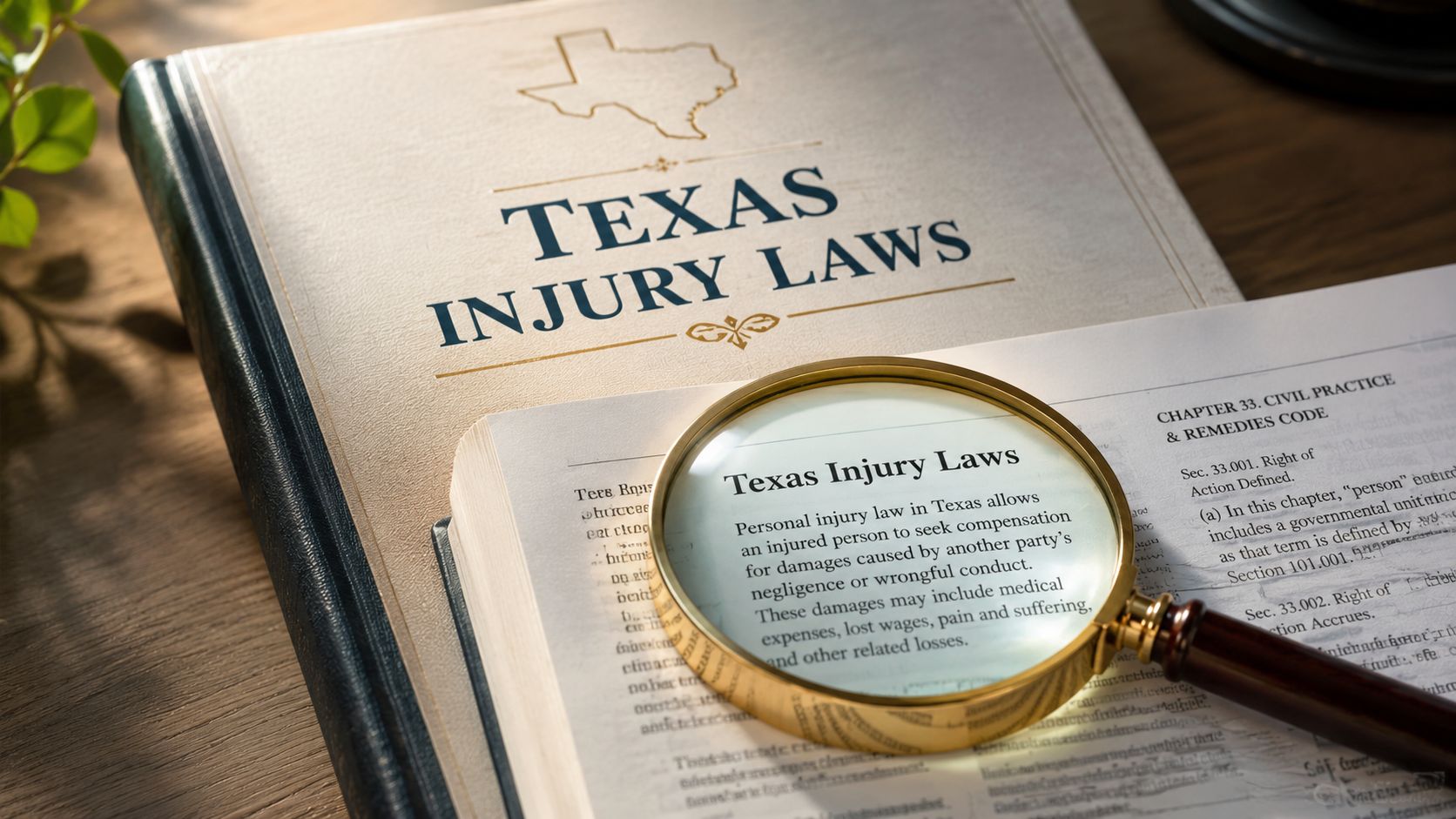
Texas injury claims turn on two legal rules that can change settlement value fast. One is fault. The other is the filing deadline. If you understand both early, you have a better chance of keeping your broken arm claim out of the bargain-bin range.
How fault works in Texas
Texas follows modified comparative fault. In plain English, you can still recover money if you were partly responsible, but only up to a point. If you are more than 50% at fault, Texas law bars recovery.
That rule gives insurance adjusters a clear strategy. They look for ways to push part of the blame onto you. In a broken arm case, that matters because every increase in your fault percentage cuts what you receive.
Here is how that plays out in practice:
- At 0% fault: You can pursue the full value of your damages.
- At partial fault: Your compensation is reduced by that percentage.
- At 51% or more fault: You cannot recover damages from the other side.
A simple example helps. If a claim is worth $100,000 and you are found 20% responsible, the recovery drops to $80,000.
That is why early statements matter. A polite comment to an adjuster can become an argument against you later. “I didn't see the other car.” “I may have reacted late.” “Maybe I was going a little fast.” Those words can cost real money.
Why early evidence can raise or lower settlement value
Fault disputes are usually won with details, not opinions. The driver who gets the better evidence early often has the stronger settlement position later.
After a Texas crash, useful proof often includes the police report, photos of the vehicles, witness names, scene images, medical records that tie the arm injury to the collision, and records showing what happened in the hours and days after the wreck. Strong documentation makes it harder for the insurer to argue that you caused the crash, that the fracture was minor, or that the injury came from something else. This evidence needed for a Texas injury claim often determines whether a case stays discounted or moves toward fair value.
I tell clients this often. Do not guess, speculate, or fill in gaps for the insurer. If you do not know an answer, say that. If you are still in treatment, say that. Accuracy protects claim value.
For people trying to make sense of the bigger picture, this overview on comprehending personal injury claims gives helpful background, but Texas cases still depend on Texas fault rules and Texas proof.
How long do you have to file a claim in Texas
Texas also gives you a limited window to file suit. In most car accident injury cases, the deadline is two years from the date of the crash under Texas Civil Practice and Remedies Code Section 16.003.
That deadline sounds far away at first. It is not. Waiting can weaken a claim long before the court deadline arrives. Witnesses become harder to reach. Photos disappear. Surveillance footage gets erased. Medical gaps create arguments the insurer did not have before.
The practical trade-off is simple. People often want to wait and “see how healing goes” before taking legal action. Sometimes that makes sense for treatment decisions. It does not make sense for preserving proof. The strongest claims protect evidence early, then measure the full medical and financial loss carefully.
If the crash caused a death, different claims and deadlines may apply. If the injury is more severe than a fracture, such as permanent impairment or multiple trauma, the legal and medical proof becomes more demanding. In those situations, getting case-specific advice early can protect both your deadline and your settlement value.
How to Build a Strong Claim for Maximum Compensation
A strong broken-arm claim starts long before settlement talks. It starts the first time you tell a doctor what hurts, the first photo you save, and the first work shift you miss because you cannot grip, lift, or drive normally. Those details often make the difference between a claim the insurer can discount and one it has to take seriously.
Texas law gives injured drivers a limited time to file suit, as noted earlier, but the deadline is only part of the job. To push a case toward the higher end of the usual range, you need proof that is organized, consistent, and tied closely to the crash.
Get medical treatment that tells the full story
Prompt treatment matters for your health and for your claim. If the emergency room refers you to an orthopedist, go. If the orthopedist orders imaging, get it done. If therapy is prescribed, attend and follow through.
Insurance adjusters often argue from silence. If your records do not mention loss of grip strength, trouble rotating your forearm, or pain when lifting your child, the insurer may later claim those problems were minor or unrelated. Tell each provider exactly what the injury is stopping you from doing in daily life.
Consistency matters, but honesty matters just as much. Do not exaggerate. Do not minimize. A clear medical record that tracks your symptoms over time usually carries more weight than broad statements made months later.
Gather evidence before it disappears
The best claims are built piece by piece.
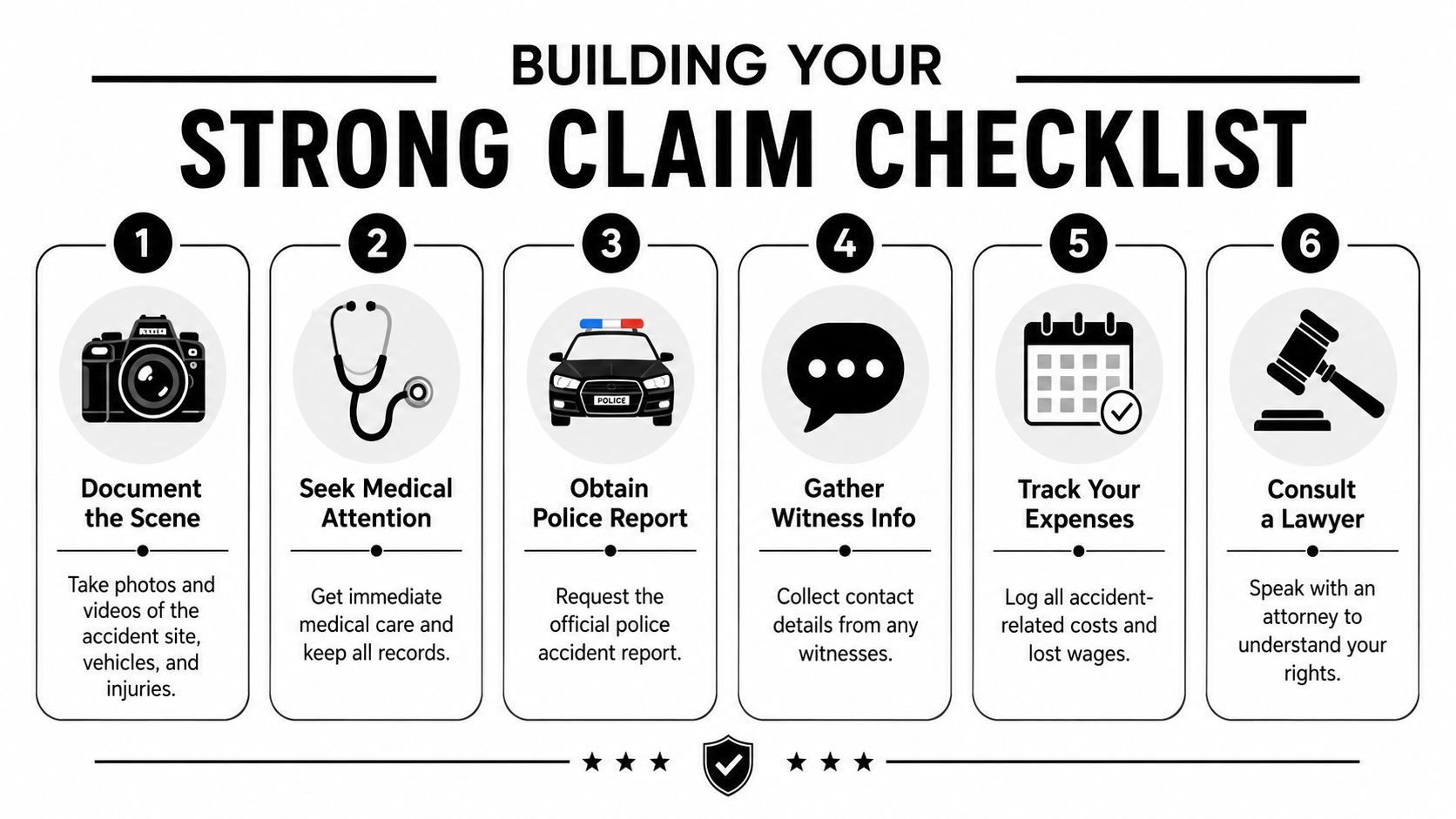
Start with the crash scene. Save photos of the vehicles, your visible injuries, the inside of the car, airbags, broken glass, road conditions, and anything else that shows how the impact happened. Get the police CR-3 report as soon as it becomes available. If witnesses stopped, try to preserve their names and contact information.
Then keep every paper connected to the injury. That includes bills, receipts, mileage to appointments, pharmacy costs, brace or sling purchases, and wage records from your employer. If you want a practical checklist of the records that carry the most weight, this guide on what evidence is needed for an injury claim in Texas is a useful starting point.
For a broader patient-centered overview, this primer on comprehending personal injury claims explains how medical proof and daily limitations often shape injury cases.
Show how the fracture affected your real life
A broken arm case gets stronger when the file shows more than an X-ray.
Keep a short recovery journal. Write down what you could not do that day. Maybe you missed work because you could not type, carry tools, or safely drive. Maybe you needed help bathing your child, cooking dinner, fastening a seatbelt, or sleeping through the night without pain. Those facts help connect the diagnosis to real losses.
Specific language works better than vague complaints. "Pain with twisting a doorknob" is stronger than "arm still hurts." "Cannot return to warehouse lifting" is stronger than "having trouble at work."
Focus on the facts that usually raise settlement value
Several factors tend to push a claim upward when they are documented well:
- Clear fault evidence such as photos, witness information, and a police report that supports your version of events.
- A prompt diagnosis that ties the fracture directly to the crash.
- Steady treatment records with no long unexplained gaps.
- Proof of income loss and work restrictions from a doctor or employer.
- Evidence of lasting problems such as stiffness, reduced range of motion, weakness, hardware placement, or future therapy.
- Credible day-to-day impact shown through records, receipts, and your own consistent descriptions.
There is a real trade-off here. Some people want to settle fast and put the wreck behind them. That instinct is understandable. But if you settle before the medical picture is clear, you may leave money on the table for care, lost wages, and ongoing limitations that had not fully shown up yet.
The goal is not to make the claim sound bigger than it is. The goal is to prove its full value.
Navigating the Settlement Process with Insurance Companies
Insurance companies speak politely, but their job is to control payouts. If you have a fractured arm, especially one that may require surgery or a long rehabilitation period, you should expect the adjuster to test your case early. That often means a quick call, a request for a recorded statement, and an offer that arrives before your treatment story is complete.

The minimum Texas auto policy limits projected for 2026 are $30,000 per person for bodily injury, which often isn't enough for serious injuries like a broken arm that requires surgery and extended rehabilitation, according to FVF Law's explanation of Texas policy limits.
Why low offers happen so often
The insurer sees your claim as a file to close. A low early offer can look tempting when the bills keep coming, but it often arrives before the long-term consequences are known. If your elbow stiffens, your grip weakens, or your doctor recommends more treatment later, that first number may look very different.
Common tactics include:
- Pushing speed: The adjuster wants closure before your recovery is fully documented.
- Narrowing the injury: The insurer describes the fracture as routine even when the daily impact says otherwise.
- Fishing for blame: A recorded statement can become ammunition for a fault argument.
- Treating limits as a ceiling: When the at-fault driver carries low coverage, the insurer may act as if that ends the discussion.
Be careful with recorded statements and releases
You usually need to report the crash, but you don't need to guess, speculate, or minimize your symptoms. Keep your communications factual and brief. If you don't yet know the full medical picture, say that.
The biggest mistake is signing a release too soon. Once you sign a final release, your claim is closed. If new complications appear later, you generally can't go back and ask for more.
Don't settle a fracture claim while the outcome is still uncertain.
That caution matters in a broken arm settlement car accident Texas case because arm injuries can evolve. Joint pain, weakness, and reduced motion may not be obvious in the first week.
A better approach to negotiation
Strong negotiation starts with timing and proof. Wait until your condition is better understood. Gather the treatment records, wage documents, imaging, and evidence of daily limitations. Then evaluate the claim with a complete picture rather than an insurer's rushed version of events.
If the adjuster keeps pressing, a practical resource on what not to say to an insurance adjuster in Texas can help you avoid statements that weaken your case.
A Houston car accident attorney or Texas personal injury lawyer can also look for other paths to recovery when liability limits are too low, including uninsured or underinsured motorist issues. That matters in crashes involving cars, commercial vehicles, or situations where a truck crash lawyer Houston families consult may identify additional coverage.
You Are Not Alone When to Hire a Texas Car Accident Lawyer
Some claims are manageable on your own. A broken arm claim often isn't one of them, especially when surgery, disputed fault, missed work, or lingering limitations are involved. When your arm affects your income and daily life, the stakes get too high for guesswork.

In Texas, 95% of personal injury cases settle before trial, and the average bodily injury claim was $22,734 in 2022, according to Karns & Karns' review of Texas settlement data. That tells you two things. Most cases resolve without trial. Skilled negotiation still matters because settlement is where most results are won or lost.
When legal help becomes important
You should seriously consider hiring a lawyer if any of these apply:
- Liability is disputed: The other driver blames you, or the insurer is trying to increase your share of fault.
- The injury is serious: Surgery, therapy, work restrictions, or long-term weakness usually raise the value and complexity of the case.
- The insurer is stalling or lowballing: Delays, repeated requests, or pressure to settle quickly are warning signs.
- Coverage issues exist: Low policy limits, uninsured drivers, and multi-vehicle crashes often require a broader strategy.
A lawyer can gather records, deal with adjusters, frame the evidence clearly, and protect the claim from avoidable damage. That gives you room to focus on healing instead of arguing over every record, phone call, and form.
If you're weighing that decision, this article on when to hire a personal injury lawyer can help you assess your situation.
What that support looks like
Legal help is especially useful when your case doesn't fit a simple script. A delivery driver with a broken dominant arm may have very different losses than an office worker. A family facing a fatal crash may need a wrongful death lawyer Texas families can rely on. A major collision involving multiple vehicles or severe trauma may call for broader catastrophic injury analysis.
If you want a quick overview of how accident cases are evaluated and negotiated, this video is a helpful starting point.
The point is simple. You don't have to carry this alone. Recovery is possible, and informed legal help can make the road forward clearer.
If you're dealing with a broken arm after a crash and need straight answers about your options, Law Office of Bryan Fagan, PLLC offers free consultations for Texas injury victims and families. You can get clear guidance about fault, insurance issues, deadlines, and the steps that may help protect the full value of your claim.