Skip to content
Spinal fusion cases in Texas often settle in the range of $173,500 to $750,000, but the actual value can rise well beyond that when the injury is severe, the fusion involves multiple levels, or the long-term impact on your life is permanent. If you've had fusion surgery after a crash or serious accident, the number you saw online is only a starting point, not a promise and not a cap.
A serious accident can change your life in seconds, but you don't have to face it alone.
You may be reading this while recovering at home, waiting for another follow-up appointment, trying to understand work restrictions, or staring at insurance paperwork that makes no sense. When a doctor says you need spinal fusion, everything gets heavier at once. The pain is physical, but the stress spreads into your job, your sleep, your family life, and your finances.
People usually ask the same question first: what is a fair spinal fusion settlement in Texas? The honest answer is that the surgery matters, but the long-term consequences matter just as much. Insurance companies often focus on the hospital bill that's already in front of them. A strong claim looks further ahead and proves what this injury will cost you in the years to come.
Your Life Changed in an Instant Now What
The first days after a major wreck are a blur. After a Houston freeway crash, for example, a driver may walk away thinking the pain will fade, only to learn later that the damage is serious enough to require surgery. By then, the claim has already started, the insurer has already opened a file, and every decision begins to matter.

If you've had spinal fusion after a car crash, truck collision, workplace incident, or another serious accident, start with a few practical steps:
- Follow your treatment plan: Keep appointments, take restrictions seriously, and tell your doctors exactly what symptoms you're dealing with.
- Save every record: Discharge papers, imaging reports, operative reports, prescriptions, and work notes all help show how the injury changed your life.
- Be careful with insurers: The adjuster may sound helpful, but their job is to resolve the claim for as little as possible.
- Get legal advice early: A Texas personal injury lawyer can protect evidence, handle communications, and keep the case focused on the full value of your loss.
Texas personal injury law is fault-based. That means the person or company that caused the accident may be responsible for the harm that followed if their negligence led to your injury. In plain terms, negligence means failing to use reasonable care. A distracted driver, a trucking company with poor safety practices, or a property owner who ignored a dangerous condition can all become part of the legal picture.
Practical rule: Early mistakes in a spinal injury case can lower the value fast. Good records, consistent treatment, and careful communication usually help more than people realize.
A fair outcome isn't just about reimbursing one surgery. It's about showing what this injury has taken from you and what you'll need to move forward.
Understanding Spinal Fusion and Its Impact on Your Claim
Spinal fusion is a procedure that joins vertebrae so the injured part of the spine becomes more stable. In everyday terms, surgeons are trying to stop painful motion, protect nerves, and prevent further damage. It isn't a minor event, and the recovery often reaches into nearly every part of daily life.
Why this surgery changes the value of a claim
A fusion case usually stands apart from a routine back injury claim because the treatment is more serious, the recovery is longer, and the risk of lasting impairment is higher. In Texas, the average settlement amount for neck and back injuries involving spinal fusion after a motor vehicle accident is $503,648, with a median of $350,000, and the same source notes that spinal fusion surgery can exceed $200,000 without insurance. It also explains that more intensive treatment like surgery often doubles or triples the potential case value compared to non-surgical injuries, which is why these claims get close review from insurers and juries alike (Texas neck and back injury settlement amounts).
That medical reality affects damages in several ways. You may miss substantial time from work. You may return with restrictions. You may not be able to lift, drive long distances, sleep comfortably, or do the same job you did before the wreck. Those changes aren't side issues. They are part of the claim.
Recovery doesn't end when the incision heals
Many people expect surgery to solve everything. Sometimes it helps significantly. Sometimes it reduces one problem but creates a new daily routine of therapy, pain management, and physical limits. If you're dealing with ongoing symptoms after surgery, resources discussing treatment options for pelvic pain after fusion can help you understand why recovery is often more complicated than people expect.
Shared fault can also affect what you recover. If the insurer argues that you played some role in causing the crash, Chapter 33 becomes important. A plain-language discussion of Texas Comparative Fault and the 51% Bar Rule explains how shared fault reduces or eliminates recovery under Chapter 33.
A spinal fusion claim is rarely just a bill-review exercise. It is often a life-impact case.
For families, that distinction matters. It helps explain why these injuries are often treated as catastrophic injury claims, why a Houston car accident attorney may bring in additional experts, and why settlement value turns on more than the surgery itself.
What Is a Typical Spinal Fusion Settlement in Texas
Looking for a typical number, individuals often seek to answer a practical question: will the settlement be enough to cover what this injury has done to my life? The best answer starts with the range and then moves into the facts of your case.
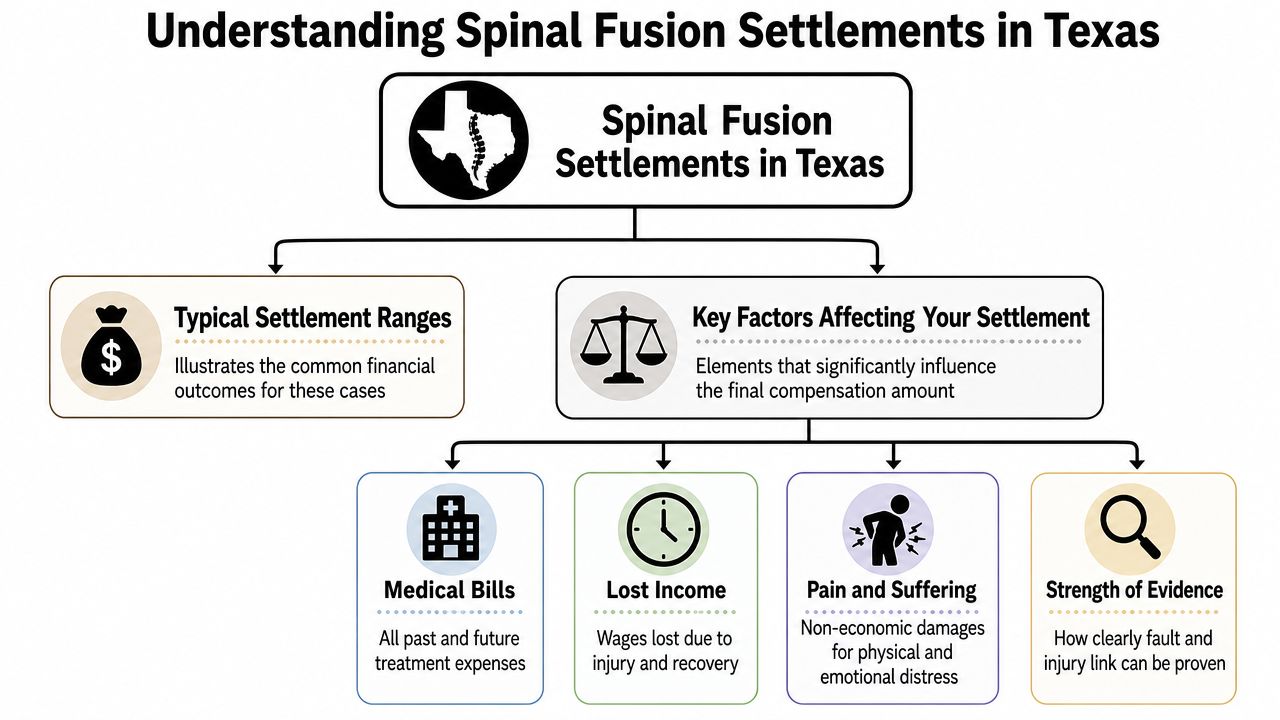
Under Texas-specific reporting on spinal fusion claims, the average settlement for a spinal fusion injury typically ranges between $173,500 and $750,000, with a single-level fusion averaging around $150,000 on the low end, while a multi-level fusion can start at $275,000 and exceed several million dollars depending on the effect on quality of life (Texas spinal fusion settlement ranges).
Why one case lands low and another lands high
Two clients can both have fusion surgery and still have very different case values. The difference usually comes from how clearly the lawyer can prove fault, medical necessity, permanent impairment, and future loss.
A Houston truck crash claim often looks different from a store fall claim. In a truck case, there may be commercial insurance coverage, electronic driving records, and safety issues involving the company. In a premises case, liability may be disputed harder from the start, especially if the owner argues the condition was open and obvious or unrelated to the fusion.
Key Factors That Determine Your Spinal Fusion Settlement Value
| Factor | Impact on Settlement Value | Example |
|---|---|---|
| Number of levels fused | More extensive surgery often points to more serious injury and greater life impact | A single-level fusion may be valued differently from a fusion involving several vertebrae |
| Future medical needs | Increases value when ongoing treatment, follow-up care, or additional procedures are likely | A person who will need long-term pain management usually has a stronger damages claim |
| Lost earning ability | Raises value when the injury affects your job, hours, or long-term career path | A construction worker with permanent lifting limits may have a larger wage-loss claim |
| Liability strength | Clear proof of fault usually improves negotiating position | A rear-end crash with strong records is often easier to prove than a disputed intersection collision |
| Insurance coverage | Practical limits can affect what is recoverable | A serious injury case may involve multiple policies or defendants |
Real trade-offs in settlement strategy
Insurers like cases they can price quickly. That's one reason they often focus on the bills already incurred and downplay everything else. If your future condition is still developing, accepting an early offer can lock you into a number before the true cost is clear.
If you want a broader view of back and neck case valuation, this discussion of average settlement amounts for car accident back and neck injuries gives useful context. The same is true for procedure. A plain-language overview of The Texas Personal Injury Settlement Process can help you understand what to expect from demand through settlement or trial.
The strongest spinal fusion cases aren't built around averages. They're built around proof.
That proof often includes the surgeon's opinions, imaging, work restrictions, before-and-after function, and evidence showing how the injury affects your day from morning to night. That's what turns a generic estimate into a serious demand.
Crucial Texas Laws That Affect Your Compensation
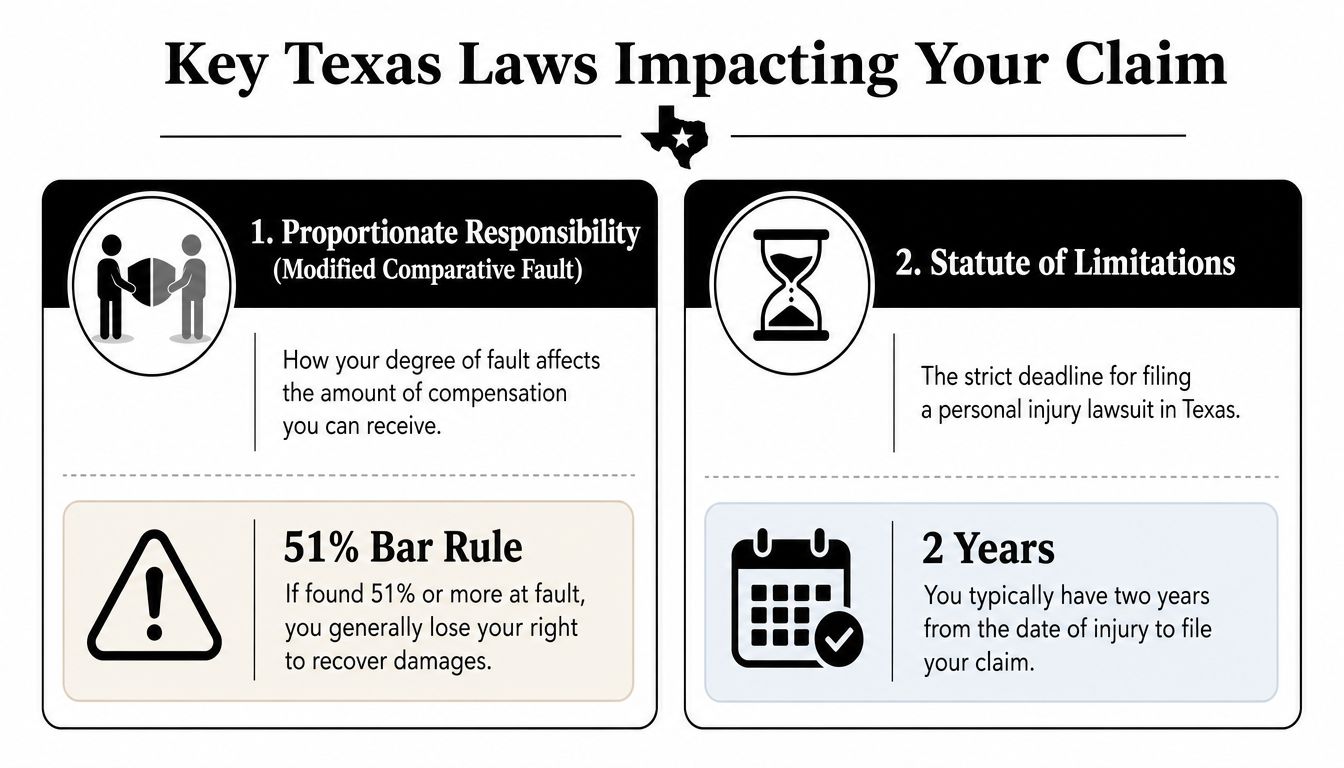
A strong injury case can still fail if the legal rules aren't handled correctly. In Texas, two rules matter immediately in spinal fusion cases: comparative fault and the filing deadline.
Fault can reduce what you recover
Texas uses a modified comparative negligence system. A plaintiff can recover damages if they are 50% or less responsible for the accident, but the recovery is reduced by that percentage of fault. If the plaintiff is found 51% or more at fault, recovery is barred. The same Texas source also confirms a strict two-year statute of limitations running from the date of the accident (Texas modified comparative negligence and filing deadline).
In real life, that means the defense may try to shift blame onto you even when your injury is obvious. After a multi-vehicle crash, for example, they may argue you were speeding, following too closely, or failed to react in time. In a workplace vehicle case, they may claim you ignored a safety rule. Those arguments aren't side issues. They directly affect compensation.
Deadlines arrive faster than people expect
Many injured people think the deadline starts when surgery happens or when they finally understand how serious the injury is. In these cases, that's a dangerous assumption. The filing deadline is tied to the accident date, not the surgery date.
If you need more detail, this guide on the Texas statute of limitations for personal injury claims explains the rule in plain English.
Here is what usually helps:
- Check the accident date early: Don't rely on memory. Confirm it from the crash report or incident report.
- Preserve evidence while treatment continues: Video, vehicle data, witness statements, and photographs can disappear long before recovery is complete.
- Don't wait for perfect medical closure: A case can be prepared while you continue treatment.
Miss the legal deadline and the strength of the injury usually won't save the case.
A Texas personal injury lawyer offers more than just paperwork support. Their role is to protect timing, evidence, and your strong position while you focus on healing.
Maximizing Your Claim by Proving Lifetime Damages
Many spinal fusion cases are ultimately decided by these factors. The insurer will usually study your past bills first because those numbers are easy to slot into a spreadsheet. Your lawyer has to prove something harder and more important: what this injury will cost you in the future.
Past bills matter, but they are not the whole claim
A proper claim usually includes economic damages such as medical care and lost income, along with non-economic damages such as pain, suffering, and the loss of normal daily function. If you want a plain-language explanation of this part of the case, this article on pain and suffering damages in Texas is a helpful starting point.
But spinal fusion claims often turn on permanent impairment. Can you return to the same work? Will you need follow-up procedures? Do you need more therapy, pain management, home help, or accommodations? Those questions can matter more than the first set of invoices.
Future care often drives the real value
Verified guidance on these cases shows why. A complete settlement must account for long-term needs because spinal fusion can require 26+ years of future care, with verifiable future costs that can include $488,000 for future surgeries, $314,000 for future physical therapy, and $149,000 for future pain management (future care costs in spinal fusion cases).
Those figures illustrate a practical truth. The claim's value may rise far beyond the first hospital stay when the evidence shows that treatment didn't end with the operation.
What actually helps prove lifetime damages
Lawyers don't prove future loss by guessing. They build it through records, expert opinions, and consistent facts.
- Operative and treatment records: These show what was done, why it was necessary, and what limits remain.
- Treating doctor opinions: Surgeons, pain specialists, and rehabilitation providers can explain expected future care.
- Life-care planning: A life-care planner can organize likely future medical needs into a detailed projection.
- Vocational evidence: When the injury affects your work, vocational analysis helps explain reduced earning ability.
- Daily-life evidence: Family testimony, journals, and before-and-after accounts show how the injury changed ordinary living.
One practical example: after a major truck wreck, a person may return to work in a lighter role but lose overtime, promotion opportunities, and the ability to perform the physical tasks that shaped their career. Another person may technically return to work but need regular injections, extended therapy, or intermittent leave because pain flares keep interfering with normal function. Those losses are real even if they don't appear neatly on the first billing statement.
A fast settlement can feel like relief. In a fusion case, it can also leave future care unpaid.
For that reason, a truck crash lawyer Houston families trust often waits until the future-damages picture is medically supportable before pressing hard on value. The same logic applies in a catastrophic injury case, a serious car crash, or a claim that may later involve a wrongful death lawyer Texas families turn to when a loved one doesn't survive complications.
Navigating the Texas Personal Injury Claim Process
A major injury claim feels more manageable when you can see the path ahead. The process has moving parts, but each stage has a purpose.
Early in the case, the focus is medical stabilization and evidence preservation. Later, the focus shifts to proving damages, presenting a demand, and deciding whether settlement talks are serious or just delay tactics.
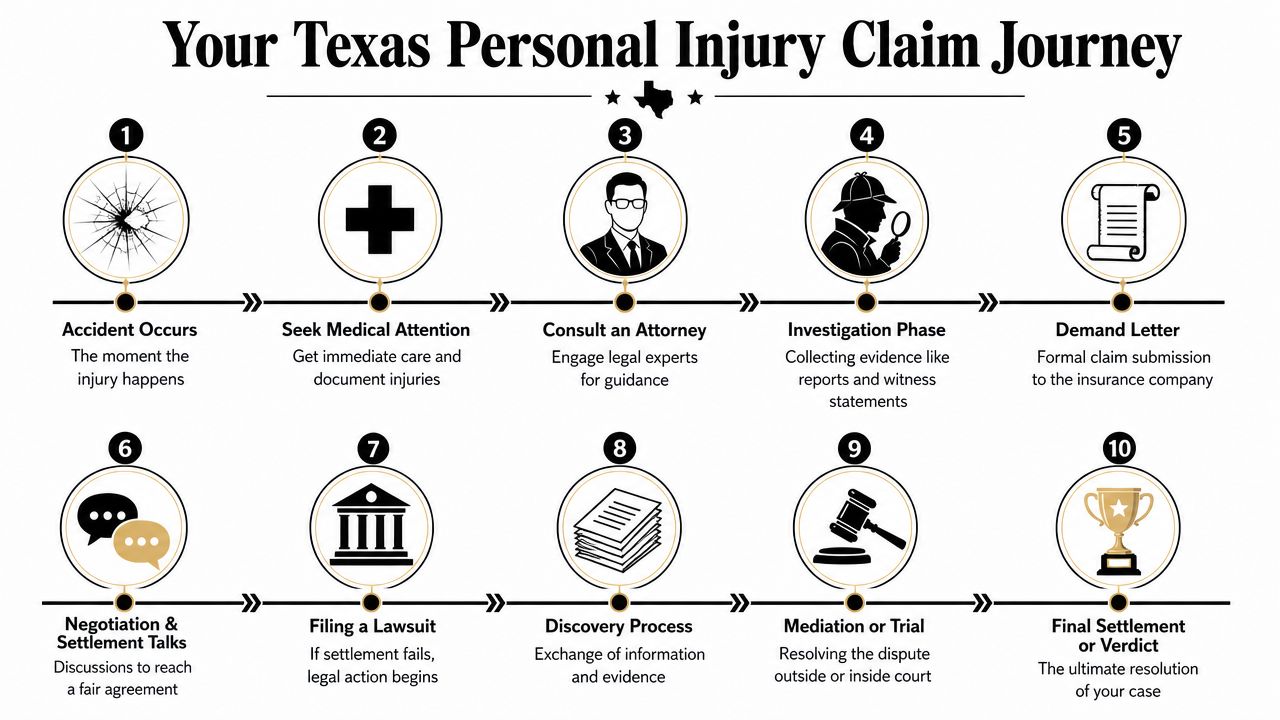
The claim usually unfolds like this
- Get medical care first. Your health comes before the case, and prompt care creates the first layer of documentation.
- Report the accident. In a car or truck wreck, that often means law enforcement. At work, it may mean an employer report plus outside investigation if a third party caused the injury.
- Talk to a lawyer before giving detailed statements. The insurer may ask questions designed to narrow the claim early.
- Investigate liability and damages. This can include crash reports, photographs, witness interviews, medical records, and employment information.
- Prepare a demand package. The demand tells the story of fault, treatment, losses, and future needs.
- Negotiate from documented value. Serious negotiations work better when the records are complete.
- File suit if needed. Sometimes that is what moves the case forward.
- Use discovery to test defenses. Each side exchanges information and examines the evidence.
- Attempt mediation or prepare for trial. Many cases resolve here, but trial preparation itself often strengthens their negotiating position.
- Resolve by settlement or verdict. The case ends only when the terms are final.
A short video can help make that timeline easier to visualize.
Where people get stuck
The most common problems are practical, not dramatic. People minimize symptoms, stop treatment too early, trust the adjuster to be fair, or wait too long to get legal advice. In a spinal fusion case, those choices can weaken both causation and value.
If your injury happened on the job or in a company vehicle, Workplace Injury and Third-Party Claims in Texas outlines recovery options when you're hurt on the job in Texas. For people who want direct representation, the Law Office of Bryan Fagan, PLLC handles Texas personal injury matters involving car accidents, truck crashes, catastrophic injuries, and wrongful death claims.
Good legal guidance also helps connect related claims. A spine injury case may overlap with a car accident claim, a truck accident case, a catastrophic injury matter, or, in the hardest situations, a wrongful death claim.
You Don't Have to Face This Alone Call for a Free Consultation
A spinal fusion injury can affect your income, your mobility, your independence, and your plans for the future. The settlement number that matters isn't the fastest number an insurance company offers. It's the number that reflects the full reality of your losses, including the care and limitations that may continue for years.
You deserve clear answers. You deserve to know how Texas fault rules apply, how deadlines affect your rights, and how to build a claim that doesn't stop at today's bills. Whether your injury came from a freeway collision, a commercial truck crash, a workplace vehicle incident, or another serious accident, legal help is available.
Recovery is possible, and you don't have to sort this out by yourself.
If you need answers about a spinal fusion settlement in Texas, contact the Law Office of Bryan Fagan, PLLC to schedule a free consultation. You can talk through what happened, learn how fault and deadlines may affect your case, and get practical guidance on the next step toward financial recovery.