Skip to content
A serious accident can change your life in seconds, but you don't have to face it alone.
If you're searching for what to do immediately after accident texas, there's a good chance you're shaken, hurting, worried about your car, or trying to help someone you love. In those first minutes, individuals aren't thinking about legal rules or insurance strategy. They're trying to breathe, stay calm, and figure out what comes next.
That's exactly why the first choices matter so much. The right step at the scene can protect your health. The next right step can protect your insurance claim. And the wrong words, or a delay in care, can create problems that follow you for months.
Texas crashes often unfold in fast-moving, high-pressure places. After a Houston freeway crash, for example, you may be dealing with traffic, emergency responders, and another driver who's already trying to explain away what happened. In that moment, you need a simple roadmap. Safety first. Evidence second. Medical care next. Then protect your legal rights before an insurance company starts shaping the story for you.
This guide is written the way I would explain it to an injured client in plain English. You'll see what works, what doesn't, and why Texas law makes certain steps especially important. If you were hurt in a car wreck, truck collision, or a crash that took a loved one's life, these early actions can affect fault, negligence, comparative responsibility, and the value of any future claim.
Your Guide Through the Chaos After a Texas Accident
The first thing to know is simple. You do not need to solve the whole case at the scene.
You need to make a few smart decisions in the right order. Check for injuries. Get to safety if you can. Call for help when the situation calls for it. Preserve what you can before the scene changes. Then get medical care and protect your rights before an insurance adjuster starts asking loaded questions.
Start with control, not panic
A crash throws your body and mind into survival mode. People forget basic details. They say things they don't mean. They try to be polite and end up sounding like they accepted blame.
That's normal, but it's risky.
Practical rule: At the scene, stick to facts. Who was involved, where it happened, what vehicles were there, and whether anyone needs help.
In Texas personal injury cases, the details recorded early often become the backbone of the claim. The police report, photos, witness names, vehicle positions, and early medical records often carry more weight than anyone's later memory. That's why calm, limited, factual communication works better than emotional explanations.
What the law cares about
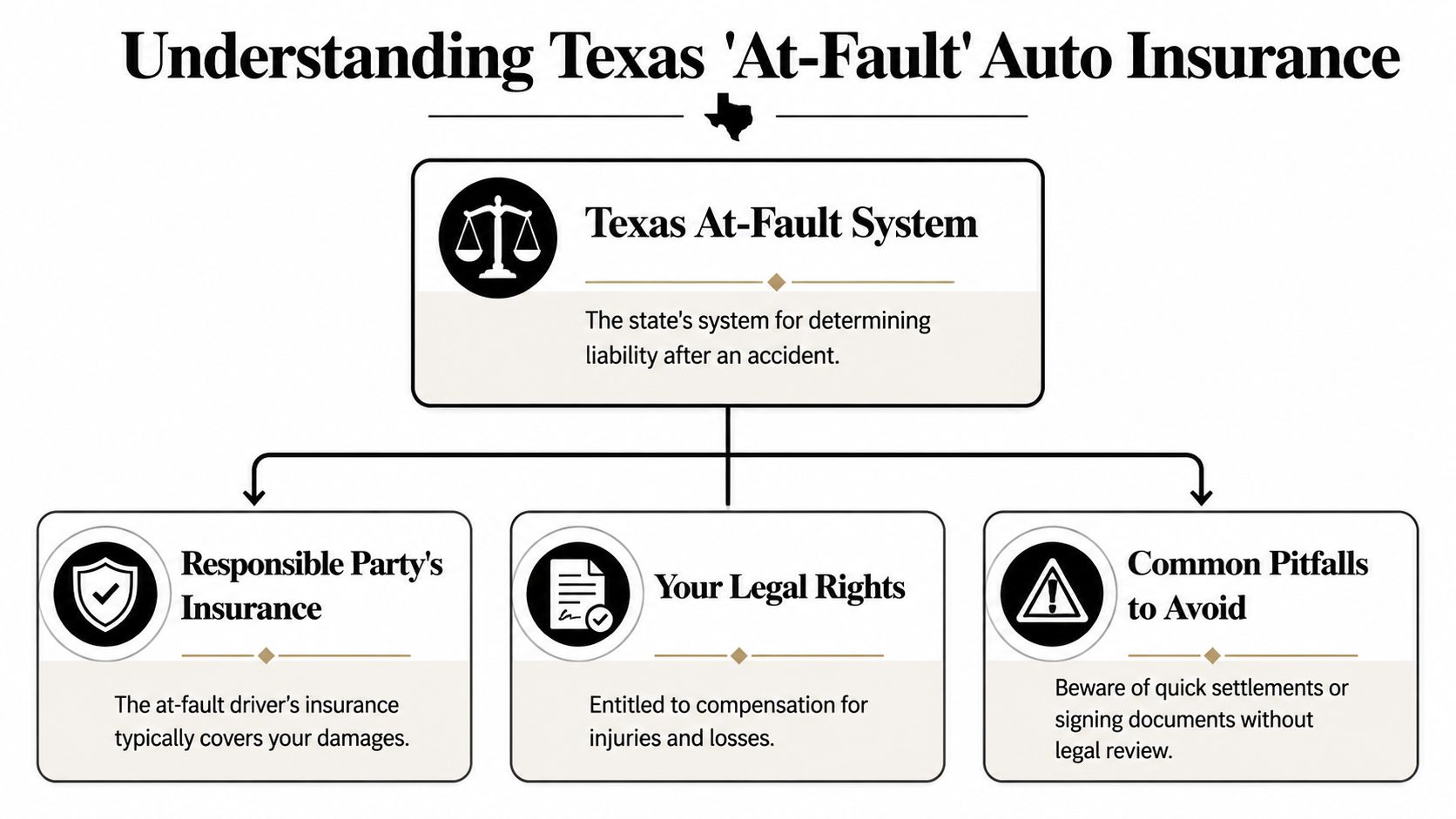
Texas follows an at-fault system. That means the person who caused the crash, and usually that person's insurance, may be responsible for the harm that followed. To recover compensation, you generally need to show negligence, which means another person failed to use reasonable care and caused injury or loss.
That sounds technical, but the practical version is familiar. A driver follows too closely, runs a light, changes lanes without checking, drives distracted, or speeds in rain. One bad decision leads to a collision. Then the case becomes a fight over proof.
Here's the point most people miss. Your actions after the crash can either support that proof or weaken it. That's true whether you need a Houston car accident attorney, a truck crash lawyer Houston, or a wrongful death lawyer Texas families can turn to after a fatal collision.
Your First Priorities at the Accident Scene
The first few minutes are about safety, legal compliance, and avoiding preventable mistakes.
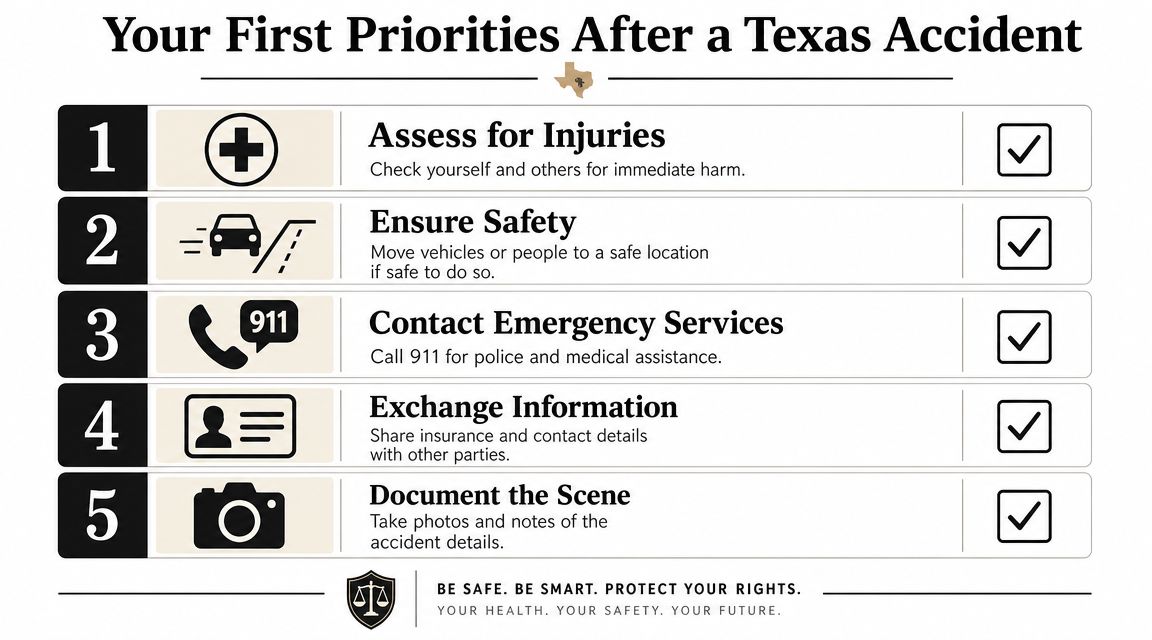
Check for injuries and call 911 when the crash is serious
In Texas, the legal response to a crash starts with a clear reporting threshold. If the collision causes an injury, a fatality, or damage that makes a vehicle unsafe to drive away, Texas law requires immediate police notification, which is why 911 is the right first call in a serious wreck, as explained in this Texas crash guide discussing immediate police notification.
If you aren't sure whether someone is hurt, assume caution is the smarter choice. Hidden injuries are common after collisions. A person may say they're fine and then feel pain, dizziness, or confusion minutes later.
If anyone has neck pain, trouble breathing, bleeding, loss of consciousness, or obvious trauma, don't try to talk yourself out of calling.
Move out of danger if it's safe to do so
If no one is injured and the vehicles can be moved, Texas guidance advises getting out of the roadway. That helps prevent a second impact and lowers the risk to everyone standing near traffic.
A practical approach looks like this:
- Turn on hazard lights: Let approaching drivers see there's a problem ahead.
- Move to the shoulder or a safer area: Only do this if the vehicles are drivable and moving them won't put anyone at greater risk.
- Stay alert around traffic: On busy roads, people often focus on the damaged car and forget the danger coming from behind.
If a vehicle won't move, or moving it feels unsafe, leave it where it is and wait for emergency help.
Exchange information, but keep your words tight
Texas drivers should exchange basic identifying and insurance information. That includes names, insurance details, and license or plate information.
Use your phone to photograph documents if the other driver allows it. That usually prevents copying errors and saves time.
What works:
- Be polite and direct: Ask for the information you need and provide your own.
- Confirm the vehicle details: Plate number, make, model, and visible damage.
- Keep the conversation short: Save the full explanation for later, after facts are documented.
What doesn't work:
- Apologizing out of reflex
- Arguing about fault
- Guessing about speed, distance, or what you “must have” done
- Saying you're uninjured before you really know
Let the police create the first official record
A police report often becomes the first neutral record of the crash. When officers arrive, tell the truth, but stay with facts you know. If you didn't see a traffic light change, don't guess. If you aren't sure where impact occurred, don't fill in gaps.
After a crash, many people also worry about treatment costs. If you need care and don't have good coverage, this guide on getting medical treatment after an accident without insurance can help you understand your options.
Preserving Critical Evidence for Your Texas Claim
A crash scene changes fast. Cars get towed. Debris gets cleared. Weather shifts. Witnesses leave. Once that happens, you can't recreate those details with the same force.
That's why evidence preservation is not busywork. It's how you protect the truth.
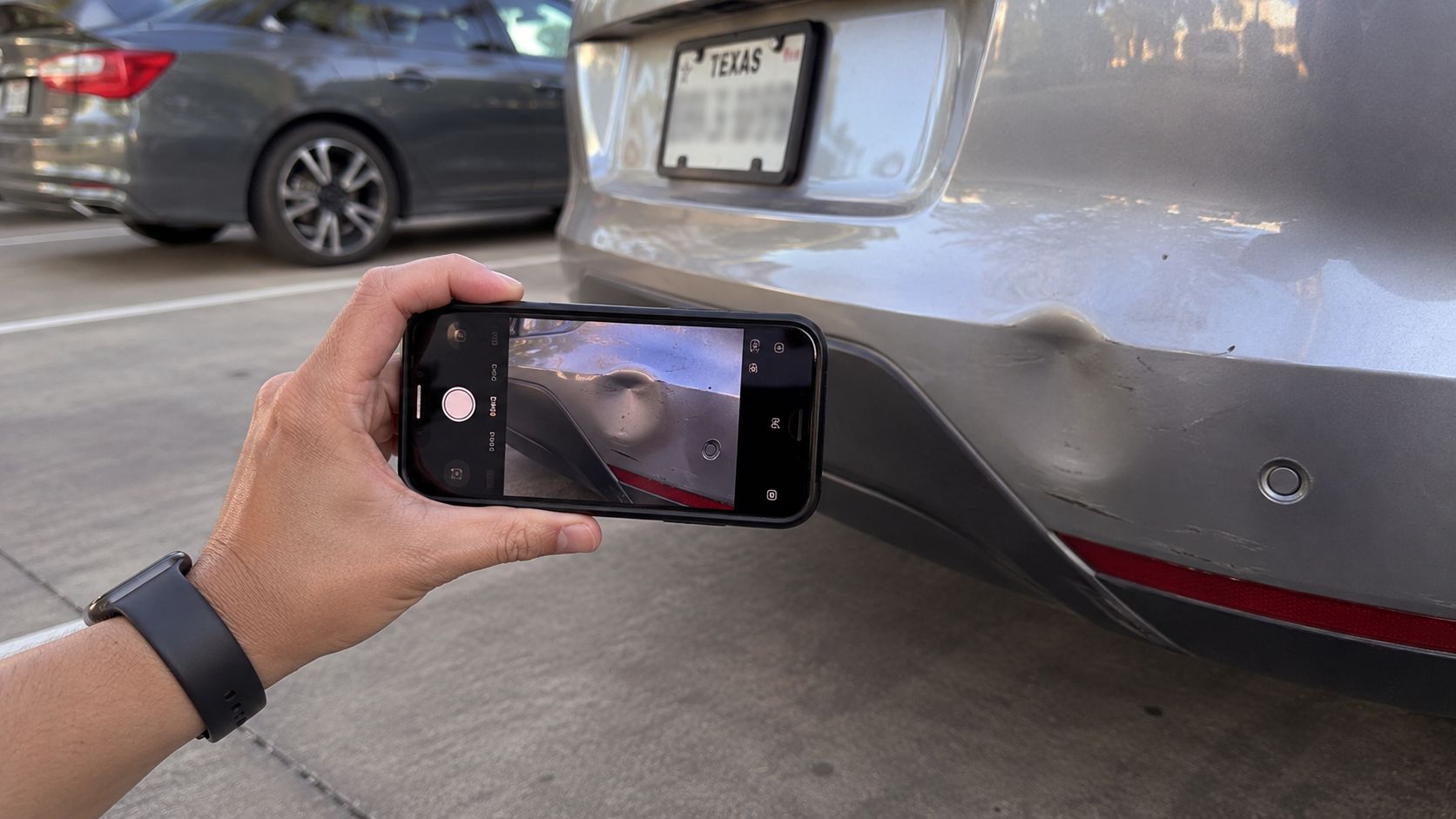
Texas Department of Insurance guidance advises drivers to take pictures of the other driver's insurance card and license, the vehicles, plates, and street signs, and to write down the location, time, weather, and what happened, as described in this Texas Department of Insurance wreck checklist.
What to photograph before the scene disappears
Don't just take one close-up of a dented bumper. Build a visual record.
Use your smartphone to capture:
- Wide shots of the whole scene: Show where every vehicle came to rest.
- Close-ups of damage: Get each impact point from more than one angle.
- License plates and vehicle identifiers: Tie the right damage to the right vehicle.
- Street signs and lane markings: These details often matter in right-of-way disputes.
- Road angles and surrounding conditions: Intersections, shoulders, medians, and curves can all become important later.
- Weather and lighting conditions: Rain, glare, darkness, and visibility issues often shape liability arguments.
- Visible injuries: Bruising, cuts, swelling, and marks can fade faster than people expect.
Witnesses often decide close cases
Independent witnesses can be powerful because they usually don't have a financial stake in the outcome. If someone saw the crash, get a name and phone number. If they seem willing, ask them to briefly state what they saw while it's fresh.
After a Dallas intersection crash, for example, each driver may insist the light was green. A neutral witness who saw one driver run the red light can change the entire direction of the claim.
The best witness is the one you can still reach a week later.
If nearby businesses, homes, or traffic cameras may have captured the collision, make a note of that immediately. Video can disappear quickly if no one asks for it in time. If you want to understand how lost or destroyed proof can hurt a case, read about spoliation of evidence in Texas injury claims.
What not to say at the scene
This part matters as much as the photos.
Do not admit fault. Don't apologize in a way that sounds like blame. Don't minimize your pain. Don't tell the other driver, a witness, or an officer that you're “probably okay” if you haven't been medically evaluated.
Insurance companies look for statements they can frame as admissions. A simple “I didn't see you” or “I'm fine” can become a major argument later.
Here's a useful walkthrough on scene documentation and post-crash priorities:
Steps to Take in the Hours and Days After the Crash
Many claims are damaged after the scene is over, not during it.
People go home, try to “shake it off,” miss symptoms, and wait too long to create a clear medical record. Then the insurance company argues the injury came from something else.
Get medical care promptly
Medical timing matters. Even when a crash seems minor, delayed symptoms are common, and prompt evaluation protects both your health and your claim. One Texas claims guide states that insurance notice is often expected within 24 to 72 hours, as noted in this Texas post-accident guide on treatment and notice timing.

Many people make an expensive mistake. They wait because they're busy, don't want a medical bill, or hope the soreness will pass. That gap in treatment gives an insurer room to argue that the crash wasn't serious, or that your condition started later.
Notify your insurer without oversharing
Reporting the crash to your own insurance company is usually necessary. That doesn't mean you need to give a detailed, polished narrative while you're still in pain and missing facts.
A simple notice is often enough at the start. You can say:
“I was involved in a crash in Texas on [date]. I'm reporting the accident and will provide the basic information I have. I'm still receiving medical evaluation, so I'm not ready to give a full statement.”
That approach is usually better than trying to explain everything from memory.
Keep these items handy before you call:
- Crash basics: Date, time, location, and vehicles involved
- Policy information: Your insurance card and claim number if one has been assigned
- Police details: Agency name and report reference if available
- Medical status: Whether you've been evaluated and where
Build your claim file early
You don't need a fancy system. A folder on your phone, an email folder, and a physical envelope can do the job if you use them consistently.
Start saving:
- Medical records and discharge papers
- Receipts for prescriptions, devices, and travel tied to treatment
- Tow, storage, and repair paperwork
- Photos and videos from the scene
- Messages from insurers and adjusters
- Notes about your symptoms each day
Real-world trade-offs people face
After an Austin rear-end collision, a client may be deciding whether to miss work for urgent care or wait until the weekend. Waiting feels easier in the moment. Legally and medically, it usually creates more problems than it solves.
Prompt treatment doesn't guarantee a perfect case. But delay often gives the defense a predictable argument.
Understanding Your Legal Rights and Common Pitfalls
A lot of people know they can file a claim after a wreck. Far fewer know how Texas law can reduce or even block recovery.
If you understand fault, negligence, comparative responsibility, and filing deadlines early, you're less likely to fall into the traps that devalue a case.
Texas is an at-fault state
In plain terms, the driver who caused the collision is generally responsible for the damage that followed. In many cases, that means a claim is made against the at-fault driver's liability coverage.
That doesn't mean the insurance company writes a fair check. It usually means the insurer starts investigating how to limit what it pays. If the facts are unclear, it may argue that you caused part of the crash, your injuries are overstated, or your treatment was excessive.
A Texas personal injury lawyer helps by organizing proof into a claim that shows what happened, why the other party was negligent, and how the crash changed your health, finances, and daily life.
Comparative responsibility can shrink a claim
Texas uses a modified comparative responsibility system. The practical lesson is this: if you share blame, your recovery can be reduced. If your share of responsibility is too high, recovery can be barred.
Here's a relatable example. After a crash on a busy Houston freeway, one driver may have changed lanes without enough clearance, while the other may have been speeding. Both sides may argue over who created the danger. That dispute is not just academic. It directly affects the value of the case.
Legal reality: Fault is often argued in percentages, but the real fight is over evidence.
This is why photos, witness statements, vehicle damage patterns, and early medical documentation matter so much. They don't just prove there was a crash. They help prove who bears responsibility for it.
Common mistakes that hurt otherwise valid claims
Some mistakes are avoidable if you know what to watch for.
| Problem | Why it hurts | Better move |
|---|---|---|
| Giving a recorded statement to the other driver's insurer too early | You may guess, minimize symptoms, or lock yourself into incomplete facts | Give basic identifying information and get advice before a detailed statement |
| Accepting a quick settlement | You may not yet know the full extent of treatment, lost income, or lasting pain | Wait until your damages are clearer |
| Posting on social media about the crash or recovery | Photos and comments can be taken out of context | Stay quiet online until the claim is resolved |
| Missing follow-up care | Gaps in treatment are used to challenge injury severity | Follow the medical plan and keep records |
For a broader consumer-facing overview of carrier behavior after a collision, these expert insights on post-accident auto insurance add helpful context on how claims often unfold once insurers get involved.
How long do you have to file a claim in Texas
Texas personal injury claims generally have a two-year statute of limitations. That means waiting too long can put your case at risk, even if liability seems obvious.
Families dealing with a fatal wreck should know this urgency applies in wrongful death matters too. If you lost someone in a violent collision involving a car, commercial truck, or company vehicle, speaking with a wrongful death lawyer Texas families trust can help preserve evidence and identify the right claims before key proof disappears.
The shorter practical deadline is almost always earlier than the legal one. Witnesses become hard to find. vehicles are repaired or sold. Memories blur. Surveillance footage may be lost. Delay helps the defense.
When to Call a Texas Personal Injury Lawyer
You don't need a lawyer for every bump in a parking lot. But if the crash caused injuries, significant vehicle damage, disputed fault, a commercial vehicle claim, or a death in the family, legal help usually makes the process more manageable and more accurate.
Signs it's time to get help
You should strongly consider calling a lawyer if:
- You were hurt and needed medical care: Injury cases involve records, causation issues, and damages that are easy to undervalue.
- The other driver's insurer wants a recorded statement: That's often the point where people unintentionally damage their own claim.
- Fault is being disputed: A lane-change case, intersection collision, or truck wreck can turn into a complex evidence fight.
- A loved one died in the crash: These cases carry emotional and legal weight that families should not have to manage alone.
- A commercial truck was involved: A truck crash lawyer Houston victims rely on will usually look beyond the driver to the company, maintenance issues, and document preservation.
What a lawyer actually does
A lawyer's value is not just paperwork. It's timing, strategy, and protection.
That can include:
- Investigating the collision: Securing reports, photos, witness statements, and available video
- Managing insurer contact: So you don't have to field pressure while trying to heal
- Calculating damages fully: Medical bills, lost wages, future care needs, and the daily impact of serious injuries
- Protecting legal deadlines: So your claim isn't weakened by preventable delay
For people trying to decide whether it's time, this guide on when to hire a Texas personal injury lawyer can help clarify the decision. The Law Office of Bryan Fagan, PLLC handles car wreck, truck collision, catastrophic injury, and wrongful death matters across Texas, which is one option for people who want help evaluating their next step.
If you're searching for a Houston car accident attorney because the insurance process already feels stacked against you, trust that instinct. Most injured people don't need more pressure. They need room to recover while someone else protects the claim.
If you or someone you love was hurt in a Texas crash, you can schedule a free consultation with Law Office of Bryan Fagan, PLLC to talk through your options. Whether you need guidance after a car wreck, help from a truck crash lawyer Houston families can call, or support from a wrongful death lawyer Texas relatives can trust, legal help is available. Recovery is possible, and you don't have to figure this out alone.