
A serious accident can change your life in seconds, but you don’t have to face it alone.
If you’re hurt after a Houston freeway crash, a truck collision near Dallas, or a rideshare accident in San Antonio, you may be asking a very practical question: what is litigation lawyers do for me now? The wording may feel awkward, but the concern behind it is real. You want to know who handles the insurance company, who gathers proof, who files the lawsuit if needed, and who stands up for you if the other side refuses to be fair.
A litigation lawyer is the attorney who takes that fight on. In a Texas personal injury case, that means more than filing papers. It means building your case, proving fault, responding to defense tactics, and being ready to go to court when a settlement offer doesn’t reflect what your injuries have cost you.
Your Advocate in the Fight for Justice
When people hear the word “lawyer,” they often imagine someone giving advice behind a desk. A litigation lawyer does that, but also much more. According to the U.S. Bureau of Labor Statistics description of lawyers, lawyers advise and represent clients in civil proceedings and trials. In real life, only a small percentage of attorneys regularly appear in court, which is why an experienced litigator can be such an important ally after a serious injury.

What that means for you after an accident
If another driver, trucking company, or business caused your injuries, your litigator’s job is to move your case forward while you focus on medical care and stability at home.
That usually includes:
- Investigating fault: looking at crash reports, photos, witness statements, vehicle damage, and any available digital evidence.
- Proving negligence: showing that another party failed to use reasonable care and that their conduct caused your injuries.
- Handling insurers: dealing with adjusters so you don’t have to manage pressure calls or low settlement tactics alone.
- Preparing for court: filing suit, gathering evidence, questioning witnesses, and making legal arguments if the case can’t be resolved fairly.
Texas personal injury law often turns on a few core ideas. Fault asks who caused the wreck. Negligence asks how they failed to act safely. Comparative responsibility can matter if the defense argues you were partly to blame. And the statute of limitations sets the deadline for filing suit.
Practical rule: A good litigator doesn’t just react to problems. They build a case early so the other side knows you’re prepared.
For many injured people, that preparation brings peace of mind. If you want a broader plain-English overview of different kinds of personal injury cases, that resource can help you understand where your claim fits and why the legal path can look different from one injury case to another.
Why courtroom readiness matters
Some cases settle quickly. Others don’t. Insurance companies often evaluate a claim differently when they know the injured person has a lawyer who is prepared to litigate.
That matters in a car wreck claim, a catastrophic injury case, or a wrongful death lawsuit. A litigation lawyer is there to push for the full value of your losses, not just the easiest number for the insurer to pay.
The Seven Stages of a Texas Personal Injury Lawsuit
A lawsuit feels intimidating when you haven’t been through one before. In reality, most cases follow a structured path. Once you know the stages, the process becomes easier to understand and much less mysterious.
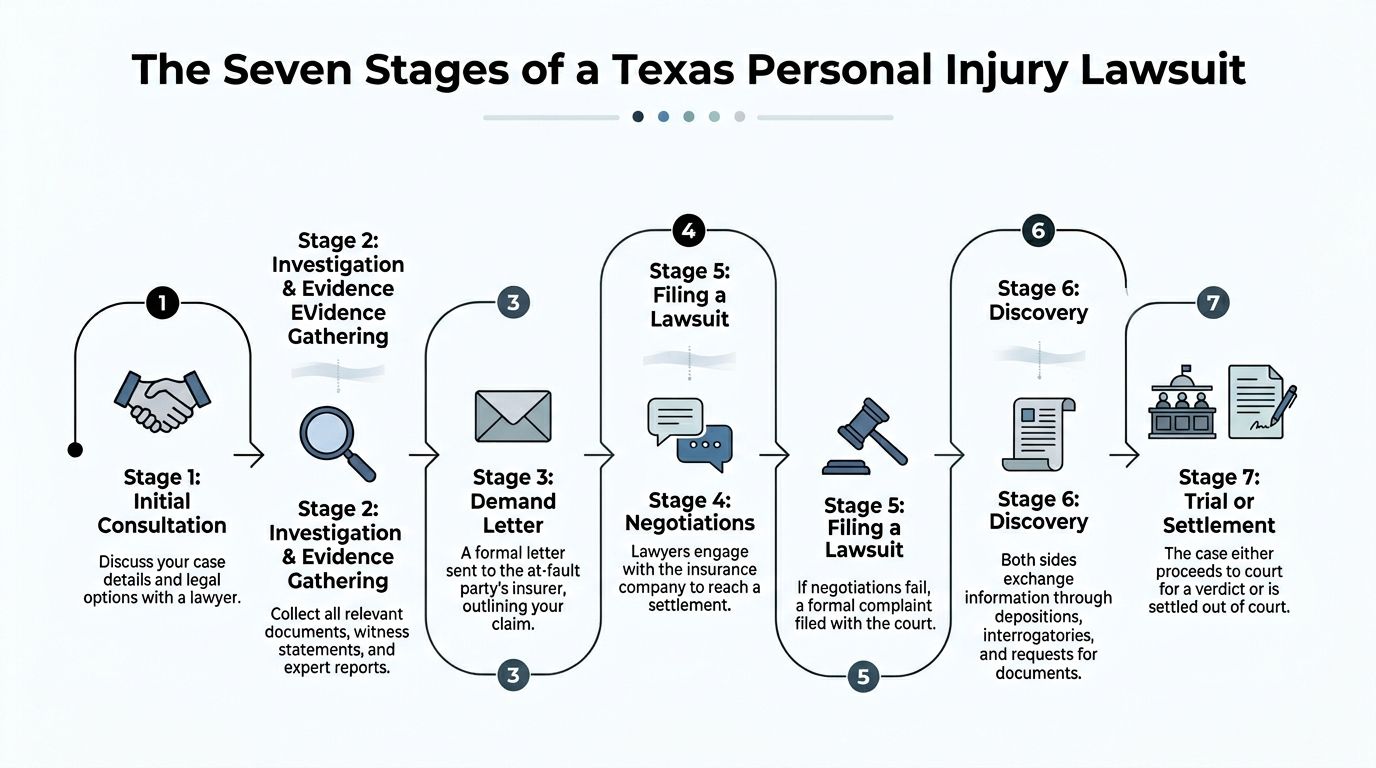
Stage one: Pre-suit investigation
Your lawyer starts gathering the foundation of your claim. That can include the police report, medical records, scene photos, witness information, and any available video or electronic data.
In severe injury cases, the investigation often goes deeper. A lawyer may consult specialists, preserve vehicle data, and document future care needs. That kind of detailed work is especially important in catastrophic injury matters, where the long-term impact of the injury can shape the entire claim.
Stage two: Demand and negotiation
After the core evidence is organized, your attorney usually sends a demand package to the insurance company. This explains what happened, why the insured party is legally responsible, and what compensation is being sought.
Negotiation can be productive, but it can also be frustrating. The insurer may question treatment, argue over fault, or try to minimize pain and limitations that are very real in your daily life.
Stage three: Filing the lawsuit
If the insurance company won’t act reasonably, the next step is filing a petition in court. This formally starts the lawsuit.
Filing suit doesn’t always mean the case will end in trial. It means your lawyer is using the court system to require responses, move evidence forward, and create consequences for delay tactics.
Filing a lawsuit is often less about drama and more about leverage, structure, and accountability.
Stage four: Discovery
Discovery is the evidence-exchange phase. It is one of the most important parts of a personal injury lawsuit.
According to this litigation guide discussing discovery, 80-90% of a case’s critical evidence is exchanged during this stage, and it can last 6-18 months. Discovery includes depositions, interrogatories, and requests for documents. It can uncover facts that connect negligence directly to injury, such as a truck driver’s phone use in violation of Texas Transportation Code §545.425.
Stage five: Motions and pre-trial hearings
Before trial, lawyers often ask the judge to decide specific legal issues. These requests are called motions.
A motion might address what evidence the jury can hear, whether an expert may testify, or whether part of a claim should be dismissed. This stage can shape the strength of each side’s position before a jury is ever seated.
Stage six: Trial
If settlement still doesn’t happen, the case goes to trial. Your lawyer presents evidence, questions witnesses, cross-examines the defense, and argues why the jury should award damages.
For you, trial is the moment when your story is told in full. Your medical treatment, your limitations, your lost income, and the way the injury changed your life all become part of the record.
Stage seven: Appeals
An appeal is not a second trial. It is a request for a higher court to review legal rulings made in the case.
Not every case is appealed. But a litigation lawyer has to be prepared for that possibility, especially in cases involving major injuries, disputed legal issues, or significant damages.
Critical Steps to Take After an Accident in Texas
The hours after a crash can feel blurry. You may be in pain, frightened, and unsure what matters most. The steps you take early can protect both your health and your legal claim.

Start with safety and medical care
Call 911. Accept medical evaluation. If emergency responders recommend treatment, follow that advice.
After a Houston freeway crash, even a person who walks away may have injuries that worsen later. Prompt care also helps create a clear record of what happened and how you were hurt.
Protect the facts before they disappear
If you can do so safely, gather:
- Photos of the scene: vehicle positions, skid marks, debris, road conditions, and visible injuries
- Driver and witness information: names, contact details, plate numbers, and insurance information
- Basic observations: time, weather, and anything the other driver said right after the collision
For a practical step-by-step guide, review what to do after a car accident in Texas.
If you’re able, take wide photos and close-up photos. Wide shots show the scene. Close shots preserve details.
Be careful with insurance adjusters
You may get a call quickly from the other side’s insurer. Stay polite, but be cautious. Don’t guess, don’t minimize your pain, and don’t agree to a recorded statement before getting legal advice.
That’s especially important when injuries are still developing. What seems minor in the first day can become a serious back, head, or shoulder injury a week later.
This short video helps explain what early post-crash decisions can affect your claim:
Know the Texas deadline
Texas personal injury cases have filing deadlines, and acting promptly matters. Evidence can be lost, witnesses become harder to reach, and digital records may not be preserved unless someone requests them.
If you suspect the other driver was distracted, intoxicated, or driving a commercial vehicle, speaking with a lawyer sooner rather than later can make a major difference.
How We Build a Winning Case with Evidence and Experts
A strong personal injury case is built from proof, not assumptions. The legal system asks your lawyer to show what happened, who is responsible, and how the injury affected your life. That takes careful evidence work from the start.
The evidence that often matters most
Every case is different, but certain categories show up again and again in Texas injury litigation.
In a car wreck, your lawyer may use the police report, photos, medical records, repair estimates, and witness statements. In a commercial vehicle case, the investigation may also involve black box data, maintenance records, driver logs, and company safety materials.
For a closer look at how technical proof is used in serious crash cases, see this overview of an accident reconstruction expert witness.
Experts help connect the dots
Jurors and insurance adjusters don’t automatically understand injury mechanics, future treatment needs, or how a collision unfolded in seconds. That’s why litigators often work with specialists.
A case may involve:
- Accident reconstructionists who analyze vehicle movement, impact points, and road evidence
- Medical experts who explain diagnosis, treatment, impairment, and future care
- Vocational or financial experts who help describe how an injury affects work and earning ability
After a truck crash in Houston, for example, an expert may compare roadway evidence with vehicle data to test whether the defense version of events holds up.
Legal strategy isn’t guesswork anymore
Modern litigators also use data tools to prepare smarter arguments. According to Thomson Reuters’ overview of Westlaw Edge litigation analytics, these tools process millions of court records and can show patterns such as how often a judge rules for plaintiffs in similar matters or the average time to rule on a summary judgment motion.
That kind of information doesn’t replace legal judgment. It sharpens it. A lawyer can use those patterns to decide how to frame motions, what timeline to expect, and where pressure points may arise in the case.
Good litigation strategy comes from combining facts, expert analysis, and courtroom experience.
Language and records can matter too
Some injury cases involve records in another language, foreign insurance paperwork, or family members who feel more comfortable reviewing legal material in translation. If that applies to your situation, a careful guide on how to translate legal documents with confidence can help you understand the risks of inaccurate translation and why precision matters.
That same attention to detail is what separates a routine claim from a well-prepared lawsuit. Whether you need a truck crash lawyer Houston families can trust or a broader Texas litigation team, the work behind the scenes is often what gives the case its strength.
Understanding Timelines and Costs of a Personal Injury Lawsuit
Two questions come up in almost every consultation. How long will this take? And how do I pay for a lawyer?
How contingency fees help injured people
Most Texas personal injury lawyers handle cases on a contingency fee. That means you don’t pay attorney’s fees upfront. The lawyer is paid only if the case results in a recovery.
That arrangement matters because accident victims are often already dealing with medical bills, missed work, and financial stress. You shouldn’t have to choose between getting legal help and paying household expenses.
Why some cases move fast and others don’t
A straightforward case may resolve faster if fault is clear and treatment is limited. A disputed case usually takes longer when injuries are serious, multiple parties are involved, or the defense fights liability.
A Texas personal injury lawyer should be honest with you about that. A claim involving permanent disability or a wrongful death lawyer Texas case often requires more investigation, more records, and more time than a relatively simple crash claim.
Here’s a practical way to think about timing:
| Case Stage | Estimated Duration |
|---|---|
| Initial investigation | Weeks to a few months |
| Insurance negotiations | Several weeks to several months |
| Lawsuit filing and early court process | Several months |
| Discovery | Often extended, depending on complexity |
| Trial preparation and trial setting | Can take many additional months |
| Appeal, if one occurs | Additional time after judgment |
What affects the timeline most
Three factors usually drive the pace:
- Medical recovery: your lawyer often needs a clearer picture of your injuries before valuing the case
- Disputed fault: if the other side denies responsibility, more evidence work is needed
- Case complexity: truck collisions, wrongful death claims, and catastrophic injuries often involve more records and more experts
The fastest settlement isn’t always the best result. Timing should support a full and fair claim, not a rushed one.
How to Choose a Strong Texas Personal Injury Litigator
Choosing a lawyer after an accident can feel overwhelming. Websites all sound confident. Ads all promise results. What matters is whether the attorney has the skill, resources, and approach your case needs.
Look for real litigation experience
Some lawyers mainly negotiate claims. Others are prepared to file suit, take depositions, argue motions, and try cases before juries.
That distinction matters. Insurance companies often track which lawyers are willing to go to court. If your attorney has meaningful litigation experience, the defense may take your case more seriously from the start.
Ask how the case will be built
A strong litigator should be able to explain, in plain English, how they would approach your claim. Ask what evidence they would try to preserve. Ask whether expert testimony may be needed. Ask how they handle disputed liability or comparative responsibility arguments.
If you were injured in a commercial wreck, this is especially important. A Houston car accident attorney may handle vehicle collision claims generally, but a trucking case can involve additional layers of investigation and corporate evidence.
Pay attention to communication
You need more than legal knowledge. You need a lawyer who listens, explains things clearly, and treats you with respect.
Good communication often looks like this:
- Clear expectations: they tell you what they know, what they don’t know yet, and what comes next
- Regular updates: you’re not left wondering whether anything is happening
- Practical guidance: they help you avoid common mistakes with insurers, records, and social media
Local knowledge can help
Texas courts vary by county, judge, and local practice. A lawyer who regularly handles injury cases in Houston, Dallas, Austin, or San Antonio may bring useful familiarity to venue issues, court procedures, and litigation style.
The right lawyer should make you feel informed, not pressured. You’re looking for steady judgment, courtroom ability, and the kind of compassion that matters when your life has been disrupted.
Frequently Asked Questions About Personal Injury Litigation
A lot of people don’t know what to expect until they’re already in the middle of a claim. These are some of the questions accident victims ask most often.
Quick answers to common concerns
| Question | Answer |
|---|---|
| Do all personal injury cases go to trial? | No. Many cases resolve through settlement, but a litigator prepares the case as if trial may be necessary. |
| What if I was partly at fault? | Texas fault issues can be contested. A lawyer can evaluate whether the defense is exaggerating your role and how comparative responsibility may affect the claim. |
| Should I talk to the other driver’s insurance company? | You can provide basic information, but you should be careful about recorded statements or detailed discussions before getting legal advice. |
| What damages can I seek? | That depends on the facts, but injury claims often include medical losses, lost income, pain, and the future impact of the injury. |
| When should I call a lawyer? | As soon as practical after medical needs are addressed, especially if injuries are serious or liability is disputed. |
A few questions people hesitate to ask
Will hiring a lawyer make my case more hostile?
Not necessarily. In many cases, it makes the process more organized. The insurer now has a point of contact, the evidence is presented properly, and deadlines are taken seriously.
Can I handle my own claim?
Some people try, especially if the crash seems straightforward. But once injuries are significant, treatment lasts longer than expected, or fault becomes disputed, self-representation can become risky very quickly.
What if the insurance company already made an offer?
An early offer may or may not be fair. Before accepting anything, make sure you understand whether the amount reflects your medical needs, missed work, pain, and possible future care.
A settlement closes the claim. Once you sign, you usually can’t go back and ask for more later.
Does a wrongful death case work the same way?
The core litigation process is similar, but the emotional and legal issues are often more complex. Families pursuing justice after a fatal crash usually need especially careful guidance from a wrongful death lawyer Texas families can rely on.
What if English isn’t my first language?
You still deserve clear advice and accurate communication. Ask whether the firm can help you review records carefully and explain legal documents in a way you fully understand.
If you’re hurt and trying to make sense of the process, the most important thing to remember is this: the legal system may be complex, but your next step doesn’t have to be.
If you or a loved one was injured in a crash, Law Office of Bryan Fagan, PLLC is available to help you understand your rights and your options. Whether you need guidance from a Texas personal injury lawyer, support after a serious truck wreck, or answers about a wrongful death claim, you can schedule a free consultation to talk through what happened and what comes next. Recovery is possible, and legal help is available.