A serious accident can change your life in seconds, but you don’t have to face it alone.
If you’re reading this after a wreck in Houston, Dallas, Austin, San Antonio, or anywhere else in Texas, you may be dealing with pain, paperwork, and a lot of unanswered questions. You may also be asking a basic question that suddenly feels much bigger than it sounds: what is a car crash?
In everyday language, a car crash is a collision involving a vehicle. In real life, it’s more than that. It can mean an ambulance ride, a child who’s afraid to get back in the car, weeks off work, calls from insurance adjusters, and stress about how you’ll pay for treatment. For some families, it also means a wrongful death claim and the grief that follows a loss that never should have happened.
As a Texas personal injury lawyer, I want you to have clear answers. You deserve to understand not only what a crash is, but why it happens, how injuries develop, what Texas law says about fault, and what steps protect your health and your legal rights.
A Crash Changes Your Life in Seconds But You Are Not Alone
A car crash happens when a vehicle collides with another vehicle, a person, an object, or the road environment itself. That’s the simple definition.
The harder truth is that a crash often creates three separate problems at once. There’s the physical impact, the emotional shock, and the financial fallout. Even a collision that looks minor in a parking lot photo can lead to neck pain, headaches, missed work, and arguments with insurance companies over who should pay.

That’s one reason these cases matter so much. According to the World Health Organization’s road traffic injuries fact sheet, approximately 1.19 million people die every year from road traffic crashes worldwide, and between 20 and 50 million more suffer non-fatal injuries. The same source explains that these crashes cost most countries 3% of their GDP.
A crash is more than damaged metal
After a Houston freeway crash, people often focus on the visible things first. A bent fender. A cracked headlight. An airbag that deployed.
But what matters most is usually what you can’t see right away:
- Pain that starts later after the adrenaline wears off
- Fear and confusion in the hours after impact
- Medical bills and lost income that start piling up fast
- Pressure from insurers to make quick statements or accept quick money
Practical rule: If a crash disrupted your body, your routine, or your peace of mind, treat it seriously from day one.
Why this matters in Texas
Texas roads include crowded city streets, long rural highways, construction zones, oilfield traffic, delivery vans, and heavy commercial trucks. That mix creates all kinds of crash scenarios. A rear-end collision on Loop 610 in Houston is different from a side-impact wreck at a Dallas intersection or a truck crash outside San Antonio, but each can leave the victim facing the same basic challenge: figuring out what happened and what to do next.
That’s where legal understanding helps. A Texas personal injury lawyer looks at the crash as both an event and a claim. The event is the collision itself. The claim is your path to recovering money for medical care, lost wages, pain and suffering, property damage, and in some cases future treatment or wrongful death damages.
Recovery is possible. Clarity is possible too.
Common Causes of Car Crashes on Texas Roads
Most crashes don’t come out of nowhere. They usually begin with a choice, a mistake, a mechanical problem, or a chain of events that builds in seconds.
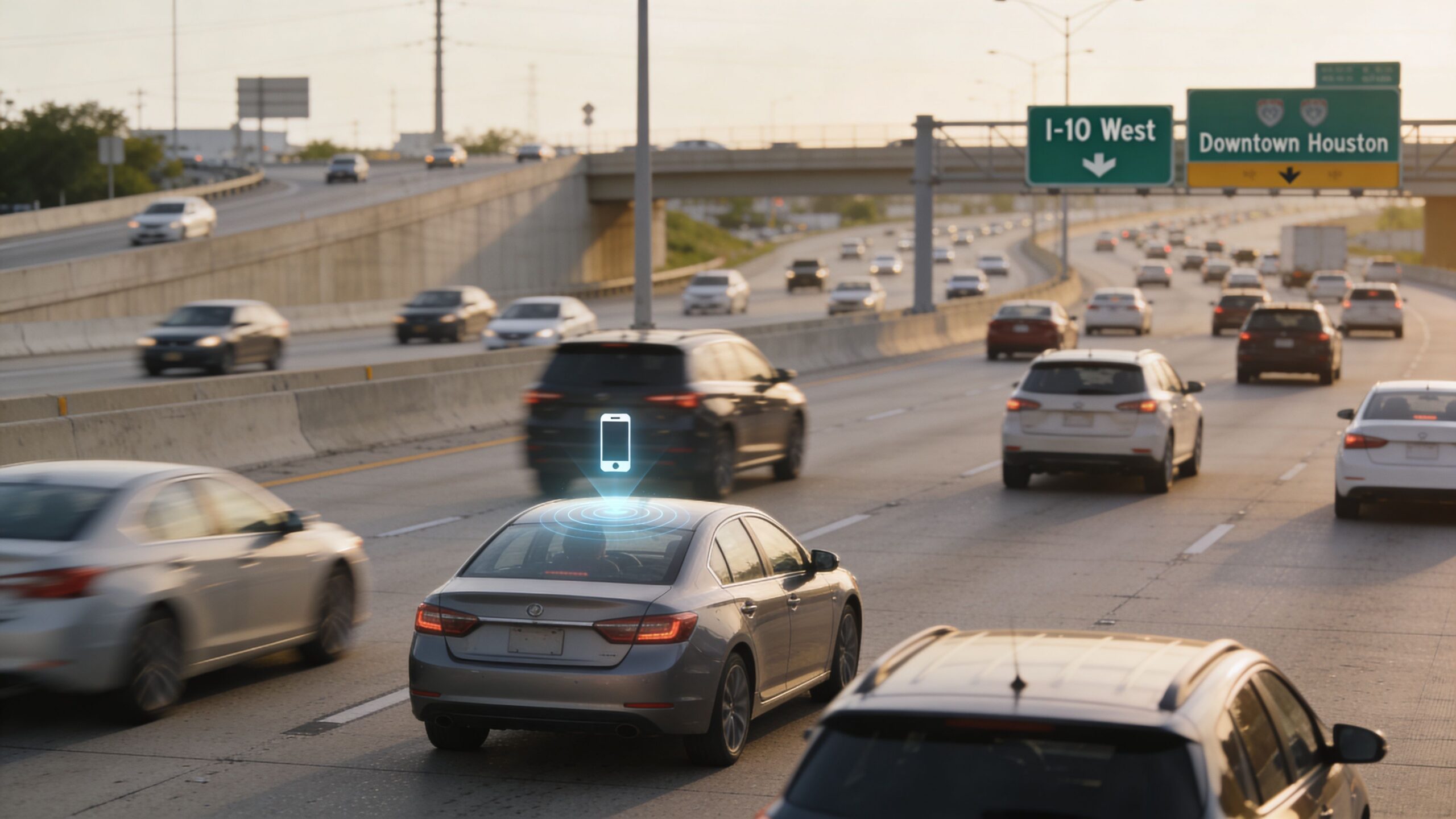
On Texas roads, the same patterns show up again and again. A driver checks a phone on I-10. Someone runs a red light in Austin. A pickup makes a sudden lane change without enough room. A tired rideshare driver brakes too late in stop-and-go traffic. A commercial truck swings wide and traps a smaller car beside it.
What negligence looks like in the real world
In legal terms, many crashes happen because of negligence. In plain English, that means someone failed to use reasonable care.
Common examples include:
- Distracted driving. Texting, looking at GPS directions too long, eating, or reaching for something on the seat.
- Speeding. Driving too fast for traffic, weather, or road conditions.
- Drunk or impaired driving. Reduced judgment and slower reaction times often turn ordinary traffic situations into severe wrecks.
- Unsafe lane changes. Cutting across traffic without checking blind spots or signaling.
- Following too closely. Rear-end crashes often start when a driver leaves too little space to stop.
- Failure to yield. This happens often at intersections, left turns, and merge areas.
- Vehicle maintenance problems. Worn brakes, bad tires, or fluid leaks can make a driver lose control. If you’re wondering what mechanical warning signs matter, this guide on signs of brake fluid issues gives a useful plain-English overview.
For a broader look at contributing factors, this page on common causes of car accidents in Texas is helpful.
Why some crash types are so severe
Not all collisions hit the body the same way. The angle of impact matters.
A rear-end crash often throws the head and neck back and forward suddenly. A head-on collision forces energy into the front of both vehicles. A side-impact crash, often called a T-bone, can be especially dangerous because the side of a vehicle offers less space between the person inside and the point of impact.
According to this explanation of collision physics and momentum, a car collision is governed by the conservation of momentum, which means the combined momentum before and after impact is equal. That principle helps explain why a side-impact crash can be so devastating. The force has less structure to travel through before reaching the occupant.
In a T-bone crash at a Texas intersection, the vehicle doesn’t “soak up” force the same way it might in a straight front-end impact. The person nearest the hit often takes the worst of it.
Texas examples that make this easier to understand
A few everyday examples show how these causes turn into claims:
| Texas scenario | What likely caused it | Why it matters legally |
|---|---|---|
| A driver rear-ends you on a Houston freeway | Following too closely or distraction | The driver may be liable for failing to stop safely |
| A pickup hits the side of your SUV at a Dallas light | Running a red light or failure to yield | Intersection evidence often helps prove fault |
| A truck drifts into your lane near San Antonio | Fatigue, distraction, or improper lane change | Company records and driver logs may matter |
| A car loses braking ability in city traffic | Poor maintenance or part failure | Liability may involve the driver, owner, or another party |
This is why cause matters. It shapes the evidence, the insurance fight, and the value of the case.
The Hidden and Visible Injuries After an Accident
A crash injury doesn’t have to look dramatic to be serious. That confuses a lot of people.
You might leave the scene walking and talking, then wake up the next morning barely able to turn your neck. You might have no cuts at all, but still suffer a concussion, a back injury, or internal trauma. Many victims worry that if they didn’t go through the windshield or leave in an ambulance, their claim won’t count. That’s not how injury law works.
Visible injuries are only part of the story
Some injuries are easy to identify right away. Broken bones, deep bruising, burns, lacerations, and obvious swelling usually get immediate attention.
Others are slower and more deceptive. These often include:
- Whiplash and soft tissue injuries
- Concussions and traumatic brain injuries
- Back injuries, including disc problems
- Internal bleeding or organ damage
- Joint injuries in the shoulders, knees, or hips
According to this explanation of vehicle crumple zones and crash forces, modern vehicles use about 50 centimeters of crushable space to absorb collision energy. That controlled deformation slows deceleration to a level the human body can tolerate. When that system fails or is overwhelmed, occupants can suffer severe internal injuries even if there’s little visible damage outside.
Why a “minor” crash can still hurt you
Here’s where people get tripped up. They look at the bumper and think, “That doesn’t seem bad.”
But your body is not a bumper. Your muscles, discs, brain, and internal organs respond to sudden motion very differently than steel and plastic do. A crash can jolt the body hard enough to create pain that appears hours or days later.
That’s why early medical care matters. It protects your health first, and it also creates records that connect your symptoms to the crash.
A useful outside resource is MedAmerica's advice on car accident injuries, especially if you’re trying to understand delayed symptoms in plain language.
Don’t measure your injury by how damaged the car looks. Measure it by how your body feels, functions, and heals.
Emotional trauma is a real injury
A car crash can also injure your nervous system and mental health. Some people become afraid to drive. Others replay the impact in their minds, avoid highways, lose sleep, or feel panic when they hear brakes screech.
Those symptoms are not weakness. They are part of trauma.
In a personal injury claim, emotional distress can matter alongside physical pain, especially when it affects sleep, work, relationships, or daily life. That’s why it helps to keep a journal, tell your doctor about mood changes, and seek counseling if you’re struggling after the wreck.
What to watch for in the first days
If you were in a crash, seek medical attention if you notice any of the following:
- Headaches or dizziness that continue or worsen
- Neck or back stiffness that limits movement
- Numbness or tingling in the arms, hands, legs, or feet
- Abdominal pain or unusual bruising
- Sleep problems, nightmares, or anxiety after the event
These symptoms can become important both medically and legally. The sooner they’re evaluated, the easier it is to protect yourself.
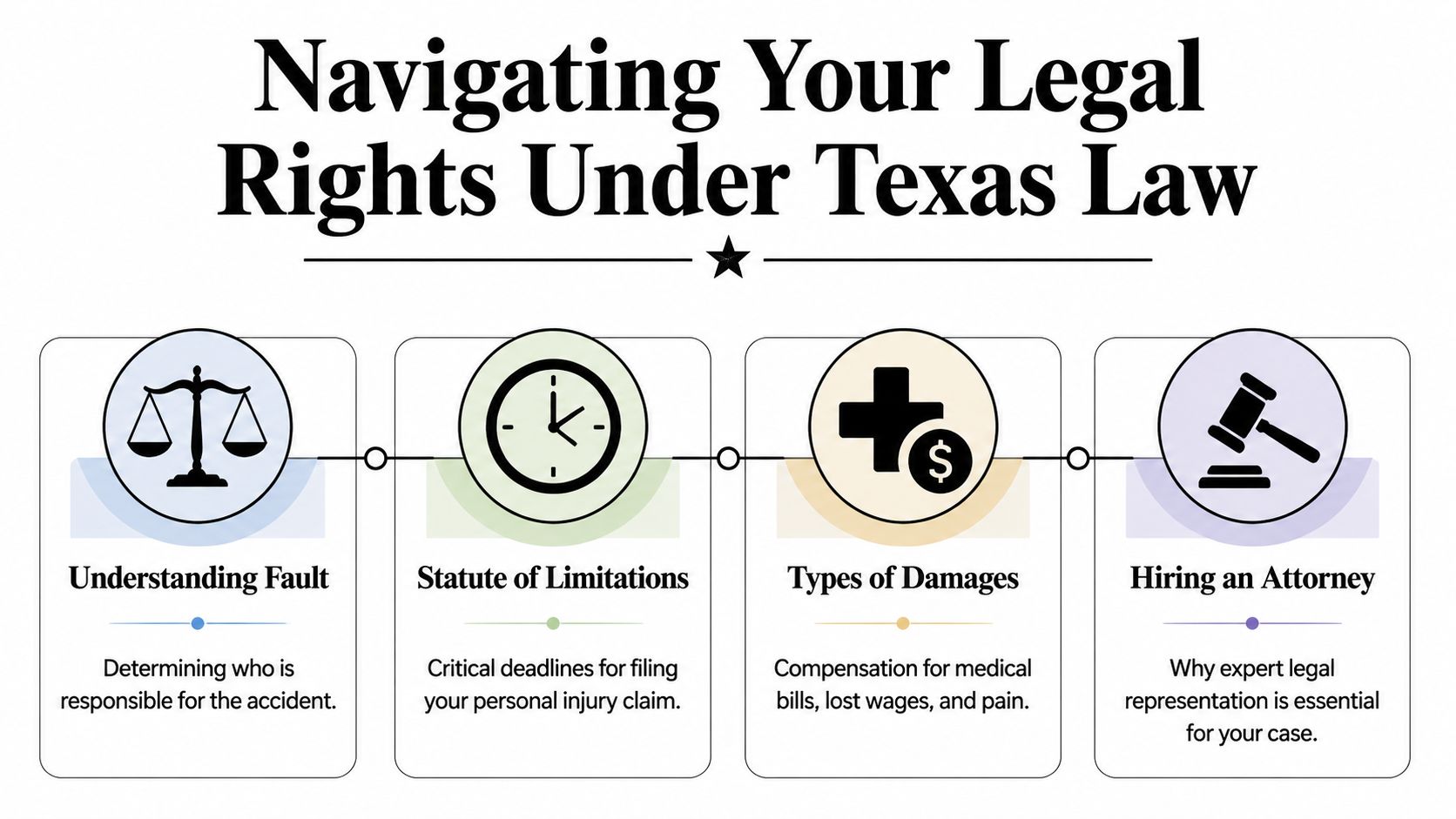
Navigating Your Legal Rights Under Texas Law
Knowing what happened in a crash is one thing. Knowing what Texas law allows you to do about it is another.
If someone else caused the wreck, you may have the right to bring a personal injury claim. If a loved one died, your family may have the right to pursue a wrongful death case. Texas law gives you tools, but you need to understand the basic rules before you rely on an insurance company to explain them for you.
According to the National Safety Council’s historical motor-vehicle fatality data, 44,762 people died in motor-vehicle crashes in the U.S. in 2023, with a rate of 13.4 deaths per 100,000 people. Those numbers show why accountability matters. Civil claims don’t just seek compensation. They also help enforce basic safety rules on the road.
For a focused overview of the claims process, you can also review motor vehicle accident claims in Texas.
Negligence means someone failed to use reasonable care
Most car crash cases begin with negligence. You must show that another person had a duty to act carefully, failed to do so, and caused your injuries.
A few examples make this easier:
- A driver texts and rear-ends you at a red light.
- A drunk driver crosses the center line.
- A truck driver changes lanes without checking blind spots.
- A company vehicle isn’t maintained properly and causes a preventable wreck.
In each example, the legal issue is not that a crash happened. The issue is that the crash happened because someone acted carelessly.
Texas uses a comparative responsibility rule
Texas follows a rule often called modified comparative responsibility. Many people know it as the 51% bar.
Think of fault like a scale. If the other driver is mostly responsible, you can still recover damages even if you were partly at fault. But if you are found more responsible than the other side, you can’t recover damages from them.
This matters in real cases. Suppose a driver in Houston made an unsafe lane change, but the insurance company argues you were also speeding. They may try to assign part of the blame to reduce what they have to pay. That doesn’t automatically defeat your case, but it does mean evidence matters a lot.
Insurance companies often fight over percentages of fault because every point can affect what they owe.
What damages can you recover
A Texas claim is about more than vehicle repair. The law may allow recovery for several types of losses.
Economic damages
These are the direct financial losses tied to the crash, such as:
- Medical bills
- Future medical care
- Lost wages
- Lost earning ability
- Property damage
- Out-of-pocket costs related to treatment
Non-economic damages
These cover human losses that don’t come with a simple receipt:
- Physical pain
- Mental anguish
- Emotional distress
- Physical impairment
- Loss of enjoyment of life
- Disfigurement in serious cases
In wrongful death cases, surviving family members may also be able to seek damages related to the loss of their loved one’s support, companionship, and care.
How long do you have to file a claim in Texas
Texas has a statute of limitations, which is the legal deadline to file a lawsuit. In many Texas personal injury and wrongful death cases, that deadline is two years from the date of the injury or death.
That sounds like a long time, but it moves fast. Medical treatment takes time. Witnesses become harder to find. Video footage disappears. Vehicles get repaired or totaled. If a government entity is involved, notice rules may be even shorter.
That’s why waiting can hurt a strong case.
What if you share some blame
This is one of the most common worries people have. Maybe you braked suddenly. Maybe you were driving a little over the speed limit. Maybe you didn’t see the other driver until the last second.
Those facts do not automatically erase your rights. Texas law allows injured people to pursue claims even when fault is disputed. The key question is how responsibility is divided and what the evidence shows.
That’s also why statements made in the first days after a wreck matter so much. A rushed apology or a poorly worded recorded statement can be twisted into an argument that you caused more of the crash than you did.
Your Step-by-Step Action Plan After a Crash
The first hours after a wreck are chaotic. You may be shaken up, angry, embarrassed, or focused only on getting home. That’s exactly when small decisions can have a big effect on both your health and your case.

If you want a more detailed companion guide, review what to do after a car accident in Texas.
Step one and step two matter most
Start with safety. Then start preserving proof.
Get to a safer position if you can
If the vehicles can be moved safely, get out of active traffic. Turn on hazard lights. If someone appears seriously injured, don’t move them unless there’s immediate danger.Call 911 and ask for police and medical help
A police report can become a key piece of evidence later. If paramedics evaluate you, that also creates early medical documentation.Exchange basic information
Get names, contact details, insurance information, license plate numbers, and vehicle descriptions. If there are witnesses, ask for their contact information too.
Build your evidence before it disappears
A crash scene changes quickly. Tow trucks arrive. Drivers leave. Rain falls. Traffic moves.
Use your phone to document:
- Vehicle damage from several angles
- The roadway, including lanes, skid marks, debris, and traffic signs
- Visible injuries
- The other vehicle and license plate
- The surrounding area, especially at intersections or merge points
If you’re able, write down what happened while it’s fresh. Include the time, location, weather, what direction each vehicle was traveling, and anything the other driver said.
A simple note typed into your phone right after the crash can become important months later when memories fade.
Get medical care even if you think you’re okay
This step protects both your health and your legal claim. Many crash injuries don’t fully show themselves right away.
That includes emotional harm too. According to this discussion of emotional trauma after motor vehicle accidents, up to 30% of motor vehicle accident victims develop PTSD. The same source stresses the importance of psychological evaluation and documenting anxiety, nightmares, or fear of driving.
Tell your doctor everything you feel, not just the obvious pain. Mention headaches, dizziness, back soreness, numbness, sleep problems, panic, and mood changes.
A short video can also help you think through these immediate next steps:
Be careful with insurance adjusters
Report the crash to your own insurer promptly. Stick to the facts. Don’t guess, speculate, or downplay your injuries.
If the other driver’s insurance company calls, be cautious. You don’t have to let an adjuster rush you into a recorded statement while you’re still in pain and still learning what your injuries really are. Early settlement offers often come before the full cost of the crash is known.
Start one recovery file
Create one place for everything related to the wreck. A folder, binder, or phone note system works.
Include:
- Medical records and bills
- Prescription receipts
- Repair estimates
- Work absence records
- Photos and videos
- A symptom journal, including pain levels and emotional struggles
This file helps you stay organized and gives your attorney a much clearer picture of your damages.
How a Texas Car Accident Lawyer Protects Your Recovery
A crash claim is not just a stack of forms. It is the story of what happened, who is legally responsible, how badly you were hurt, and what it will take to put your life back together.
Many people know they should report the wreck. Far fewer know how to prove a case when the other driver denies fault, an insurer questions medical treatment, or a commercial vehicle crash leaves lasting financial damage. A lawyer’s job is to turn a confusing event into a clear, supported claim under Texas law.
A lawyer builds the case from the ground up
Insurance companies often start with a narrow file. They may rely on the police report, a few photos, and limited statements. That can miss important facts.
A Texas car accident lawyer looks deeper by:
- Getting witness statements before memories fade
- Reviewing scene photos, dashcam video, or nearby surveillance footage
- Studying vehicle damage to show how the impact happened
- Checking maintenance records in commercial vehicle cases
- Identifying every person or company that may share legal responsibility
That last point matters more than many people realize. In a crash involving a delivery van, company truck, or work vehicle, the claim may involve more than the driver. It can also involve an employer, a vehicle owner, a contractor, or another business connected to the trip.
A lawyer handles insurance pressure with a plan
Insurance adjusters are trained to protect the company’s money. They may push for a quick statement, argue that your injuries were preexisting, or claim you were partly at fault. In Texas, that matters because your compensation can be reduced by your share of fault, and barred if you are found more than 50 percent responsible.
A lawyer works to keep the claim from being shaped by those early tactics.
| Insurance tactic | Why it hurts your claim | How a lawyer responds |
|---|---|---|
| Quick settlement offer | It may leave out future treatment, missed income, or long-term pain | Reviews the full loss before any settlement decision |
| Recorded statement request | A stressed or injured person may guess, miss details, or say something that gets used out of context | Prepares you, limits unnecessary exposure, or speaks for you when appropriate |
| Disputing medical treatment | The insurer may argue care was unrelated or too extensive | Ties the records, diagnosis, and crash evidence together |
| Blame shifting | The insurer may try to increase your percentage of fault | Uses photos, witness accounts, crash facts, and expert input to challenge unfair blame |
A good lawyer does more than argue. A good lawyer organizes proof so the claim makes sense from start to finish.
A lawyer values the full harm, not just the first bills
Many crash victims look at the emergency room bill and assume that is what the case is about. Texas law allows a broader look.
A claim can include medical care, lost wages, reduced earning ability, physical pain, mental anguish, physical impairment, and damage to daily life. In a serious case, the largest losses may come months later, after surgery, therapy, work restrictions, or permanent limitations become clear.
That is why timing matters. Settling too early is like pricing a house before you know the foundation is cracked. Once a case ends, you usually do not get to reopen it because treatment lasted longer than expected.
This same approach applies in the hardest cases, including catastrophic injuries, fatal crashes, and collisions involving large commercial vehicles. The legal issues may differ, but the goal is the same. Show the full human and financial cost with evidence that holds up.
A strong claim does not stop at proving a collision occurred. It shows what the collision changed in your body, your work, and your everyday life.
A lawyer prepares the case as if it may need court
Many Texas car accident cases settle without a trial. Even so, fair settlements often come from serious preparation.
If the insurer knows your lawyer is ready to file suit, question witnesses under oath, work with medical or crash experts, and present the case to a jury, the settlement discussion usually changes. Claims involving disputed liability, trucking companies, severe injuries, uninsured drivers, and wrongful death often require that level of preparation.
Preparation also protects you from missing deadlines. Texas has a statute of limitations for injury claims, and waiting too long can destroy an otherwise valid case. A lawyer tracks those deadlines while also gathering records, reviewing insurance coverage, and building the evidence needed to support recovery.
A lawyer gives structure to a hard season
After a wreck, people are often trying to heal, keep up with appointments, repair a car, answer insurer calls, and figure out how bills will be paid. Legal help adds order to that chaos.
Your lawyer can collect records, communicate with adjusters, calculate damages, watch for Texas fault issues, and keep the case moving while you focus on treatment and stability at home. Many Texas injury lawyers handle these cases on a contingency fee, which means the attorney’s fee comes from the recovery rather than an upfront payment.
That arrangement matters for families already feeling the financial shock of a crash. It gives injured Texans a way to protect their rights without taking on another immediate bill.
Frequently Asked Questions About Texas Car Crash Claims
What if the other driver has no insurance or not enough insurance
This issue catches many Texas drivers off guard. The crash may be over, but the money question starts right away. Who pays for medical care, lost income, and other losses if the at fault driver has little coverage or none at all?
Your own policy may still provide a path to recovery. Uninsured and underinsured motorist coverage can step in when the other driver cannot fully cover the harm they caused. The hard part is that your insurer may still examine the claim closely, ask for records, and dispute the value of your losses. A lawyer can review the policy, explain what coverage applies, and press the insurer to handle the claim fairly.
How much is my car accident claim worth
A car crash claim is not priced like a repair estimate. It is closer to adding up every way the collision changed your health, your work, your finances, and your daily routine.
The value usually depends on several facts. How serious are the injuries? What treatment did you need, and what care will you need later? How much work did you miss? Did the crash leave lasting pain, physical limits, scarring, or other long-term effects? Strong evidence on fault also matters, especially in Texas, where your compensation can be reduced if you share part of the blame.
That is why two crashes that look similar on the roadside can lead to very different claims.
Do I have to go to court
Many Texas car crash claims settle without a trial. Even so, court is part of the actual situation, not just a remote possibility. If the insurance company refuses to accept clear evidence, minimizes the injury, or tries to shift too much blame onto you, filing suit may be the step that protects the case.
Texas deadlines matter here. Waiting too long can block your claim, even if your injuries are serious. Court also does not mean you will end up before a jury. In many cases, the lawsuit pushes the insurer to take the claim seriously and opens the door to a better settlement discussion.
If you were hurt in a wreck and have questions about fault, insurance, or deadlines, speak with a Texas personal injury lawyer as soon as you can. Clear legal advice early on can help you protect evidence, avoid costly mistakes, and make informed decisions about your recovery.