A serious accident can change your life in seconds. One moment you're stopped at a light on a Houston freeway or easing through traffic in Dallas. The next, you hear screeching tires, feel the impact, and your body jolts forward before you even understand what happened.
That shock is real. So is the confusion that follows. You're hurt, your car may be damaged, and almost everyone around you seems to assume the same thing: the rear driver is always at fault.
Often, that's true. But not always.
Rear-end crashes are common, and they matter. According to NHTSA rear-end collision data summarized here, rear-end collisions are the most common type of motor vehicle accident in the United States, accounting for nearly 29% of all reported crashes. If you're searching for answers about rear end collision who is at fault, you're asking the right question.
Texas law starts with a general rule, then looks closely at the facts. A driver who hits another vehicle from behind may be presumed careless, but that presumption can be challenged with evidence. Sudden stops, broken brake lights, unsafe lane changes, and chain-reaction wrecks can all change the picture.
If you've been injured, you need clarity, not guesswork. You also need to know what to do next to protect your health, your claim, and your future.
A Serious Accident Can Change Your Life in Seconds
A rear-end crash doesn't have to happen at high speed to turn your day upside down. I often talk with people who say the same thing after a wreck: "It happened so fast." That's especially true when traffic is heavy and you barely have time to react.
The moment after impact
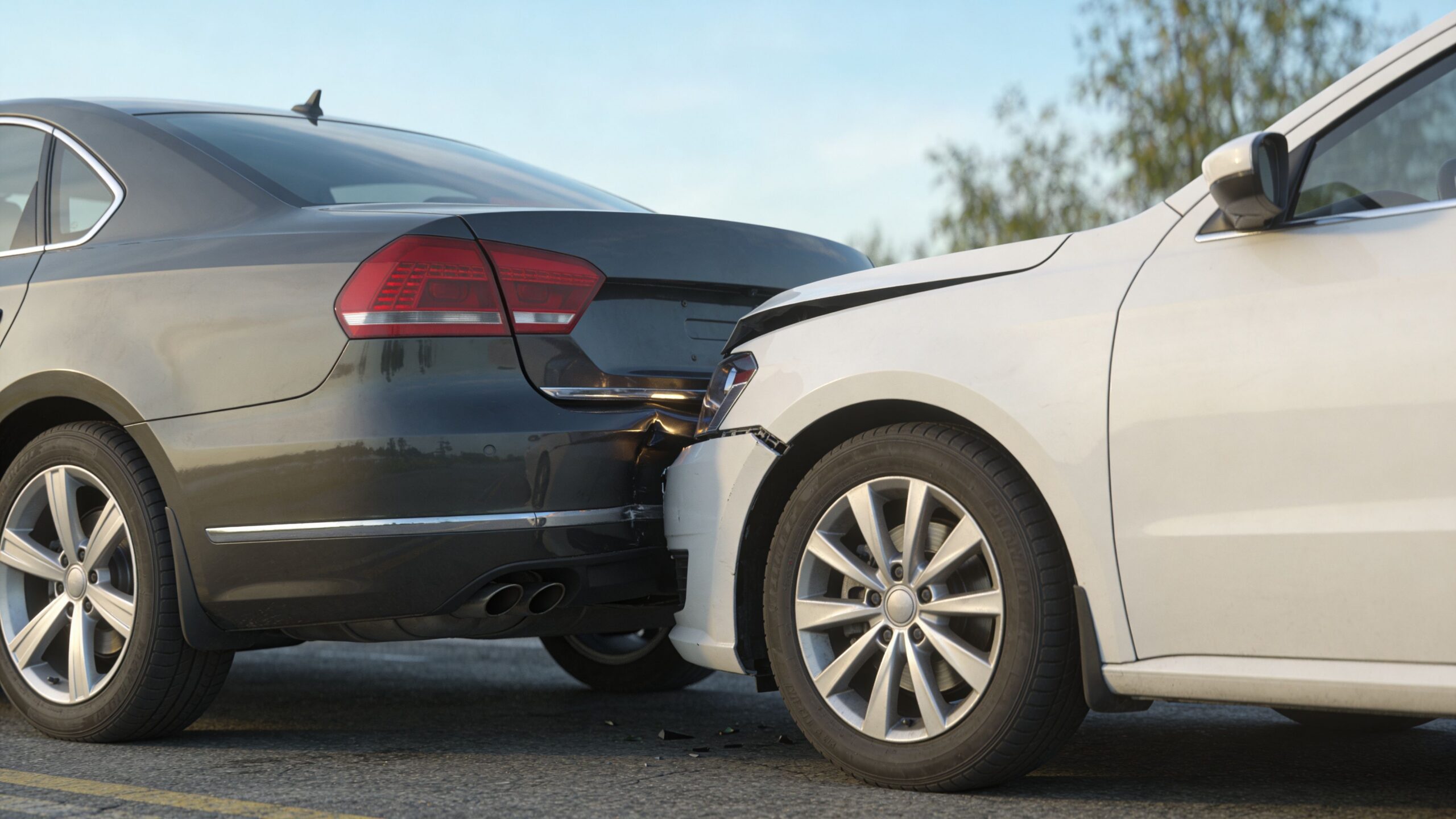
After a Houston freeway crash, many people feel a mix of adrenaline and uncertainty. Your neck may hurt. Your hands may shake. The other driver may start talking right away about blame, insurance, or what "really happened."
That early confusion causes problems. People apologize out of politeness. They say they're fine when they aren't. They assume fault before anyone has looked at the vehicles, the road, or the sequence of events.
Practical rule: Right after a crash, focus on safety and medical care first. Fault should be based on evidence, not on what someone says in the first few minutes.
Why this question matters so much
The answer to rear end collision who is at fault affects more than the police report. It can shape your insurance claim, your ability to recover compensation, and how much pressure the insurer puts on you later.
For some people, the issue seems simple. If you were sitting at a red light and another driver slammed into you, fault may look obvious. But many rear-end crashes aren't that clean. A driver may cut into your lane and stop abruptly. A vehicle may have brake light problems. A pileup may begin with one impact and then involve several others.
Texas law can account for those details. That's why it's important not to accept a one-line answer when the facts are more complicated.
You're not alone in this
A lot of injured drivers and passengers feel isolated after a crash. They worry about missing work, dealing with pain, or paying for treatment before the insurance company has accepted responsibility.
You don't have to sort it all out on your own. A clear understanding of fault is often the first step toward regaining control.
The Texas Presumption of Negligence in Rear-End Wrecks
A rear-end crash claim in Texas often starts from a simple idea. The driver in back usually had the last clear chance to avoid the impact.
That starting point matters, but it is only a starting point.
In Texas, insurers, police officers, and juries often begin with the presumption that the following driver was negligent. In everyday terms, that means the rear driver is usually assumed to have followed too closely, reacted too slowly, or failed to control their vehicle.
Negligence is just a legal way of saying a driver failed to act with reasonable care. On the road, reasonable care includes ordinary habits that prevent predictable crashes:
- leaving enough distance to stop safely
- watching traffic instead of a phone, dashboard, or other distraction
- adjusting speed for rain, congestion, or sudden slowdowns
- expecting normal traffic changes, such as brake lights, red lights, and backed-up lanes
A rear-end collision often signals that one or more of those duties was missed. That is why the rear driver often begins the claim on the defensive.
A helpful comparison is a grocery cart rolling down an aisle. The person pushing from behind has the better view of the gap closing and the better chance to slow down before contact. Traffic works in a similar way. The following driver is usually expected to leave enough room for the ordinary stops and slowdowns that happen every day.
Still, the law does not treat rear-end damage like an automatic guilty stamp. The point of impact tells you where the vehicles touched. It does not always tell you why they touched.
That distinction confuses many injured drivers.
For example, a police report may show front bumper damage to one vehicle and rear bumper damage to the other. That supports the usual presumption, but it does not rule out other facts. The lead vehicle may have cut into the lane moments earlier. Its brake lights may not have worked. A chain-reaction crash may have pushed the rear driver forward without enough time to avoid contact.
Here is the practical baseline:
| Starting question | Usual Texas answer |
|---|---|
| Who is presumed at fault in a rear-end crash? | The following driver |
| Why? | Texas drivers must keep a safe distance, pay attention, and stop in time for ordinary traffic conditions |
| Is the presumption final? | No. Evidence can shift some or even most fault to the front driver or another party |
As a Texas personal injury lawyer, I often tell clients to treat this presumption like the opening chapter, not the whole book. If the insurance company stops its review at "rear driver hit front driver," it may miss the facts that ultimately decide fault and, later, how much compensation an injured person can recover under Texas's 51% comparative fault rule.
Exceptions When the Front Driver May Be at Fault
The most common mistake people make is assuming that rear-end fault is automatic. Texas cases don't work that way. The rear driver is usually blamed first, but the front driver can share fault or even carry the larger share if their conduct created an unreasonable hazard.
Common scenarios where the lead driver may be at fault
| Action by Lead Driver | Why It Can Create Fault |
|---|---|
| Sudden stop without a valid reason | A driver can't create a danger on purpose or stop unpredictably when traffic conditions don't require it |
| Brake-checking | Intentionally slamming on the brakes to intimidate another driver can support a finding of negligence |
| Broken brake lights | The rear driver may not get proper warning that the vehicle ahead is stopping |
| Unsafe lane change | If a driver cuts into your lane and stops before you have time to react, fault may shift |
| Reversing unexpectedly | A front vehicle that backs into another car can become the primary cause of the impact |
| Failing to signal | Other drivers need warning to adjust speed and position safely |
One reason these exceptions matter is that they happen in real traffic every day. According to this discussion of rear-end fault in Texas, front-driver negligence such as sudden stops or failing to use a signal contributes in 15-20% of cases in Houston-Dallas urban pileups.
A real-world example from Texas traffic
Take a common Houston example. You're moving with traffic on a busy freeway. Another driver darts into your lane with little space, doesn't signal, and then brakes hard because traffic ahead is slowing. Your front bumper hits their rear bumper.
At first glance, it looks like a standard rear-end wreck. But a closer look may show that the lead driver created the emergency by making an unsafe lane change. If a witness saw the move, or a dash cam captured it, the insurer may no longer be able to claim you were entirely responsible.
Why insurers often oversimplify these cases
Insurance adjusters like simple stories. "You hit them from behind" is a simple story. It helps them close files fast and push injured people toward smaller settlements.
That approach ignores how crashes happen. In chain-reaction collisions, for example, one driver may be pushed into another vehicle. In city traffic, a driver may enter a lane too abruptly for the following driver to create a safe cushion. In some cases, the front driver's equipment or conduct becomes a major issue.
If the first version of the story leaves out lane changes, brake lights, witness accounts, or video, it may leave out the truth.
What to look for right away
If you think the front driver's conduct mattered, try to preserve facts that tend to disappear quickly:
- Lighting evidence: Photograph brake lights, turn signals, and rear damage before repairs.
- Road position: Capture where the vehicles stopped, lane markings, and traffic signs.
- Independent witnesses: A neutral bystander can be more persuasive than either driver's account.
- Video sources: Dash cams, nearby businesses, and home security systems may show the sequence.
These exceptions don't guarantee that the rear driver wins the argument. They do mean the case deserves a serious investigation before anyone labels it open-and-shut.
How Texas Comparative Fault Can Affect Your Claim
Texas uses modified comparative fault. That rule matters because fault isn't always all-or-nothing. Two drivers can share responsibility for the same crash, and the percentage assigned to each driver affects compensation.

The 51 percent rule in plain English
Texas allows you to recover damages if you're 51% or less at fault. But your recovery is reduced by your own share of fault. If you're found to be more than 51% responsible, you can't recover damages from the other side.
A simple example helps. If your total damages are $100,000 and you are 20% at fault, your recovery would be reduced to $80,000. That's the practical effect of comparative fault in a rear-end case.
For a fuller breakdown, see this explanation of comparative fault in Texas injury cases.
Why this rule changes settlement strategy
Many people think partial fault means they don't have a case. That's not true. In Texas, a driver can still recover compensation even if they made a mistake, as long as that mistake doesn't push them over the legal bar.
This matters in rear-end claims because insurers often argue shared fault to reduce what they pay. They may say you were following too closely, not paying attention, or driving too fast for conditions. Even a small percentage they assign to you can reduce the value of your claim.
The fight is often about the percentages.
A common example
Suppose a driver in front of you changes lanes abruptly and brakes hard. You hit them, but the evidence also shows you were momentarily distracted. A jury or insurer might decide both drivers contributed.
That doesn't automatically destroy your claim. It changes the math.
A short video can help make this rule easier to understand in practical terms.
Why percentage disputes are so important
Fault percentages affect every stage of a claim. They influence settlement offers, negotiations, and what a case may be worth at trial.
"Partly at fault" does not mean "out of options."
If you've suffered serious harm, that math becomes even more important in claims involving surgery, long-term pain, or permanent limitations. A small shift in fault can mean a major difference in what you receive.
The Critical Evidence Needed to Prove Fault
Rear-end claims are won with evidence, not assumptions. If you want to show what really happened, you need more than a damaged bumper and a quick opinion from an adjuster.
Start building the record immediately
Some of the strongest evidence exists only for a short time. Skid marks fade. vehicles get repaired. Security footage gets deleted. Witnesses forget details.
That means your actions in the hours and days after the wreck can make a real difference.
Here are the most useful categories of proof:
- Police report: This can identify the drivers, location, witnesses, and officer observations.
- Scene photos and video: Capture the road, traffic signs, vehicle positions, damage, debris, and anything unusual.
- Witness statements: A neutral third party can confirm a sudden stop, unsafe lane change, or brake-check.
- Vehicle damage patterns: The point and shape of impact can support or challenge each driver's version.
- Medical records: Treatment records help connect your injuries to the crash.
- Electronic data and expert analysis: In contested cases, lawyers may use reconstruction and vehicle data to establish timing and movement.
If liability is disputed, an accident reconstruction expert witness may help explain how speed, braking, and lane position fit together.
What your photos should actually show
A lot of people take a few quick shots and think they're done. Wider and more deliberate photos are often much more useful.
Try to include:
- Both vehicles from several angles
- Close-ups of taillights and signals
- The full lane area
- Skid marks or lack of skid marks
- Traffic lights, signs, and road conditions
- Visible injuries
Mechanical issues can matter too
Sometimes fault questions overlap with vehicle condition. Was a brake light working. Was there a problem with steering, braking, or another component. Basic maintenance issues can become important if the other side claims a failure contributed to the crash.
If you're trying to understand whether a vehicle problem may have played a role, a plain-language guide to car trouble diagnosis can help you recognize warning signs before or after a collision.
Preserve the vehicles if fault is disputed. Repairs can erase clues that matter later.
What to avoid
Evidence can be damaged by simple mistakes:
- Don't repair the car too quickly if the crash facts are contested.
- Don't delete texts, dashcam files, or photos.
- Don't post guesses on social media about what happened.
- Don't rely on memory alone when details can be documented now.
The stronger your evidence, the harder it is for an insurer to turn the claim into a "he said, she said" argument.
Navigating Insurance Company Tactics After a Crash
Insurance companies move fast after rear-end wrecks, especially when they think they can lock in a simple fault story. Their goal is to resolve claims for as little as possible. Your goal is to protect your health and your legal rights.
The quick-settlement problem
One of the most common tactics is the early offer. It may arrive before you've finished treatment, before you know whether your neck or back pain will improve, and before anyone has fully reviewed fault.
That offer can feel tempting if bills are coming due. But once you settle, you usually can't go back and ask for more later.
Another common tactic is the recorded statement. An adjuster may sound friendly and ask you to "just tell your side." The problem is that casual wording can be used against you. If you say, "I didn't see them stop," the insurer may try to frame that as an admission of inattention.
For practical guidance on these conversations, this page on how to deal with insurance adjusters is worth reviewing.
Why your own policy may matter
Not every at-fault driver has enough insurance. Some have none at all. In Texas, that creates a major gap for injured people unless they carry UM/UIM coverage.
According to this Texas uninsured driver discussion, 13% of Texas drivers are uninsured, and UM claims have reportedly spiked 18% in areas like San Antonio and Austin. In a rear-end wreck, your own uninsured or underinsured motorist coverage can become a key source of recovery.
How UM and UIM claims get complicated
People often assume their own insurer will be easier to deal with. Sometimes that's true. Sometimes it isn't.
Your insurer may still question fault, medical treatment, or the value of your claim. If it argues that you contributed to the wreck, it may try to reduce payment under the same comparative fault rules discussed earlier. That's one reason policy language, crash evidence, and medical records all matter.
Smart ways to protect yourself
After a rear-end collision, keep your communication focused and careful:
- Report the crash promptly: Give basic facts to your insurer.
- Avoid broad recorded statements: Especially before you've reviewed the facts.
- Don't guess: If you don't know speed, distance, or timing, say you don't know.
- Keep every document: Repair estimates, medical bills, letters, emails, and claim numbers all matter.
If the wreck involved a company vehicle, delivery van, or large commercial truck, the insurance issues may be even more layered. In those cases, injured people often look for a Houston car accident attorney or a lawyer with experience handling overlapping liability and commercial coverage issues.
What Compensation Can You Recover After a Rear-End Collision
A rear-end collision can leave two kinds of damage at once. One shows up on bills, pay stubs, and repair estimates. The other shows up in your body, your routine, and your peace of mind.
Texas law recognizes both.
Economic damages
Economic damages are the losses you can usually measure in dollars with records and documents. They form the financial side of a claim, and they often continue long after the cars are towed away.
These damages may include:
- Medical expenses: Ambulance care, emergency room treatment, imaging, follow-up visits, prescriptions, and rehabilitation
- Future medical care: Ongoing treatment, pain management, injections, surgery, or therapy if symptoms do not resolve
- Lost wages: Income you missed while you were unable to work
- Reduced earning capacity: Losses tied to injuries that limit the type of work you can do or the hours you can handle
- Property damage: Repair costs, total loss value, rental car expenses, and other out-of-pocket vehicle losses
One part of property damage often gets overlooked. A repaired vehicle may still be worth less on the market because it now has a crash history. If that issue applies to your case, this guide on diminished value after an accident explains it well.
Non-economic damages
Non-economic damages cover the human cost of the crash.
They may include:
- Physical pain
- Mental anguish
- Disfigurement
- Physical impairment
- Loss of enjoyment of life
These losses are real even though they do not come with a receipt. A person with lingering neck and back pain may not sleep well, sit comfortably, drive without fear, exercise, or lift a child. A settlement that only counts medical bills misses a large part of the harm.
This is also where fault percentages matter in a very practical way. If the insurance company argues you were partly responsible, your compensation can be reduced by your percentage of fault. If a jury finds you more than 50 percent at fault, Texas law bars recovery altogether. That makes the value of your claim closely tied to the fault evidence discussed earlier, not just the seriousness of your injuries.
When injuries are severe or permanent
Some rear-end crashes cause injuries that change a life for months, years, or permanently. Disc injuries, head trauma, nerve damage, and lasting mobility problems can affect work, family life, and basic daily tasks.
In more serious cases, compensation may also need to account for long-term care, home modifications, future income loss, and the broader effect the injury has on a household. In fatal crashes, surviving family members may have separate legal claims under Texas law.
At The Law Office of Bryan Fagan, PLLC, we often explain it this way. Compensation should reflect the full before-and-after picture. Not just what you paid, but what the collision changed.
What To Do After a Rear-End Accident in Texas
You are stopped at a red light in Houston. A pickup hits you from behind. Your neck feels tight, your hands are shaking, and the other driver is already saying you stopped too suddenly. In the next 30 minutes, what you do can affect both your health and your ability to prove what really happened.
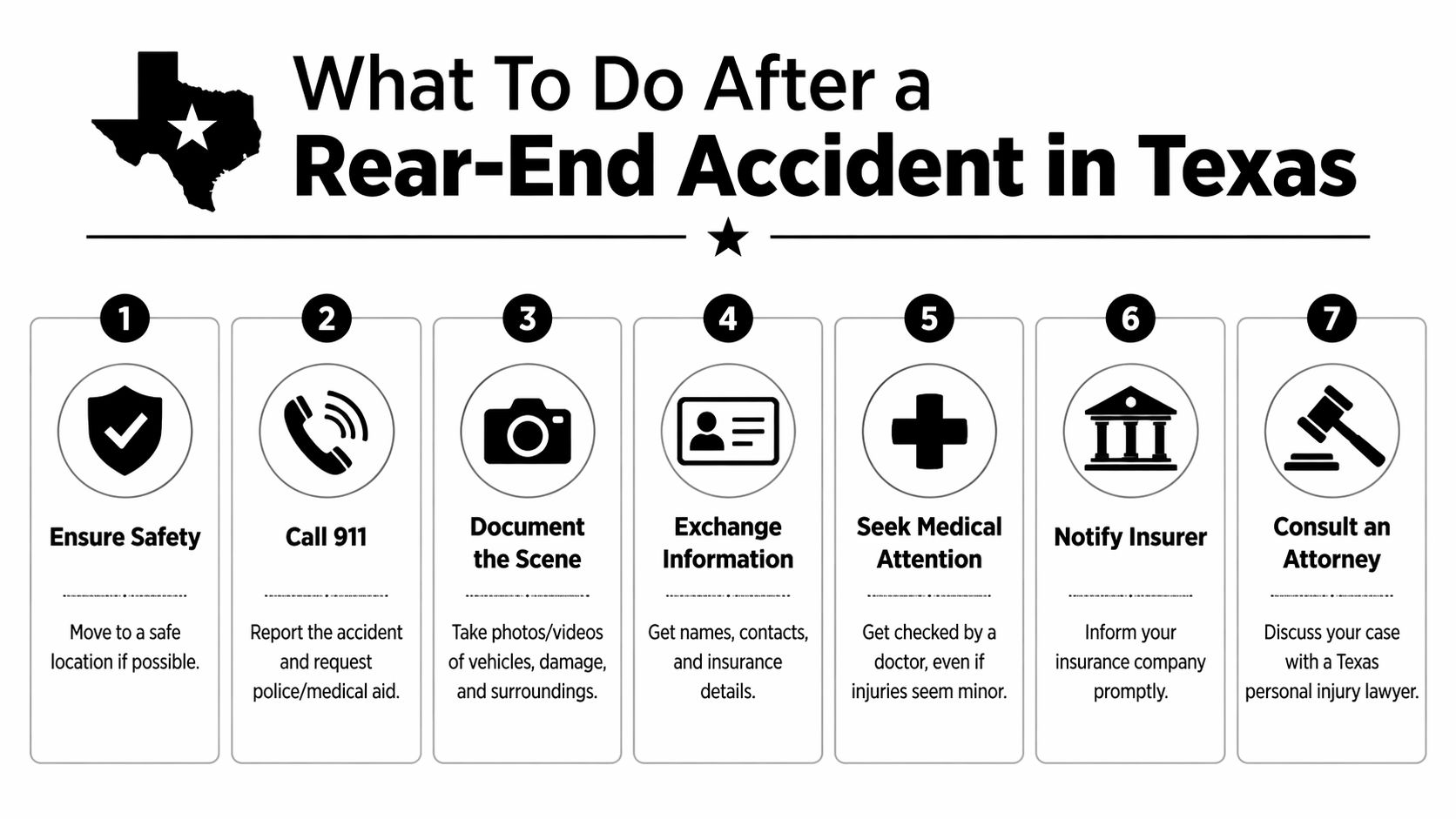
Start with safety and medical care. If the vehicles can be moved and it is safe to do so, get out of traffic. Call 911 and ask for police and EMS if anyone may be hurt.
Rear-end injuries often act like a problem hidden under the hood. The car may still run, but something is wrong. Pain from whiplash, a concussion, or a back injury can show up hours later after adrenaline wears off, so get checked promptly even if you think you are "probably fine."
Next, preserve the scene before it changes. Skid marks fade, cars get towed, and memories shift fast. Use your phone to photograph vehicle positions, damage, license plates, road conditions, traffic signs, debris, and any visible injuries.
Then gather the basic information you will need later. Get the other driver's name, contact information, driver's license number, insurance details, plate number, and vehicle make and model. If any witness saw the crash, ask for a name and phone number. A neutral witness can make a major difference when the other driver claims you caused the wreck.
Choose your words carefully. Be polite and cooperative with police, but do not guess about speed, distance, or fault. Simple statements such as "I was stopped" or "I need medical attention" are safer than speculation. In Texas, fault in a rear-end collision is not always automatic, and insurers often look for any statement they can use to shift part of the blame onto you.
Medical follow-through matters too. If an ER doctor, primary care doctor, or specialist recommends follow-up care, keep those appointments. Gaps in treatment give insurance adjusters an opening to argue that you were not seriously hurt. If your recovery plan includes rehab, this guide on physical therapy after an auto accident explains what that process can look like.
Report the crash to your insurance company soon after the collision, but keep it brief and factual. Date, time, location, vehicles involved, and whether you were injured are usually enough for an initial report. If the other insurer asks for a recorded statement, be careful. Those calls are often designed to pin you down before the full facts or your injuries are clear.
That is one reason legal advice can matter early, especially if the front driver may be blamed for a sudden unsafe stop, broken brake lights, or another exception to the usual rear-driver presumption. Comparative fault works like a percentage discount applied against your claim. If you are found partly responsible, your recovery can be reduced. If you are found more than 50 percent at fault, Texas law bars recovery altogether.
Time limits matter
Texas injury claims usually must be filed within two years of the crash date. Some situations involve shorter deadlines or added notice rules, so waiting can cost you evidence and legal options.
A practical post-crash checklist
| Action | Why it matters |
|---|---|
| Get to safety and call 911 | Reduces the chance of more harm and creates an official response |
| Get medical evaluation quickly | Protects your health and documents injuries early |
| Photograph the scene | Preserves details that may later be disputed |
| Exchange information and gather witnesses | Helps identify the parties and support your version of events |
| Avoid admitting fault or guessing | Limits statements that can be used against you |
| Report the crash to your insurer | Starts the claim process |
| Speak with a lawyer if fault is disputed or injuries are serious | Helps protect evidence and assess how fault percentages may affect recovery |
One practical option is speaking with the Law Office of Bryan Fagan, PLLC, which handles Texas motor vehicle injury claims involving disputed fault, uninsured drivers, serious injury, and wrongful death matters.
The first day after a rear-end wreck often feels chaotic. A simple plan helps. Protect your body, protect the evidence, and protect your words.