Skip to content
A serious accident can change your life in seconds, but you don't have to face it alone.
Maybe you rear-ended someone in Houston traffic. Maybe you turned left in Dallas and the crash happened so fast you still replay it in your mind. Maybe an officer handed you a report, the other driver started blaming you immediately, and now the insurance company is calling. If you're asking, Should I get a lawyer for a car accident that was my fault in Texas? you're probably dealing with more than a legal question. You may be carrying guilt, fear, and a lot of uncertainty.
The first thing I want you to know is this. What feels like “my fault” in the first hour after a wreck is not always the final legal answer. Texas accident cases often involve shared blame, disputed facts, and insurance companies that move quickly.
A Car Accident Can Change Your Life in Seconds
After a crash, people often assume the story is simple. “I made a mistake, so I must be fully responsible.” But real cases usually aren't that clean.
A driver on a San Antonio freeway may believe he caused a wreck because he changed lanes. Later, video shows the other driver was speeding. A parent in Fort Worth may think she caused the collision because she pulled out too soon. Then a witness says the other vehicle ran a light. Those details matter.

Texas roads are busy enough that insurers process claims at a relentless pace. Texas recorded 559,402 traffic accidents in 2023, and a reportable crash happened about every 57 seconds, according to Texas car accident statistics. When companies handle that kind of volume, speed often matters to them more than hearing every side of your story.
Why panic leads people to the wrong conclusion
Right after a wreck, those involved often don't know what facts will matter later. They apologize. They speculate. They give recorded statements before they've had time to think. That's understandable, but it can hurt you.
Practical rule: Your first reaction is human. It is not the same thing as a legal finding of fault.
This confusion shows up in many areas of injury law, not just car crashes. If your family is also trying to understand rights after a loss from another kind of negligence, a resource on a mesothelioma claim after death may help you see how evidence and timing can shape what survivors can pursue.
The real question most people are asking
Often, you're not just asking whether you can recover money. You're asking:
- Will I be blamed for everything
- Will the other driver's insurer deny the claim
- Will my own policy help with medical bills or repairs
- Do I need someone to deal with adjusters before I make things worse
Those are good questions. They're also why legal help can matter even when you believe you made the mistake that started the crash.
Understanding the 51% Fault Rule in Texas
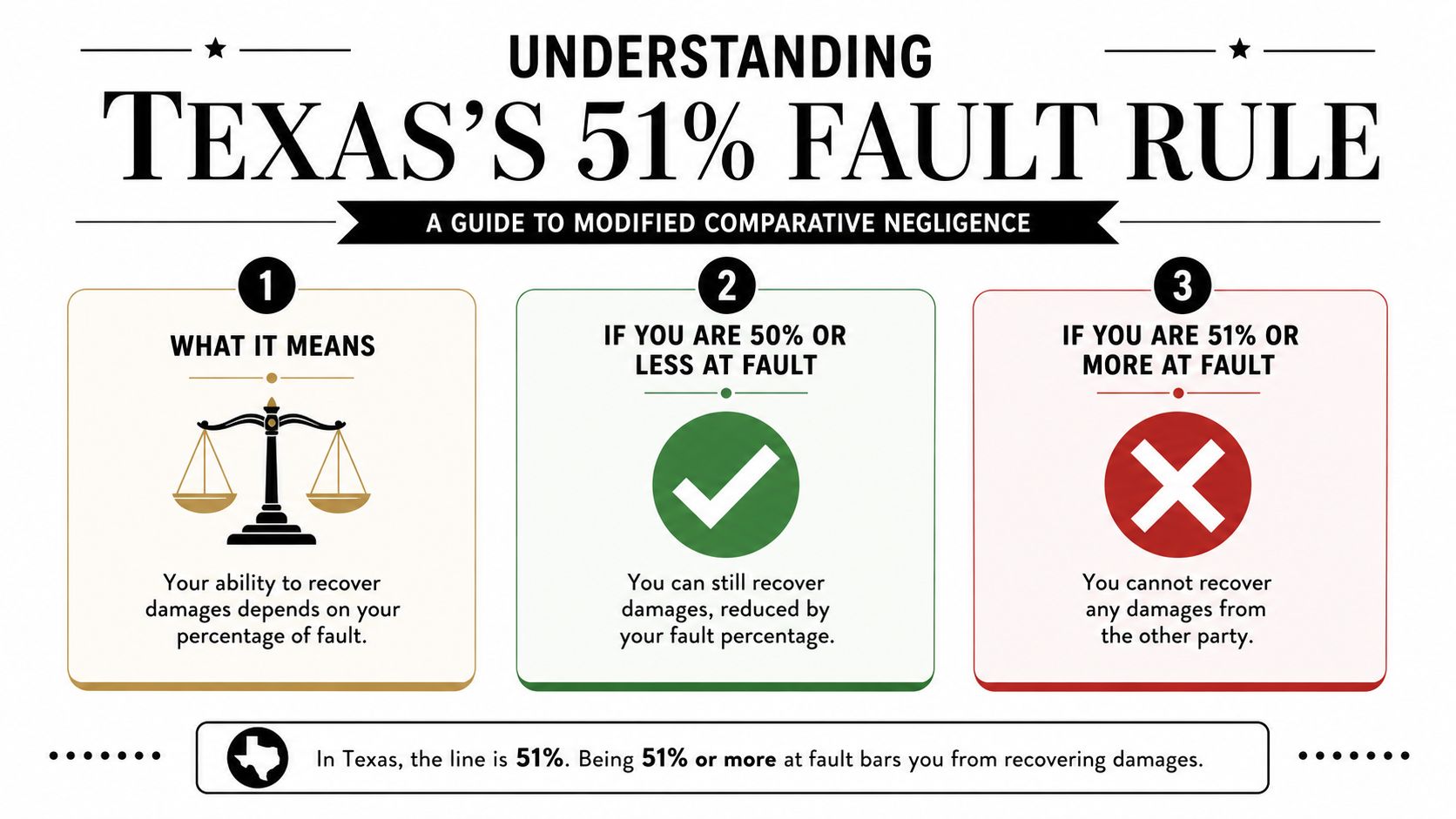
Texas uses modified comparative negligence, also called proportionate responsibility. That phrase sounds technical, but the idea is simple. Fault can be shared.
If two drivers both contributed to a wreck, Texas law allows fault to be divided by percentage. That percentage controls whether an injured person can recover damages from the other side.
What the rule says in plain English
Under Texas Civil Practice & Remedies Code § 33.001, you can recover damages only if you are 50% or less responsible. If you are 51% or more at fault, you recover nothing, as explained in this discussion of Texas's 51% fault rule.
That's why a lawyer may focus so heavily on details that seem minor at first. A single disputed fact can affect the percentage assigned to you.
Think of fault like a pie
A simple way to picture this is a pie chart of blame.
- Half or less of the pie is yours: you may still recover, but your share reduces what you receive.
- More than half is yours: your claim against the other side is barred.
Here's the practical effect using a verified example. A $100,000 claim drops to $60,000 if you are assigned 40% fault, and it drops to $0 if your share crosses the 51% line, as explained in this overview of partially at-fault claims in Texas.
When fault is close, the case often turns on who preserved the better evidence.
A common real-world example
Take a Houston intersection crash. You were speeding. The other driver ran a red light. If both actions contributed, fault might be split.
That doesn't mean you automatically lose. It means someone will argue about percentages. The insurer for the other driver may try to push your share over the line that bars recovery. Your lawyer's job is to push back with evidence.
For a broader explanation of how shared blame works, this page on comparative fault in Texas is a helpful starting point. You can also review Texas Comparative Fault and the 51% Bar Rule for a focused summary of how Chapter 33 reduces or eliminates recovery when fault is shared.
Reasons to Hire a Lawyer Even If You Share Blame
The short answer is yes, you often should. Not because hiring a lawyer means you're denying reality, but because you need someone protecting your side of it.
Many people asking this question aren't trying to avoid responsibility. They're trying to avoid being assigned all the responsibility when that isn't accurate.

A lawyer can challenge an unfair version of the crash
The other side's insurer has one clear goal. Pay as little as possible.
If they can frame the wreck as entirely your fault, they may try to deny the claim, reduce what they owe, or strengthen a claim against you. A lawyer can investigate whether the other driver was distracted, failed to yield, drove too fast for conditions, or contributed in some other way.
That work may include:
- Securing video early: dashcam footage, nearby surveillance, or phone evidence can disappear quickly.
- Locating witnesses: people who saw the wreck may confirm facts that don't appear in the initial report.
- Reviewing the scene: road layout, signage, and visibility often matter more than people expect.
A lawyer also protects you on the defensive side
This is the part many articles miss. If you think the crash was your fault, you may be worried about your own exposure. That concern is valid.
A lawyer's role may be defensive as much as offensive. The goal can be to limit your personal liability, push back on exaggerated claims, and manage communication so you don't accidentally make things worse.
You don't hire a lawyer only to make a claim. You also hire one to keep someone else from defining the whole case for you.
For drivers wondering how soon to get help, this guide on when to contact a lawyer after a Texas accident explains why early action can matter.
Your own insurance may still help
Many drivers think fault means they're on their own. That's not always true.
Texas Department of Insurance guidance explains that your own Personal Injury Protection (PIP), Medical Payments (MedPay), or Collision coverage may help with your injuries or vehicle repairs even if you caused the crash, as noted in Texas insurance guidance on dealing with accident claims.
That matters for practical reasons:
| Coverage issue | Why it matters |
|---|---|
| Your car needs repairs | Collision coverage may be available |
| You have medical bills | PIP or MedPay may help |
| The insurer underpays | A lawyer can challenge the handling of the claim |
If your own insurer denies benefits or delays payment, that's a separate problem from who caused the accident. You may still need legal help to enforce the policy you paid for.
When an Accident Involves Criminal Allegations like a DWI
Some crashes don't stay in the civil lane. They also raise criminal issues.
If the wreck involves suspected DWI, a hit-and-run allegation, or another possible offense, you are dealing with two separate problems at once. One is the civil side, which involves injury claims, property damage, and insurance. The other is the criminal side, which involves the state.
Civil and criminal cases are not the same thing
A civil case asks who should pay for losses. A criminal case asks whether the state believes a law was broken and whether punishment should follow.
That difference matters because people often assume they can talk freely to an insurer and “clear things up.” In a case with criminal exposure, that can be dangerous. Statements made in one setting may create problems in another.
Why immediate legal advice matters
If alcohol, drugs, or leaving the scene is even being discussed, you need legal guidance right away. This is not optional.
A personal injury lawyer handles the civil side. In some situations, you may also need a criminal defense attorney. The key point is coordination. You don't want one statement, one recorded interview, or one rushed apology to damage both parts of the case.
If there is any hint of criminal conduct, stop trying to explain the crash on your own.
If you want a consumer-friendly explanation of how DUI allegations can affect insurance issues, this Florida All Risk Insurance DUI guide offers useful background, even though Texas law and procedures are different.
For Texas readers dealing with an alcohol-related crash, our page on a drunk driving accident claim discusses the civil side of these cases. If you're also facing possible criminal allegations, make sure you tell any lawyer you contact immediately so your response is handled carefully from the start.
What a Texas Car Accident Attorney Actually Does for You
People often picture lawyers arguing in court. Most of the important work happens long before that.
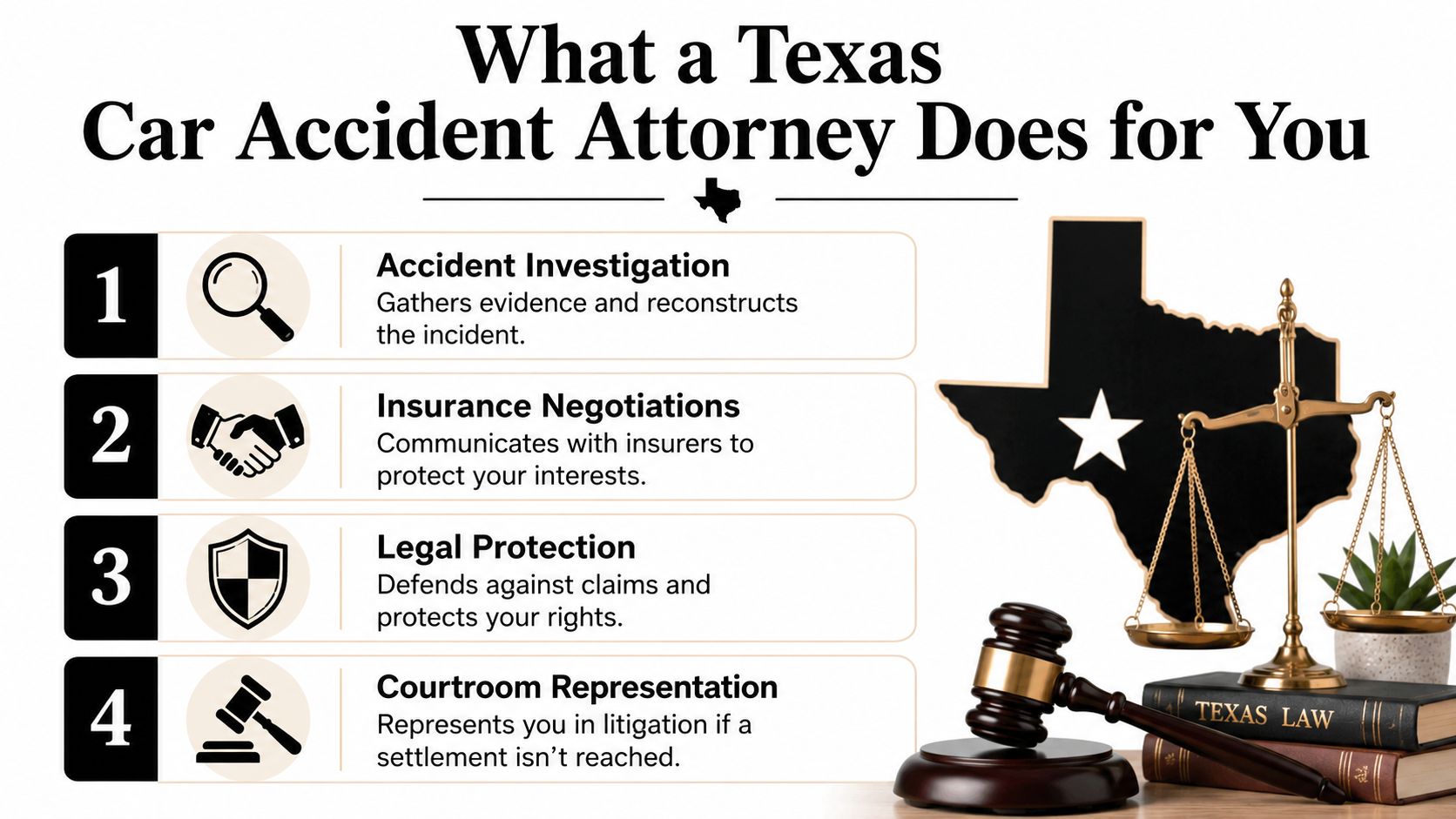
When fault is disputed, a Texas personal injury lawyer builds the record that supports your version of what happened and protects you from careless mistakes during the claims process. In many cases, the job is largely defensive: limit your liability exposure, guard against inaccurate blame allocation, and manage the insurance process, as discussed in guidance on whether to hire a lawyer after a crash you may have caused.
The work usually starts with evidence
A lawyer may begin by collecting the pieces that uncover the true story of the crash.
That can include photos, vehicle damage, witness interviews, dashcam footage, phone records, and the official report. In a more serious case, the attorney may also work with reconstruction professionals to test whether the insurer's version makes sense.
For example, after a Houston freeway crash, the issue may not be just who changed lanes. It may also be whether the other driver was following too closely, driving aggressively, or failed to brake in time.
Your lawyer becomes a buffer
This matters more than commonly understood. Insurance adjusters are trained to ask questions in ways that lock in your answers.
A lawyer can take over those communications, respond to document requests, and help prevent statements that sound harmless but later get used against you. That alone can reduce stress and protect your case.
Here's what that often looks like in practice:
- Handling calls and letters: you don't have to manage every adjuster conversation alone.
- Organizing records: medical bills, repair estimates, photos, and policy documents need to be gathered and presented clearly.
- Evaluating deadlines: Texas injury claims often involve a statute of limitations, and missing it can end your rights to file suit.
What about cost
Many injury lawyers work on a contingency fee in cases where recovery is being pursued, which means the fee is tied to a successful outcome rather than upfront payment. Fee structure depends on the facts of the case and the claims involved, so it's important to ask directly during a consultation.
If you're looking for one option in Texas, the Law Office of Bryan Fagan, PLLC handles motor vehicle accident and serious injury matters and offers free consultations. If your situation includes a passenger vehicle collision, a commercial truck impact, or a fatal crash, you may also want to ask about related services such as a Texas car accident lawyer, a truck crash lawyer Houston families may need after a major wreck, catastrophic injury claims, or a wrongful death lawyer Texas families can contact after losing a loved one.
You Don't Have to Face This Alone. Get a Free Consultation Today.
If you believe you caused a crash, it's easy to assume the outcome is already decided. In Texas, it usually isn't. Fault can be shared. Evidence can change the picture. Insurance companies can get it wrong.
That's why the answer to Should I get a lawyer for a car accident that was my fault in Texas? is often yes, especially if anyone was hurt, fault is disputed, coverage is unclear, or the other side is pushing hard to blame you completely.
A few steps you can take right now
Start with the basics and keep it simple.
- Save what you have: photos, dashcam clips, repair records, names of witnesses, and any messages about the crash.
- Be careful with statements: don't guess, exaggerate, or agree to a recorded statement before getting advice.
- Read your policy: check whether you have collision coverage, PIP, MedPay, or uninsured or underinsured motorist coverage.
- Ask about deadlines: Texas injury claims are subject to filing deadlines, and waiting too long can close important options.
The goal isn't to escape responsibility
The goal is fairness.
If you made a mistake, the law can account for that. But the law also allows you to challenge a false claim that you were entirely to blame. It allows you to seek coverage under your own policy. And if another driver, a road condition, or a vehicle problem contributed, it allows those facts to be part of the case too.
A compassionate lawyer can help you sort through all of that without judgment. Whether you need a Houston car accident attorney, help after a truck collision, guidance on a catastrophic injury claim, or support from a wrongful death lawyer Texas families can trust, getting answers early can make the road ahead much clearer.
If your accident involved a commercial vehicle, ask about truck-specific evidence. If a loved one died, ask about wrongful death and survival claims. If you're hurt badly enough that future care may be an issue, say that clearly in the first call. The more complete the picture, the better the legal advice.
Recovery is possible. Clarity is possible. And you don't have to figure this out by yourself.
If you need answers after a crash, contact Law Office of Bryan Fagan, PLLC for a free consultation. We can help you understand fault, insurance coverage, deadlines, and your next steps under Texas law so you can protect yourself and your family with confidence.