A serious accident can change your life in seconds, but you don't have to face it alone.
If you're reading this after a wreck, you may be hurting, missing work, fielding calls from insurance adjusters, and trying to make sense of what comes next. A lot of people ask the same urgent question: How long after a car accident can I sue in Texas? It's a fair question, and the answer matters more than many understand.
After a Houston freeway crash, for example, a person might spend the first weeks focused on the ER, follow-up appointments, car repairs, and childcare. Legal deadlines can feel far away. They aren't. Texas law gives you only a limited window to act, and some situations have even shorter notice rules that catch families off guard.
This guide is here to give you clear, plain-English answers. You'll learn the general rule, the exceptions that confuse people most, and the practical mistakes that can cost someone the right to recover compensation. If you need immediate next steps after a wreck, this guide on what to do immediately after an accident in Texas is also a helpful place to start.
Your Life Changed in an Instant Now What
The hours after a collision rarely feel organized. One minute you're driving home, taking your kids to school, or heading to work. The next, you're dealing with pain, shock, a damaged vehicle, and a dozen unanswered questions.
Many people don't start out thinking about lawsuits. They think about whether their neck pain will get worse, how they'll pay medical bills, and whether the insurance company is really on their side. That reaction is normal. When your life has been disrupted, legal vocabulary like statute of limitations can sound cold and distant.
Here's what that phrase means in plain language. A statute of limitations is the deadline for filing a lawsuit. If you miss it, the court can refuse to hear your case, even if the other driver was clearly at fault and even if your injuries are serious.
Practical rule: The legal clock starts running long before most people feel ready to deal with a claim.
After a rear-end crash on I-45, for instance, someone may assume they can wait until treatment ends before talking to a lawyer. Another person may spend months trying to settle directly with an insurer, believing that active negotiations protect them. That misunderstanding causes real problems.
Texas personal injury law also involves more than just a deadline. Fault matters. Negligence matters. Comparative responsibility can matter too. If another driver caused the wreck by speeding, texting, running a light, or driving distracted, that may support a claim. But proving what happened gets harder as time passes and evidence fades.
That's why timing and evidence work together. The sooner you understand your timeline, the better you can protect your health, your claim, and your future.
The Two-Year Countdown for Texas Car Accident Claims
The general rule is straightforward. In Texas, the statute of limitations for personal injury claims arising from a car accident is strictly two years from the date the accident occurred, as explained in Texas Civil Practice & Remedies Code § 16.003(a).
Consider it a countdown clock that starts on the day of the crash.
If a collision happens on a Monday in Houston, the legal deadline is measured from that accident date, not from the date your treatment ends, not from the date an insurance adjuster returns your call, and not from the date you decide you're finally ready to take legal action. That two-year deadline generally applies to claims for bodily injuries and vehicle damage.
What filing actually means
A lot of people confuse filing an insurance claim with filing a lawsuit. They are not the same thing.
You may open an insurance claim quickly and still lose your right to sue if no lawsuit is filed before the deadline. Insurance companies know this. Settlement talks can continue for months, but conversations alone don't stop the clock.
If negotiations are still going near the end of the deadline, filing suit may be necessary to preserve your rights.
That's one reason early legal help matters. A Texas personal injury lawyer can track the deadline while also gathering records, interviewing witnesses, and dealing with the insurer.
A real-world Texas example
Say you were injured in a Houston freeway crash during rush hour. The other driver swerved into your lane, your SUV hit the barrier, and you needed ongoing care. The insurer might seem cooperative at first. Then it asks for more documents. Then another review. Then another delay.
If you wait too long because you believe a settlement is coming, you could run out of time. Courts treat this deadline seriously. Missing it can permanently block your claim.
For a plain-language overview of why this deadline matters in most injury cases, The Two-Year Deadline for Texas Injury Claims explains why many Texas lawsuits fall under CPRC 16.003.
Why acting early helps even if two years sounds like enough
Two years can sound like a long time when you're still recovering. In practice, it goes fast.
- Evidence can disappear: Photos get lost, vehicles get repaired, and crash scenes change.
- Witnesses become harder to reach: People move, switch numbers, or forget details.
- Medical records take time to organize: Strong claims depend on clear documentation.
- Fault disputes get sharper over time: The longer a case sits, the more room the defense has to challenge your version of events.
Texas follows a fault-based system. That means the person or party who caused the crash may be responsible for the harm that followed. In many cases, negligence is the core issue. Did someone fail to drive with reasonable care? Did that failure cause your injuries? Those are the questions your claim is built around.
When the Clock Works Differently Important Exceptions to the Rule
The two-year rule is the starting point, not the whole story. Some cases follow a different timeline, and these exceptions are where people often get tripped up.
Wrongful death claims follow a different starting date
When a crash leads to a fatality, the deadline can work differently. A critical exception applies to wrongful death claims, where the deadline is two years from the date of death, not the date of the accident itself, as discussed in this explanation of Texas wrongful death timing rules.
That distinction matters when a loved one survives the crash at first but later dies from accident-related injuries.
A family might be dealing with hospital decisions, grief, and funeral planning. In that situation, the wrongful death timeline is tied to the date of death. If you're dealing with that kind of loss, a wrongful death lawyer Texas families trust can help sort out what claims may exist and which deadline applies.
Minors get special protection
Texas also treats injured children differently in important ways. If the injured person is a minor, the statute may be paused until that person turns eighteen.
That doesn't mean every family should wait. It means the law recognizes that children can't protect their own legal rights the way adults can. Parents still need guidance early because evidence, insurance issues, and liability questions won't wait just because the filing clock may.
The discovery rule is narrow and fact-specific
Some injuries don't show themselves immediately. A person may walk away from a crash thinking they're lucky, only to learn later that they have a serious condition tied to the wreck. In rare situations, Texas may apply what lawyers call the discovery rule, meaning the limitations period may begin when the injury was discovered rather than on the crash date.
This is not something to assume lightly. Courts apply it narrowly. If you rely on it and the court disagrees, the case can still be thrown out.
Delayed symptoms don't automatically create a delayed deadline. The facts have to support that the injury truly was not reasonably discoverable earlier.
Mental incapacity can pause the clock
Texas law may also pause the limitations period for a person who is mentally incapacitated. These cases are very fact-sensitive. Families should get legal advice early rather than guessing whether tolling applies.
Comparative responsibility can still affect the case
A different deadline doesn't erase the need to prove fault. Texas injury claims still turn on negligence and responsibility. If the other side argues you share blame for the crash, that can affect recovery. This is why prompt investigation matters in car wrecks, truck collisions, and catastrophic injury claims.
If your injuries are severe, resources like a Texas Personal Injury Lawyer page can help you understand the kinds of cases that often need broader investigation and long-term damage analysis.
Texas Car Accident Lawsuit Deadlines at a Glance
| Type of Claim | Standard Filing Deadline |
|---|---|
| Personal injury from a car accident | Two years from the date of the accident |
| Property damage from a car accident | Two years from the date of the accident |
| Wrongful death | Two years from the date of death |
| Claim involving an injured minor | The clock may not start until the injured person turns 18 |
| Injury discovered later in rare cases | May begin on the date the injury was discovered |
| Breach of insurance contract claim | Four years from the date of the insurer's alleged breach |
That chart is a useful snapshot, but it's not a substitute for legal advice. Small factual differences can change how a deadline works.
Special Deadlines You Cannot Afford to Miss
Many people assume the only date that matters is the standard lawsuit deadline. That's one of the most dangerous assumptions in Texas injury law.

Government vehicle cases move much faster
If your crash involved a city vehicle, county vehicle, public school transportation, or another government employee, you may face a much shorter notice rule. When a government vehicle or employee is involved in a Texas car accident, victims often must provide written notice of their claim within just 180 days from the accident date to preserve their right to sue, as noted in this discussion of Texas government accident claim notice deadlines.
That catches people off guard because they think, “I have two years.” In a government-related case, waiting can be a serious mistake.
Take a simple example. A driver is hit by a city bus in Houston. The injuries are painful but not immediately life-altering, so the person focuses on treatment and misses work while assuming there's plenty of time to decide what to do next. By the time legal advice is sought, the notice deadline may already be gone.
Why this pitfall is so common
Government claims don't feel different at the crash scene. It's still a wreck. There's still pain, insurance, paperwork, and confusion. But legally, the path can change right away if a public entity is involved.
That's why a general answer to “How long after a car accident can I sue in Texas?” isn't always enough. The better question is, “What deadline applies to my specific case?”
For a closer look at filing windows in Texas injury cases, this guide on how long you have to file an injury claim in Texas gives additional context.
Other complex cases need quick review too
Some collisions involve more than ordinary driver negligence. A truck wreck may involve a commercial carrier, maintenance records, or multiple insurance policies. A catastrophic injury case may raise long-term care issues. In some situations, a defective vehicle part or medical treatment after the crash can complicate the timeline and the legal theories involved.
Those cases deserve immediate attention because they often involve evidence that companies control, not evidence you can easily collect on your own. If your injuries are severe or the crash involved an eighteen-wheeler, a truck crash lawyer Houston families turn to can help identify the right claims before key deadlines are missed.
What You Must Do Now to Protect Your Rights
Knowing the deadline helps. Taking the right steps early protects your case.
Start with the basics. Get proper medical care. Follow your doctor's instructions. Keep records in one place. Save photos, receipts, appointment notes, and anything else connected to the wreck.
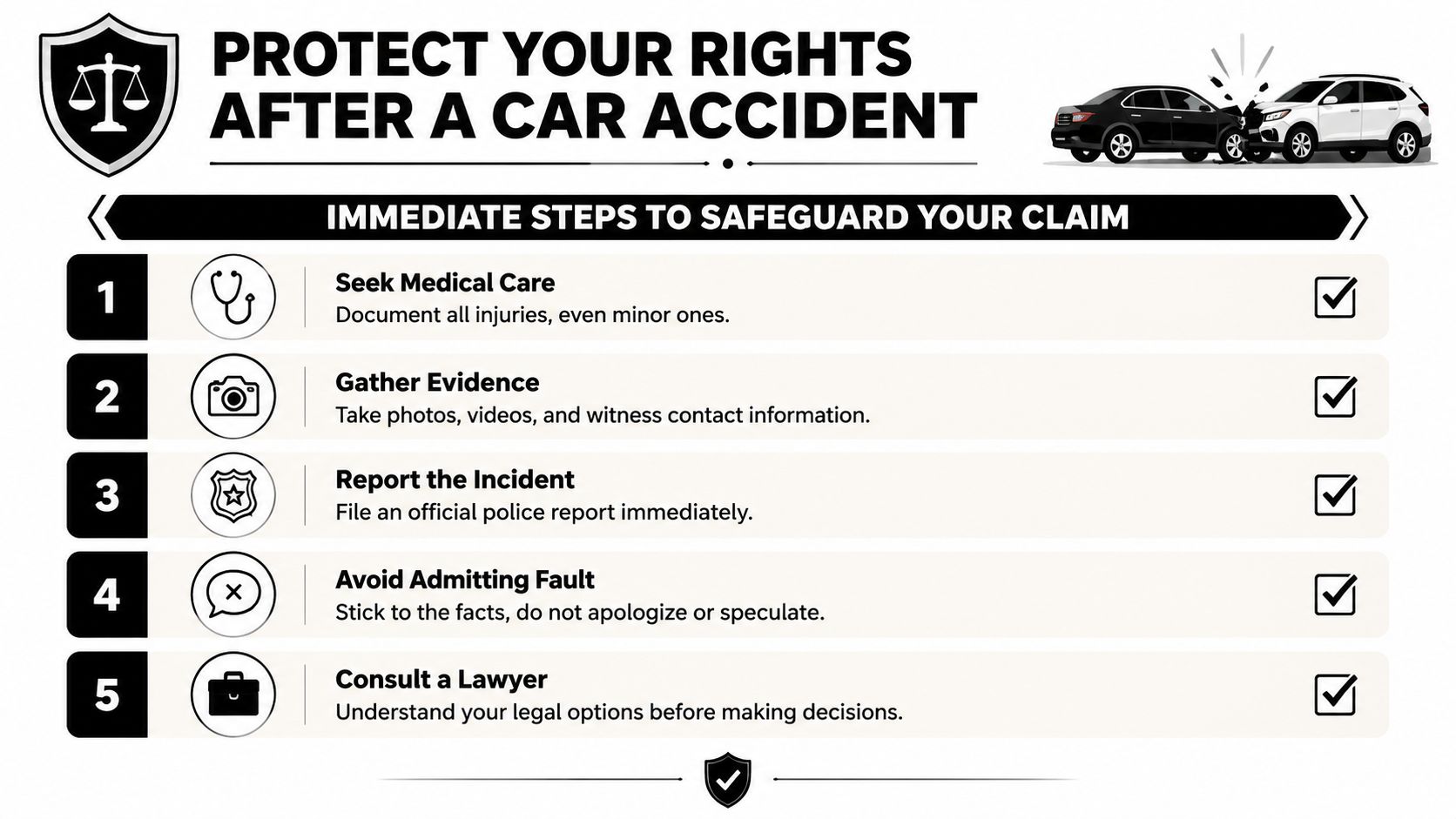
A practical checklist after a Texas crash
Get medical attention early. Some injuries look minor at first. A same-day or prompt medical record can also help connect your symptoms to the collision.
Preserve what you can. Save vehicle photos, road-condition photos, names of witnesses, towing records, and repair estimates. If you have bruising or visible injuries, photograph those changes over time.
Report the crash. An official report often becomes a key piece of the case, especially when drivers tell different stories later.
Be careful with insurance conversations. Victims must notify their insurance company as soon as possible, but must avoid admitting fault or providing recorded statements without legal counsel to prevent jeopardizing the case before the deadline, as explained in this discussion of insurance notice and recorded statement risks after a Texas auto accident.
Talk to a lawyer before signing anything. A release or quick settlement can affect rights you may not fully understand yet.
Fault negligence and comparative responsibility in plain English
Texas uses a fault-based system. If another driver caused the wreck, your claim usually turns on proving that person acted negligently. Negligence means failing to use reasonable care. Speeding through traffic, following too closely, driving while distracted, or ignoring traffic signals are common examples.
Comparative responsibility adds another layer. The other side may argue that you were partly to blame. That doesn't automatically end a case, but it can change how the claim is evaluated. This is one reason people benefit from an early legal review instead of relying on the insurer's version of events.
Keep your statements short and factual. Don't guess. Don't fill in gaps. Don't apologize just to be polite.
Use outside scrutiny wisely
Insurance companies sometimes raise fraud concerns when reviewing claims, especially where injuries are disputed or facts are incomplete. Understanding how investigators approach detecting injury claim fraud can help you see why consistent medical records, honest reporting, and careful documentation matter so much.
If you want a short video summary before making your next move, this may help:
When to call a lawyer
You don't need to wait until things get worse. In fact, it's often better to call sooner.
A Houston car accident attorney can review deadlines, identify whether a government notice rule may apply, handle insurer communications, and help preserve evidence before it disappears. If the crash involved a commercial vehicle, you may also need guidance tied to truck and fleet records. For families facing fatal injuries, wrongful death and catastrophic injury issues may require a different strategy from the start.
You Are Not Alone Get a Free Consultation Today
A crash can leave you feeling isolated. The paperwork keeps coming. The bills don't stop. Meanwhile, you're expected to make good decisions while in pain or while grieving someone you love.
That's a heavy load to carry by yourself.

Clear answers can change the next few months
For many families, the biggest relief comes from finally understanding what applies to their case. Was it a standard car wreck claim? A truck case? A wrongful death claim? Did the crash involve a government vehicle? Is a child's injury involved? For minors, the clock on the two-year statute of limitations does not start until the injured person turns 18 years old, potentially extending the filing window significantly, as explained in this overview of Texas injury claims involving minors.
Those details matter. They can shape everything that follows.
Don't wait for certainty before asking for help
A lot of people delay because they think they need every answer before speaking with a lawyer. You don't. A consultation is where many people get the clarity they've been missing.
If you're unsure about timing, evidence, insurance pressure, or whether you even have a case, start with this guide on when you should contact a lawyer after an accident in Texas.
You deserve straight answers, respect, and a path forward. Whether you need a Texas personal injury lawyer, a Houston car accident attorney, help after a truck wreck, or guidance from a wrongful death lawyer Texas families can turn to, legal help is available. Recovery is possible, and you don't have to figure this out alone.
If you were hurt in a wreck or lost a loved one in a Texas crash, contact Law Office of Bryan Fagan, PLLC for a free consultation. You can get clear guidance about deadlines, fault, insurance issues, and the next steps for a car, truck, wrongful death, or catastrophic injury case. The goal is simple. Protect your rights while you focus on healing.