Most Texas personal injury lawyers take 33.33% if the case settles before a lawsuit is filed and 40% if a lawsuit is filed or the case goes to trial. Those numbers are only part of the story, though, because your final settlement check can also be affected by case costs and medical liens.
A serious accident can change your life in seconds, but you don't have to face it alone.
If you're reading this after a crash, you're probably not asking about legal fees out of curiosity. You're asking because bills are coming in, work may be on hold, and the insurance company is already calling. You want a straight answer to a practical question: What percentage do lawyers take in Texas for personal injury, and what will be left for me at the end?
That's the right question. A compassionate Texas personal injury lawyer should explain the fee agreement in plain English, not bury it in legal wording. You deserve to know how attorney fees work, how Texas negligence rules affect a case, what happens if more than one driver shares fault, and how the final payout is calculated after everyone who must be paid is paid.
Your First Question After an Accident How Will I Afford Help
After a Houston freeway crash, many people have the same first thought. It isn't about filing paperwork or legal strategy. It's much simpler: How can I afford a lawyer when I'm already worried about medical care, car repairs, and missing work?
That fear is understandable. Texas injury cases often begin at the worst possible time. You're hurt, your family is stressed, and the insurer may act friendly while looking for a fast, cheap resolution. In most car, truck, and SUV accident claims, lawyers handle that problem through a contingency fee arrangement. That means the fee comes out of the recovery, not out of your pocket at the start.
What many injured Texans are dealing with right now
You may be facing several problems at once:
- Medical treatment: You need care now, even if you don't have health insurance. Practical options are discussed in how to get medical treatment without insurance.
- Insurance pressure: Adjusters may ask for statements before you understand the full extent of your injuries.
- Lost income: Missing work can turn a stressful week into a financial emergency.
- Uncertainty about fault: Texas follows fault-based personal injury law, so who caused the crash matters.
Practical rule: Don't assume you have to choose between legal help and paying your household bills. In many Texas injury cases, the fee structure is designed so you can get representation first and pay later only if money is recovered.
Texas law also matters beyond attorney fees. To recover compensation, you generally need to show another person or company acted negligently. That usually means they failed to use reasonable care, and that failure caused your injuries. In some cases, fault isn't all on one side. Texas uses comparative responsibility, which means your own share of fault can affect what you recover. And there's also a filing deadline. The statute of limitations can shape whether a claim moves forward at all.
The Contingency Fee Explained What It Means for You
You are hurt, work is uncertain, and a law office asks you to sign a fee agreement. The first thing many people want to know is simple. How much of my settlement will go to the lawyer, and how much will I keep?
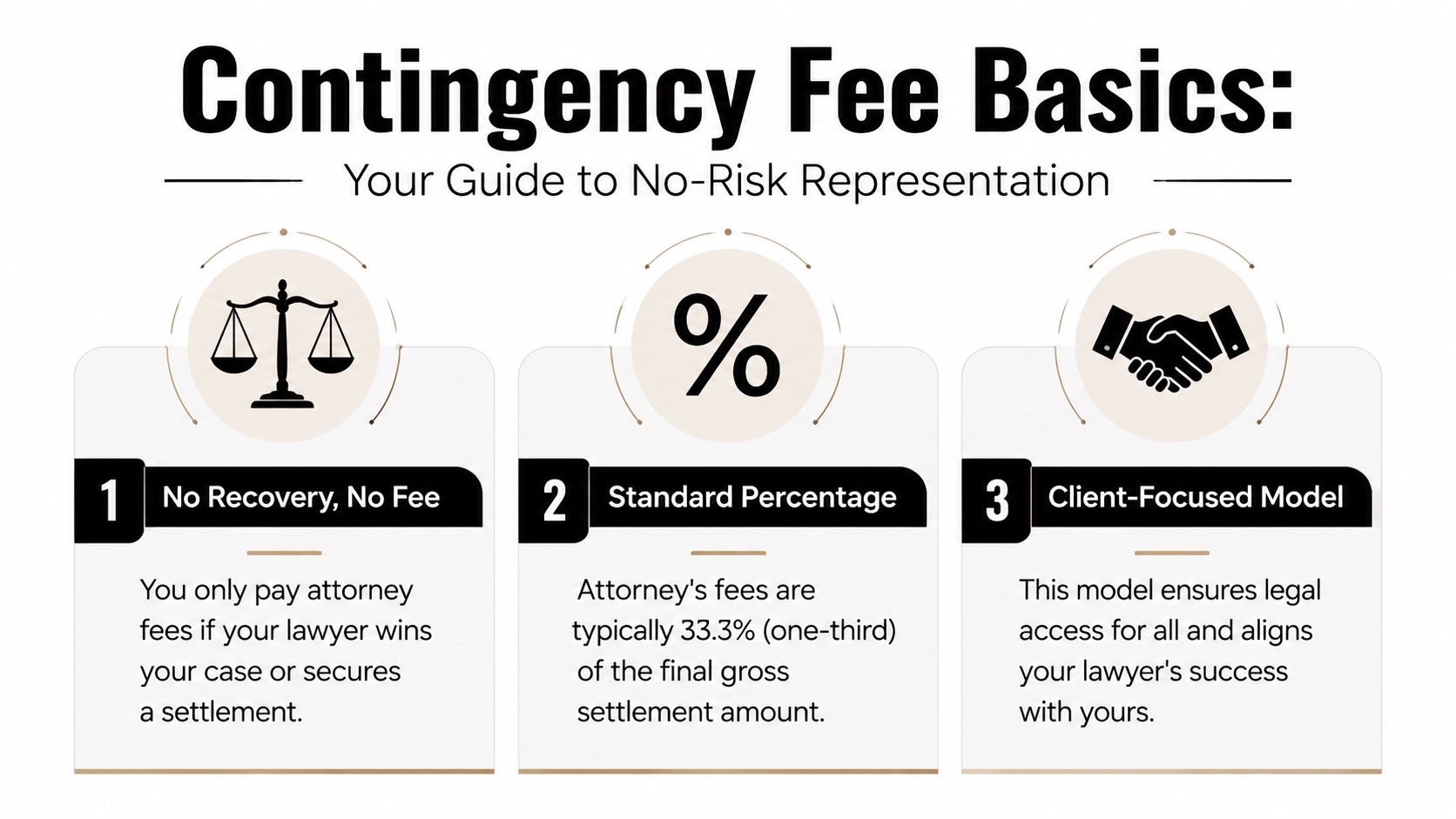
A contingency fee means the lawyer is paid from the money recovered in the case. If there is no recovery, there is usually no attorney fee. That arrangement lets an injured person get legal help without paying a retainer or monthly bill while the case is still being built.
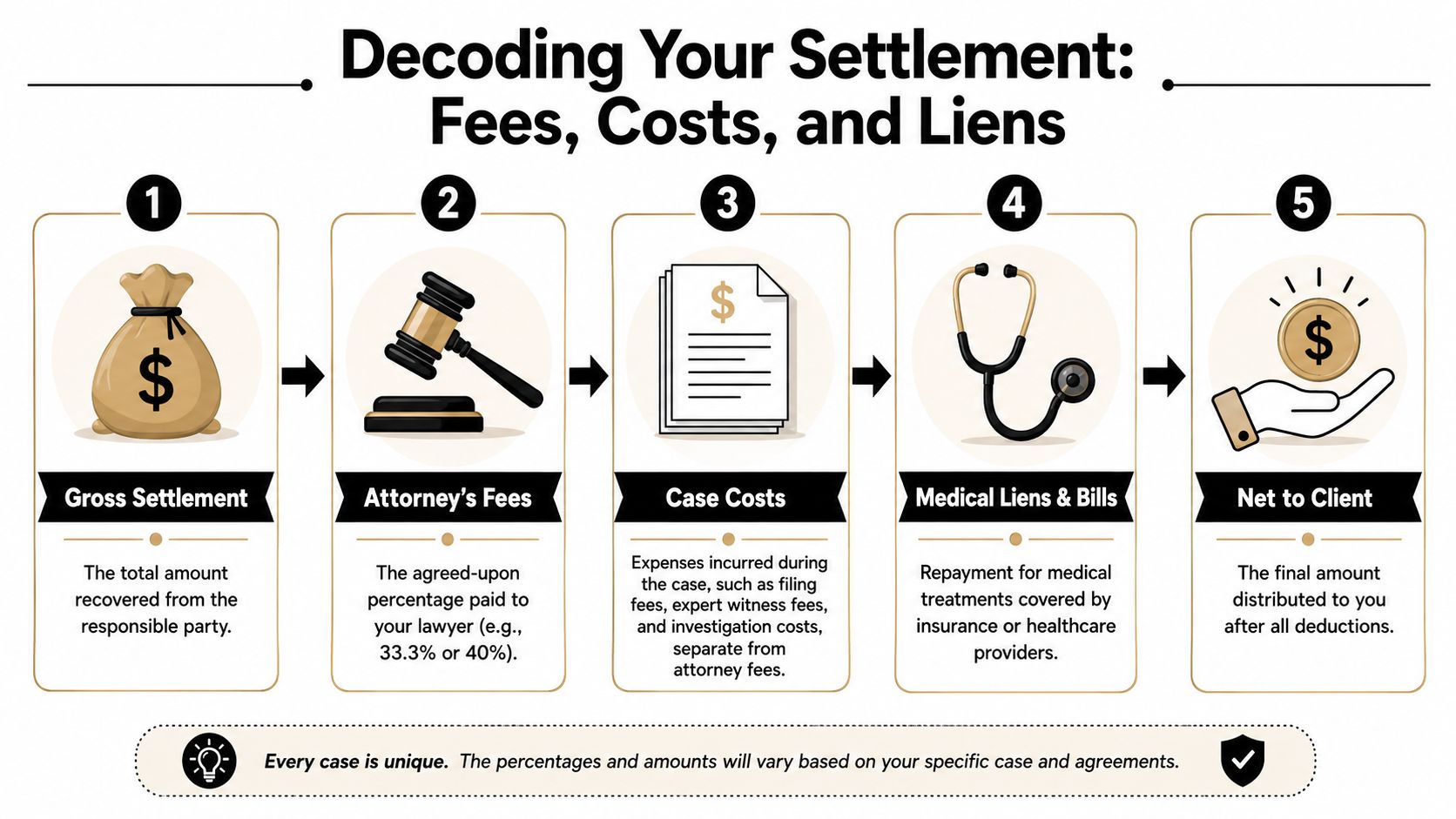
The percentage is only one part of the picture. A settlement check works more like a series of deductions from one pot of money. First comes the total recovery. Then the attorney fee is taken under the contract. After that, case costs and some medical claims may also be paid. What matters to you is the net amount, which is the amount left in your hands at the end.
The basic math
In many Texas personal injury cases, the fee is often around one-third if the claim resolves before suit and higher if the case has to be litigated. The exact percentage should be stated clearly in a written fee agreement you can read before signing.
Here is the easy way to read that agreement:
- Start with the total settlement or verdict.
- Apply the fee percentage listed in the contract.
- Subtract case costs if the contract says they are reimbursed from the recovery.
- Subtract valid medical liens or unpaid medical balances that must be resolved.
- The amount left is your final take-home amount.
That step-by-step view clears up a common misunderstanding. Clients often hear "one-third fee" and assume they can estimate their final check from that number alone. In real life, the fee is only one line on the closing statement.
Why this model helps injured people
A contingency arrangement shifts much of the financial risk of the case to the law firm. The firm puts in time and, in many cases, advances money for records, filing fees, or experts, then waits to be paid until the case resolves. For someone recovering from a car crash or other serious injury, that can make legal help possible at a time when cash is tight.
Before you sign, read the contract slowly and ask direct questions such as:
- What percentage applies if the case settles early?
- Does the percentage increase if suit is filed or trial preparation begins?
- Are case costs taken out before or after the fee is calculated?
- What happens to unpaid medical bills or liens at the end of the case?
A clear fee agreement should let you trace the money from the gross settlement down to your final check, line by line. If you cannot follow the math, ask for a written example before you sign.
Why and When Your Lawyer's Percentage Might Change
Some clients feel surprised when they hear that the fee may rise if a lawsuit has to be filed. The key is understanding what changes in the case. A pre-suit claim and a litigated case are not the same job.

What changes after a lawsuit is filed
Before suit, a lawyer is usually gathering records, analyzing liability, presenting damages, and negotiating with the insurance company. Once the case enters litigation, the workload often expands sharply. The firm may need to prepare formal pleadings, respond to defense filings, conduct depositions, work with expert witnesses, and prepare for trial.
Texas law does not set a universal cap on personal injury contingency fees, but the typical range is 33.33% to 40%. A notable exception is workers' compensation matters, where attorney fees are capped at 25%, as described in TexasLawHelp's explanation of lawyer fees.
Why the higher percentage can be reasonable
The higher litigation rate reflects more than time. It also reflects risk. A firm may spend months or longer advancing work on a case that might still be contested by the insurer or defense counsel.
Here's what that usually means in real life:
- More procedure: Court deadlines, filings, and discovery can become part of the case.
- More evidence work: Depositions and expert input may be necessary.
- More pressure on timing: Filing deadlines matter. The Two-Year Deadline for Texas Injury Claims explains why most Texas injury lawsuits must be filed within two years under CPRC 16.003.
- More uncertainty: Litigation can involve stronger defenses about fault, injuries, or the value of the claim.
Texas personal injury law also includes familiar issues beyond fees. Fault and negligence remain central. In a truck crash case, for example, the defense may argue you changed lanes unsafely or failed to react in time. Under Texas comparative responsibility rules, your share of fault can reduce your recovery. That's one reason case preparation matters so much when the insurer refuses to be reasonable.
Understanding Case Costs and Medical Liens
Attorney fees are one part of the payout. Two other pieces often affect the final number: case costs and medical liens. These factors frequently lead to client confusion, underscoring why transparency is paramount.
Case costs are not the same as attorney fees
Case costs are the out-of-pocket expenses involved in building and pursuing the claim. These can include court filing expenses, record collection, deposition-related charges, and expert witness expenses. They are separate from the lawyer's percentage.
Across Texas, the 33.33% to 40% fee range is treated as a benchmark under rules requiring fees to be reasonable, and firms typically advance case costs and recoup them only if the case succeeds, as explained in this discussion of Texas contingency fee agreements and advanced case expenses.
Medical liens are repayment claims
A medical lien is different. It usually means a hospital, doctor, or insurance-related payer has a right to be repaid from the settlement for treatment connected to the accident. Those amounts are not attorney compensation. They are obligations tied to the medical care that helped you recover.
If you're trying to understand this part before you sign anything, how medical bills are paid after an accident in Texas is a useful starting point.
Many clients focus on the fee percentage first. The more practical question is this: after fees, expenses, and medical repayment issues are resolved, what is the net amount to you?
That's also why hospitals and providers pay close attention to their own revenue cycle. For a broader look at how providers think about unpaid accounts and recovery, this CFO's guide to sealing revenue leaks offers context from the medical side.
A short video can also help make the process easier to follow.
A simple way to think about the final payout
You can think of a settlement distribution in this order:
| Step | What it means |
|---|---|
| Gross settlement | The total amount recovered in the claim |
| Attorney fee | The agreed percentage under the written fee contract |
| Case costs | Expenses advanced to move the case forward |
| Medical liens or bills | Repayment claims tied to treatment |
| Net to client | What you actually receive |
If you've suffered a catastrophic injury or your family is handling a wrongful death claim, these issues can become even more important. Larger cases often involve more records, more negotiation, and more financial cleanup before the final check is issued.
A Real-World Example How the Numbers Work
After a Houston freeway crash, a client's first reaction is often relief when the case settles. The second reaction is usually more practical: How is the money divided, and what will I take home?
Because every case is different, any real settlement breakdown depends on the written fee agreement, the expenses advanced, and the medical repayment issues that must be resolved. The safest way to understand this is to follow the sequence rather than rely on a one-size-fits-all formula.
A relatable example
Suppose a Houston driver is injured when a commercial vehicle causes a major collision. The case doesn't resolve quickly, so the claim has to be litigated. The client has medical treatment, missed work, and an insurer that disputes fault. A Houston car accident attorney or truck crash lawyer Houston handling the case would usually walk the client through the final distribution in stages.
Here's what that conversation often looks like:
- Start with the gross recovery. This is the full settlement or verdict amount before deductions.
- Apply the attorney fee from the contract. If the case required litigation, many Texas agreements use the higher percentage discussed earlier.
- Subtract case costs. These are the expenses advanced during the case.
- Resolve medical liens and related bills. These repayment claims are handled before the final disbursement.
- Issue the net check to the client. That is the amount the client takes home.
Why no honest lawyer should guess your net too early
A client may ask for a firm number at the beginning of the case. That's understandable, but it usually isn't possible to give a precise answer that early. The amount can change based on medical treatment, the posture of the insurance negotiations, whether a lawsuit must be filed, and how fault is evaluated under Texas comparative responsibility rules.
If someone promises your exact take-home amount before the records, bills, liens, and liability issues are known, be careful.
Texas fault law also shapes the outcome. If the defense argues you were partly responsible, your recovery may be reduced under comparative responsibility. That can matter in a wrongful death case too. A wrongful death lawyer Texas families consult should be ready to explain how liability disputes, hospital bills, and settlement deductions all fit together.
Questions that make this example useful
Instead of asking only, “What percentage do lawyers take in Texas for personal injury?” ask these follow-up questions:
- What triggers the higher fee? Is it filing suit, trial prep, or appeal work?
- How are case costs listed? Ask for them to be explained in writing.
- Who negotiates liens? Find out whether the firm helps reduce medical repayment claims when possible.
- When do I see the final statement? You should expect a clear closing breakdown before money is distributed.
That level of detail protects you from surprises and helps you make decisions with confidence.
Finding the Right Texas Personal Injury Lawyer for Your Case
You are sitting in a consultation after a crash. Your arm is hurting, bills are already showing up, and one practical question keeps cutting through everything else: If this case settles, what will the check look like in my hands?
That question helps you choose the right lawyer.
A fee percentage matters, but your take-home amount is shaped by several moving parts working together, much like a final receipt after a large purchase. The gross settlement is the starting number. Then come attorney's fees, case costs, and medical bills or liens that may have to be paid back. A good Texas personal injury lawyer should be able to walk through each step in plain English and tell you where the pressure points usually are. If that explanation is vague at the start, the numbers often stay confusing until the end.
Questions to ask in a consultation
Bring your questions in writing. Pain, stress, and medication can make it hard to remember details.
- What percentage will you charge, and what causes that percentage to change?
- Do you calculate the fee before or after case costs are deducted?
- What costs usually come up in a case like mine?
- Will your office review and try to reduce medical liens or hospital repayment claims?
- Who explains settlement offers and the deductions from any final recovery?
- Before I sign, can you show me a sample closing statement or settlement sheet?
That last question is especially useful. A closing statement works like the final math page for the case. It shows the total settlement, each deduction, and the client's net amount. Seeing that format early helps you ask better questions before surprises become expensive.
What to look for beyond the fee percentage
A lower percentage on paper does not always produce a better result. If a lawyer settles too early, misses damages, or fails to address medical repayment claims carefully, the client may keep less money in the end.
Look for someone who explains the process step by step, answers money questions calmly, and treats the settlement breakdown as part of the job, not as an afterthought. You can compare firms using practical criteria in best personal injury lawyer in Texas how to choose.
You can also learn something from how a firm teaches. Clear educational writing often reflects clear client communication. For background on how law firms build online visibility, see attract more legal clients with SEO.
Law Office of Bryan Fagan, PLLC handles Texas personal injury matters on a contingency-fee basis. If your injuries came from a car wreck, truck collision, catastrophic injury, or a fatal accident, ask exactly how the firm handles fees, costs, lien review, and final disbursement.
You do not need to know every legal term before you call. You need a lawyer who can explain, line by line, how a settlement check is calculated and what can be done to protect as much of it as possible.