A serious accident can change your life in seconds — but you don’t have to face it alone. In the legal world, when someone intentionally destroys, alters, or hides evidence that's essential to a case, we call it spoliation of evidence.
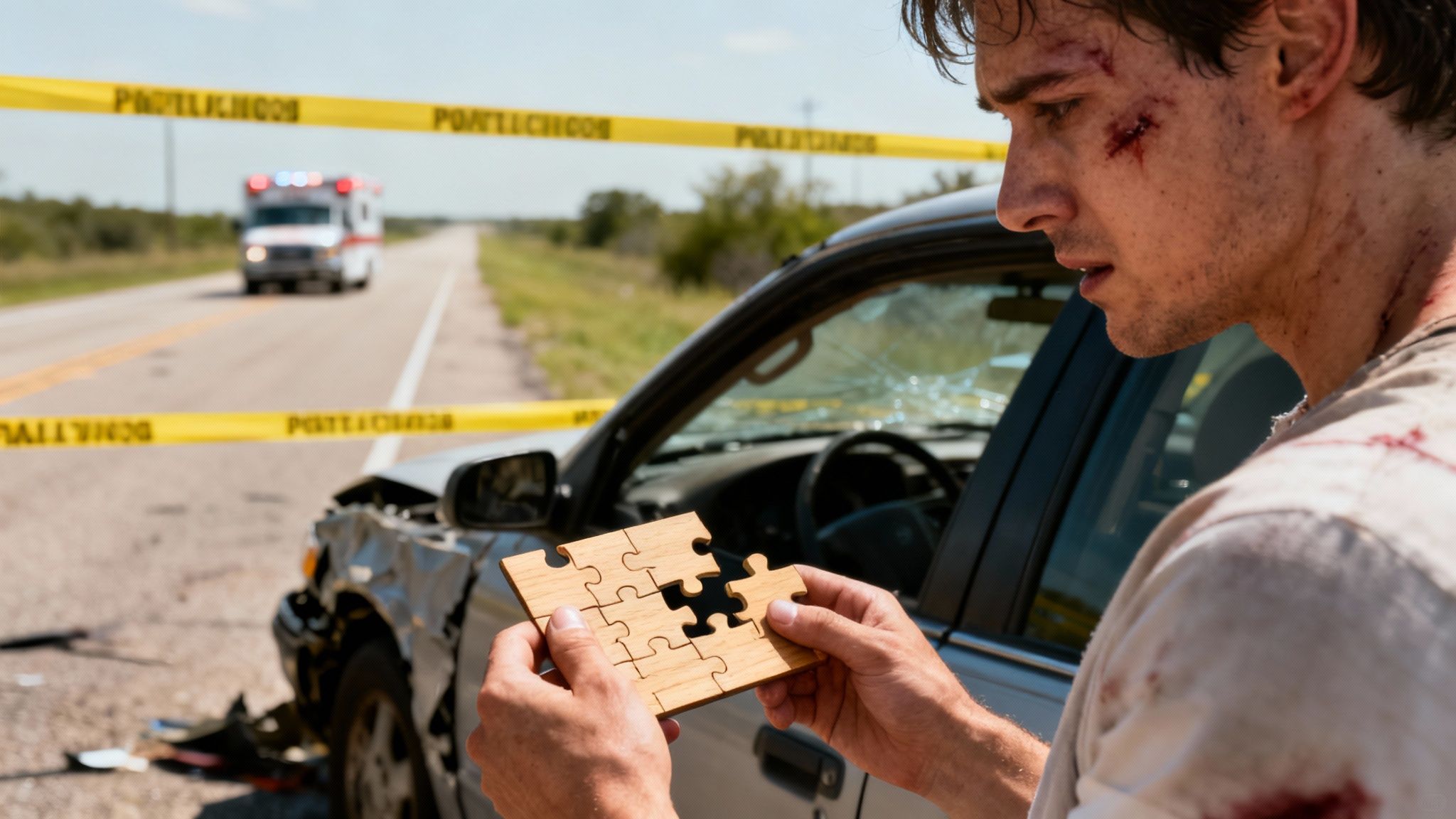
Think of it this way: you're trying to put together the puzzle of what happened, but the person who caused your injuries has already hidden the most critical pieces. This is an unfair tactic designed to help them avoid responsibility, but a skilled Texas personal injury lawyer knows how to fight back and hold them accountable.
What Spoliation of Evidence Means for Your Texas Claim
After a life-altering accident in Houston, Dallas, or anywhere across Texas, your main focus should be on your recovery. The last thing you should have to worry about is the at-fault party trying to cover their tracks. Unfortunately, it happens more often than you might think. Some people and companies will go to great lengths to avoid paying for the harm they’ve caused, and that includes getting rid of evidence that proves their negligence.
This act of destroying or hiding proof is called spoliation, and it poses a direct threat to your ability to get the full and fair compensation you rightfully deserve for your medical bills, lost wages, and pain.
For a real-world example, let's imagine a major pile-up on a Houston freeway caused by a commercial truck. The trucking company knows its driver was texting and is at fault. To protect themselves, they might be tempted to delete the driver’s electronic logs, conveniently "lose" maintenance records, or even erase dashcam footage that clearly shows the truck driver was distracted. This missing information is the lifeblood of your truck accident claim. Without it, proving who was at fault and securing the compensation your family needs becomes much more difficult.
Why You Must Act Quickly to Protect Your Rights
In Texas personal injury law, the duty to preserve evidence kicks in the moment a person or company reasonably anticipates a lawsuit. This means from the second they know a claim is likely, they are legally obligated not to destroy anything that might be relevant to the accident.
But here's the catch: without swift legal action from your side, critical evidence can vanish. This often happens in a few common ways:
- Intentional Deletion: Purposely erasing text messages, emails, photos, or video footage that points to their liability.
- "Routine" Destruction: Hiding behind a company policy that calls for shredding documents or overwriting data after a set period, which conveniently wipes out key evidence in your case.
- Physical Alteration: Rushing to repair a damaged vehicle or piece of equipment before your experts can professionally inspect it.
The most powerful tool for stopping spoliation is a formal "preservation of evidence" letter sent by an experienced Texas personal injury lawyer. This legal notice puts the at-fault party and their insurance company on high alert, legally commanding them to safeguard every single piece of evidence related to your accident.
How Missing Evidence Can Weaken Your Injury Case
When crucial proof disappears, it can throw a major wrench in your fight for justice, making it much tougher to prove the other party was at fault (their negligence) and show the true extent of your damages. This directly impacts your ability to hold them responsible under Texas's comparative responsibility laws.
Picture this: you're in a terrible wreck on I-10 near Houston. The trucking company responsible knows their driver was texting, so they quickly wipe the truck's dashcam footage or delete the driver's logbooks. That’s spoliation of evidence. It’s the legal term for destroying, changing, or simply failing to save key proof when they know a lawsuit is coming.
Under rules like Federal Rule of Civil Procedure 37(e), which covers electronically stored information (ESI), this is a serious violation. In personal injury cases, this often looks like vehicle black box data that suddenly goes "missing," phone records that get erased, or surveillance videos that are conveniently overwritten just when you need them to prove negligence.
Intentional Destruction vs. Accidental Loss
In a Texas courtroom, not all missing evidence is treated the same. The key difference comes down to the at-fault party's intent when that evidence vanished.
- Accidental Loss (Negligence): Sometimes, things are lost without malicious intent. A business might have an automated system that overwrites security footage every 30 days, and no one stopped it in time. While this can still harm your case, the legal consequences are usually less severe.
- Intentional Destruction (Bad Faith): This is where things get serious. "Bad faith" means the other side knew the evidence was vital to your claim and got rid of it on purpose, specifically to sabotage your case and cover up their wrongdoing.
Proving bad faith isn’t easy, but an experienced Houston car accident attorney knows how to do it. When we can show a judge that the defendant deliberately destroyed evidence, it can swing the entire case in your favor.
A trucking company that "loses" its driver’s logs immediately after a fatal truck crash isn't just being careless—it's actively trying to hide the truth. This is a classic tactic used by those who know they're at fault and are desperately trying to escape accountability.
The Real-World Impact on Your Claim
When key evidence disappears, you can find yourself struggling to prove the basic facts of your case. That vanished dashcam footage might have been the only thing that definitively showed the other driver ran a red light. Those deleted text messages could have been the smoking gun proving they were distracted.
Losing that evidence makes it harder to prove negligence and can even make it more difficult to document the full scope of your injuries. The story of what happened becomes your word against theirs. This is why it’s so critical to understand all the ways you can build your case, which is why we created our detailed article on how to prove pain and suffering. It’s also exactly why having a sharp truck crash lawyer Houston is so important—we know these tactics, and we know how to fight back.
Common Types of Evidence That Disappear After an Accident
After a serious accident, the scene can be chaotic. Key pieces of evidence are everywhere, but they're also incredibly fragile and can vanish quickly. Understanding what’s at stake shows why taking immediate action is so critical to prevent the spoliation of evidence.
Different types of accidents involve different kinds of evidence, but they all share one thing in common: once this evidence is gone, getting it back is nearly impossible. Our attorneys anticipate these tactics and take swift, decisive steps to protect our clients' interests across Texas.
Key Evidence in Truck Accident Cases
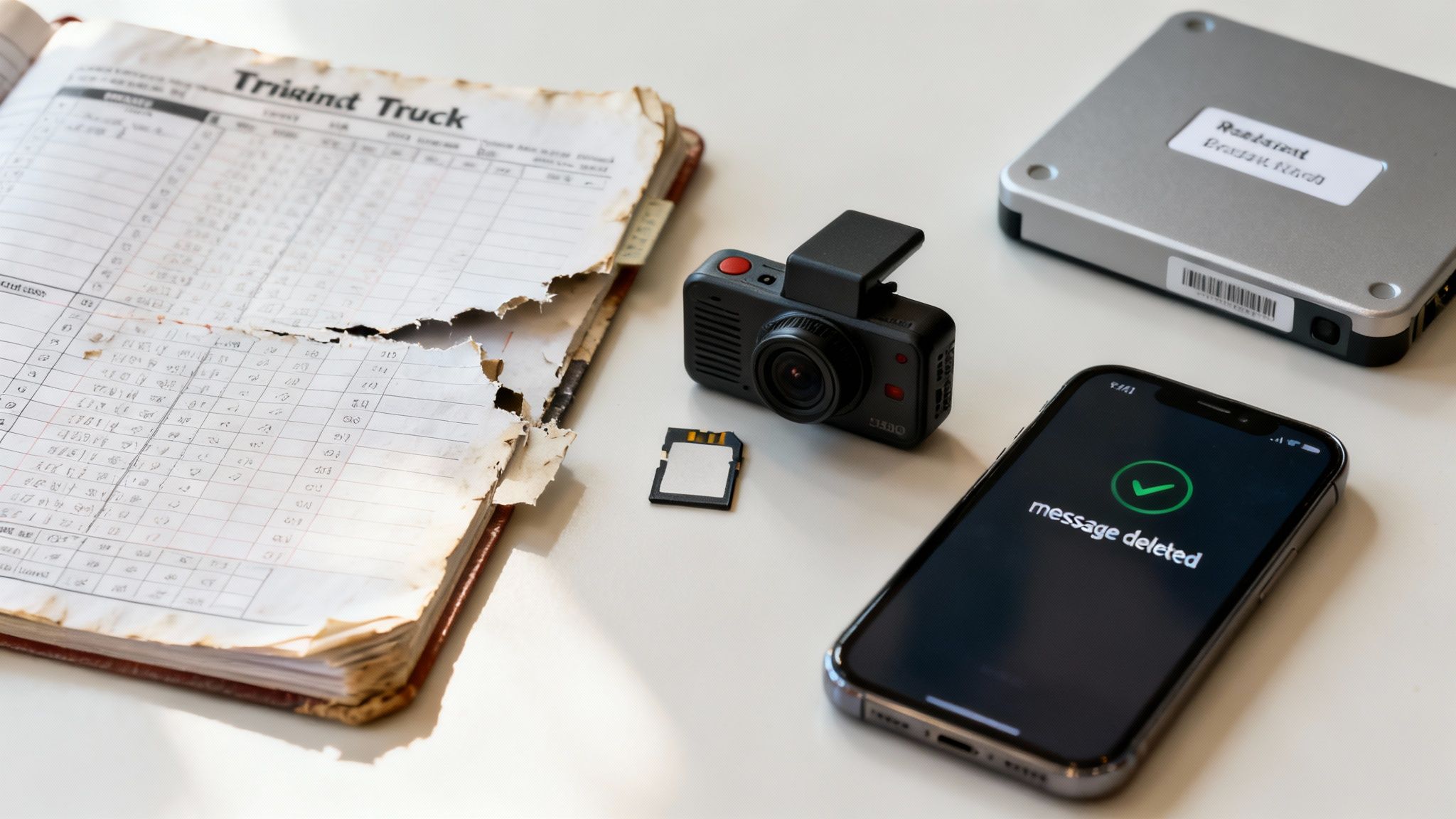
Commercial truck crashes often involve a mountain of digital and paper records that trucking companies are legally required to keep. A Houston truck crash lawyer knows exactly where to look for proof of negligence, but this evidence is often the first to disappear.
Commonly "lost" evidence includes:
- Driver Hour Logs: These electronic logs prove whether a driver was violating federal hours-of-service rules—the very regulations designed to stop drowsy driving.
- Vehicle Maintenance Records: Missing or altered records can hide a company's failure to maintain its fleet, like ignoring bad brakes or worn-out tires.
- Black Box and GPS Data: This data provides a second-by-second account of the truck's speed, braking, and location right before a crash, offering undeniable proof of what happened.
Evidence That Vanishes in Car Accidents
Even in a seemingly straightforward car accident claim, crucial evidence can be destroyed. The at-fault driver or their insurance company may try to erase any proof that points to their negligence.
We often see these items disappear:
- Deleted Text Messages or Call Logs: This is a classic move to hide evidence of distracted driving.
- Erased Dashcam Footage: Personal or commercial dashcams can provide undeniable proof of what happened, making them a prime target for deletion.
- Premature Vehicle Repairs: Getting a car repaired or scrapped before your legal team can have an expert inspect it is a common way to destroy vital physical evidence.
In cases involving a wrongful death lawyer Texas or catastrophic injuries from unsafe properties, security camera footage is often the smoking gun. A building owner might claim the system "malfunctioned" or that the footage was routinely overwritten, when in reality, they're hiding proof of their negligence. The Federal Rules of Civil Procedure, like Rule 37, give courts a framework to sanction parties who fail to preserve this kind of critical information.
How Texas Courts Punish Evidence Destruction
When the other party in your case destroys crucial evidence, they don't just get away with it. Texas courts have serious tools to punish spoliation of evidence and restore fairness to the legal process. A judge can impose a variety of penalties, or sanctions, to hold the responsible party accountable and level the playing field for you.
These aren't one-size-fits-all punishments. A judge will tailor the sanction to fit the specific situation. The ultimate goal is to undo the harm caused by the missing evidence and strongly discourage anyone else from trying a similar cover-up.
Potential Sanctions for Hiding the Truth
If your lawyer can prove the at-fault party intentionally got rid of evidence, a judge has several powerful options to make things right. These remedies can completely change the direction of your case.
Some of the most common sanctions include:
- Monetary Fines: The judge can force the party who destroyed evidence to pay for the legal fees and other costs you incurred proving they did it.
- Exclusion of Evidence: The at-fault party might be blocked from presenting their own evidence or making certain arguments related to the information they destroyed.
- Striking Pleadings: In extreme situations, a judge can throw out the defendant's entire defense, which often leads to a default judgment in your favor.
The Game-Changing Power of an Adverse Inference Instruction
One of the most effective sanctions is called the "adverse inference" instruction. This is a special instruction the judge reads to the jury before they decide the case.
A judge will essentially tell the jury that because one side destroyed or hid evidence, the jury is allowed to assume—or infer—that the missing evidence would have been harmful to that party's case.
This instruction can be a complete game-changer. Imagine a trucking company deletes dashcam footage from a catastrophic injury crash. With this instruction, the jury is free to conclude that the video would have shown the truck driver was clearly at fault.
To get this powerful instruction, we typically have to show the evidence was destroyed in "bad faith"—meaning they did it on purpose to hide the truth. Under the rules of the Fifth Circuit, which governs Texas, proving this bad faith is absolutely critical. At The Law Office of Bryan Fagan, our experienced team knows how to expose these kinds of tactics. You can read more about how courts handle spoliation and see just how seriously this issue is taken.
A Practical Guide to Preserving Evidence After a Texas Accident
A serious accident can change your life in a split second, but you don't have to face the aftermath alone. Knowing what to do right after a crash is your first, and most powerful, step toward protecting your rights. This practical advice can help you preserve the evidence needed to build a strong claim.
Of course, the most effective way to safeguard crucial evidence is to call a lawyer immediately. We can take this weight off your shoulders from the very start, letting you focus on what truly matters: your physical and emotional recovery.
What to Do After an Accident
The moments after an accident are chaotic. But if you're physically able, taking a few key steps can make a huge difference in your case. Your goal is to create a clear record of what happened before anything gets moved, repaired, or deleted.
Here are the most critical actions to take:
- Take Extensive Photos and Videos: Use your phone to capture everything. Document all vehicles from every angle, skid marks, traffic signals, property damage, and your injuries. There’s no such thing as too many photos.
- Gather Witness Information: If anyone saw what happened, get their name and phone number. An independent witness’s testimony can be incredibly powerful, especially if the other driver changes their story later.
- Don't Rush Repairs: Hold off on getting your vehicle fixed or scrapped. Your attorney will need an expert to inspect it for critical evidence, like data from its "black box" or physical proof of the impact.
The Power of a Preservation of Evidence Letter
While gathering evidence on your own is a great start, the single most powerful tool for preventing spoliation is a formal preservation of evidence letter. This is a legal notice our firm sends directly to the at-fault party and their insurance company, demanding they protect everything related to your case.
This legally binding document commands them to save things like:
- Dashcam footage
- Vehicle maintenance records
- Driver logs and work schedules
- Text messages and phone records
- Any physical evidence from the crash itself
This letter puts them on formal notice that they have a legal duty to preserve this information. If they destroy it after receiving our letter, it becomes much easier to prove they acted in bad faith.
This flowchart shows the progressive steps a court may take to sanction a party for destroying evidence.
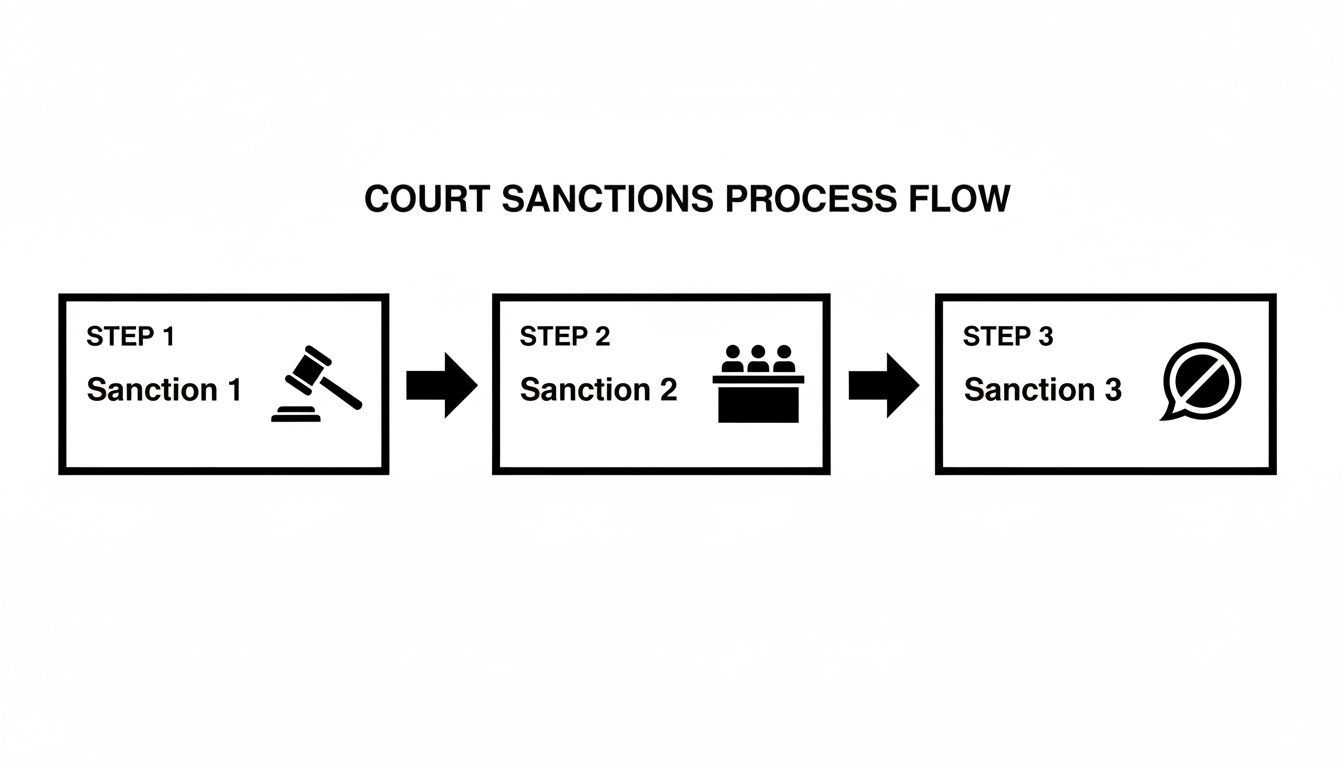
As you can see, the sanctions can escalate quickly from financial penalties to game-changing jury instructions, showing how seriously Texas courts take the destruction of evidence.
If you’ve been injured, especially as a pedestrian, every piece of evidence is vital. You can learn more about your rights in our guide for pedestrians hit by a car, which outlines additional steps to protect your claim. To maintain the integrity of evidence, professionals often rely on tools like secure evidence lockers as a key part of their preservation strategies.
How Our Attorneys Fight to Uncover the Truth
When you hire The Law Office of Bryan Fagan, you’re not just getting a lawyer—you’re getting a proactive team that moves immediately to shut down any attempts to destroy evidence. We anticipate these tactics and build a legal shield around the truth from day one. Our process is aggressive, thorough, and designed to hold negligent parties fully accountable for the harm they’ve caused you and your family.
Our very first move is to send out a legally binding preservation of evidence letter to every responsible party. This is a formal demand that legally obligates them to protect all evidence related to your case. It stops the "corporate document retention policy" excuse dead in its tracks and puts them on notice. From that moment on, they have a legal duty to preserve everything.
Taking Command of the Evidence
Sending legal notices is a powerful first step, but we don't stop there. We take command of the situation with proven strategies that leave no stone unturned in our pursuit of justice for you.
- Deploying Experts Immediately: We dispatch specialists to the accident scene or storage yard. Time is critical, which is why an accident reconstruction expert witness is so crucial for analyzing evidence before it can be altered, repaired, or "lost."
- Filing Court Motions: If the other side refuses to cooperate, we don't hesitate to take the fight to a judge. We file a motion to compel, asking the court to order them to hand over the evidence you are legally entitled to.
- Conducting Rigorous Depositions: We put key individuals under oath and question them relentlessly. Through skilled depositions, we can expose inconsistencies in their stories and uncover attempts to hide the facts.
Our entire approach is built on a track record of success. We are not just lawyers; we are your advocates, committed to fighting for the maximum compensation you deserve for your medical bills, lost income, and pain and suffering. We are here to ensure the truth is heard.
Common Questions About Evidence in Injury Claims
After a serious accident, it's natural to feel overwhelmed and have questions. We understand. Here are clear, straightforward answers to the concerns we hear most often about preserving evidence and what happens when you think someone has destroyed it (spoliation of evidence).
What if I'm Not Sure What Evidence Exists?
You shouldn't have to worry about that. Your only job right now is to focus on your recovery. When you partner with us, our legal team takes on the entire burden of identifying every piece of potential evidence.
We have a system for this, honed over years of experience:
- We immediately dive into the details of your accident.
- Our experience in cases just like yours—from catastrophic injury claims to complex truck wrecks—tells us exactly where to look.
- We cast a wide net by sending out preservation letters, legally demanding that the other side save everything that might be relevant to your case. This protects you from the beginning.
How Do You Prove Evidence Was Destroyed Intentionally?
This is where an experienced lawyer makes all the difference. Proving "bad faith" is the key to a spoliation claim, and we do that by building a case that shows a pattern of suspicious behavior. It's often about demonstrating that the at-fault party had a clear motive to hide the truth and knew the evidence they got rid of was critical to your case.
We piece this puzzle together by looking at things like:
- Timing: Did crucial evidence suddenly disappear right after they learned a lawsuit was likely? That’s a huge red flag.
- Inconsistent Stories: We can often catch them in contradictions about what happened to the evidence when we question them under oath during a deposition.
- Circumstantial Evidence: For example, if a trucking company’s dashcam just so happens to "malfunction" for the exact five minutes surrounding a major crash, that points directly at intentional destruction.
How Long Do I Have to File a Claim in Texas?
It’s almost never too late to seek legal advice, but you must act fast. In Texas, the statute of limitations for most personal injury claims is two years from the date of the accident. Every day that passes is another opportunity for evidence to be lost forever.
While some proof might already be gone, an experienced Texas personal injury lawyer knows how to find other evidence you might not have thought of. Even if weeks have passed, we can still send preservation demands, track down witnesses, and bring in experts to analyze what's left. The single most important thing you can do right now is call a lawyer to protect what remains of your claim.
At The Law Office of Bryan Fagan, PLLC, we understand you’re going through one of the hardest times of your life. Recovery is possible, and legal help is available. Our compassionate attorneys are here to give you the clarity, trust, and hope you need to move forward. Schedule a free, no-obligation consultation today and let us show you how we can fight for the justice and compensation you deserve. You don’t have to face this alone.