A serious accident can change your life in seconds, but you don't have to face it alone.
If you're searching for the best personal injury lawyer texas how to choose, you're probably not doing it on a calm, ordinary day. You're dealing with pain, calls from insurance adjusters, missed work, car repairs, medical appointments, and a lot of uncertainty. The right lawyer can help restore order. The wrong one can leave you frustrated, under-informed, and pressured into a quick settlement that doesn't reflect what your case is really worth.
Choosing a Texas personal injury lawyer isn't about picking the loudest ad or the first name that appears online. It's about finding someone with the right experience, the right case strategy, and the right way of communicating with you when your life feels unsettled. If your family is dealing with a fatal crash, that search becomes even more important. A wrongful death lawyer Texas families trust should bring clarity, not confusion.
Your First Step After a Serious Texas Accident
The first step is simple. Slow the process down enough to make good decisions.
After a Houston freeway crash, a truck wreck outside Dallas, or a serious intersection collision in Austin, many individuals enter the claims process without understanding the legal rules already shaping their case. In Texas, personal injury claims usually turn on negligence, which means one party failed to use reasonable care and caused harm to someone else.
Texas also uses comparative responsibility. That means fault can be shared. If the insurance company says you contributed to the crash, your compensation may be reduced. That's one reason early statements matter. What you say to an adjuster before you know the medical picture can follow your case for months.
Know the deadline and protect the evidence
Texas has a two-year statute of limitations for most personal injury cases. In plain terms, that usually means you have two years from the date of the accident to file suit. Waiting too long can destroy an otherwise valid claim.
That doesn't mean you should panic. It does mean you should act with purpose.
A strong early checklist looks like this:
- Get medical care first: Your health comes before the claim. Follow-up treatment matters too. If you're dealing with pain, soft-tissue injury, or mobility issues after a crash, resources on auto accident injury treatment in Shawnee can help you understand the kind of care accident victims often need.
- Preserve what you have: Save photos, discharge papers, prescriptions, repair estimates, and every insurance letter or email.
- Avoid a recorded statement if you're unsure: The insurer is evaluating exposure, not protecting your interests.
- Talk to counsel early when injuries are serious: The timing question comes up often, and this guide on when you should hire a personal injury lawyer in Texas is a useful starting point.
Practical rule: The days right after an accident aren't the time to guess. They're the time to document, treat, and avoid saying anything you can't take back.
What this means for your lawyer search
The lawyer you hire will shape how fault is framed, how records are collected, and how the insurance company values your claim. If your case involves a spinal injury, a company vehicle, or the death of a loved one, those choices become even more important.
A person searching for a Houston car accident attorney often thinks the main issue is settlement amount. In reality, the first issue is usually case handling. Who gets the evidence? Who talks to witnesses? Who spots the legal issues early enough to use them?
Those are the questions that lead to better outcomes.
Evaluating a Lawyer's Experience and Trial Record
Experience matters in every legal field, but in injury law, relevant experience matters most.

A lawyer who handles mostly divorces, probate matters, or general civil disputes may be competent and well-intentioned. That still doesn't make them the right fit for a complicated injury claim. Personal injury law includes car wrecks, truck crashes, slip and falls, medical malpractice, workplace incidents, and wrongful death claims. Each type of case involves different proof, different defenses, and different pressure points.
According to guidance on choosing the right Texas personal injury lawyer, evaluating a lawyer's experience with cases similar to yours is paramount. That same guidance explains that a lawyer's history of settlements and verdicts offers direct insight into whether they can negotiate effectively with insurers or litigate successfully if the case doesn't settle.
Match the lawyer to the case
A few examples show why this matters:
| Case type | What the lawyer needs to understand |
|---|---|
| Rear-end crash in Houston | Liability proof, medical causation, insurance tactics |
| Commercial truck wreck on I-35 | Driver logs, company records, federal trucking issues |
| Fatal crash claim | Wrongful death damages, estate issues, family communication |
| Catastrophic injury case | Long-term treatment, future care, life impact evidence |
If your case involves an 18-wheeler, you don't want a lawyer who treats it like an ordinary fender-bender. A truck crash lawyer Houston families can rely on should understand commercial defendants, layered insurance coverage, and the difference between a quick offer and a full case valuation.
Insurance companies know which lawyers will fight aggressively and which will fold. That reputation can affect how your claim is handled from the start.
Ask about verdicts, not just settlements
Most injury cases settle before trial. Still, you want a lawyer prepared to go to court if necessary. That's not a slogan. It's an essential advantage for your negotiations.
When you meet with a lawyer, ask direct questions:
- What cases like mine have you handled: Ask for examples by case type, not generic injury experience.
- How often do you file suit: A firm that never litigates may have less negotiating power.
- What trial work have you done: Courtroom readiness matters even when a case settles.
- What were the strengths and weak points in those cases: The answer tells you whether the lawyer thinks strategically.
If you'd like a plain-English look at what courtroom work involves, this overview of what litigation lawyers do helps clarify the difference between negotiating a claim and preparing a case for trial.
A short explainer can also help you understand why trial posture matters:
What works and what doesn't
What works is specific proof. A lawyer should be able to explain how they handle cases like yours, what roadblocks they expect, and how they build pressure when the insurer resists.
What doesn't work is vague branding. If all you hear is "we fight for our clients" but you can't get a clear answer about similar cases, trial readiness, or day-to-day handling, keep looking.
Understanding the Financial Commitment and Contingency Fees
Money worries stop many injured people from getting legal help. That's exactly why contingency fees matter.
A personal injury lawyer typically works on a contingency basis. That means you pay no upfront costs, and the attorney is paid from a settlement or verdict if the case succeeds. Guidance on how to choose a personal injury lawyer describes contingency-based representation as the gold standard because it removes financial barriers for people already facing medical bills and lost wages.
What you should ask before signing
Don't stop at "no fee unless we win." Ask what that means in practice.
Use this checklist in the consultation:
- Fee percentage: Ask what percentage applies and when it applies.
- Case expenses: Ask whether record charges, filing fees, expert costs, and deposition expenses are separate from the attorney fee.
- Responsibility if the case doesn't recover: Get the answer in writing.
- Communication policy: Ask who updates you, how often, and whether calls or emails are returned promptly.
A transparent fee agreement should be understandable without translation. If the contract feels rushed, overly complicated, or hard to explain, pause before signing.
Fees and expenses aren't the same thing
This distinction matters.
Attorney fees are what the lawyer earns for legal work. Case expenses are the out-of-pocket costs of moving the case forward. Those can include filing fees, medical records, expert review, and other litigation-related costs. You should know how both are handled before you commit.
For a deeper explanation, this guide on how contingency fees work in Texas personal injury cases is worth reading before you sign any representation agreement.
A good fee conversation should leave you calmer, not more confused.
Practical trade-offs to think through
The cheapest-sounding option isn't always the strongest one. In a serious injury case, resources matter. A lawyer handling a catastrophic harm claim may need to gather extensive medical records, consult the right experts, and present future losses clearly. That's especially true in cases involving paralysis, brain injury, or permanent impairment. If your injuries are severe, learning more about a catastrophic injury claim can help you understand why careful case preparation matters.
What works is clarity. You should know who pays what, when, and why. What doesn't work is trusting a handshake summary and skipping the written details.
Your Interview Script Questions to Ask Every Potential Lawyer
A consultation shouldn't feel like a sales pitch you're forced to sit through. It should feel like an interview, because that's what it is. You're deciding who gets access to one of the most important problems in your life.
Bring notes. Bring documents. Bring questions in writing. If you feel overwhelmed, hand the lawyer your list and go line by line.
Ask about experience and fit
Start with the basics, then get more specific.
How much of your practice is devoted to personal injury cases like mine?
You want to know whether this is core work or occasional work.Have you handled claims involving this kind of accident before?
Ask it plainly. Car crash, truck wreck, pedestrian impact, rideshare collision, workplace vehicle wreck, or wrongful death claim.What problems do you expect in my case?
This is one of the best questions you can ask. Strong lawyers don't pretend every case is easy.If my case doesn't settle fairly, are you prepared to file suit and try it?
Listen for a direct answer, not a marketing answer.
Ask how the firm will actually handle your case
Many people hire a lawyer they like in the meeting, then spend the rest of the case speaking to someone else.
Ask these next:
- Who will be my main point of contact
- Will the attorney I meet today stay involved
- Who gathers records and evidence
- How do you keep clients updated
- How quickly do you usually return calls or emails
A short answer isn't a problem. A fuzzy one is.
If a lawyer can't explain who will handle your file, your case may already be headed into an assembly line.
Ask strategy questions, not just value questions
People naturally want to ask, "What is my case worth?" That's understandable. But early value estimates are only part of the picture.
Try these instead:
| Question | Why it matters |
|---|---|
| What are the strengths of my case | Shows whether the lawyer sees usable proof |
| What are the weaknesses | Tests honesty and judgment |
| What evidence would you want first | Reveals how they build a claim |
| What should I avoid doing right now | Helps protect the case immediately |
| What timeline do you expect in a case like this | Gives you a practical roadmap |
A lawyer who answers carefully and explains uncertainty is usually more trustworthy than one who gives a fast, confident number.
Use this printable consultation script
You can copy this into your phone or print it before meetings.
- Case focus: "How often do you handle claims like mine in Texas?"
- Trial readiness: "What happens if the insurer won't make a fair offer?"
- Team structure: "Who will I hear from most often after I sign?"
- Communication: "How long should I expect to wait for a return call?"
- Costs: "What expenses might come out of the case besides your fee?"
- Assessment: "What concerns you most about my case right now?"
- Client role: "What do you need from me in the next few weeks?"
Compare answers, not personalities alone
A lawyer may be warm, polished, and reassuring. That's helpful, but it's not enough by itself.
After each consultation, rate the lawyer on these five points:
- Clarity: Did they answer questions directly?
- Specificity: Did they talk about your actual case, not just general success?
- Access: Did you learn who handles communication?
- Candor: Did they mention risks and not just upside?
- Confidence without pressure: Did they make you feel informed instead of rushed?
That's how you choose with structure instead of stress.
Warning Signs and Red Flags to Avoid When Hiring
Bad legal hires usually don't begin with obvious dishonesty. They begin with speed, vagueness, and pressure.
A firm may sound impressive on television, on a billboard, or in a rapid-fire intake call. But if the operation is built for volume instead of case preparation, your claim may be pushed toward a quick payout instead of a full investigation.
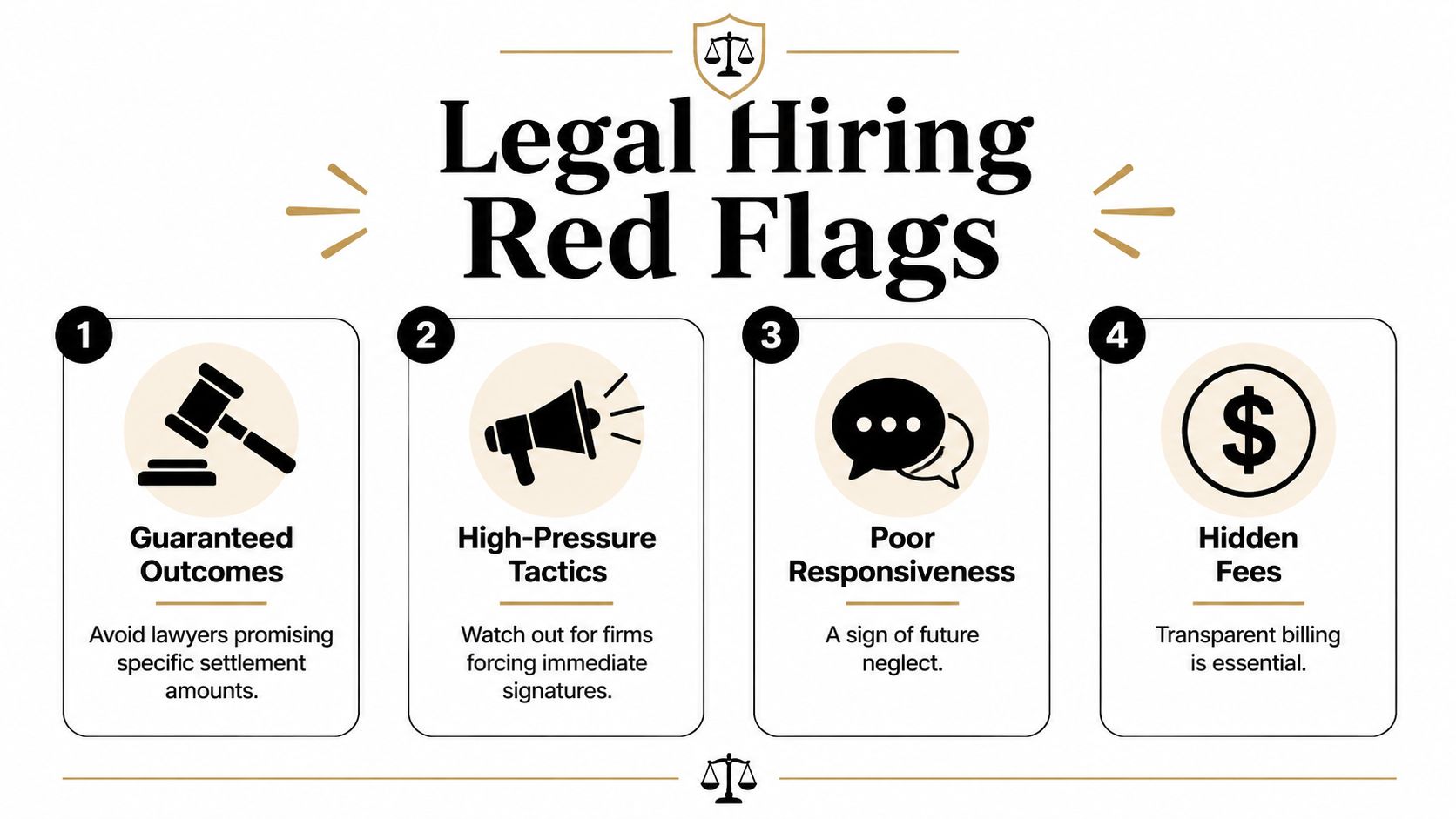
Guidance on common pitfalls in choosing a Texas personal injury lawyer warns that high-volume settlement mills often found through aggressive advertising can lead to 50% lower recoveries because they lack trial preparation. That same guidance notes that poor availability, including responses taking longer than 24 hours, or lack of familiarity with local courts can reduce outcomes by 25% in venues like Dallas-Fort Worth or Austin. It also states that lawyers who focus over 80% of their practice on personal injury secure higher success rates, and unrepresented victims often recover far less, with favorable resolutions reported at 3.5 times higher.
Four red flags that should slow you down
Some warning signs are enough to end the conversation.
- Guaranteed outcomes: No ethical lawyer can promise a specific settlement or verdict before the case is fully developed.
- Pressure to sign now: You should never be rushed into a representation agreement during a first call.
- Poor responsiveness: If your messages sit unanswered before you hire the firm, expect more of the same later.
- Hidden billing language: If fees and expenses aren't explained clearly, don't assume it'll sort itself out.
What a settlement mill often looks like
A settlement mill usually has a few patterns:
| Red flag | What it can mean |
|---|---|
| Heavy ad presence with little detail | Marketing may be stronger than case handling |
| Fast intake, no attorney access | Your file may be processed, not developed |
| Vague answers about trial work | The firm may settle early to avoid litigation |
| Constant handoffs between staff | Accountability gets blurred |
This doesn't mean every well-known firm is a bad choice. It means you should verify how the case is handled.
A person looking for a Houston car accident attorney after a pileup on I-10 might call three firms in one afternoon. If one office pushes a contract immediately, another can't explain who will manage the case, and the third asks smart questions about treatment, evidence, and liability, the difference matters.
The best sign of a good lawyer isn't volume. It's disciplined attention to your specific case.
Green flags worth noticing
Red flags get attention, but green flags help you decide.
Look for these:
- Focused practice: The lawyer spends most of the practice on injury claims.
- Specific answers: They discuss your accident type, likely defenses, and needed evidence.
- Local knowledge: They understand how Texas claims are built and how local venues work.
- Steady communication: They tell you how updates happen and follow through.
What works is patience and comparison. What doesn't work is hiring the first firm that sounds confident.
What Happens Next After You Hire Your Lawyer
Once you hire a lawyer, the goal is to take the legal burden off your shoulders while keeping you informed. You shouldn't feel shut out, and you shouldn't feel like you have to manage the claim yourself.

The case usually starts with investigation
After a serious crash, the legal team will typically gather the core evidence first. That can include the crash report, scene photos, vehicle information, witness contact details, medical records, and insurance correspondence.
In a truck wreck case, the file may also expand quickly. Commercial records, company policies, electronic data, and maintenance issues can become part of the picture. In a fatal crash case, the lawyer may also coordinate with surviving family members and estate representatives while protecting the claim from avoidable mistakes.
Then the insurance process begins
Most clients notice the biggest immediate relief here. Once counsel is involved, the insurer should no longer be dealing with you as if you're alone and unrepresented.
A typical sequence looks like this:
- Notice goes out: The insurance company is told to direct communications to counsel.
- Records are collected: Medical proof and supporting documents are organized.
- Damages are evaluated: Lost wages, treatment needs, pain, and long-term impact are assessed.
- A demand is presented: The case is framed and submitted for negotiation.
- Settlement talks happen: If the offer is fair, the case may resolve. If not, suit may be filed.
If the case doesn't settle
That doesn't mean something has gone wrong. Sometimes litigation is the next necessary step.
After a Dallas collision or a Houston commercial vehicle crash, a claim may need formal discovery before the full value becomes clear. The lawyer handles pleadings, evidence requests, depositions, and court deadlines. Your role is still important, but it changes. You focus on treatment, honesty, and staying in touch. Your legal team handles the pressure campaign.
Good representation should give you two things at the same time. A stronger case and more room to heal.
What you should expect from your side
You don't need to know every procedural detail. You do need to help your lawyer help you.
Stay engaged in these ways:
- Keep medical appointments: Gaps in treatment can create problems.
- Send updates promptly: New providers, new bills, and new symptoms matter.
- Be careful online: Social media posts can complicate injury claims.
- Ask questions when you don't understand something: Good lawyers welcome that.
The process can feel slow at times. That's normal. Strong injury claims are built, not rushed.
If you or your family is trying to choose a lawyer after a crash, a serious injury, or the loss of a loved one, Law Office of Bryan Fagan, PLLC is available to help. You can schedule a free consultation, get clear answers about your rights, and talk through the next steps without pressure. Recovery is possible, and experienced legal help is available when you're ready.