Skip to content
A serious accident can change your life in seconds, but you don't have to face it alone.
If you're reading this, you may already be dealing with the most confusing part of a Texas injury claim. The ambulance ride is over. The emergency room visit happened. The pain is still there. And now the bills are showing up before anyone has accepted responsibility.
That feels backward, but it's common.
Regarding how medical bills are paid after accident Texas, a simple answer is often expected. There isn't one single payer or one single timeline. In most cases, payment happens in stages. First, you find a way to keep treatment going. Later, the liability claim may resolve. After that, different insurers and providers may ask to be repaid from the settlement.
That sequence matters. It's also where many injured people get trapped. They assume the other driver's insurance will take care of everything right away. Usually, it won't. They assume every medical bill will be fully recoverable. Sometimes, it isn't. They assume the settlement check is theirs once it arrives. Often, other claims have to be handled first.
Texas law adds another layer. Texas is a fault state. That means the person who caused the crash is generally responsible. Texas also uses comparative responsibility, which means your compensation can be reduced if you share blame, and you can be barred from recovery if you are more responsible than the other side. On top of that, there is a deadline to file suit. In many Texas injury cases, waiting too long can cost you your rights.
A Houston freeway crash, a truck wreck outside Dallas, or a fatal collision involving a loved one can all trigger the same urgent question. Who pays now, and what happens later?
Your Immediate Options for Paying Medical Bills
The first shock usually comes before any settlement discussion. A hospital bill arrives. Then radiology. Then the orthopedic clinic. If you can't work because of your injuries, even a manageable bill can feel crushing.
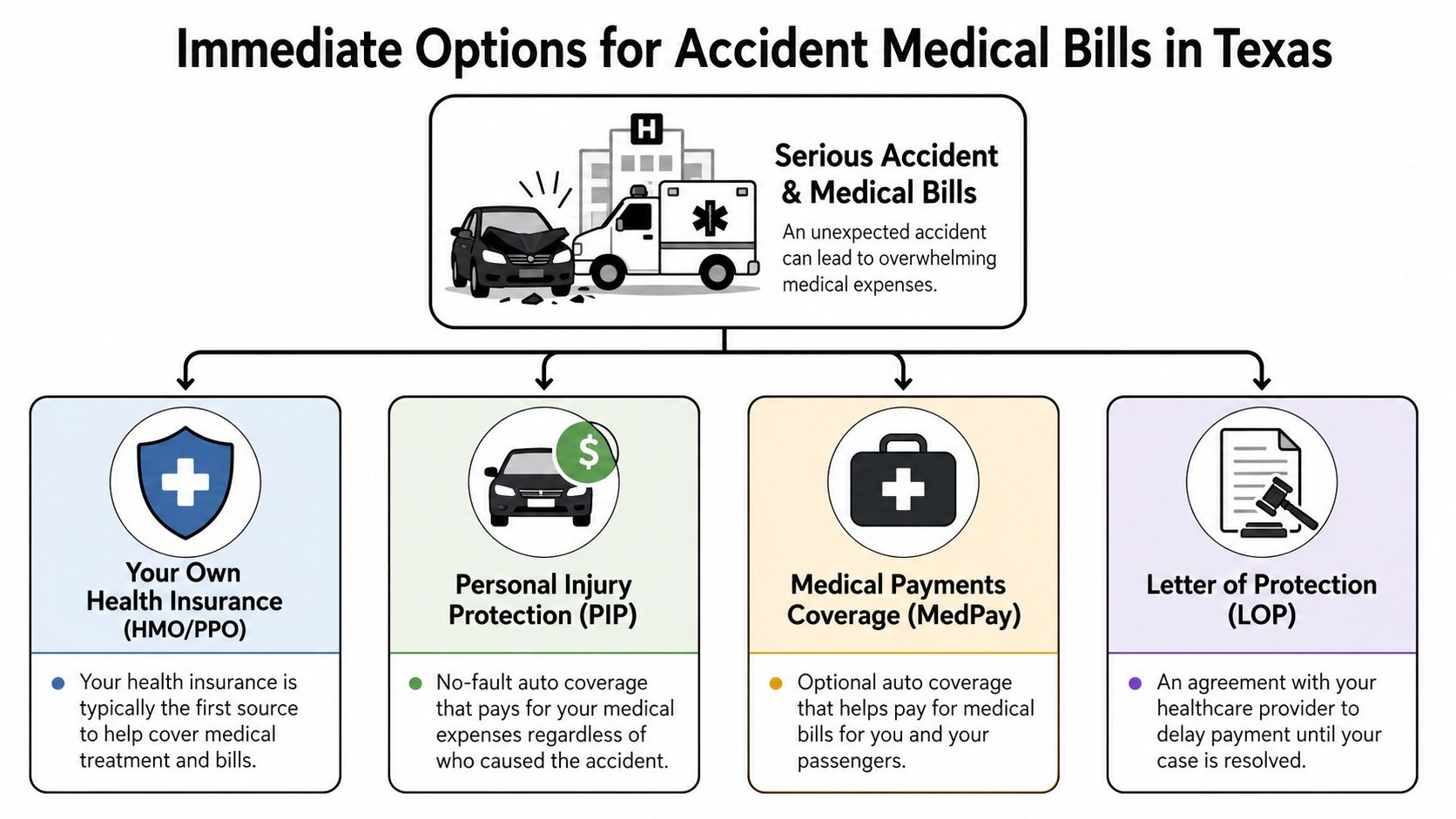
Texas follows a fault-based system, so the driver who caused the crash is generally responsible for the injured person's medical costs. But Texas only requires minimum bodily injury liability coverage of $30,000 per injured person, $60,000 per accident, and $25,000 for property damage, which is one reason many injured people first rely on their own coverage while the liability claim is investigated. Texas insurers must offer PIP, and if it wasn't rejected in writing, it can provide immediate no-fault help for medical bills and lost wages, as explained in this discussion of Texas medical bills after a car accident.
Start with your own available coverage
For many people, the first practical answer isn't the other driver's insurer. It's your own policy or your health coverage.
Here are the main buckets:
| Option | What it does | Common use |
|---|---|---|
| PIP | No-fault auto coverage that can help with medical bills and lost wages | Fast first layer after the crash |
| MedPay | Auto coverage for medical expenses | Helps with treatment costs |
| Health insurance | Bills treatment through your regular medical plan | Useful for ongoing care |
| Letter of Protection | Delays payment until the case resolves in some situations | Used when other options are limited |
PIP is often the first money in
In Texas, PIP commonly starts at $2,500 unless higher limits were purchased, and it pays regardless of fault, which is why it often becomes the first source of help after a crash, as described in this overview of how Texas crash victims use PIP while treatment continues.
After a Houston freeway crash, for example, a driver might use that PIP coverage to help pay for the ambulance, ER visit, or an early follow-up appointment while the bigger injury claim is still being sorted out.
Practical rule: Don't wait for the other driver's insurance before you get medically evaluated. Delayed care can hurt both your health and your claim.
MedPay and health insurance can fill gaps
Medical Payments coverage, often called MedPay, is another possible source. It usually focuses on medical expenses only. It doesn't work exactly like PIP, and whether it's available depends on your policy.
Your health insurance can also keep treatment moving. That can be important if you need specialist visits, imaging, therapy, or longer-term care. If you don't have health coverage, options like a provider agreement may matter even more. If that's your situation, this guide on getting medical treatment without insurance after an accident can help you understand the basics.
Some families also worry that one accident can trigger a much larger financial spiral. If you're under pressure from collections or unpaid care, this article about bankruptcy due to medical bills gives useful context on why acting early matters.
How the At-Fault Drivers Insurance Pays
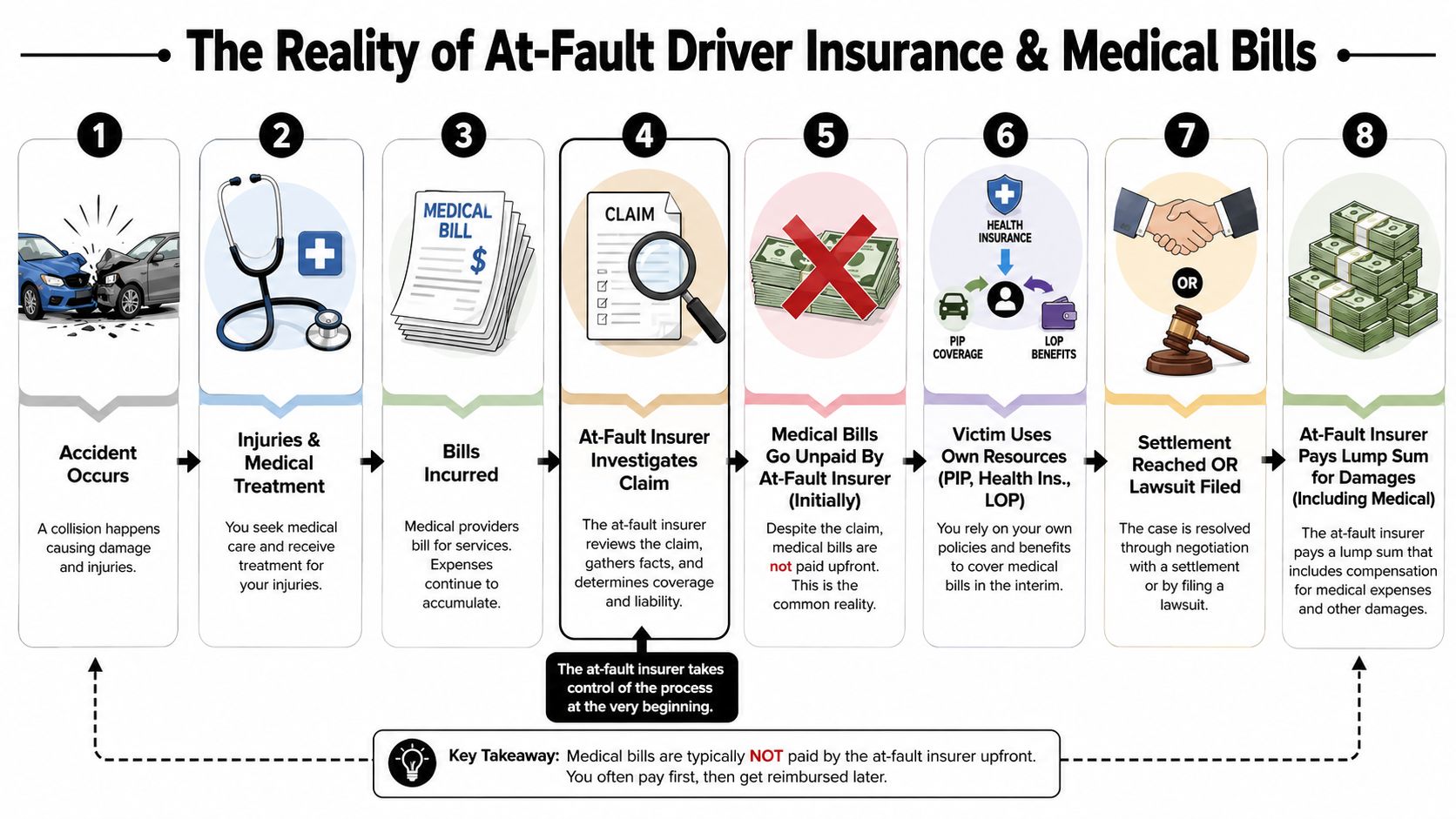
A lot of injured people think the at-fault driver's insurance company will pay each medical bill as it comes in. That isn't how these claims usually work in Texas.
The liability carrier is not typically set up like your health insurer. It doesn't process your ER invoice on Monday, your MRI on Thursday, and your physical therapy bill the next week. It investigates first. It questions fault. It reviews records. It often waits until treatment is finished or more clearly understood.
Why the other insurer usually doesn't pay as you go
In Texas car-crash claims, medical bills are usually not paid bill-by-bill by the at-fault driver's insurer while treatment is ongoing. Instead, the carrier typically resolves payment in a single settlement after fault and damages are proven, and the injured person may rely on PIP first to keep care moving. This explanation of bodily injury liability coverage in Texas claims helps show where that settlement money is supposed to come from.
Think of liability insurance like the final accounting at the end of a dispute, not like a running tab at the doctor's office.
Fault has to be proven first
That delay exists for a reason. The insurer wants answers to questions like:
- Who caused the crash
- Whether you share any blame
- Whether the treatment relates to the wreck
- Whether the amount claimed is justified
Texas uses a modified comparative responsibility system. In plain English, if you were partly at fault, your recovery may be reduced. If you were more responsible than the other side, you may be barred from recovering damages. That's why evidence from the beginning matters so much.
After a truck collision on a Houston corridor, for example, the trucking company's insurer may argue that you changed lanes unsafely, braked suddenly, or had a pre-existing condition. A truck crash lawyer Houston families trust will usually focus early on preserving evidence, driver logs, company records, witness statements, and crash scene details. That early work can shape who pays at the end.
The most dangerous phrase in an injury claim is, “The other insurance company said they're taking care of it.”
Settlement is often the end-stage payment
Once treatment stabilizes, a lawyer or claimant can present the records, bills, proof of lost income, and evidence of pain and disruption. Then the insurer may offer a lump-sum settlement. If it doesn't offer a fair amount, the next step may be a lawsuit.
That's true in a regular car claim and in bigger cases handled by a car accident lawyer or a truck accident lawyer. The path is similar. The size, resistance, and complexity usually aren't.
Common Pitfalls Liens Subrogation and Repayment
Many people are often blindsided.
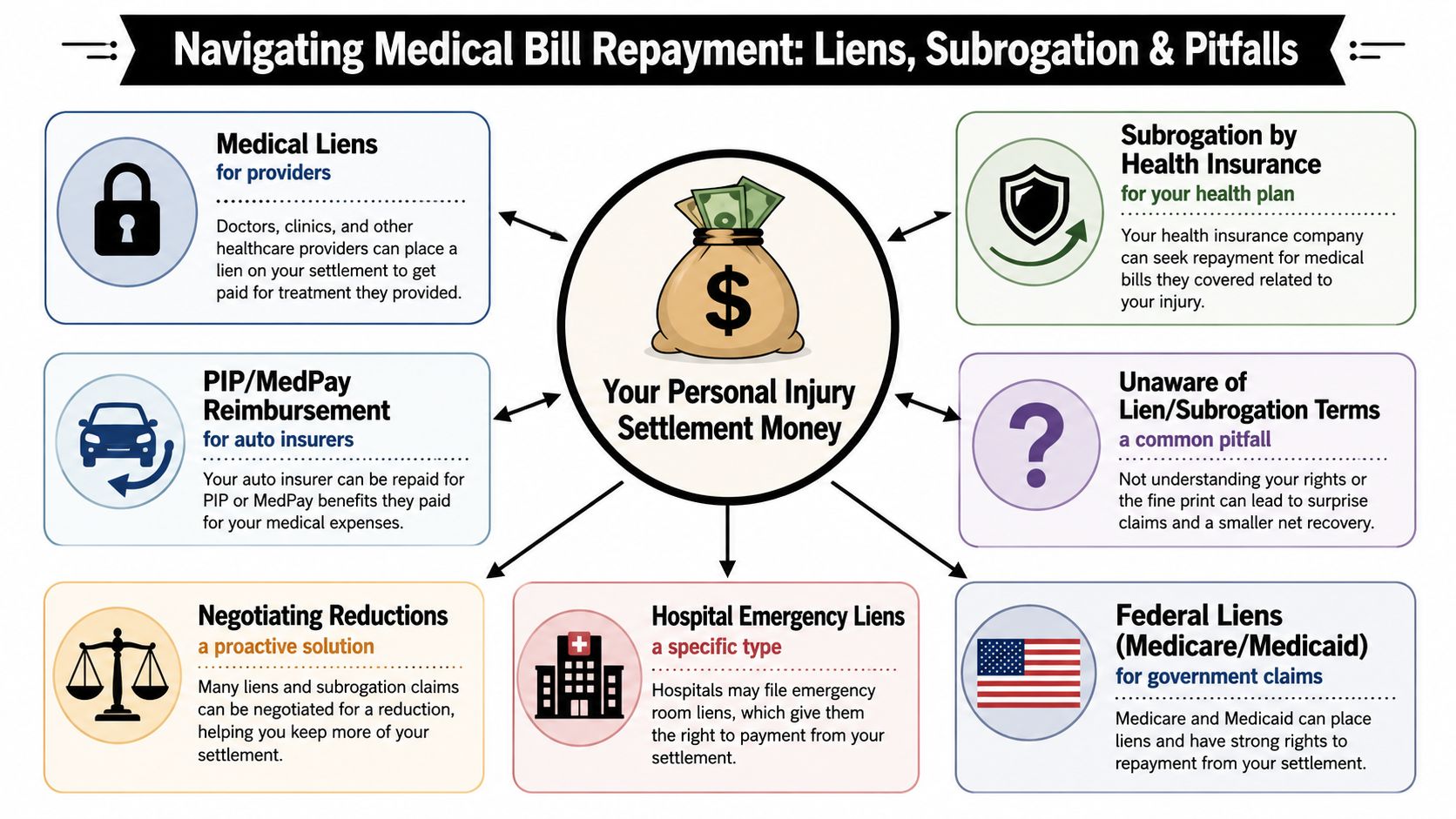
You fought to get treatment. You waited while the case developed. Then the settlement finally comes in, and suddenly multiple parties claim a right to part of that money. That can include hospitals, health insurers, and sometimes other payors.
Not every bill automatically survives
A major challenge for accident victims is proving that all treatment was reasonable and necessary and directly tied to the crash. Insurers often dispute charges for things like MRIs, specialist care, pain management, or long-term therapy. Health insurance reimbursement rights and hospital liens can also consume a large portion of a settlement, which is why careful negotiation matters so much, as discussed in this review of recovering medical expenses in a Texas personal injury case.
That means the fight is often not just who pays the bill first. It's who gets reimbursed later, and for how much.
What a lien means in plain English
A lien is a legal claim against money from your case.
A hospital lien, for example, can attach to part of the recovery. If a provider treated you and has a valid claim, it may seek payment from the settlement before you receive your final share.
A simple way to think about it is this:
- Treatment happens first
- The case settles later
- The provider says, “Pay us from the case proceeds”
That doesn't always mean the full amount must stand untouched. It means the issue must be addressed carefully.
What subrogation means
Subrogation usually involves your own health insurer asking to be repaid if it covered accident-related treatment and you later recover money from the at-fault party.
This surprises people because they assume, “I paid premiums, so that's the end of it.” Often, it isn't.
Some plans are more aggressive than others. Government-related claims can bring additional rules. In serious cases involving brain trauma, spine injuries, or fatal crashes, these repayment issues can become as important as the original liability dispute. That's one reason families working with a catastrophic injury lawyer or a wrongful death lawyer Texas often need a much broader strategy than negotiating the headline settlement number.
A settlement isn't just a number. It's a number minus every valid claim that attaches to it.
To understand why billing language matters, even down to procedure coding, it can help to learn CPT billing with Patient Talker LLC. You don't need to become a coder. But knowing that billing descriptions and treatment records can affect disputes over necessity and charges can make these issues less mysterious.
Here's a useful overview of the repayment stage:
| Claim against settlement | What it usually means |
|---|---|
| Hospital lien | A provider claims payment from case proceeds |
| Health insurance subrogation | Your insurer seeks reimbursement for covered treatment |
| Other reimbursement claims | Additional policy-based repayment demands may arise |
A deeper explanation of the negotiation process is available in this guide on negotiating medical bills after settlement.
Here is a short video that helps illustrate why these repayment issues matter in injury cases.
Critical Steps to Take After Your Accident
The hours and days after a crash are chaotic. A simple checklist can protect both your health and your legal rights.
Protect yourself first
- Get medical care right away. Even if you think you're “just sore,” some injuries show up later. Prompt treatment also creates the records insurers will examine.
- Follow the treatment plan. If a doctor recommends follow-up care, imaging, or therapy, try not to ignore it. Gaps in care give insurers room to argue that you weren't badly hurt.
Preserve the evidence
- Call law enforcement and make sure a report is created. That report won't decide the whole case, but it often becomes an early reference point.
- Take photos if you can. Get vehicle damage, skid marks, road conditions, visible injuries, and the surrounding area.
- Collect names and contact information. Independent witnesses can matter when drivers tell different stories.
If you're physically unable to gather evidence, ask a family member or trusted friend to help as soon as possible.
Be careful with insurance conversations
- Notify your own insurer. Most policies require notice, and your own coverage may be part of the first payment stage.
- Don't give a recorded statement to the other driver's insurer without advice. Adjusters often ask questions in ways that lock people into incomplete or misleading answers.
- Don't sign broad medical authorizations. You may accidentally give the insurer access to records that have nothing to do with the crash.
Keep a claim file
Keep everything in one place:
- Medical bills
- Prescription receipts
- Mileage to appointments
- Work notes and pay records
- Emails and letters from insurers
Texas also has filing deadlines. A lawsuit usually has to be filed within the legal time limit, and missing that window can destroy an otherwise valid case. That's why calling a Texas personal injury lawyer early is often less about aggression and more about protection.
How a Lawyer Protects Your Financial Recovery
By the time individuals call a lawyer, they already know they're injured. What they don't always realize is how many financial threats are building in the background.
An experienced Houston car accident attorney doesn't just argue about fault. The job is broader than that. It involves controlling the timeline, protecting the evidence, coordinating the claim, and stopping the final recovery from being swallowed by billing disputes and insurance pushback.
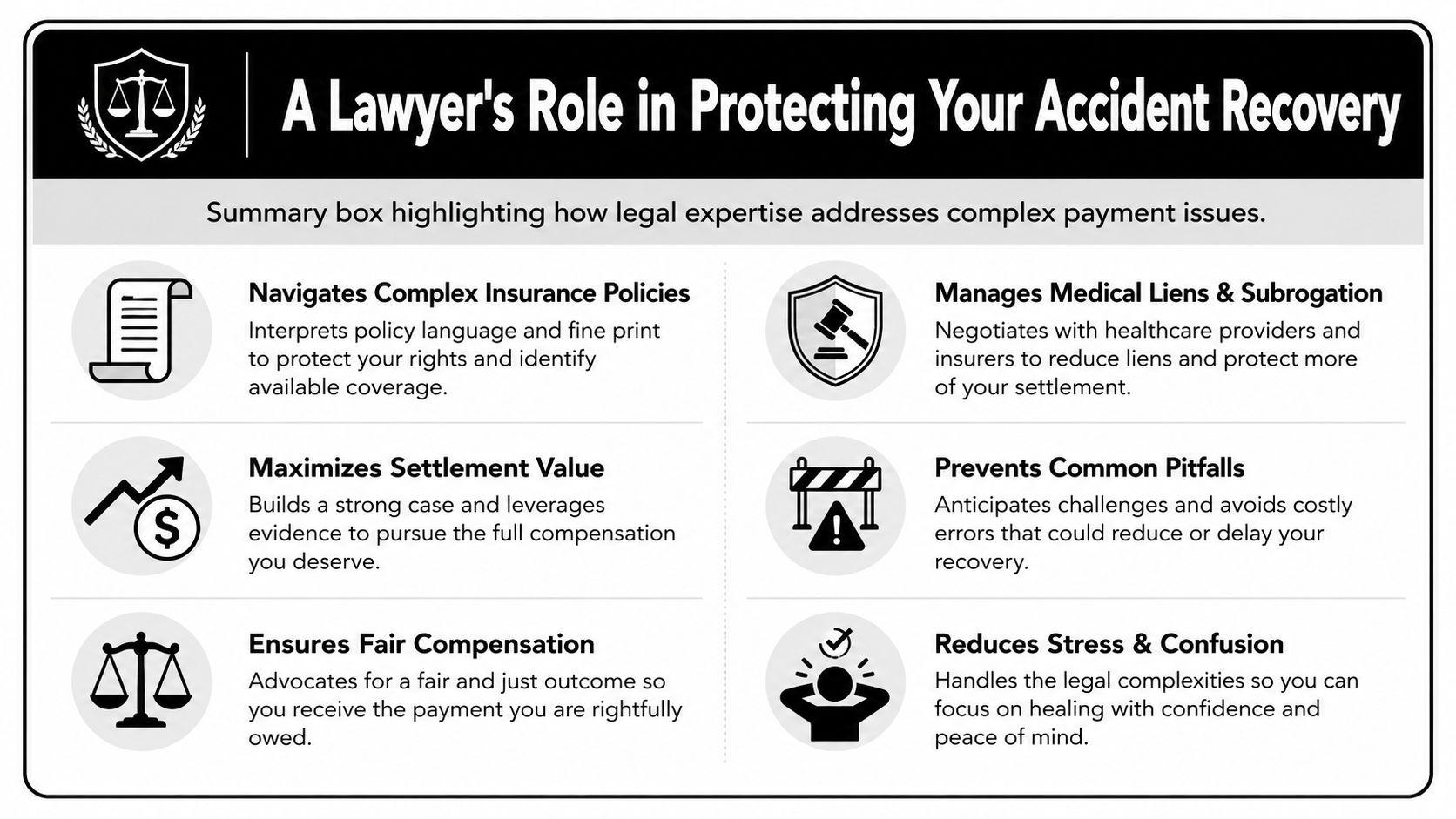
A lawyer helps at the pressure points
The key intervention points usually look like this:
| Stage | Risk | Lawyer's role |
|---|---|---|
| Early treatment | Bills arrive before liability is resolved | Identify payment options and protect records |
| Liability investigation | Insurer disputes fault | Gather proof, witness statements, and crash evidence |
| Medical proof | Carrier says treatment was excessive or unrelated | Organize records and support necessity |
| Settlement stage | Liens and repayment claims reduce the payout | Negotiate reductions where possible |
Why timing matters
Early representation often changes the shape of the case.
If the insurer contacts you before the facts are clear, a lawyer can control communications. If records are missing, someone needs to collect them. If there's surveillance footage, black-box evidence, or witness testimony, someone needs to move before it disappears.
That matters in a straightforward wreck and even more in cases involving company vehicles, commercial carriers, severe trauma, or a death claim. A wrongful death lawyer Texas families turn to is often dealing not just with grief, but with probate questions, insurance layers, and pressure from multiple entities at once.
The medical side of the case has to be built carefully
Insurers often challenge whether later treatment was connected to the crash. They may say the MRI was unrelated, the referral was too late, or the surgery was based on a prior condition.
A lawyer's role is to gather the records in a way that tells a clear story:
- What symptoms started after the collision
- What providers found
- Why treatment progressed
- How the injuries affected daily life and work
Sometimes that means coordinating with providers. Sometimes it means identifying record gaps before the adjuster uses them against you.
Good legal work isn't only about asking for money. It's about proving why the medical care happened and why the law requires compensation.
The last fight is often over the net recovery
This is the part many people never see coming. A settlement can look fair on paper but still leave the client disappointed if the back-end claims aren't handled well.
That's where legal negotiation becomes practical, not theoretical. The work may include reviewing billing claims, identifying whether a lien is valid, disputing overstated balances, addressing repayment demands, and trying to preserve more of the client's final recovery.
The Law Office of Bryan Fagan, PLLC handles Texas injury claims involving that full chain of issues, including auto collisions, truck crashes, catastrophic injuries, and wrongful death matters.
For you, that means less time arguing with adjusters and billing departments, and more time focusing on recovery.
You Dont Have to Face This Alone
If this process feels unfair, that's because it often does.
You get hurt first. The bills come next. The liability carrier moves slowly. Then, when the case finally resolves, hospitals or insurers may try to take part of the recovery. That's why understanding how medical bills are paid after accident Texas isn't just about who writes the first check. It's about the entire timeline.
You have rights under Texas law. You also have deadlines, evidence issues, and financial risks that deserve careful attention. If you lost a loved one, suffered a life-changing injury, or you're trying to keep treatment going after a wreck, legal guidance can make the process far more manageable.
Recovery is possible. Clarity is possible too. With the right help, you can protect your health, your claim, and your future.
If you need clear answers after a crash, schedule a free consultation with Law Office of Bryan Fagan, PLLC. You can talk through your medical bills, insurance questions, liens, fault issues, and next steps with a Texas personal injury lawyer. The firm handles car wrecks, truck collisions, catastrophic injury claims, and wrongful death cases across Texas, and cases are handled on a contingency-fee basis, which means you pay no fee unless compensation is recovered.