Skip to content
Texas personal injury lawyers usually take 33.33% to 40% of the total recovery under a contingency fee agreement, and you typically pay no attorney fees upfront. In many Texas cases, that means about 33.33% if the claim settles before a lawsuit is filed and 40% if the case moves into litigation.
If you're reading this after a wreck, a fall, or the loss of someone you love, you're probably not thinking in legal terms. You're thinking about missing work, medical appointments, calls from insurance adjusters, and whether you can afford help at all. That concern is real, and it's one of the first questions people ask a Texas personal injury lawyer.
The financial side of a case should never feel hidden. What matters most isn't just the lawyer's percentage. It's your net recovery, meaning what you receive after attorney fees, case expenses, and any valid medical liens or unpaid bills are resolved. That's the number families live on while they rebuild.
A serious accident can change your life in seconds, but you don't have to face it alone.
You've Been Injured and You Need Answers
After a Houston freeway crash, many don't call a lawyer because they want to file paperwork. They call because everything starts moving at once. The hospital wants insurance information. The other driver's carrier wants a recorded statement. Your employer wants to know when you're coming back.
At the same time, you're hurting.
For many families, the biggest fear isn't whether they have a case. It's whether they can afford to protect it. That's why contingency fees matter in Texas personal injury cases. Instead of paying a lawyer by the hour, the attorney's fee depends on whether money is recovered for you.
Why this matters when bills are already piling up
A contingency fee arrangement gives injured people access to legal help without paying attorney fees upfront. Texas legal resources explain that personal injury lawyers commonly charge a percentage of the recovery, and the lawyer receives nothing in attorney fees if there is no recovery under that agreement, with fees governed by reasonableness standards under the Texas rules of professional conduct through Texas Law Help's discussion of fees and hiring a lawyer.
That structure is especially important when you're trying to make decisions under stress. You can focus on treatment and stability while your legal team handles the claim, gathers records, and deals with the insurance company.
Practical rule: If you're worried you can't afford a lawyer after an accident, ask whether the case is handled on a contingency fee and get the answer in writing before you sign anything.
The legal basics you should know early
Texas personal injury law turns on fault and negligence. In plain English, that means the injured person must usually show that someone else failed to use reasonable care and caused harm. Texas also applies comparative responsibility, so fault can be disputed and divided between people involved in the incident.
A few basic steps help protect your claim:
- Get medical care: Your health comes first, and your records help document what happened.
- Be careful with insurers: Keep conversations short and don't guess about injuries or blame.
- Save evidence: Photos, discharge papers, repair estimates, and witness information can matter later.
- Act before deadlines pass: Texas claims are subject to a statute of limitations, so waiting too long can hurt or even bar a case.
- Call a lawyer when liability or injuries are serious: This is especially true after a commercial truck collision, a fatal crash, or a catastrophic injury.
If your injuries came from a wreck, a work vehicle collision, or a fatal crash, the same question usually follows: what percentage do lawyers take for personal injury in Texas, and what will that leave for me in the end?
The Standard Contingency Fee in Texas Personal Injury Cases
A client settles a case for a number that sounds like relief, then asks the question that matters most. What will be left after the lawyer is paid? That is the right way to look at a contingency fee, because the percentage is only one part of the final check.
In many Texas personal injury cases, the fee is 33.33% before a lawsuit is filed and 40% after litigation begins, as explained in Herrman & Herrman's overview of contingency fees.
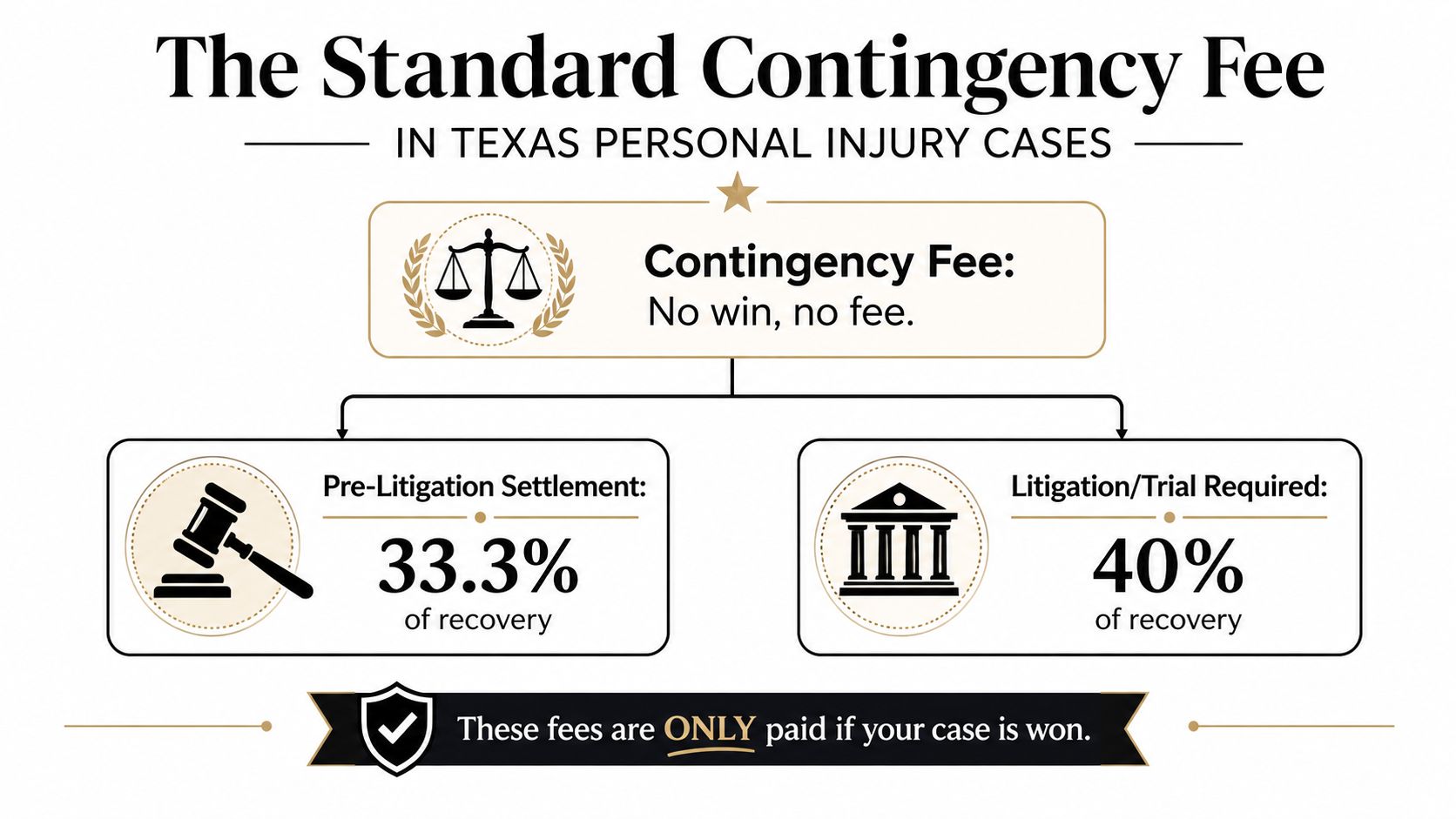
That usually means the attorney fee is paid out of the recovery, not billed to you upfront by the hour. If you're exploring representation, a Texas Personal Injury Lawyer typically handles cases on a no-fee-unless-we-win basis. If you want a fuller explanation of the structure, this guide on how contingency fees work in Texas injury cases walks through the basics.
Why the percentage changes
The increase from one-third to 40% reflects what happens after a case leaves negotiation and enters litigation. Before suit, the work often centers on collecting records, reviewing liability, preparing a demand, and negotiating with the insurance carrier. After suit is filed, the case usually requires formal discovery, depositions, hearings, expert work, and trial preparation.
That change affects more than attorney time.
It also affects risk, cost, and delay. Some cases that look straightforward at first become heavily disputed once the defense hires counsel and starts fighting over fault, medical treatment, or the value of future care. A higher litigation fee is common because the lawyer is committing more work and usually advancing more money to keep the case moving.
What the fee percentage does, and does not, tell you
The fee percentage tells you how the attorney is paid for legal work. It does not tell you what your net recovery will be. Clients get surprised when they focus on the one-third or 40% number and never ask how expenses and medical liens will be handled at the end.
That is why the written fee agreement matters so much. It should clearly state when the percentage changes, whether the percentage rises again for trial or appeal, and how case expenses are treated. A lower advertised fee can still leave a client with less money if the contract is vague about deductions.
Here is the basic comparison:
| Case path | Common fee structure | What usually drives the difference |
|---|---|---|
| Settles before suit | 33.33% | Investigation, records, demand work, negotiation |
| Lawsuit filed, case litigated | 40% | Discovery, depositions, hearings, experts, trial prep |
The practical question is simple. After attorney fees, expenses, and medical claims are paid, how much of the settlement reaches you?
A note about trial
Some contracts set a different percentage if the case goes through trial or appeal. That is not unusual, but it should never be a surprise. Read that section carefully and ask for a plain-English example using real numbers before you sign.
A good fee conversation should leave you knowing more than the percentage. It should leave you with a clear picture of how the settlement will be divided and what could change that result.
Beyond the Fee Understanding Case Expenses and Other Costs
Attorney fees pay for legal work. Case expenses are different. They are the out-of-pocket costs required to build and move the claim forward.
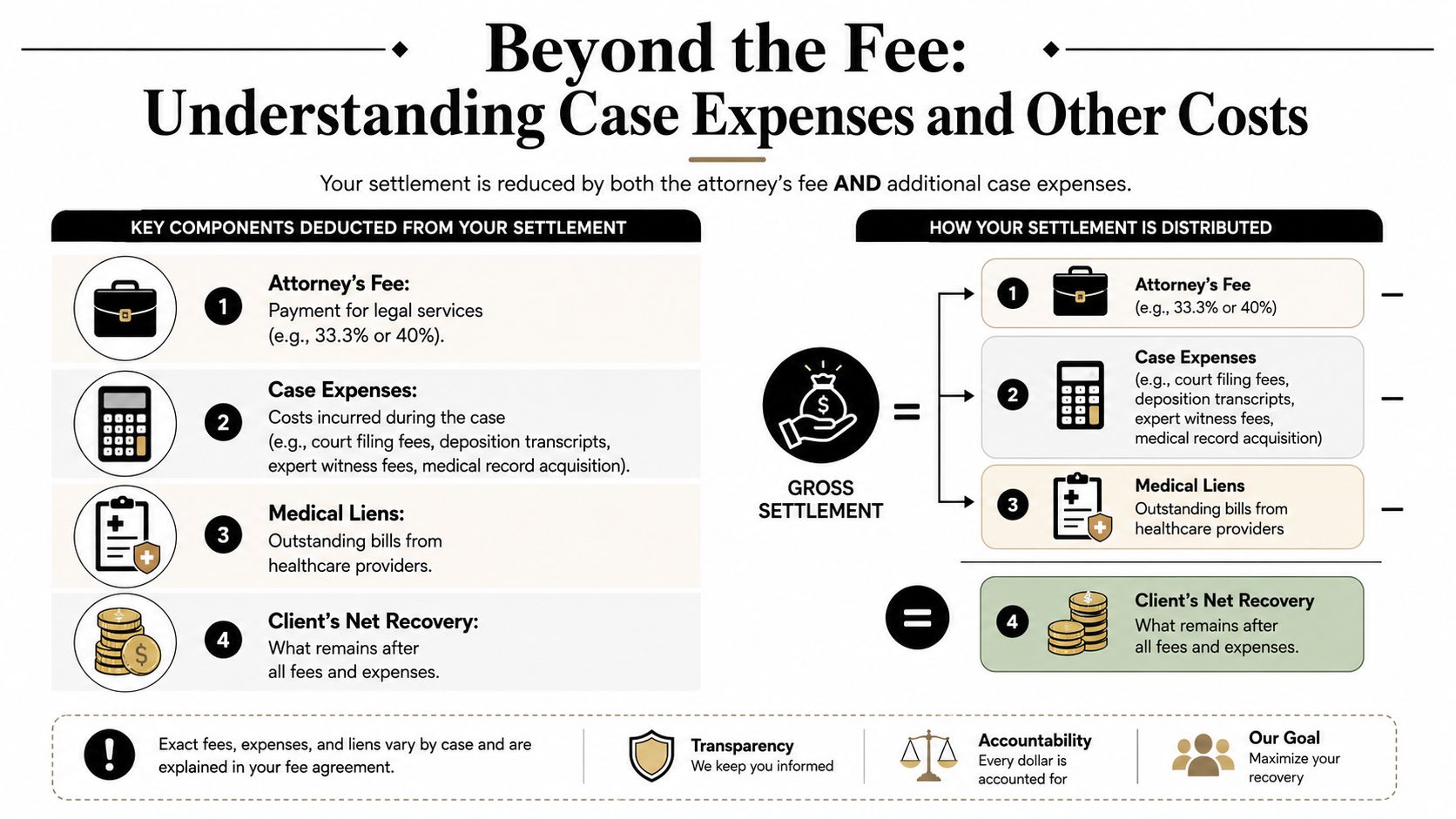
This distinction matters because people often hear "no upfront fees" and assume nothing else affects the final check. In practice, several pieces can affect the amount you receive at the end. If you're trying to understand treatment charges after a wreck, this article on how medical bills are paid after an accident in Texas helps explain the process.
Common expenses in a Texas injury case
Some expenses are modest. Others grow if the case becomes contested. Texas filing fees alone can vary by county and case complexity, typically from a few hundred dollars to over $1,000, and many firms advance those costs to be repaid from the recovery after a successful outcome, as described in this explanation of personal injury lawsuit costs in Texas.
Other common expenses may include:
- Medical records and billing retrieval: Providers usually charge to produce records.
- Deposition transcripts: Court reporters and transcripts are part of formal discovery.
- Expert review: In some cases, outside professionals help analyze medical issues or collision facts.
- Service and filing costs: A lawsuit has to be filed and served properly.
- Exhibit and case preparation costs: Trial-ready cases often require organized evidence presentation.
Liens and unpaid medical bills can affect your net recovery
A settlement doesn't go straight from the insurance company into your bank account untouched. If a healthcare provider, health plan, or other party has a valid claim for reimbursement, that amount may need to be resolved from the settlement funds. People often refer to these as liens, though the exact legal basis can vary.
After a serious crash on I-45, for example, a client might have ambulance charges, emergency room treatment, follow-up imaging, and specialist care before the case ever settles. Even if the liability case is strong, those outstanding balances still matter when the final disbursement is prepared.
A fair settlement can still feel disappointing if nobody explained ahead of time how expenses and medical claims reduce the final check.
Ask how the math is done
One of the most important fee questions is whether expenses are deducted before or after the attorney's fee is calculated. The contract should answer that clearly. So should the lawyer.
Use this short checklist during a consultation:
- Ask for a sample closing statement: It should show gross recovery, fee, expenses, liens, and net amount.
- Ask who advances costs: Many firms do, but you shouldn't assume.
- Ask what happens if the case isn't successful: The answer should be specific, not vague.
- Ask how medical claims will be handled: This can make a real difference in what you keep.
How Your Settlement Is Calculated With Examples
The easiest way to understand fees is to follow the money from start to finish.
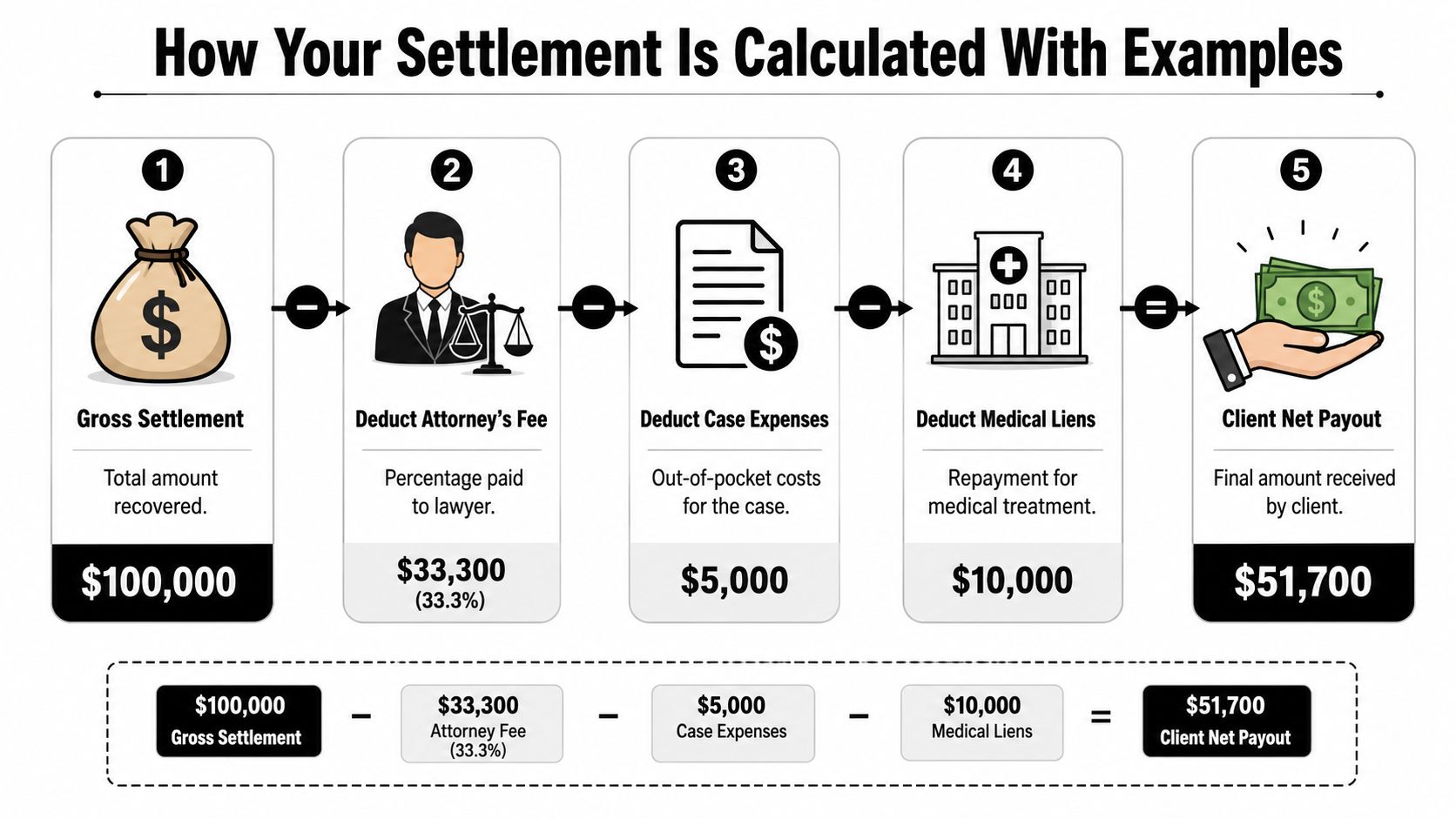
When people ask what percentage do lawyers take for personal injury in Texas, they're often really asking a different question: "What will I receive?" If you want to estimate different outcomes, this page on how to calculate a car accident settlement can help you think through the moving parts.
Example one with the full breakdown
Take a freeway crash example. A driver is hit in Houston, receives treatment, misses work, and the case resolves before suit. The gross settlement is $100,000. The fee is 33.3%, or $33,300. Case expenses are $5,000. Medical liens are $10,000. The client's net recovery is $51,700.
That sequence looks like this:
| Step | Amount |
|---|---|
| Gross settlement | $100,000 |
| Less attorney fee at 33.3% | $33,300 |
| Less case expenses | $5,000 |
| Less medical liens | $10,000 |
| Client net recovery | $51,700 |
Those numbers show why the base fee alone never tells the whole story. A person who only hears "one-third fee" may still be surprised if nobody discussed records costs, filing costs, or treatment balances.
Here's a short visual explanation of how these calculations often work in practice.
Example two with a more complex claim
Now consider a more difficult case, such as a fatal commercial vehicle crash involving a family pursuing a wrongful death claim. Once litigation begins, the fee percentage is often higher because the work is deeper and the case expenses can increase as the dispute develops.
I won't assign extra dollar figures here unless they're fixed by the written agreement or the actual closing statement. But the order usually stays the same:
- Gross recovery comes in
- Attorney fee is deducted under the contract
- Advanced case expenses are reimbursed
- Medical or related claims are resolved
- The remaining funds go to the client or family
That order is why families looking for a wrongful death lawyer Texas or a truck crash lawyer Houston should ask for a projected settlement breakdown during the consultation, not just a fee quote.
A real-world way to judge value
A lower fee isn't always the better deal if the lawyer doesn't prepare the case well, misses evidence, or pushes you to settle before the medical picture is clear. By the same token, a higher fee only makes sense if the representation is organized, transparent, and positioned to improve the outcome.
For many injured people, the right measure is simple: did the lawyer protect the claim, deal with the insurer properly, manage the paperwork, and help maximize the client's net recovery after all deductions?
Important Questions to Ask a Lawyer About Fees
A good consultation should leave you less confused than when you started. If a lawyer can't explain fees clearly before you hire them, you can expect more confusion later when money is on the line.
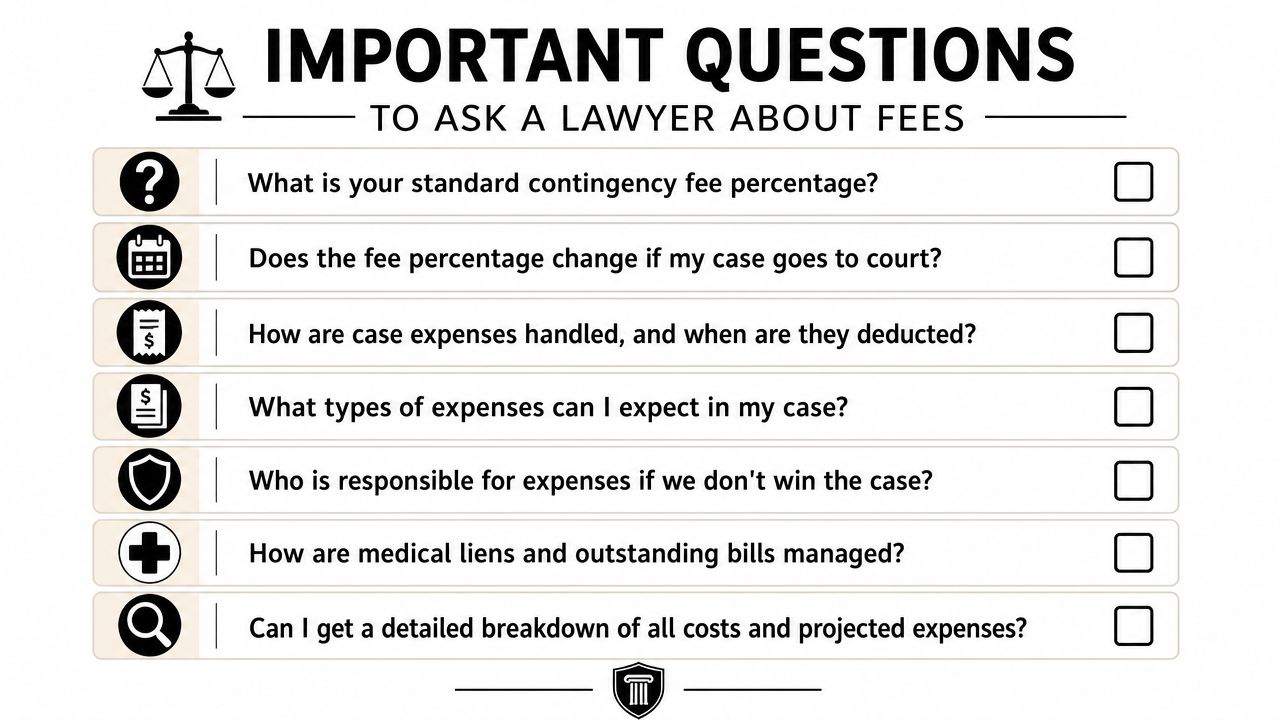
The questions that actually matter
Bring these questions to a free consultation and write down the answers:
- What is your standard contingency fee percentage? Ask for the exact percentage in plain language.
- Does the percentage change if my case goes into litigation or trial? You want the full schedule, not a partial answer.
- Are expenses deducted before or after the fee is calculated? This affects your net recovery.
- What kinds of expenses are common in a case like mine? Car wrecks, truck cases, and catastrophic injuries don't all cost the same to pursue.
- Who pays expenses if there is no recovery? Don't assume. Ask.
- How are medical liens or unpaid bills handled? This is often one of the biggest factors in the final distribution.
- Will I receive a written closing statement? You should be able to review every deduction.
Why these questions protect you
Insurance companies already know where injured people feel pressure. They know many people need money quickly, don't feel well, and don't want another complicated conversation. A lawyer should reduce that pressure, not add to it.
After a rear-end crash, a Houston car accident attorney may be dealing with treatment records, lost wage proof, property issues, and a liability dispute all at once. If the fee agreement is clear, you can make decisions with your eyes open. If it isn't, small misunderstandings turn into big frustrations at settlement time.
Ask for examples, not slogans. A trustworthy lawyer should be able to show you how a settlement would be distributed using sample numbers or a mock closing sheet.
Don't forget the legal fundamentals
Fees matter, but they aren't the only reason to call quickly. Fault can be disputed. Comparative responsibility can reduce recovery. Evidence can disappear. The statute of limitations keeps running whether the insurer is "still reviewing" the claim or not.
If your injuries are serious, the other driver is blaming you, or the insurer wants a statement right away, that's the moment to get legal advice.
Your Recovery Is Our Priority Take the Next Step
A client calls a week after a wreck. The car is in the shop, treatment has started, and the insurer wants a statement. The first question is often, “How much of my settlement would I keep?” That is the right question.
The answer is not just the attorney's percentage. Your net recovery depends on four moving parts: the settlement amount, the fee, case expenses, and any medical liens or unpaid bills that must be resolved before money goes out to you. A good fee conversation should leave you with a clear picture of that final check, not just a headline number.
Start with the basics and keep your file organized.
- Keep treating and follow medical advice: Gaps in care can hurt both your health and your case.
- Save every record: Bills, discharge papers, photos, wage loss documents, and insurer letters all matter.
- Be careful with insurance adjusters: A recorded statement given too early can create problems later.
- Do not sign a release without advice: Once a claim is settled, it is usually over.
- Get answers about the net payout: Ask how fees, expenses, and liens would likely affect your recovery in your specific case.
If you want a clearer picture of what may be included in a claim, What Damages Can You Recover in a Texas Injury Case? explains the main categories in plain English.
Good legal representation should lower stress, not add to it. That means clear fee terms, honest discussion about case costs, and a real effort to identify medical bills or liens before settlement money arrives. Clients deserve to know how the numbers work.
If you or a loved one was injured in a crash and you need clear answers about fees, deadlines, and what your case may be worth, schedule a free consultation with Law Office of Bryan Fagan, PLLC. We can talk through your situation, explain how contingency fees work, and help you understand what your recovery may look like after fees, expenses, and medical claims are addressed.