Skip to content
There is no single average settlement for a car accident back and neck injury in Texas. Depending on the injury and the facts of the crash, settlements can range from $5,000 to $500,000, and cases involving spinal cord damage can exceed $1 million, while a 2025 state-by-state study puts the Texas average at $503,648 and the median at $350,000.
A serious accident can change your life in seconds, but you don't have to face it alone.
If you're reading this, you may be dealing with pain that won't let up, missed work, medical appointments, and an insurance company that seems to want a fast answer before you even know how badly you're hurt. That's a hard place to be. A common first question in this situation is: what is the average settlement for a car accident back and neck injury?
It's a fair question, but "average" can be misleading. One person's case involves a few weeks of therapy after a rear-end collision. Another person's case involves surgery, chronic pain, or permanent spinal damage. Texas law also adds a major twist that many people don't realize until it's too late. If you're blamed for part of the crash, your compensation can drop sharply, or disappear altogether.
Your Life After the Accident and the Question of Compensation
The days after a crash often feel blurry. You may be trying to manage neck stiffness, lower back pain, headaches, numbness, or shooting pain down an arm or leg, while also figuring out how to pay bills and whether you'll be able to return to work.
That's why broad averages only help so much. A 2025 state-by-state data study on neck and back injury settlements reports that the average settlement amount for neck and back injuries in Texas is $503,648, with a median settlement of $350,000. Those numbers are useful, but they don't tell you what your case is worth. High-value catastrophic cases can pull the average upward, while more routine soft tissue cases settle for far less.
Why your number may look very different
Your settlement depends on facts that are unique to you:
- How serious the injury is
- What treatment you need
- Whether you can work
- How clearly the other driver caused the crash
- How well your injuries are documented
After a Houston freeway crash, for example, one driver may walk away thinking it's just soreness, only to develop lasting disc pain a few days later. Another may need immediate emergency care. Those two cases won't be valued the same, even if both involve "back and neck injuries."
Practical rule: The more your records show about your diagnosis, treatment, limits, and recovery, the easier it is to explain the value of your claim.
Medical follow-through matters early. If you're trying to understand what treatment options can look like after a collision, resources on Car Accident Treatment can help you see why prompt evaluation and consistent care often become central parts of an injury claim.
A settlement isn't a prize. It's an attempt to compensate you for what the accident has cost you physically, financially, and personally.
The Two Types of Damages in a Personal Injury Claim
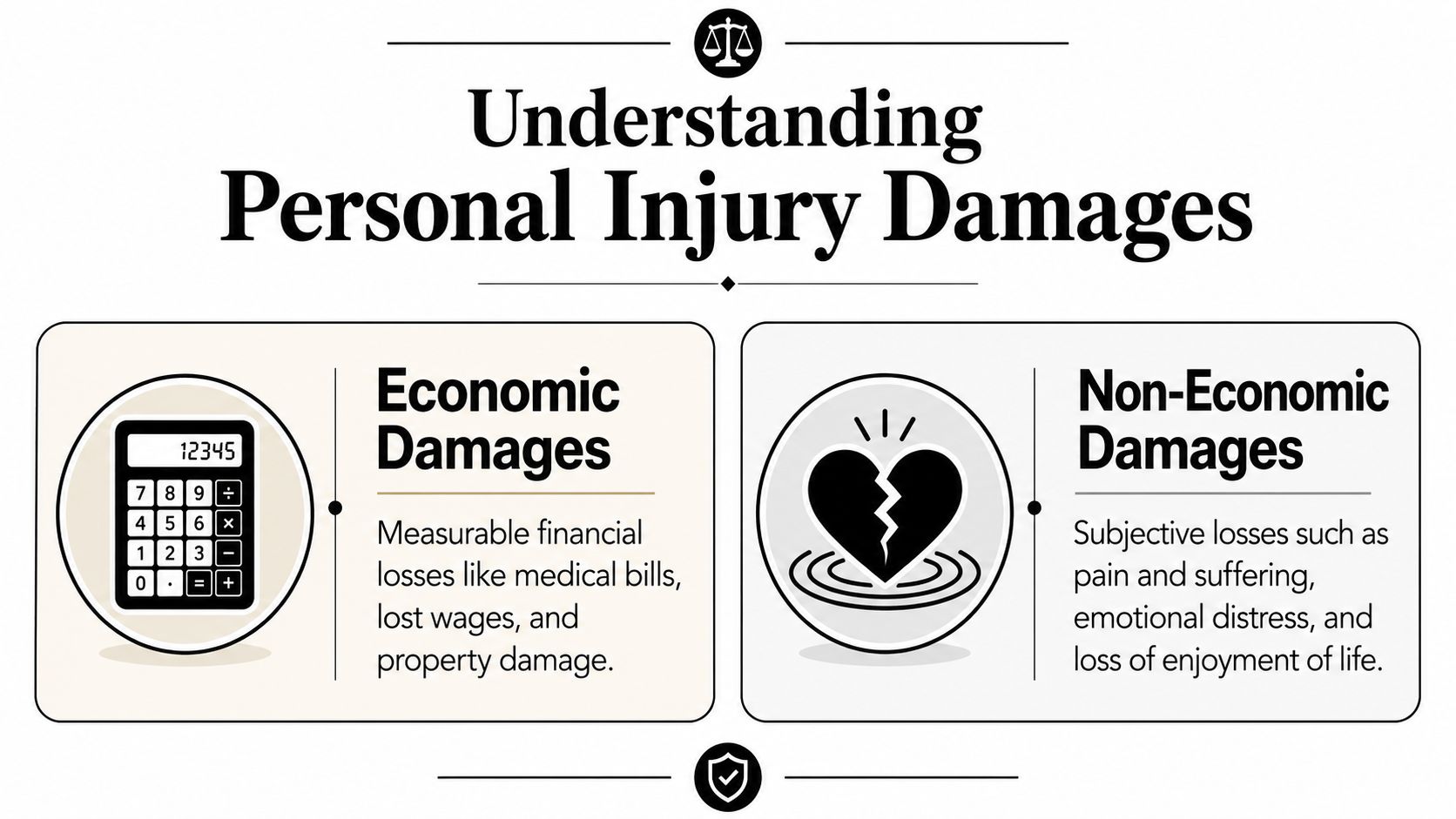
When people hear a settlement figure, they often imagine that insurance companies just pick a number. That's not how a claim should work. A fair settlement is built from different categories of loss, called damages.
Economic damages
Economic damages are the losses you can usually document with bills, wage records, invoices, or other paperwork. These are the parts of your claim that have a clearer dollar value.
Common examples include:
- Medical bills for emergency care, imaging, doctor visits, therapy, pain management, surgery, medication, and follow-up care
- Lost wages if you missed time from work while recovering
- Reduced earning capacity if your injury affects the kind of work you can do in the future
- Out-of-pocket expenses tied to your treatment and recovery
If your back injury keeps you from lifting, driving, sitting for long periods, or working full shifts, those practical limitations can become part of the claim when they affect your income.
For a broader explanation of the categories Texas law recognizes, What Damages Can You Recover in a Texas Injury Case? outlines the types of compensation available to Texas injury victims.
Non-economic damages
Non-economic damages are just as real, even though they don't come with a receipt. These damages reflect the human cost of the injury.
They may include:
- Pain and suffering
- Emotional distress
- Loss of enjoyment of life
- Physical limitations in daily activities
- The strain the injury places on your routine and relationships
A person with a neck injury may still show up to work, but only in pain, on medication, and unable to sleep well. Another may stop coaching a child's team, exercising, or driving long distances because of ongoing symptoms. Those losses matter.
Pain and suffering isn't a bonus category. It's part of the real harm a serious back or neck injury can cause.
Why this breakdown matters
Insurance companies often focus first on the easy-to-count numbers. They may add up medical bills and lost income, then push back on everything else. That's one reason two claims with similar treatment records can still end with very different outcomes. The lawyer's job is to present the full picture, not just the spreadsheet.
Key Factors That Determine Your Back and Neck Injury Settlement Value
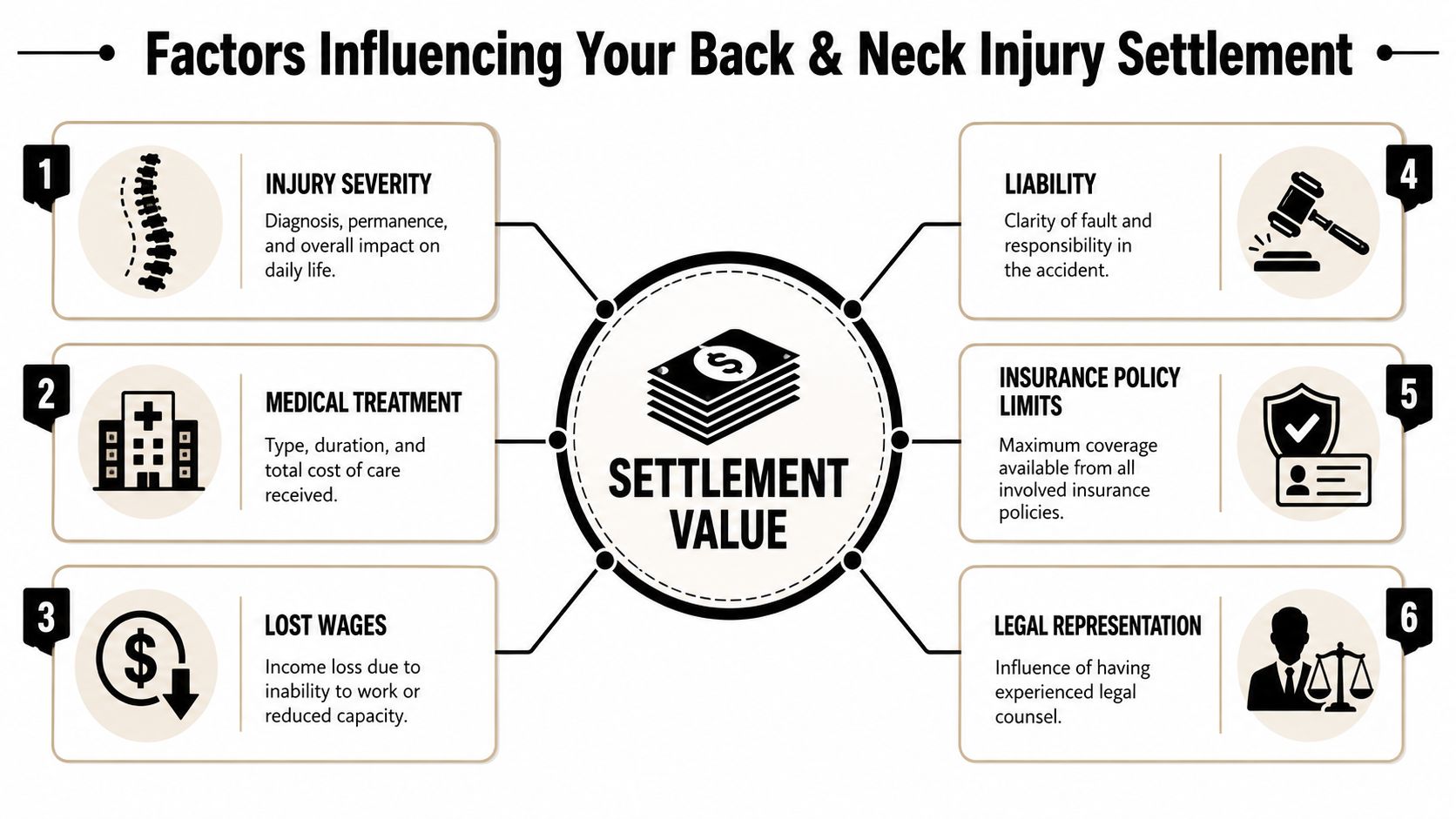
The value of a back or neck injury claim comes from a group of facts working together. One strong factor can raise value. One weak factor can drag it down. That's why the same diagnosis doesn't guarantee the same result.
Injury severity and whether the condition lasts
Severity matters first. A short-lived soft tissue strain is different from a disc injury that causes radiating pain, weakness, or long-term limits. Permanent impairment matters too. If your doctors expect lasting symptoms, future care, or reduced mobility, the claim usually carries more weight.
Texas data discussed in this review of back injuries from car accidents shows how widely values can differ depending on the medical picture.
The type and consistency of medical treatment
Insurance adjusters look closely at what care you received and whether you followed through. Gaps in treatment can give them an opening to argue that you weren't seriously hurt or that something else caused your symptoms.
That doesn't mean every case needs surgery. It does mean your records should make sense. If you were in pain, sought care, followed recommendations, and had objective findings, that creates a stronger claim.
Careful documentation can also matter in rehabilitation settings. Discussions about precision in physiotherapy assessments help show why consistent measurement of function, strength, and progress can make an injury easier to explain.
Here's a short video that helps illustrate how injury claims are evaluated in practice.
Work loss and future earning problems
Some people miss only a few days. Others can't return to the same job at all. If your work depends on lifting, driving, climbing, bending, or long periods of sitting or standing, a back or neck injury can hit your income hard.
A warehouse worker in Dallas with a lumbar disc injury may face a very different financial loss than someone who can do a desk job remotely with accommodations. The law looks at both present losses and future limits when supported by evidence.
Liability and the quality of proof
Even a serious injury claim can lose value if fault is disputed. If the insurer believes it can shift blame onto you, settlement pressure increases. Police reports, witness statements, crash photos, vehicle damage, and medical timing all matter here.
Pre-existing conditions
This point confuses many people. If you had prior neck pain, arthritis, degenerative disc disease, or an old back injury, the insurer may argue that the crash changed nothing. That's often an oversimplification.
The law doesn't block recovery just because you weren't perfectly healthy before the collision. If the accident worsened an existing condition, that aggravation may still be compensable. The key is careful medical proof showing what changed after the crash.
Insurance policy limits and legal representation
Sometimes the biggest issue isn't injury severity. It's available coverage. A devastating injury can't produce money that no policy provides, unless other sources of recovery exist.
Legal help also changes how evidence is gathered, organized, and presented. If you need case evaluation or representation, a Texas Personal Injury Lawyer can investigate fault, collect records, and present the claim in a way that reflects its full value.
How Texas Law Shapes Your Financial Recovery
Texas follows an at-fault system for car accidents. That means the person who caused the crash is legally responsible for the damage that follows. In practice, this means your case depends on proving negligence. You need to show that another driver failed to act reasonably and that the failure caused your injuries.
That sounds simple until the insurance company starts arguing about blame.

The 51 percent rule
Texas uses modified comparative responsibility. This is one of the most important settlement rules in the state, and it's often the reason an "average" number doesn't help much.
Under Texas's modified comparative negligence rule, your settlement is reduced by your percentage of fault. If you are awarded $100,000 but found 20% at fault, you only receive $80,000. If you are found 51% or more at fault, you recover $0.
That one rule can completely change the value of a case.
A simple example
Say you were rear-ended in Houston, but the insurer argues your brake lights weren't working or that you stopped suddenly. If your losses are valued at a substantial amount, even a partial fault finding can sharply reduce what you take home. If the insurance company pushes your fault high enough, your right to recover can disappear.
Liability isn't a side issue in Texas. It's one of the main drivers of settlement value.
Negligence and comparative responsibility in real life
This usually becomes a fight over details:
- Speed and following distance
- Lane changes and turn signals
- Distracted driving
- Who had the right of way
- What the vehicles and scene photographs show
After a San Antonio intersection crash, for instance, both drivers may blame each other. The insurer then looks for anything it can use to divide fault. That's why early evidence matters.
How long do you have to file a claim in Texas
Texas personal injury claims are also controlled by a statute of limitations, which is the legal deadline for filing suit. If you wait too long, you can lose the right to pursue compensation at all. The exact deadline can depend on the facts of the case, especially if a government entity is involved, so it's wise to speak with a lawyer promptly rather than guessing.
Families dealing with a fatal crash face related but different issues, and a wrongful death lawyer Texas families trust can help explain those deadlines and next steps.
Decoding the Insurance Company's Settlement Calculation
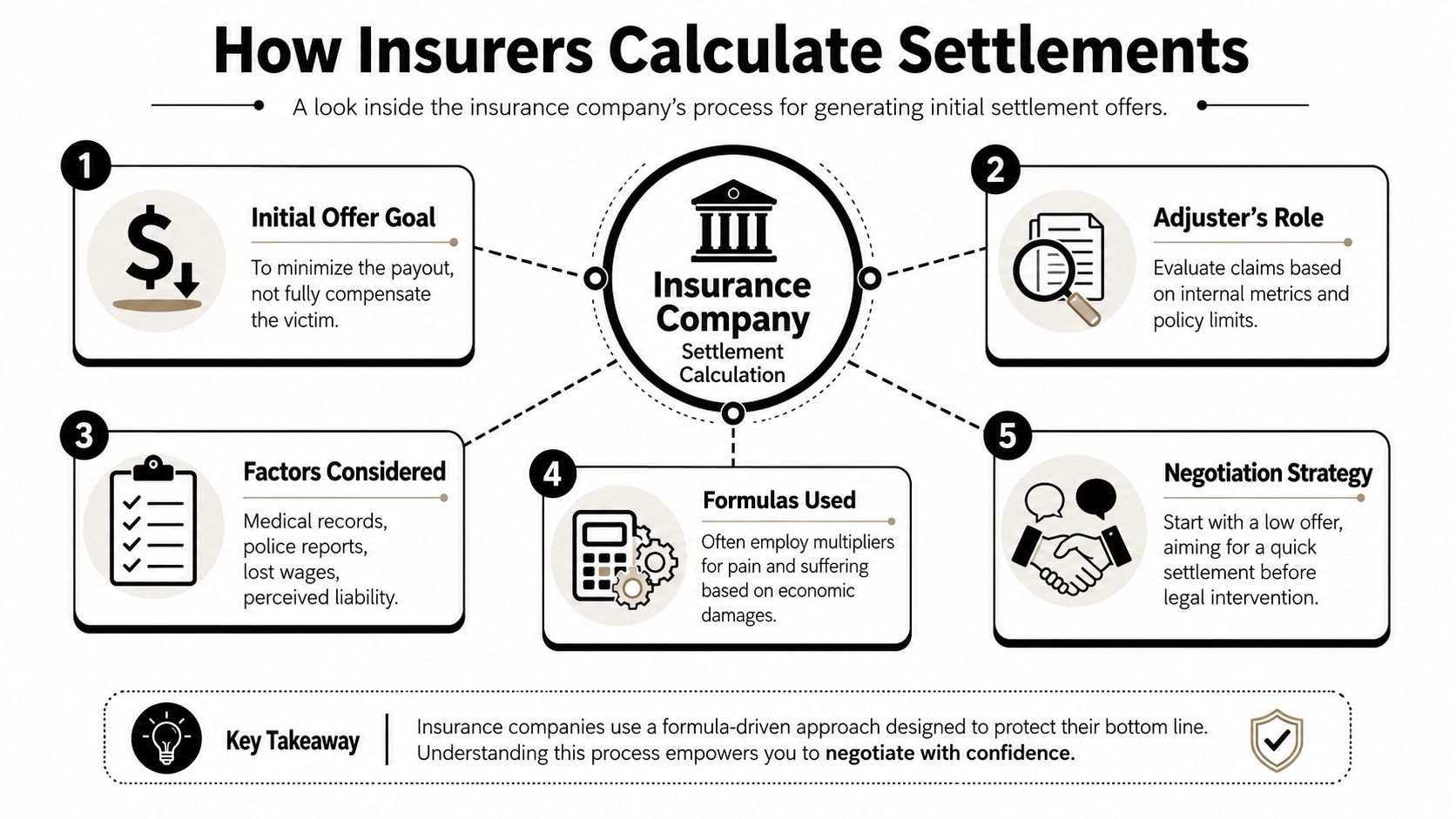
Insurance companies don't calculate settlement offers the way injured people do. You're thinking about pain, stress, lost sleep, missed work, and whether your body will ever feel normal again. The adjuster is looking at claim notes, coded diagnoses, records, fault arguments, and policy limits.
What the adjuster usually reviews
Most insurers start with a paper review of the claim. That often includes:
- Medical records and billing
- Police report details
- Photos and property damage
- Work loss documents
- Arguments about who caused the crash
- The available insurance coverage
Many companies also use internal software and standard formulas to create a starting range. That starting point may not reflect the full story, especially when pain, limitations, or future complications are difficult to capture in a simple file review.
If you want a clearer look at how these figures are often approached, this guide on how to calculate a car accident settlement explains the moving parts in plain language.
Why the first offer is often low
An early offer may come before you've finished treatment or before the medical picture is clear. That benefits the insurer, not you. Once you settle, you usually can't go back and ask for more if your symptoms continue or your diagnosis gets worse.
A Houston car accident attorney often sees this pattern after rear-end crashes. The insurer labels the injury "minor," questions treatment, and offers a quick payment to close the file.
The first number on the table is often a negotiation position, not a fair measure of the claim.
The human part insurers tend to undervalue
Adjusters may acknowledge your bills but resist the less visible damage. They may discount pain that interrupts sleep, stiffness that makes driving miserable, or the emotional strain of not being able to care for your children the way you did before.
That gap is one reason claim presentation matters. A settlement demand should connect the records to your daily reality, not just list charges and dates.
Example Settlement Ranges for Texas Back and Neck Injuries
Settlement ranges make more sense once you connect them to injury type. After a rear-end crash on a Dallas highway, one person may leave with temporary soreness. Another may discover a serious spinal injury after imaging and specialist care. Both were "hurt in a car accident," but their cases won't land in the same range.
For Texas back and neck injuries, reported settlement ranges and averages show that soft tissue injuries often range from $5,000 to $20,000, moderate injuries like disc damage average around $38,492, cases requiring surgery such as a broken neck can average from $150,000 to $500,000, and spinal cord damage can exceed $1 million.
Typical settlement ranges for Texas car accident back and neck injuries
| Injury Type | Typical Settlement Range |
|---|---|
| Soft tissue back injuries | $5,000 to $20,000 |
| Back and neck injuries without surgery | $10,000 to $30,000 |
| Rear-end collisions causing back pain | $10,000 to $50,000 |
| Moderate injuries such as whiplash or disc damage | Average of $38,492 |
| Broken neck injuries | $150,000 to $500,000 |
| Severe spinal cord damage | Can exceed $500,000 |
| Spinal cord damage with major future losses | Can reach $1 million or more |
How to read this table the right way
Don't treat the chart like a price list. It's a context tool.
A person with a non-surgical disc injury may land above or below the average depending on treatment history, missed work, imaging findings, fault disputes, and the insurance policy involved. A person with a broken neck may have a high-value injury on paper, but still face a difficult recovery if liability is contested or coverage is limited.
One more point matters here. Rear-end crashes often look straightforward, but they aren't always treated that way by insurers. They may argue your pain should have resolved quickly, or say the vehicle damage doesn't match the symptoms. That's why thorough medical records and clear documentation matter so much in these cases.
If the crash involved a commercial vehicle, the claim can become even more complex. A truck crash lawyer Houston families and injured drivers rely on will often need to deal with company records, layered insurance, and more aggressive defense tactics.
Take Control How to Protect Your Claim and Maximize Your Recovery
You can't control what happened in the crash. You can control what happens next.
The strongest claims usually come from steady, practical steps taken early and followed consistently.
What to do now
- Get medical care promptly: Back and neck injuries often worsen over time. Early evaluation helps protect both your health and your claim.
- Follow the treatment plan: If you stop care too soon, the insurer may argue that you healed quickly or weren't seriously hurt.
- Keep every record: Save discharge papers, imaging reports, prescriptions, work notes, mileage logs, and billing statements.
- Write down your symptoms: A simple daily note about pain, sleep problems, missed activities, and movement limits can help show how the injury affects real life.
- Be careful with insurance calls: You don't have to give the at-fault insurer a recorded statement without understanding the risk.
- Don't rush into a quick settlement: Fast money can be tempting when bills are piling up, but a premature settlement can leave you paying for future care on your own.
When to call a lawyer
Call a lawyer early if fault is disputed, your symptoms aren't improving, the insurer is minimizing your injuries, or the crash involved a company vehicle, a commercial truck, or a fatality. Good legal guidance can also help if you're dealing with uninsured or underinsured motorist issues.
For practical next steps, this guide on how to maximize a personal injury settlement in Texas gives a useful overview of how injured Texans can protect the value of a claim.
Recovery takes time. So does building a strong case. But with the right information, careful documentation, and experienced legal help, the process becomes more manageable and much less confusing.
If you need answers about your own case, Law Office of Bryan Fagan, PLLC offers free consultations for Texans dealing with car wrecks, truck collisions, catastrophic injuries, and wrongful death claims. You can speak with a Texas personal injury lawyer about your back or neck injury, your deadlines, the insurance issues in your case, and the next steps for protecting your recovery. Healing is possible, and legal help is available when you're ready.