Skip to content
A serious accident can change your life in seconds, but you don't have to face it alone.
You may be reading this after a crash on I-45, the Katy Freeway, or a neighborhood road in Houston. Your car might be damaged, your phone is full of calls from insurers, and you may have a headache that won't let up. People around you may say you look fine. That's one of the hardest parts of a concussion. You can feel very different from how you look.
A concussion after a car wreck often leaves people confused in more ways than one. You may be dizzy, forgetful, short-tempered, sensitive to light, or unable to focus at work. At the same time, you're expected to deal with medical appointments, vehicle repairs, and insurance adjusters who want quick statements. If you're searching for answers about a concussion settlement car accident Texas claim, you're likely trying to understand two things at once: what's happening to your health and what your legal rights really are.
Texas law gives injured people a path to pursue compensation when another driver's negligence caused the crash. That path is real, but concussion claims are rarely simple. Because the injury is often invisible, these cases are usually won or lost on documentation, timing, and credibility.
You Are Not Alone After a Car Accident Concussion
After a Houston freeway crash, many people go home believing they're lucky to have “walked away.” Then the symptoms start. A pounding headache. Nausea. Trouble finding words. A strange fog that makes ordinary tasks feel heavy. By the next morning, the person who seemed okay at the scene doesn't feel okay at all.
That experience is common in concussion cases. A concussion is a brain injury, even when there's no cut, no cast, and no dramatic scan result. The fact that others can't see it doesn't make it minor. It means you have to be more careful about how you respond.
Practical rule: If you feel off after a crash, trust the change in how you feel and get checked.
Families see this too. A spouse may notice you're repeating questions. A coworker may notice you can't keep up with routine tasks. A parent may notice a teen who was in a wreck is sleeping more, reacting emotionally, or struggling with schoolwork. Those early observations matter because they often show the actual-world impact of the injury before an insurance company ever reviews the file.
Texas personal injury cases are built on fault and negligence. In plain terms, that means showing another driver failed to use reasonable care and caused the crash that caused your injury. In a concussion case, that chain has to be clear. The collision happened. The symptoms followed. Medical providers documented them. Your daily life changed.
Some people hesitate to call a lawyer because they think a concussion claim sounds too small or too hard to prove. Others wait because they assume the symptoms will fade. Sometimes they do. Sometimes they don't. The safest approach is to protect your health and your legal position early, before records go missing and before an insurer defines your case for you.
What Is a Concussion and How Is It Valued in Texas
A rear-end crash at a stoplight may not look severe on the police photos, yet the driver who got hit can spend the next week fighting headaches, confusion, light sensitivity, and trouble concentrating at work. That is a common concussion case. The injury is real, but it often does not look dramatic to an adjuster reviewing a file from a desk.
A concussion is a mild traumatic brain injury. “Mild” is a medical label. It does not describe the disruption the injury can cause in your job, sleep, memory, mood, or family life. In Texas claims, that distinction matters because insurance companies often treat concussion cases as questionable unless the records clearly show what changed after the wreck.
Why diagnosis and documentation drive value
Concussion cases are valued by proof, not by appearances. The first question is usually not, “How bad did the crash look?” It is, “What medical evidence ties these symptoms to this collision?”
That is why early care matters. A prompt evaluation creates a starting point. Follow-up visits show whether symptoms resolved or continued. Referral records, work restrictions, therapy notes, and symptom complaints help establish a timeline that is hard for an insurer to dismiss. The Centers for Disease Control and Prevention explains that concussion symptoms can involve physical, thinking, emotional, and sleep-related problems, which is one reason these injuries are often misunderstood if the chart is sparse or delayed (CDC concussion symptoms and diagnosis).
A Texas Personal Injury Lawyer can help organize that proof early, before the insurance carrier frames the case as “just a headache claim.”
Symptoms insurers often try to downplay
The hard part in many concussion claims is not that the victim is exaggerating. It is that the symptoms fluctuate. You may be able to grocery shop for twenty minutes but still be unable to finish a normal workday on a screen. You may look fine in a waiting room and then forget a conversation an hour later.
Common symptoms include:
- Physical problems such as headaches, dizziness, nausea, balance trouble, and sensitivity to light or noise
- Cognitive problems such as slowed thinking, memory lapses, brain fog, and poor concentration
- Emotional or behavioral changes such as irritability, anxiety, mood swings, and feeling overstimulated
- Sleep disruption such as sleeping far more than usual, insomnia, or waking up exhausted
Those details matter because valuation turns on impact. If a teacher cannot tolerate classroom noise, if an oilfield worker cannot safely return to a physically demanding job, or if an office employee cannot focus long enough to complete routine tasks, the claim has to show those limits in a specific, documented way.
In many Texas concussion cases, the strongest evidence is a steady medical timeline plus real-world proof of how daily functioning changed.
How Texas law values a concussion claim
Texas law does not assign a fixed payout to a concussion diagnosis. The value depends on liability, credibility, and damages. In plain terms, the claim is stronger when the other driver's fault is clear, treatment began soon after the crash, symptoms were reported consistently, and the records show how the injury affected work and daily life.
Severity also matters, but not only in the way people assume. A short ER visit with full recovery in a few weeks will usually be valued differently than a case involving months of headaches, vestibular therapy, neurology follow-up, missed paychecks, and post-concussion symptoms that interfere with parenting or driving. The legal question is not just whether you had a concussion. The question is what losses the concussion caused and how well those losses can be proven.
That is why lawyers look closely at both medical proof and damages proof. Medical records establish the injury. Wage records, employer statements, family observations, and journals often help show the human effect. If you want a clearer sense of the losses Texas law may allow in an injury case, this explanation of economic and non-economic damages in Texas claims is a useful reference.
A concussion claim becomes more valuable when the evidence answers the doubts insurers usually raise. Did symptoms begin soon after the crash? Did the patient follow treatment? Did daily functioning change in a way other people can confirm? Invisible injuries are often won or lost on those details.
Types of Damages in a Texas Concussion Settlement
A concussion claim is about more than the first emergency room bill. Texas law allows an injured person to seek compensation for the full effect of the injury, not just the easiest expenses to print on paper. In practice, that means looking at how the brain injury changed your health, income, and daily life.
Economic and non-economic losses
Some damages are straightforward. Others are profoundly personal.
| Damage Category | Examples |
|---|---|
| Economic damages | Emergency room care, follow-up doctor visits, neurologist appointments, therapy, prescription costs, lost wages, reduced ability to work |
| Non-economic damages | Pain, suffering, mental anguish, frustration, sleep disruption, loss of enjoyment of life, strain on family relationships |
For a fuller explanation of how Texas law treats these categories, this page on types of damages in an injury claim is a helpful reference.
What these damages look like in real life
Economic damages usually begin with paperwork. Bills, receipts, wage records, disability notes, and proof of missed work all help. If you work at a desk and can't concentrate for a full shift, that matters. If you work construction outside Dallas and chronic headaches make you unsafe around machinery, that matters too.
Non-economic damages are harder to measure, but they're no less real. A concussion can make a patient short with their children, unable to read for long, unable to enjoy workouts, church activities, or weekend drives. Someone who used to handle a busy schedule with ease may suddenly need reminders for simple tasks.
That human side of the claim should never be treated like an afterthought. In many concussion cases, the disruption to normal life is the heart of the case.
What families should document
People often underestimate the value of everyday evidence. Good claims files usually include more than medical records.
Useful proof can include:
- Work records that show missed days, reduced duties, or written concerns about performance
- Family observations that describe changes in mood, memory, patience, sleep, or routine
- Personal notes that track headaches, dizziness, confusion, and what activities trigger symptoms
- Treatment records that show follow-up care was consistent and taken seriously
A Texas personal injury lawyer or Houston car accident attorney will usually gather these materials early because they tell a fuller story than bills alone. That same approach is often important in a truck wreck, a catastrophic injury case, or a wrongful death claim brought by surviving family members. The legal theory may differ, but the need for specific proof is the same.
How Much Is a Concussion Settlement Worth in Texas
A driver gets rear-ended on I-45, goes home thinking it is just a headache, and two weeks later cannot get through a workday without dizziness, memory slips, and light sensitivity. Insurance adjusters often treat that case very differently from a broken bone claim because a concussion can look minor on paper while seriously disrupting daily life.
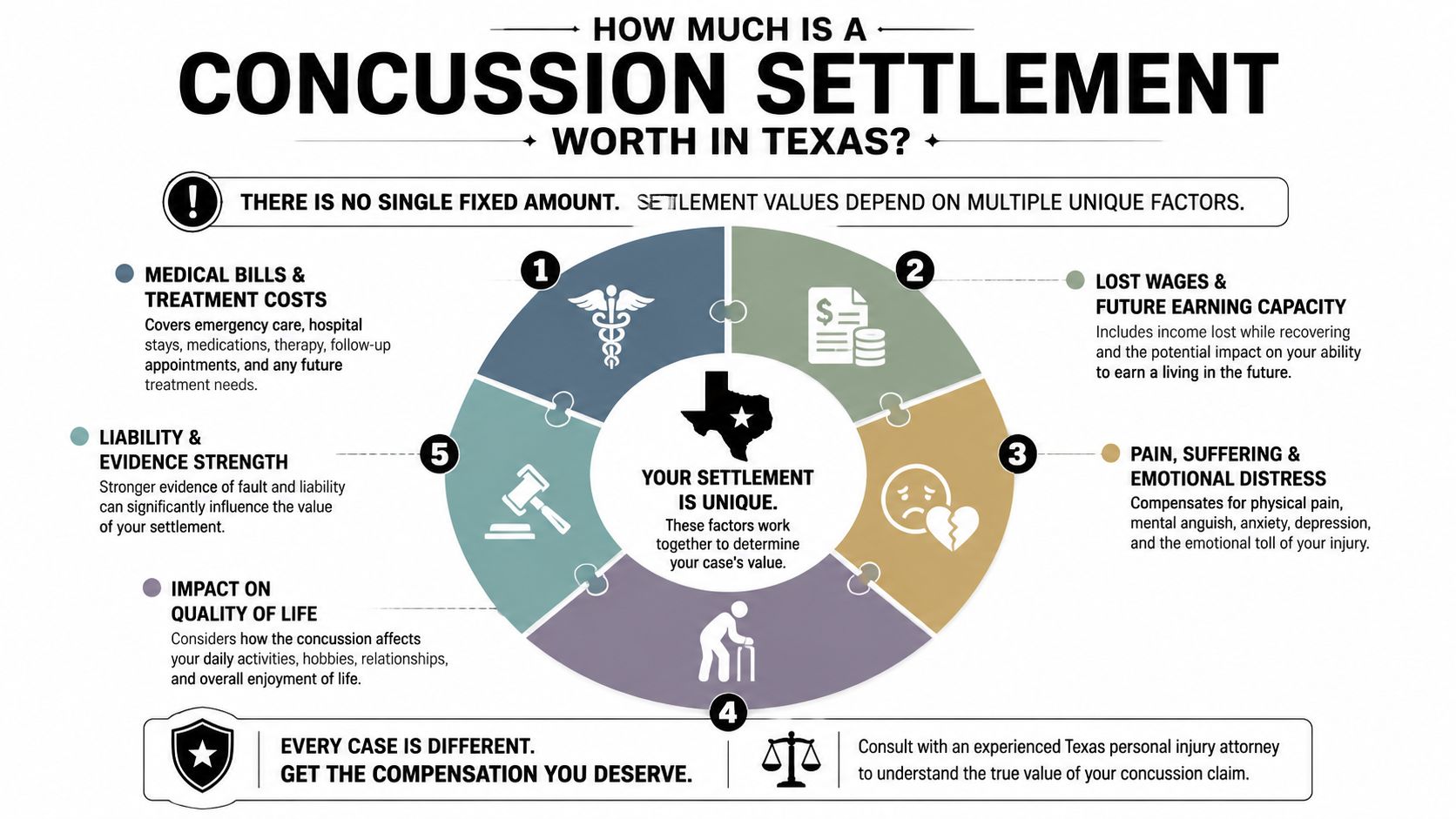
That is why no careful lawyer should promise a number at the start. The value of a Texas concussion claim depends on how clearly the evidence shows what changed, how long it lasted, and whether those problems can be tied back to the crash.
What really drives settlement value
In practice, concussion cases tend to fall into very different categories.
A short-lived concussion with prompt improvement and limited treatment usually settles far lower than a claim involving months of neurology visits, vestibular therapy, missed work, or post-concussion symptoms that interfere with driving, screens, sleep, and concentration. Duration matters. So does credibility.
Several facts usually shape the value of the case:
- Medical follow-up. One ER visit with no continued care gives the insurance company room to argue the injury resolved quickly. Regular treatment with a primary doctor, neurologist, therapist, or concussion specialist usually makes the claim stronger.
- Objective support for a subjective injury. Concussions are often called invisible injuries because standard imaging may look normal. Claims gain value when the file includes neuropsychological testing, balance problems noted in records, referrals to specialists, and consistent symptom reports over time.
- Effect on work. A teacher who cannot tolerate classroom noise, a machinist who gets dizzy around equipment, or an office worker who cannot stay focused on a screen may have a much larger claim than someone who misses only a few days.
- Effect at home. Trouble parenting, driving, reading, exercising, or managing routine tasks often matters in settlement negotiations because it shows the injury is affecting real life, not just generating medical bills.
- Clarity of the timeline. Adjusters look for gaps, prior similar complaints, late treatment, and inconsistent reports. A clean timeline usually puts more pressure on the carrier to pay fairly.
Why insurers undervalue concussion claims
Concussion cases are often disputed because symptoms do not always show up on an X-ray or MRI. The insurance company knows that. It may argue the victim is stressed, exaggerating, or already had headaches before the wreck.
That is the primary fight in many Texas concussion cases. The issue is not just whether the client was hurt. The issue is whether the evidence is specific enough to prove an invisible brain injury to a skeptical adjuster or jury.
A stronger case usually shows three things at once. The symptoms began after the crash, they were reported consistently, and they affected work or daily function in ways other people can verify.
Real trade-offs that affect case value
Some cases have significant symptoms but weak documentation. Others have excellent records but limited financial loss. Those differences matter.
For example, a person who follows every treatment recommendation but returns to work quickly may still have a solid claim, though the value may be lower than a case with clear wage loss. On the other hand, a person with serious ongoing headaches and memory problems can still face resistance if there are long gaps in treatment or social media posts that appear to conflict with the claim.
When a concussion leads to lasting cognitive limits, chronic migraines, or major work restrictions, the case can start to resemble other serious injury matters, including Catastrophic Injury Claims in Texas.
Avoid the trap of “average settlement” numbers
Average figures are usually not useful in concussion cases. They flatten very different injuries into one number and ignore the question that determines value: can you prove this concussion changed your life in a way the insurance company cannot easily dismiss?
A better approach is to evaluate the claim the way a defense adjuster will. What do the records show. Who can confirm the changes. Is there a gap between the crash and the first complaint. Did the client keep treating long enough to document the full course of the injury.
That same evidence also affects timing. Cases with ongoing symptoms often should not be settled too early because it is hard to value future care or lasting limitations before the medical picture becomes clear. This guide on how long it can take to settle a car accident claim in Texas explains why patience sometimes protects the value of the case.
The useful question is not, “What is the average concussion settlement?” The useful question is, “What proof do we have, and does it show the full impact of this injury under Texas law?”
The Timeline for a Texas Concussion Claim
Concussion claims feel overwhelming partly because the process is unfamiliar. Most clients are dealing with pain first and paperwork second. A clearer timeline helps.
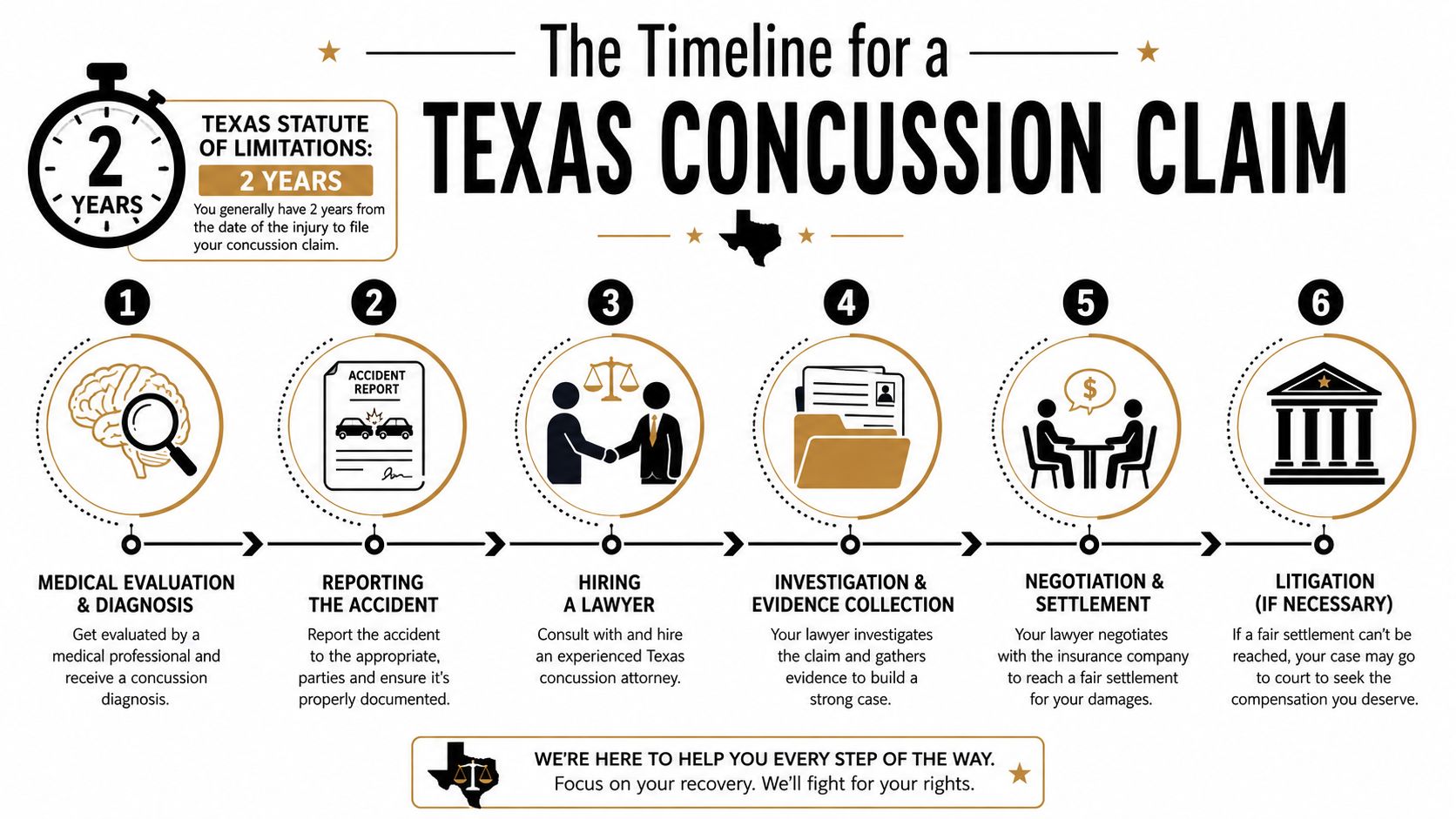
Texas law requires victims to file a personal injury claim within two years from the date of the car accident, and Texas requires minimum auto insurance coverage of $30,000 per person for bodily injury and $60,000 per accident, which is one reason serious concussion claims may require supplemental claims beyond the at-fault driver's basic policy, as explained in this Texas post-concussion settlement article.
The basic sequence after the wreck
The claim usually unfolds in stages rather than all at once.
Get medical evaluation early
The first step is protecting your health. It also starts the paper trail that ties symptoms to the crash.Report the collision and preserve records
Keep the crash report, photos, discharge papers, prescriptions, and every insurance letter you receive.Notify the insurance carriers carefully
Basic notice is one thing. A detailed recorded statement given too early is another. Many people hurt their own claim by doing so.Build the file before talking settlement
A good demand package usually includes records, bills, proof of lost income, and evidence of day-to-day impact.Negotiate from evidence, not frustration
Some cases settle through negotiation. Others need a lawsuit when the insurer won't fairly value the injury.
If you want a practical overview of the process, this resource on how long it can take to settle a car accident claim gives useful context.
The deadline you cannot miss
The two-year filing deadline is not flexible in the ordinary case. If you miss it, your right to recover compensation can be lost entirely. That matters even if negotiations seem friendly. Adjusters may continue talking while the clock keeps running.
This is one reason waiting “to see what happens” can be risky in a concussion case. Symptoms sometimes evolve slowly. By the time the seriousness is obvious, valuable time may already be gone.
Insurance limits and underinsured claims
A hidden problem in many cases is that the at-fault driver may not carry enough insurance. A severe concussion claim can outgrow basic liability coverage quickly if treatment is extended and work loss becomes significant.
That's when lawyers often look at:
- UM or UIM coverage under your own auto policy
- Additional liable parties if a work vehicle, commercial vehicle, or company driver was involved
- Layered claims when multiple policies may apply
This issue appears often in major highway collisions, commercial crashes, and some cases involving a truck crash lawyer Houston clients call after multi-vehicle wrecks. The legal timeline is similar, but the insurance structure can be much more complicated.
How to Prove Your Claim and Fight Insurance Companies
Insurers are often skeptical of concussion claims because the injury doesn't always show up the way a broken bone does. That skepticism doesn't mean your case is weak. It means your evidence has to be stronger than their talking points.
Texas uses a modified comparative negligence system, often called the 51% bar. If you are found 51% or more at fault, you recover no damages. If you are 50% or less at fault, your recovery is reduced by your share of responsibility, as explained in this Texas comparative negligence overview.
The evidence that usually makes the difference
A strong concussion claim is rarely built on one dramatic document. It's built on a consistent body of proof.
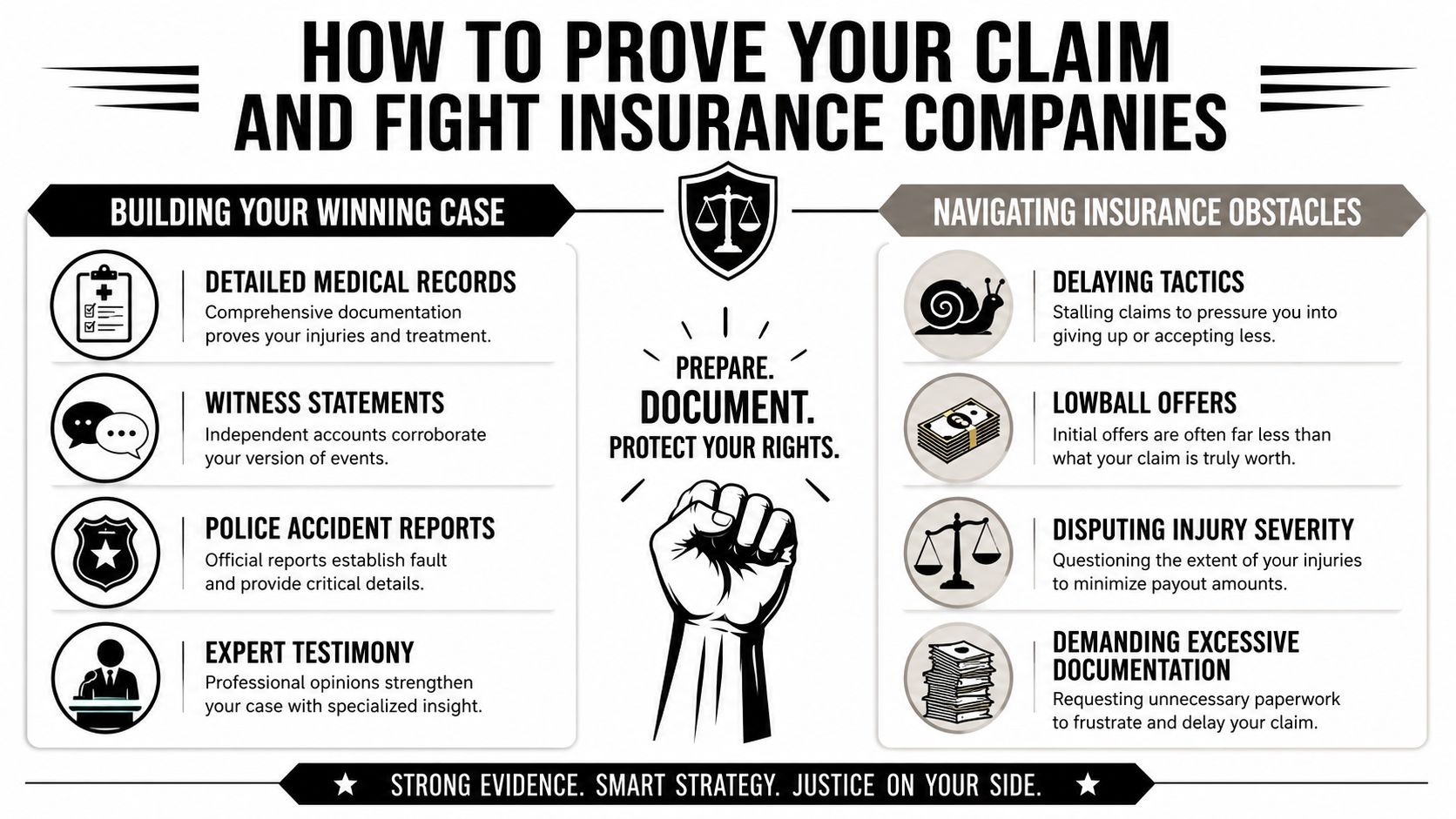
The most useful evidence often includes:
Medical records that tell a clear story
Your records should show the crash, the onset of symptoms, the diagnosis, the follow-up care, and the ongoing complaints.Witness statements with specifics
Family, coworkers, and friends can often describe changes in memory, patience, speech, work pace, or sleep.Accident evidence that supports liability
Police reports, crash photos, vehicle damage, and scene details help establish fault and counter attempts to blame you.Professional opinions when needed
In more disputed cases, specialists can explain why a person may have serious symptoms even when the injury is not outwardly visible.
For a closer look at what helps support a case, this guide on what evidence is needed for an injury claim in Texas is worth reviewing.
Tactics adjusters use in invisible injury cases
Concussion cases often trigger familiar insurance tactics. Adjusters may say your symptoms are subjective. They may point to a treatment gap and argue you weren't really hurt. They may suggest the headaches came from stress, age, or some prior condition. They may make a quick offer before the long-term picture is clear.
Those tactics work when the injured person has little documentation. They work far less often when the file is organized and the timeline is tight.
Keep your story consistent everywhere. In the doctor's office, on claim forms, and in daily life, details matter.
If the crash also totaled your car, don't treat the property claim as separate from the injury story. Vehicle damage often becomes part of the broader proof. In some cases, a resource on totaled vehicle settlement claims can help you understand disputes over the car's value while the injury claim moves forward.
What works and what doesn't
What works:
- Prompt care
- Consistent follow-up
- Symptom tracking
- Careful communication with insurers
- Legal help before a recorded statement causes damage
What usually doesn't work:
- Minimizing symptoms at first
- Skipping appointments because you're busy
- Assuming normal imaging ends the case
- Posting freely on social media while the claim is pending
- Accepting a fast check before you know the full medical picture
A Houston car accident attorney, Texas personal injury lawyer, wrongful death lawyer Texas families may call after a fatal brain injury crash, or truck crash lawyer Houston victims rely on in commercial cases all deal with the same core issue. The evidence has to be specific enough to force the insurer to confront the full impact of the injury.
Take the First Step Toward Your Recovery Today
A concussion after a car wreck can turn ordinary life upside down. You may be struggling to think clearly while also being expected to make smart decisions about insurance, treatment, and money. That's a hard place to be, and it's exactly why getting reliable guidance matters.
The key points are simple. A concussion is a real brain injury. Texas law allows you to seek compensation when another party's negligence caused the crash. To recover fairly, you need proof that is organized, credible, and tied directly to how your life changed.
If your injuries include facial impact from the collision, medical follow-up may involve more than neurological care. For readers trying to understand that side of recovery, this guide to facial trauma treatment offers general educational context about facial injury care after trauma.
You don't have to figure out the legal side alone while you're trying to heal. Early decisions matter. So do deadlines, medical records, and how the claim is framed from the start. A careful legal review can help you avoid common mistakes and protect the value of your case before the insurance company defines it for you.
Recovery is possible. Legal help is available. And the first step is often a conversation that gives you clarity about what happened, what your claim may require, and what to do next.
If you or a loved one is dealing with a concussion after a Texas crash, schedule a free consultation with Law Office of Bryan Fagan, PLLC. You can get clear answers about fault, comparative responsibility, deadlines, insurance issues, and the evidence needed to move your claim forward with confidence.