A serious accident can change your life in seconds, but you don’t have to face it alone.
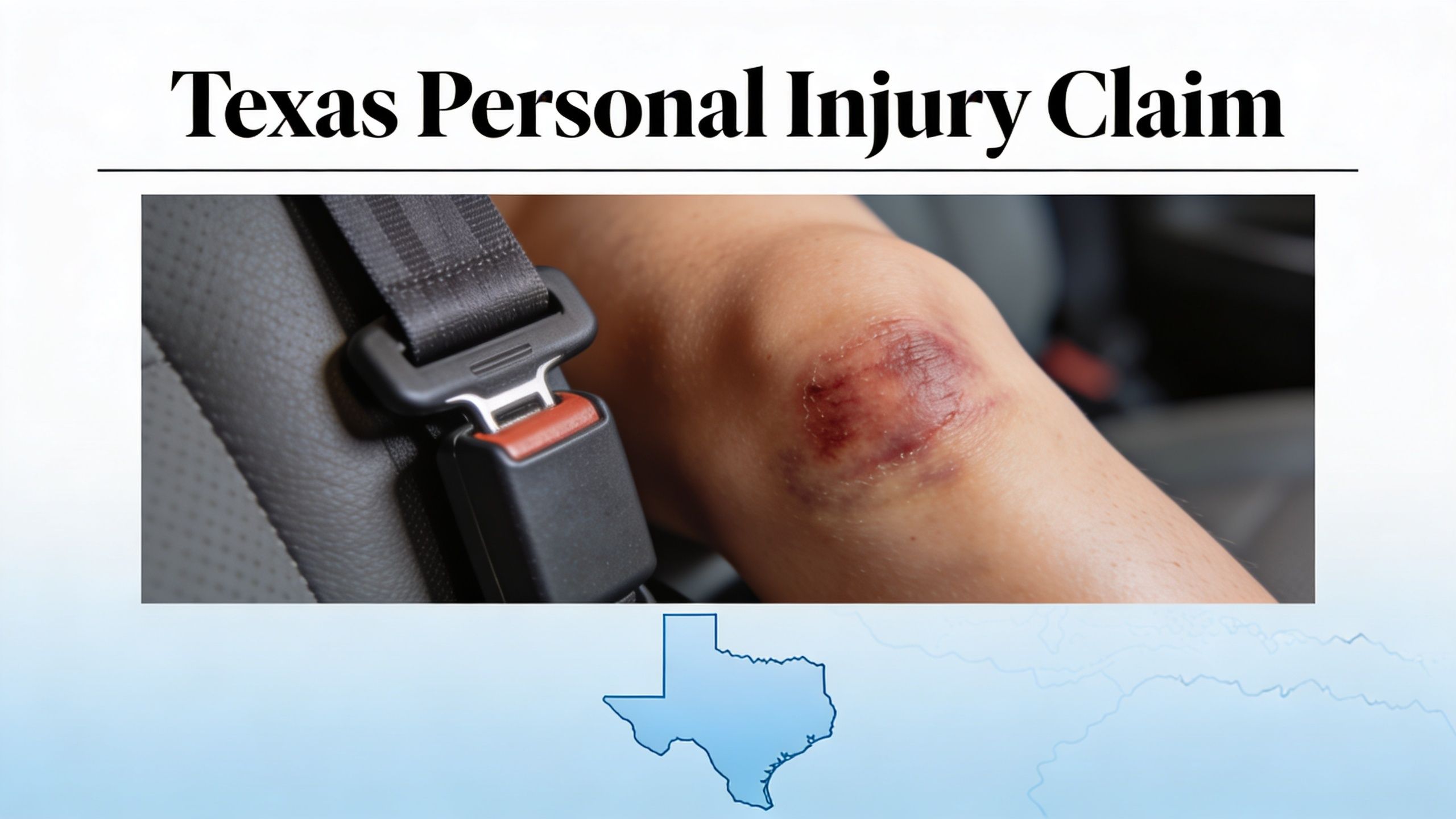
A lot of people have the same first reaction after a crash. You’re shaken up, sore, and grateful you made it out. Then later, maybe in the ER bathroom mirror or when you change clothes at home, you notice a dark stripe across your stomach, chest, or shoulder where the belt caught you.
It looks like a bruise. Sometimes it looks like road rash. Sometimes it feels minor compared to everything else that just happened.
That mark can matter far more than is commonly appreciated.
In Texas injury cases, seatbelt sign trauma is often the first visible clue of serious hidden damage. It can point to internal bleeding, bowel injury, organ trauma, or spinal damage that an insurance company may later try to dismiss as unrelated or “not that bad.” If you’re dealing with that bruise right now, or if someone you love has one after a Houston-area crash, you need clear answers fast.
You Survived the Crash But What About the Bruise on Your Stomach
After a crash on a Houston freeway, it’s common to think the worst is over once you’re standing, talking, and able to walk. Adrenaline covers a lot. People often focus on broken glass, airbag burns, and whether the car can still move. They don’t always focus on a line of bruising across the abdomen.
That bruise can be deceptive.
A seatbelt mark often shows up where the belt locked and held your body in place during violent deceleration. In practical terms, your seatbelt may have saved your life while also leaving behind evidence that your body absorbed tremendous force. If your chest hurts too, this related guide on bruised sternum symptoms can help you understand what that pain may mean.
Why clients often underestimate it
People usually say one of three things:
- “It’s just a bruise.” They assume skin discoloration means a soft tissue injury and nothing more.
- “The ER already checked me.” They may have been evaluated quickly before symptoms fully developed.
- “I was wearing my seatbelt, so I should be okay.” Wearing the belt was the right choice, but it doesn’t rule out internal trauma.
Here’s the hard part. Some dangerous injuries don’t announce themselves immediately. Abdominal pain can build. Nausea can start later. Back pain can seem like ordinary stiffness until it doesn’t.
Practical rule: If the bruise follows the path of the seatbelt, treat it like a warning sign, not a cosmetic injury.
From a legal standpoint, that mark matters too. It helps connect the crash forces to what happened inside your body. That connection can become important if an insurer later argues that your organ injury, spinal symptoms, or ongoing pain came from something else.
What Is a Seatbelt Sign and Why Is It So Dangerous
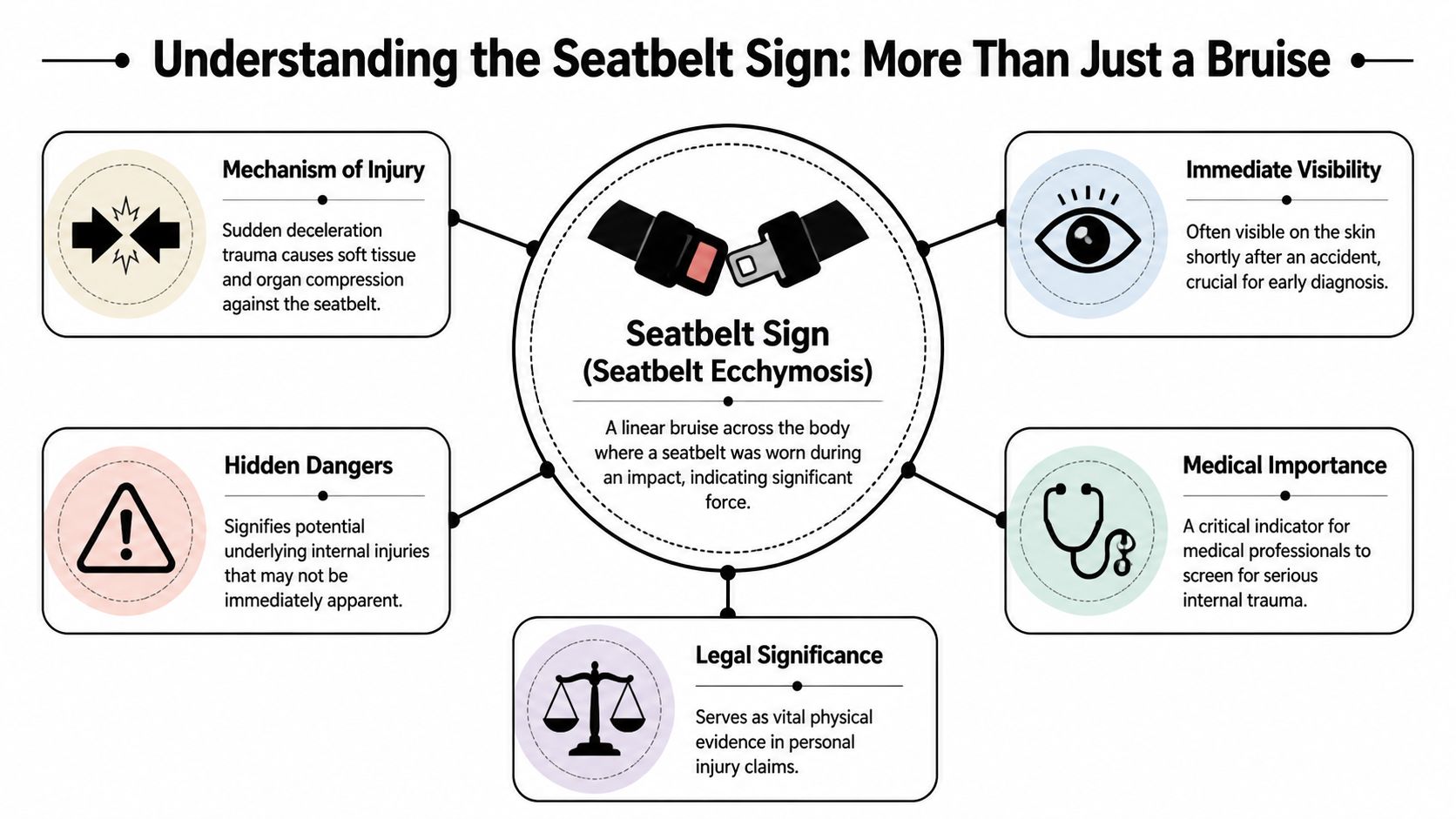
Seatbelt sign is the visible bruising, abrasion, or linear discoloration left along the path of the belt after blunt-force trauma. Doctors often think of it as more than skin deep. Lawyers should too.
The easiest way to understand it is to think of an iceberg. The bruise is the part you can see. The bigger concern is what may be underneath. During a crash, the belt restrains you suddenly while your internal organs and spine are still reacting to that force. That mismatch can create hidden injuries even when you didn’t hit the dashboard or windshield.
What the mark tells doctors
The seatbelt sign is important because it tells the medical team there was substantial restraint force through specific parts of the body. Research summarized in this seat belt syndrome reference notes that the seatbelt sign is indicative of an internal injury in as many as 30% of cases seen in the emergency department. The same source reports that among patients with visible seatbelt signs, 64% had documented abdominal injuries and 21% suffered small bowel perforation.
That’s why this isn’t something a careful doctor should shrug off.
What people mean by seatbelt syndrome
You may also hear the term seatbelt syndrome. That refers to the cluster of injuries caused by the belt’s restraining force in a collision. The skin bruise is only one part of that picture. The bigger concern is trauma to the abdomen, chest, bowel, mesentery, and spine.
A bruise can heal while the underlying injury keeps getting worse.
Here’s what doesn’t work: assuming you’re fine because you didn’t lose consciousness or because the bruise doesn’t look dramatic. Here’s what does work: connecting the visible mark with the need for a full medical evaluation and careful documentation from day one.
The bruise is visible proof of crash force. It may also be the first clue to an injury that hasn’t fully declared itself yet.
The Hidden Dangers Common Injuries Linked to Seatbelt Trauma
When people hear “seatbelt injury,” they usually think of skin bruising. In serious crashes, that’s far too narrow. Seatbelt sign trauma can involve the abdomen, chest, and spine all at once.
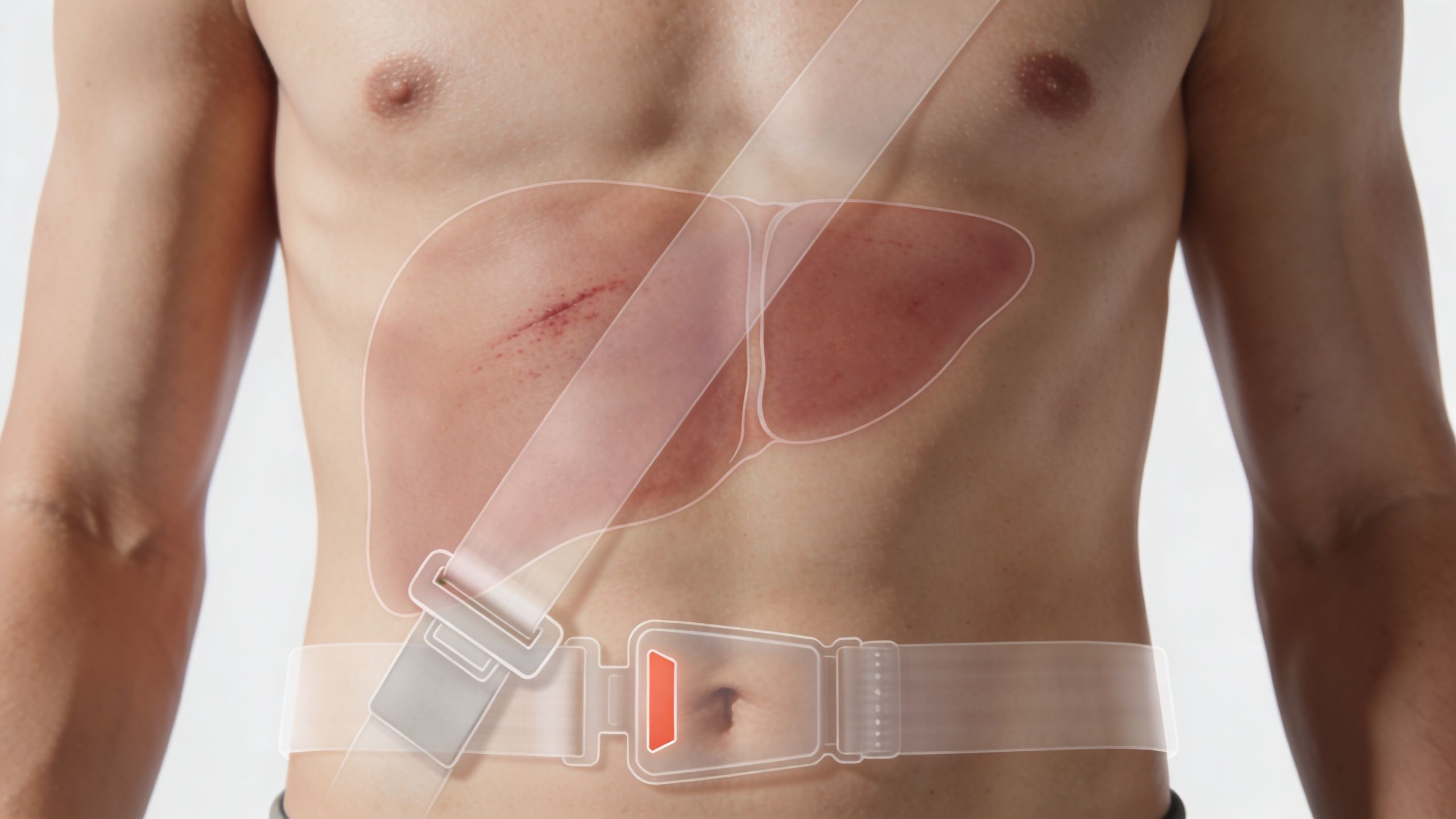
After a sudden stop on I-10 or Loop 610, your body bends sharply against the belt. The lap belt can act as a pivot point. The shoulder strap restrains the upper torso. That combination can protect you from ejection and head trauma, but it can also create a specific pattern of internal injury.
Abdominal injuries
The abdomen is one of the biggest concerns. Crash force can injure the bowel, mesentery, and abdominal organs. Some people feel pain right away. Others only notice worsening tenderness, bloating, nausea, or pain with movement hours later.
Medical literature describes the broader seatbelt complex as involving the intestine, lumbar spine, and abdominal organs, and explains that crash forces can create stretching and shearing at the points where fixed and mobile structures meet, as discussed in this medical review of seatbelt-related abdominal trauma.
Thoracic and chest injuries
The shoulder portion of the belt can leave marks across the chest and sternum. That may come with painful breathing, chest wall tenderness, or limited arm movement. Some injuries are obvious. Others need imaging and follow-up because pain patterns can change after the first day.
People looking for symptom relief after the acute phase sometimes ask about conservative options for nerve-related discomfort. This overview of massage therapy for pinched nerves can be useful background, but it should never replace a trauma workup when a crash has left a seatbelt sign.
Spinal injuries that get missed
This is the danger I wish more crash victims were warned about. The public hears a lot about abdominal injury, but less about the spine.
According to this pediatric emergency medicine discussion of seat belt injuries, the seatbelt sign carries up to a 50% risk of spinal injury, and approximately 18% of these fractures result in paraplegia. That includes injuries such as Chance fractures, where the spine is damaged by forceful flexion around the restraint point.
That’s one reason back pain after a crash should never be brushed off as “just soreness” when a seatbelt bruise is present.
What Doctors Look For Medical Evaluation After an Accident
A proper medical evaluation after seatbelt sign trauma should go beyond a quick glance at the bruise. The question isn’t whether the skin is discolored. The question is what the collision did underneath it.
In the ER, doctors usually start with the basics. They’ll ask where the belt hit, where you feel pain, whether the pain is getting worse, and whether you have abdominal tenderness, guarding, rebound pain, nausea, dizziness, weakness, or numbness. Those details matter because they help separate ordinary soreness from a potentially dangerous abdominal or spinal problem.
Imaging that can change the outcome
For many patients, imaging is the turning point. A doctor may order a CT scan to look for internal bleeding, organ injury, bowel changes, or other signs of trauma. In some settings, ultrasound may also be used as part of the trauma evaluation.
Current protocols are clear on one key point. When CT imaging is negative for specific concerning findings such as free fluid, solid organ injury, bowel wall irregularities, abdominal wall soft tissue contusion, mesenteric stranding or hematoma, and bowel dilatation, the risk of delayed hollow viscus injury drops to 0.01%, according to this University of Maryland Emergency Medicine educational summary.
That number matters because it shows why complete imaging is so important. It also shows why a casual “you’re probably okay” is not enough.
If you want a broader overview of common post-crash care, this page on motor vehicle accident injuries treatment is a helpful companion resource.
What safe discharge should actually mean
A safe discharge isn’t based on appearances alone. It depends on the full picture:
- Imaging findings: The scan should be evaluated for the specific danger signs doctors look for in blunt abdominal trauma.
- Physical exam: Negative rebound and guarding add reassurance when imaging is also negative.
- Symptoms over time: Worsening pain, vomiting, bloating, fever, or faintness should trigger immediate reevaluation.
If a hospital sends you home but your pain climbs, your abdomen tightens, or you develop new weakness or numbness, go back right away.
One important distinction. The same emergency medicine guidance notes that an isolated cervical seatbelt sign does not automatically justify reflexive CT angiography of the neck without other trauma indicators. In plain English, the neck mark and the abdominal mark don’t carry the same implications.
That’s why the details of where the bruise is, what symptoms you have, and what imaging was done all matter so much.
Protecting Your Rights Documenting Injuries and Gathering Evidence
Once your immediate medical needs are addressed, start preserving evidence. In seatbelt sign trauma cases, documentation often becomes the bridge between what you felt at the scene and what imaging later proves.
Insurance companies often challenge hidden injuries because they can’t be seen the way a cast or open wound can. Your job is to make the record hard to dispute.

The evidence that helps most
Start with the seatbelt mark itself. Photograph it as soon as you notice it, then again as it changes. Bruising often darkens, spreads, or changes color over time. Those photos can show both location and progression.
Keep these categories organized:
- Photos of the injury: Take clear, well-lit images from close range and farther back so the body area is identifiable.
- Medical records: Save ER records, discharge papers, imaging reports, follow-up visit notes, prescriptions, and billing statements.
- Symptom journal: Write down pain, digestive symptoms, trouble sleeping, missed work, limited movement, and anything that’s getting worse instead of better.
- Vehicle evidence: Don’t rush to repair or dispose of the car before it’s been properly documented. Belt marks, interior damage, and crash severity may matter.
- Communication records: Save texts, emails, claim letters, and voicemail summaries from insurers.
Why imaging records are legally important
Medical literature describes the seatbelt complex as involving the intestine, lumbar spine, and abdominal organs, and explains that CT imaging of the abdomen and pelvis has high sensitivity for identifying significant injuries. That makes imaging documentation especially important when proving severity and causation in litigation, as discussed in this review of seatbelt injury patterns and imaging.
That means your records aren’t just for treatment. They help show that the crash caused a medically recognized pattern of injury.
If medical bills are already piling up, practical cost-saving steps can help while your claim is pending. This guide to negotiating medical bills may be useful if you’re trying to manage expenses without losing track of the paperwork your case needs.
Keep the original timeline simple and honest. When you noticed the bruise, when pain started, when symptoms changed, and when you sought care.
That timeline often becomes one of the strongest parts of the case.
How a Seatbelt Sign Impacts Your Texas Personal Injury Claim
In a Texas injury claim, the seatbelt sign can do something powerful. It gives you objective physical evidence that your body experienced a violent restraint event during the crash. That matters because insurers often try to minimize injuries they can’t easily see.
If the other driver caused the wreck, Texas negligence law allows you to seek damages for the harm that negligence caused. That can include medical care, lost income, pain and suffering, impairment, and future treatment needs. In the most serious cases, it may involve catastrophic injury claims or, if a loved one died from internal trauma, a wrongful death lawyer Texas families can turn to for answers.
Why insurance companies push back
The common defense themes are predictable. The adjuster may say the bruise was minor, the symptoms developed too late, the pain came from a preexisting condition, or the seatbelt itself caused the injury instead of the crash.
That last argument usually misses the point.
Seatbelts save lives. They also can create a recognized injury pattern when another driver causes a violent collision. As summarized in this seat belt statistics article, seatbelts save approximately 14,955 lives annually, yet they can also cause seatbelt syndrome. In a legal claim, that paradox can support your case. You did the responsible thing by buckling up, and the force of the defendant’s impact was still great enough to injure you through the restraint.
Texas rules you need to know
Here are the rules that usually matter most:
| Texas issue | What it means for you |
|---|---|
| Fault and negligence | You must show another party failed to use reasonable care and caused the crash. |
| Comparative responsibility | Texas follows a modified comparative fault rule. If you are more than half responsible, you generally can't recover damages. If you are partly responsible but not over that threshold, your recovery can be reduced. |
| Statute of limitations | In most Texas personal injury and wrongful death cases, you generally have two years to file suit. Waiting can damage the case even sooner because evidence disappears fast. |
| Damages | A claim may include past and future medical costs, lost wages, reduced earning ability, physical pain, and mental anguish. |
If you need a plain-language overview, this guide on what is a personal injury claim is a good starting point.
Some people also look for directories of pre-vetted personal injury lawyers when comparing representation options. That can be a useful step, especially if you’re deciding between a general practice and a firm that regularly handles car wreck, truck crash lawyer Houston cases, catastrophic injury matters, and wrongful death claims.
A documented seatbelt sign can help a Texas personal injury lawyer or Houston car accident attorney connect crash force, medical findings, and long-term damages in one consistent story.
Get Help From a Texas Personal Injury Lawyer Today
Seatbelt sign trauma cases are rarely simple. The bruise may be easy to photograph, but the true damage often lives in imaging reports, surgical records, specialist follow-up, and the daily reality of how your body feels after the crash.
That’s why these cases require more than filling out forms and waiting for an adjuster to “be fair.” You may be dealing with bowel injury, spinal instability, missed work, repeat scans, pain that gets worse when you move, or a loved one whose condition changed after everyone thought they were safe. In truck collisions and high-force SUV crashes, those problems can grow quickly.
When calling a lawyer makes sense
You should strongly consider legal help if any of these apply:
- You have a visible seatbelt mark and ongoing pain: Especially abdominal pain, back pain, weakness, numbness, or worsening symptoms.
- Imaging found internal injury or spinal damage: Those cases often involve future care and larger disputes about value.
- The insurer is minimizing the claim: If they’re pushing a quick settlement or questioning whether the injury came from the crash, the case needs immediate attention.
- A family member suffered catastrophic harm or died: These cases may involve both survival claims and wrongful death issues under Texas law.
What good representation actually does
A strong Texas personal injury lawyer doesn’t just argue. The lawyer builds proof. That means collecting the crash report, securing medical records, analyzing imaging, preserving photos of the seatbelt sign, talking with your physicians, and presenting a clear damages case that accounts for treatment, work loss, pain, and future limitations.
That matters whether you need a Houston car accident attorney after a freeway wreck, a truck crash lawyer Houston families trust after a commercial vehicle collision, or guidance from a wrongful death lawyer Texas families can call after the unthinkable.
You’ve already been through enough. You shouldn’t have to fight the medical mystery and the insurance battle at the same time. Recovery is possible, and legal help is available.
If you or someone you love has suffered seatbelt sign trauma after a crash, Law Office of Bryan Fagan, PLLC is available to help you understand your rights, protect key evidence, and pursue the compensation Texas law allows. Schedule a free consultation to talk through your case, your medical concerns, and your next steps with a team that understands serious car, truck, catastrophic injury, and wrongful death claims.