Skip to content
A serious accident can change your life in seconds, but you don’t have to face it alone.
If you’re reading this after a crash in a construction zone, you may be dealing with pain, vehicle damage, missed work, and constant calls from insurance adjusters. You may also be asking a simple question that feels hard to answer right now. Why did this happen?
On a Texas freeway, the moment can feel ordinary until it isn’t. Traffic slows near orange barrels on I-45 in Houston. A driver behind you looks down for a second, then looks up too late. Or a truck enters a narrowed lane too fast and can’t stop in time. These crashes often feel sudden, but they usually aren’t random.
Work zone collisions are a major safety problem. Work zone fatalities increased 50 percent between 2013 and 2023, rising from about 598 deaths to more than 898 in 2023, and work zone crashes caused over 40,000 injuries in 2023 according to national work zone crash facts. For injured drivers and families, those numbers matter because they show a pattern. Many of these wrecks were preventable.
A Serious Accident Can Change Your Life in Seconds
Right after a work zone crash, you don’t think in legal terms. You think about your neck pain, your child in the back seat, whether your car is totaled, and how you’re going to get home. If the wreck happened near a lane closure or concrete barrier, the scene may have felt chaotic and confusing.
That confusion is normal. Construction zones change how traffic moves. Lanes narrow. Drivers brake harder. Trucks have less room. People get impatient. If someone failed to slow down, followed too closely, or made a careless lane change, your injuries may be the result of negligence, which means failing to use reasonable care.
For many Texas families, the hardest part comes later. The emergency room visit turns into follow-up care. Back pain keeps you from working. An insurance company asks for a recorded statement before you even know how badly you’re hurt. If a loved one died, the shock can make every decision feel impossible.
Work zone crashes don’t just damage vehicles. They disrupt treatment, income, routines, and peace of mind.
A Texas personal injury lawyer looks at more than the impact itself. The key questions are who caused the crash, what evidence proves it, and what losses you’ll face in the weeks and months ahead. That matters whether you need help from a Houston car accident attorney, a truck crash lawyer Houston, or a wrongful death lawyer Texas families can trust.
Here’s the basic point. If someone else caused the collision, you may have the right to seek compensation for medical bills, lost wages, pain and suffering, and other harm. The law can’t undo what happened, but it can help you move forward with support and accountability.
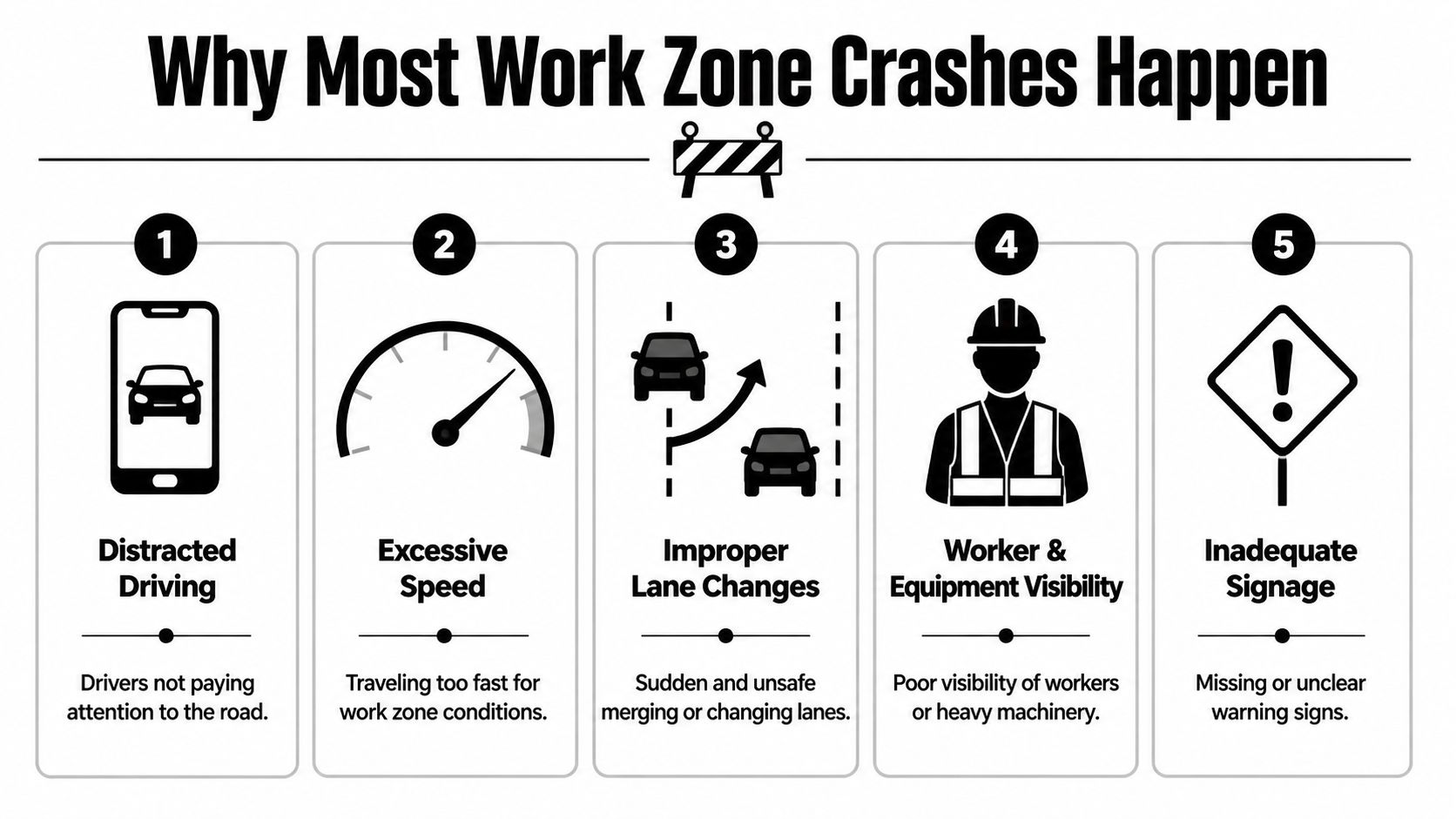
Why Most Work Zone Crashes Happen
The phrase most work zone crashes points to something important. These wrecks usually follow familiar patterns. They happen when drivers fail to adjust to changed road conditions.
One pattern stands out more than any other. Rear-end collisions account for approximately 70% of all work zone accidents, and distracted driving contributes to over 80% of these incidents according to work zone collision data from AQC Traffic. That helps explain why so many people are hit from behind in slowed or stop-and-go traffic near lane closures.
Rear-end crashes are often predictable
A work zone compresses time and space. A driver who could get away with bad habits on an open road may not have enough room to react once traffic slows. That’s why following distance matters so much.
The same source notes that guidance recommends 4 to 5 seconds of following distance in work zones instead of 3 seconds under normal conditions, and that looking away from the road for two seconds at 60 mph means 176 feet of blind travel. In plain English, that’s a long distance to cover without seeing brake lights ahead.
Think about a common Houston example. Traffic moves normally, then bunches near barrels and a merge sign. You ease off the gas. The driver behind you glances at a phone, GPS screen, or construction activity to the side. By the time that driver notices you’ve slowed, the gap is gone.
Distraction and speed work together
Distraction isn’t only texting. In a construction zone, drivers also stare at workers, heavy equipment, flashing lights, and lane shifts. That “rubbernecking” can be enough to cause a crash when traffic changes quickly.
Speed makes it worse. A driver may still be going too fast even if the number on the speedometer doesn’t feel extreme. In a narrowed lane with reduced stopping distance, “too fast” means too fast for what’s ahead.
If you want a broader look at common crash behavior, this guide to car accident causes in Texas gives useful context.
| Common behavior | Why it causes work zone crashes |
|---|---|
| Following too closely | Leaves no room for sudden slowing |
| Looking away from traffic | Delays braking and lane awareness |
| Aggressive merging | Triggers sideswipes and chain reactions |
| Failing to slow down | Increases impact force and stopping distance |
What matters legally is this. When a driver doesn’t pay attention, doesn’t leave enough space, or ignores changing traffic flow, that conduct may show negligence. If that negligence caused your injuries, it can become the foundation of a claim.
Who Can Be Held Liable for Your Injuries
Many people assume the answer is simple. The driver who hit me is responsible. Sometimes that’s true. But in work zone cases, liability can be wider than it first appears.
That matters because a full claim should identify every party who contributed to the crash. A careful investigation may show fault by a driver, a trucking company, a contractor, or another entity involved in traffic control.

The driver who acted carelessly
If another driver rear-ended you, made an unsafe lane change, or sped through a narrowed lane, that person may be directly liable. Evidence often includes the crash report, photos, witness statements, vehicle damage, and sometimes phone records or onboard vehicle data.
A real-world example helps. After a Houston freeway crash near overnight roadwork, one driver may insist traffic “stopped out of nowhere.” But if signs warned of reduced speed and lane shifts ahead, that defense may not hold up. Drivers still have a duty to pay attention and leave enough room to stop safely.
Trucking companies may also be responsible
Commercial vehicles create a different level of risk in work zones because they need more distance to slow down and maneuver. Commercial motor vehicles accounted for 30% of all work zone fatalities in 2022, and the increase in speeding as a factor points to aggressive driving behavior, according to work zone truck crash reporting.
If a large truck caused the crash, the legal picture may include more than the driver. A motor carrier may be liable if the driver was working at the time, if training was poor, or if the company failed to enforce safe work zone driving.
A truck case often starts with one collision but expands into a review of company policies, dispatch pressure, training, and vehicle records.
Texas law can also involve shared fault among multiple defendants. If you want a plain-English overview, this explanation of joint and several liability in Texas is a good place to start.
Construction companies or public entities may matter
Some work zone crashes involve unsafe setup rather than only driver conduct. Missing warnings, confusing lane transitions, blocked sight lines, or poor traffic control can all affect liability. In those cases, the company managing the project or another responsible entity may become part of the claim.
That doesn’t mean every bad work zone creates a valid case against a contractor or government body. It does mean the issue shouldn’t be ignored. Evidence disappears quickly in construction zones because signs, cones, and lane patterns often change within hours or days.
A strong case begins with asking the right question. Not just who hit you, but who created the conditions that made the crash more likely.
Critical Steps to Take After a Work Zone Accident
The first hours after a crash can shape both your medical recovery and your legal claim. If you’re physically able, focus on safety, documentation, and medical care.
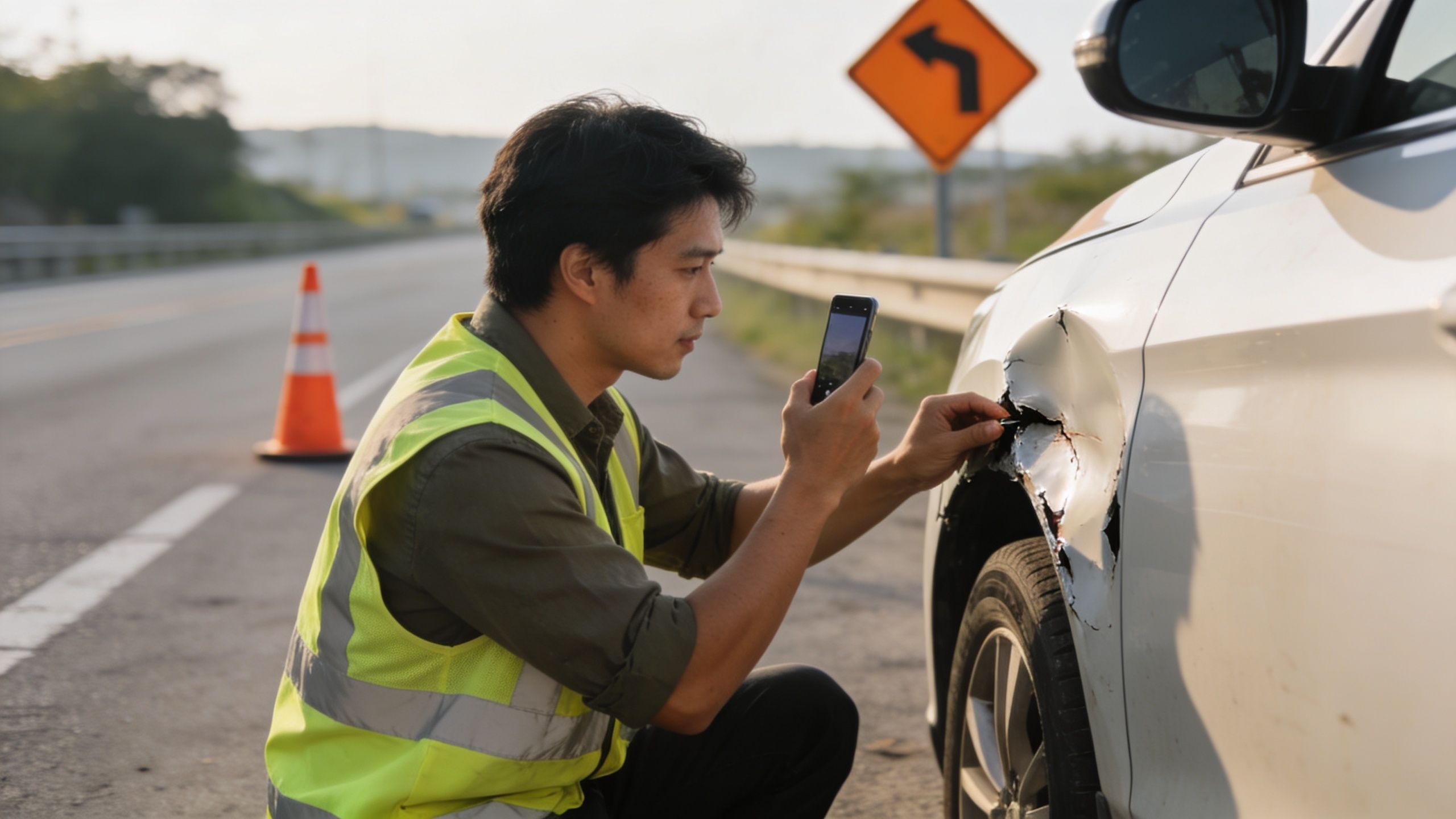
What to do at the scene
Start with the basics. Call 911. Ask for medical help if anyone is hurt, and request law enforcement so there’s an official response.
Then preserve what the scene looked like before it changes:
- Photograph the work zone: Capture lane closures, barrels, warning signs, skid marks, debris, and traffic signals.
- Get vehicle positions: Take wide shots and close-ups showing damage and where each vehicle stopped.
- Speak to witnesses: If someone saw the crash, get a name and contact information before they leave.
- Watch what you say: Be polite, but don’t apologize or guess about fault.
If the responding officer creates a report, make sure you learn how to obtain it later. This guide on getting a Texas crash report can help.
What to do in the next few days
Not every injury shows up immediately. Adrenaline can hide pain, especially after a violent rear-end or truck impact. Get checked by a doctor even if you think you’re “probably okay.”
Keep every record you can. That includes discharge papers, imaging results, prescriptions, repair estimates, towing receipts, and notes about pain or missed work. These details help connect the crash to your losses.
Practical rule: If a document relates to your injury, your treatment, your job, or your vehicle, save it.
Insurance calls usually come fast. Report the crash to your own insurer, but be careful with the other side’s adjuster. You don’t have to give a recorded statement on the spot, and you shouldn’t minimize your symptoms before you know the full picture.
This short video covers practical post-crash steps that many injured drivers find useful:
When legal help matters most
A lawyer can help early, especially if the crash involved a truck, severe injuries, disputed fault, or a fatal loss. In work zone cases, early action matters because road conditions change and companies may control key evidence.
Even if you’re unsure whether you have a case, getting advice can prevent mistakes. A few words to an insurer, a delay in treatment, or missing photos of the work zone can make a real difference later.
Understanding Your Rights Under Texas Injury Law
Texas injury law doesn’t require you to speak legal language. But it does help to know a few core rules so you can protect yourself.
The first is negligence. In a work zone crash, negligence often means a driver failed to act with reasonable care. That might be texting, speeding through a lane shift, following too closely, or failing to yield during a merge.
Drivers and passengers both have rights
Many people think work zone danger falls mainly on road crews. But drivers and passengers made up 78% of all work zone fatalities in 2023, with 704 out of 898 deaths, according to National Safety Council work zone data. If you were injured as a driver or passenger, your claim matters.

Texas uses modified comparative responsibility
Texas follows a comparative responsibility rule, often called the 51% bar rule. In plain terms, you can usually recover damages if you were not more responsible than the other side. But your recovery can be reduced if you share part of the blame.
Here’s a simple example. After a Dallas-area construction zone crash, an insurer may argue you were partly at fault because you changed lanes shortly before impact. Even if that issue is raised, it doesn’t automatically defeat your claim. The important question is how much responsibility belongs to each party, based on evidence.
This is one reason insurance companies often move quickly. They may try to frame the story before all the facts are known.
Don’t assume the first version of events in an insurance call is the final one. Fault is something that must be proved.
You usually have limited time to file
Texas also has a statute of limitations. In many personal injury and wrongful death cases, you generally have two years from the date of the accident or death to file suit. Some exceptions can affect that deadline, especially if a government-related claim is involved.
That deadline matters more than people realize. Waiting too long can mean lost evidence, faded witness memories, and fewer options. If you’re dealing with severe injuries or a fatal crash, it’s smart to talk with a Texas personal injury lawyer sooner rather than later.
How a Houston Car Accident Attorney Can Fight for You
After a work zone crash, you’re not just dealing with one problem. You may be juggling treatment, missed paychecks, vehicle repairs, and pressure from insurance companies that want a fast statement or a cheap settlement. That’s a lot to carry while you’re healing.
A Houston car accident attorney steps in to take over the parts of the process that most injured people shouldn’t have to manage alone. That often starts with a rapid investigation. In a work zone case, evidence may include photos of signage, lane closure plans, witness interviews, black box data from a truck, medical records, and the crash report.
What legal representation can actually do
A lawyer’s job isn’t just filing paperwork. It’s building a case that shows what happened, why it happened, and what it has cost you.
That may include:
- Proving fault clearly: Showing that a driver, trucking company, or another party caused the collision through careless conduct.
- Calculating full damages: Looking beyond the first hospital bill to include future treatment, lost earning ability, and pain and suffering.
- Handling insurer tactics: Responding when adjusters downplay injuries, dispute treatment, or try to shift blame.
- Preparing for trial if needed: Some claims settle fairly. Others don’t. A strong case should be built as if it may need to go to court.
Different crashes need different strategies
A passenger car claim may focus on distraction, following distance, and traffic flow through the work zone. A truck case may require a deeper review of company records and driver conduct. A fatal claim may involve a family pursuing justice after an unbearable loss.
If your case involves a commercial vehicle, this page about Texas truck accident representation may help. If you lost someone you love, this guide to wrongful death claims in Texas explains your options. And if the crash caused life-changing harm, this resource on catastrophic injury cases is worth reading.
A good attorney also helps with something less visible but just as important. They give structure to a crisis. They answer questions, explain your options, and help you make decisions from a position of strength instead of fear.
If you’re searching for a Texas personal injury lawyer, a truck crash lawyer Houston, or a wrongful death lawyer Texas families can rely on, the right help can make the path ahead clearer. Recovery takes time, but you don’t have to figure it out by yourself.
If you or a loved one was hurt in a construction zone crash, Law Office of Bryan Fagan, PLLC is available to help you understand your rights and your next steps. You can schedule a free consultation to discuss your case, get answers in plain English, and learn whether you may be entitled to compensation for medical bills, lost wages, pain and suffering, or wrongful death damages. Recovery is possible, and legal help is available when you’re ready.