A serious accident can change your life in seconds, but you don't have to face it alone. After a Houston freeway crash, you may be dealing with pain, medical bills, missed work, vehicle damage, and an insurance adjuster asking questions before you fully understand what happened. You may also worry that a small mistake on your part could destroy your claim.
Texas law does allow recovery when an injured person shares responsibility, but only up to a strict point. The fifty one percent bar proportionate responsibility Texas rule can reduce your damages when you're partly at fault and can bar recovery entirely when your responsibility is greater than half. Understanding that rule early can help you protect evidence, avoid harmful statements, and make informed decisions about your next step.
A Serious Accident Can Change Everything
After a serious collision, your first concern is usually survival and treatment. You may not be thinking about lane position, braking distance, visibility, or whether a traffic decision could later be used against you. Yet those details can become central when an insurer argues that you caused part of the crash.
Consider a driver injured when another vehicle changes lanes on a crowded Houston freeway. The other driver may have received a citation, but the insurance company could still ask whether you were traveling too fast, failed to react quickly enough, or were distracted. Those questions don't necessarily prove fault. They show why insurers examine your conduct as closely as they examine the other driver's actions.
Texas calls this process proportionate responsibility. A judge or jury may assign responsibility among the people and entities involved in an accident. If your share is within the legal limit, your damages may be reduced. If your share crosses the statutory threshold, the result can be a complete loss of compensation.
Practical rule: Never assume the insurance company's first fault assessment is the final answer.
Evidence often decides whether your account remains credible. Save photographs, identify witnesses, preserve vehicle and phone records, and seek medical care promptly. Families handling a fatal crash may also need careful documentation concerning the scene and the events that followed. Resources discussing legal steps in forensic investigation can help explain why preservation and documentation matter in serious injury and wrongful-death matters.
You may also need to identify parties beyond the driver who struck you. In a work-related vehicle crash, a trucking collision, or a case involving a property or equipment problem, the responsible-party analysis can be broader than it first appears. Information about responsible third-party designation in Texas may help you understand why identifying every relevant party can affect your legal options.
You shouldn't have to investigate a crash while recovering from it. Acting quickly gives your attorney a better chance to locate witnesses, preserve records, and respond before an insurer builds a narrative that places too much blame on you.
How the Fifty One Percent Bar Proportionate Responsibility Texas Rule Works
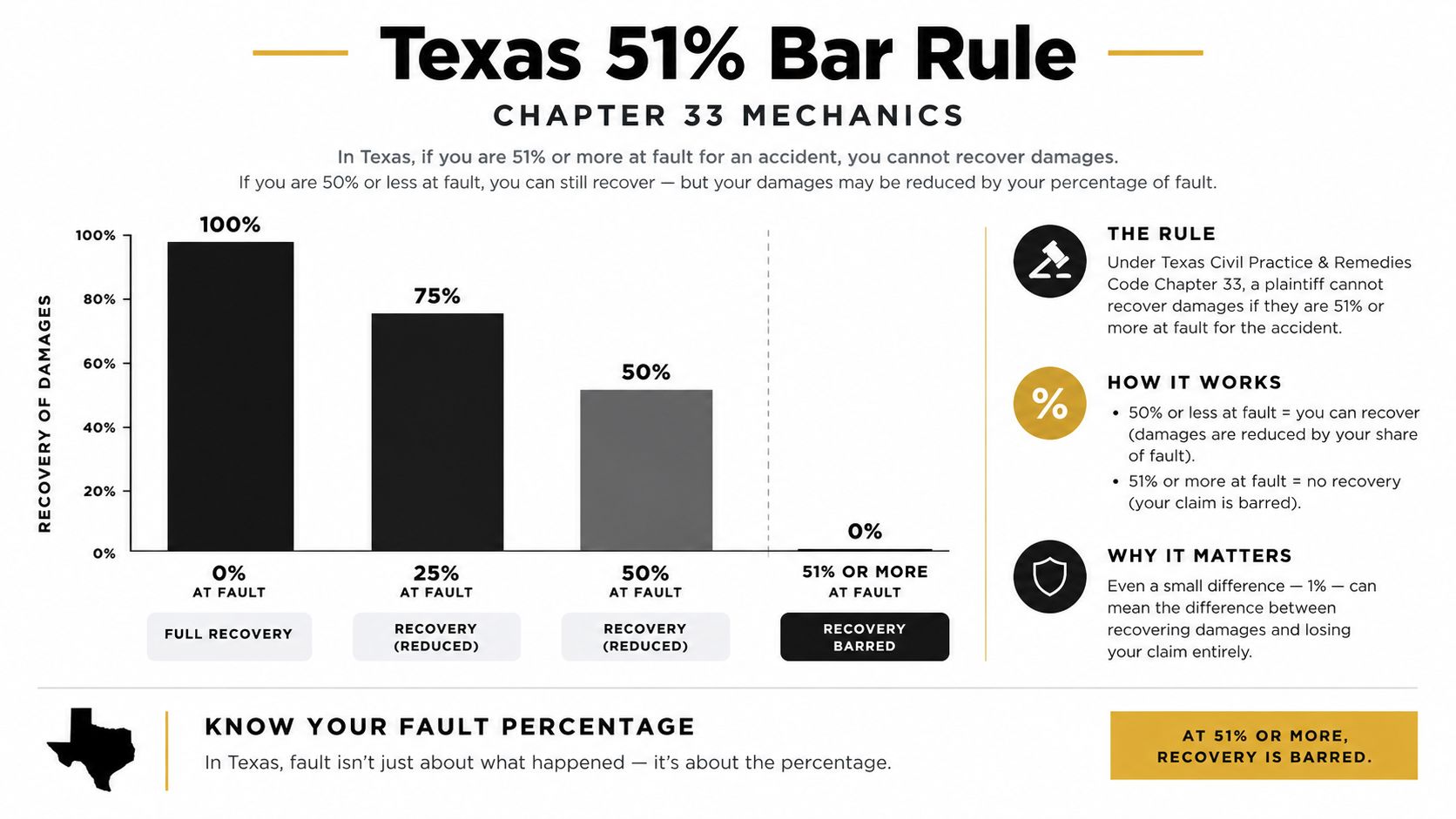
Texas uses a modified comparative responsibility system under Chapter 33 of the Texas Civil Practice and Remedies Code. The basic calculation is straightforward. If you're found 50% or less responsible, your recovery is reduced by your percentage of responsibility. If you're found more than 50% responsible, you can't recover damages under the statutory bar. The rule appears in Texas Civil Practice and Remedies Code section 33.001.
The math behind the rule
Suppose your proven damages total $100,000. The outcome changes with your assigned responsibility:
| Assigned responsibility | Result on a $100,000 loss |
|---|---|
| 20% | Recovery is reduced to $80,000 |
| 30% | Recovery is $70,000 |
| 50% | Recovery is $50,000 |
| 51% | Recovery is barred |
These examples reflect the statutory mechanics and the practical examples described in Texas Chapter 33 materials. The important point is that 50% and 51% are not nearly the same result. At 50%, you still have a claim for the reduced amount. At 51%, the law bars recovery, even though another party may have caused a substantial part of the accident.
Fault isn't based only on who received a ticket. The evidence may include photographs, witness accounts, vehicle damage, roadway conditions, medical records, and testimony about what each person did before the collision. Your lawyer's job is to present the facts accurately and challenge unsupported efforts to increase your percentage.
Why early evidence matters
A one-point change can affect a large claim by tens of thousands of dollars. That's why a careful investigation should begin before physical evidence disappears and memories become less reliable.
Readers who want a broader explanation of fault allocation can review comparative negligence in Texas. For a practical overview of what to expect from demand through settlement or trial, The Texas Personal Injury Settlement Process can provide useful context.
The legal process may end in settlement, but you should prepare as though the evidence will need to persuade a judge or jury. That approach helps prevent an early demand or insurance conversation from overlooking the fault issues that control your recovery.
Here's a short visual explanation of the rule:
Multi-Vehicle Crashes and Shared Blame
Fault becomes harder to evaluate when several vehicles or organizations contributed to one collision. A pileup may involve multiple drivers, a truck operator, a trucking company, a maintenance contractor, or another business. A rideshare collision may raise separate questions about the driver's conduct and the company relationships involved.
Texas Chapter 33 generally assigns each liable defendant responsibility for that defendant's share of fault. That means identifying every potentially responsible party matters. If one company is left out, the remaining defendants may argue that the missing party caused more of the harm.
The collection issue
Joint and several liability creates an important exception. Under Texas Civil Practice and Remedies Code section 33.013, a defendant found more than 50% responsible can face joint and several liability for recoverable damages. A defendant found at or below that level is generally responsible only for the defendant's proportionate share.
That doesn't mean the most responsible driver automatically guarantees full payment. A judgment still raises practical questions about insurance coverage, available assets, applicable policies, and whether other parties can contribute. A defendant may have limited ability to pay, while another potentially responsible company may have a relevant policy or legal obligation.
Why the full crash picture matters
Suppose a commercial truck hits one vehicle, which then strikes yours. The first driver's conduct may be important, but so may the trucking company's hiring, supervision, loading, or maintenance practices. Those issues require records and investigation, not assumptions based on the initial crash report.
A Texas multi-vehicle accident fault analysis can help explain why a collision should be evaluated as a connected event rather than as a simple dispute between two drivers. This is also why a truck crash lawyer Houston families trust may need to examine company records, vehicle data, and the actions of multiple parties.
If you suffered a catastrophic injury or lost a family member, the stakes are even higher. A wrongful death lawyer Texas families consult should investigate both fault allocation and the parties whose conduct may have contributed to the fatal event.
How Insurance Companies Try to Shift the Blame
An insurance adjuster may sound friendly while gathering information that supports the insurer's position. The adjuster's questions can focus on what you did, what you noticed, and what you believe you could have done differently. A casual answer may later be presented as an admission of responsibility.
Common blame arguments
An insurer may argue that you were distracted, failed to brake, made an unsafe lane movement, or violated a traffic rule. It may also point to a seatbelt issue, an earlier medical condition, or a gap in treatment to suggest that you caused or worsened your injuries.
Those arguments must be tested against the complete evidence. A traffic mistake doesn't automatically establish that you were more responsible for the collision. A pre-existing condition doesn't automatically explain away new trauma. The relevant question is how the available facts connect your conduct to the crash and your claimed losses.
Protecting your own words
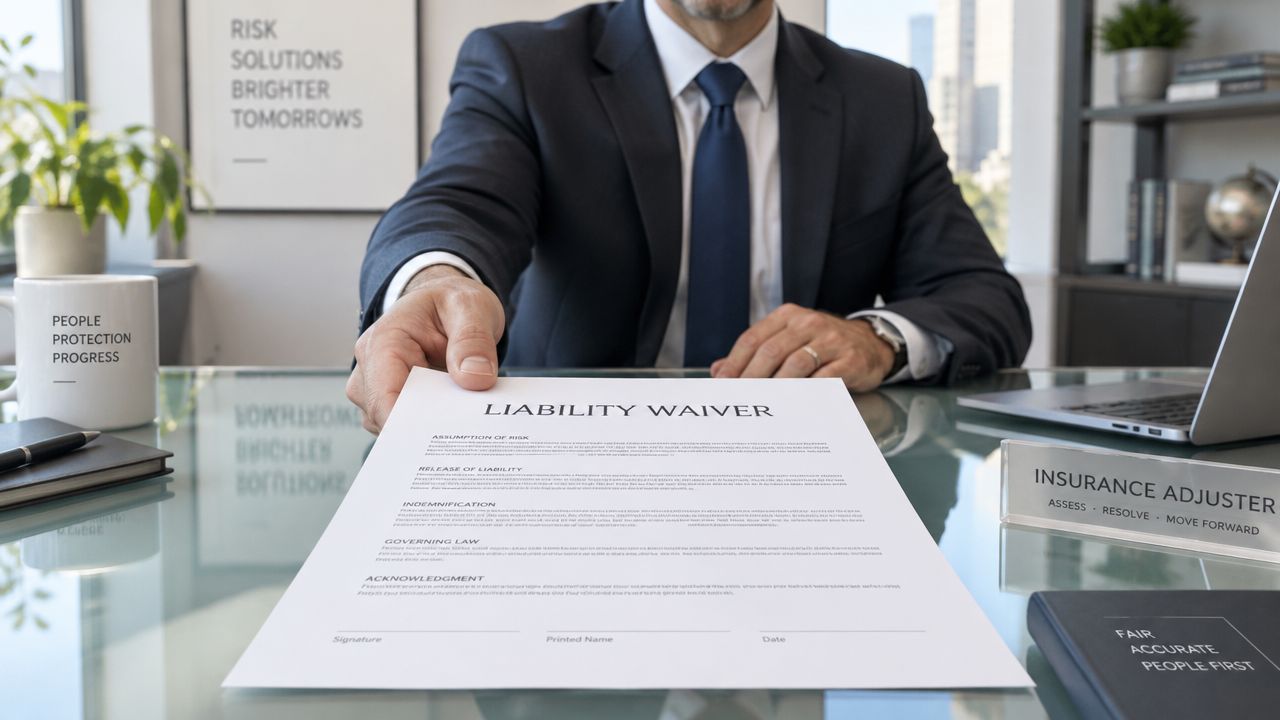
Be careful with recorded statements, broad medical authorizations, and documents that release claims before you understand the full extent of your injuries. You can provide basic accident information, but you don't need to guess, speculate, or accept the adjuster's framing of events.
A truthful answer is not the same as a complete legal analysis. You're allowed to say that you need time to review the facts before giving a recorded statement.
Keep communications focused and save every letter, email, text message, and document. Don't post photographs or comments about the accident or your activities without considering how an insurer might interpret them. If the insurer says you were mostly at fault, ask what evidence supports that conclusion and discuss the response with a lawyer before making a detailed statement.
A Houston car accident attorney can help separate verified facts from assumptions. In a truck or rideshare case, professional guidance can also help determine whether the insurer is overlooking an employer, contractor, or additional policy.
Practical Steps to Protect Your Compensation
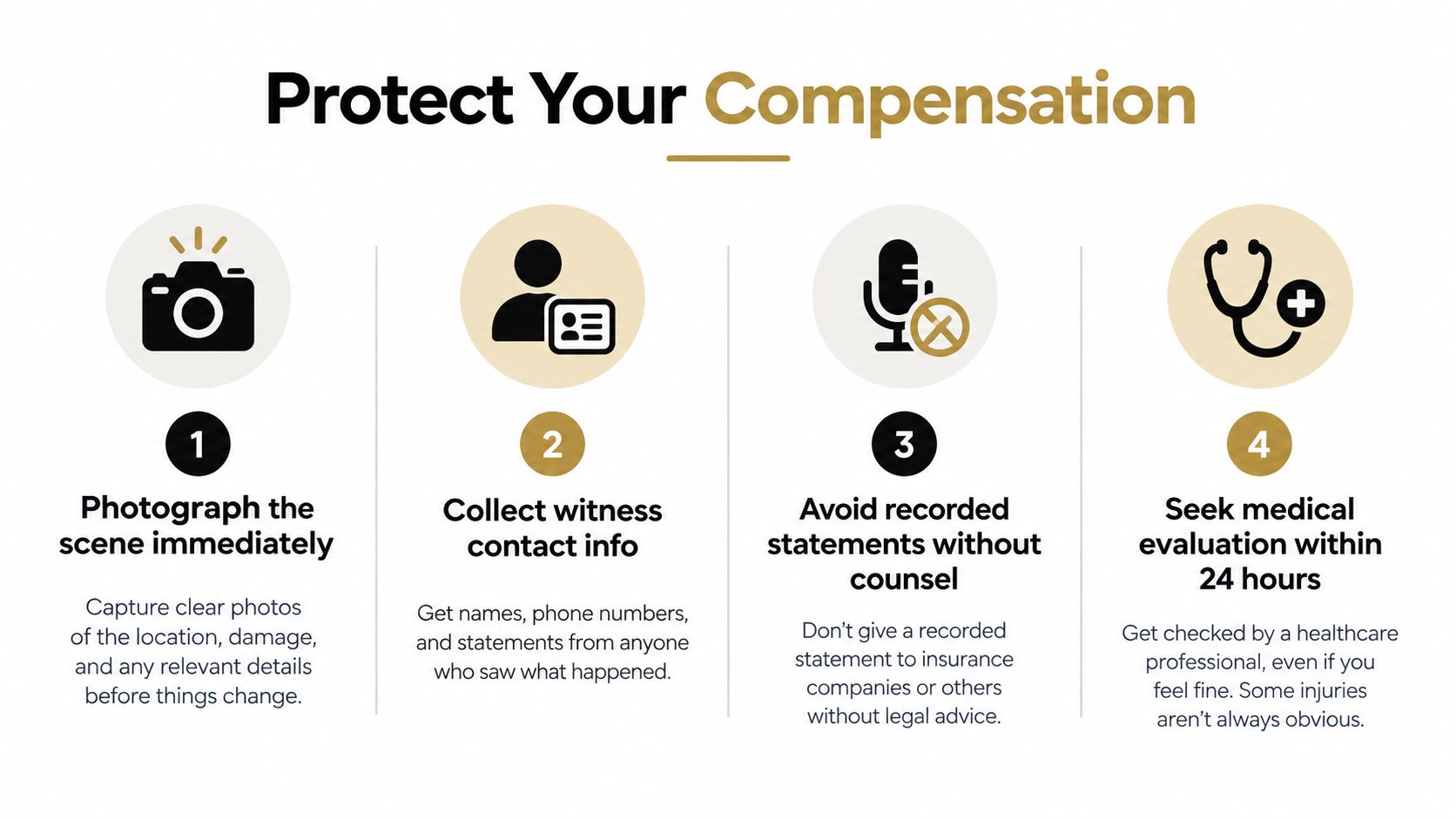
Your actions after a crash can preserve facts that later become difficult to find. If you're physically able, start with the scene. Take wide photographs showing traffic controls, road design, visibility, vehicle positions, and surrounding conditions, then capture close images of vehicle damage and visible injuries.
Build a reliable record
Use this checklist as a starting point:
- Report the crash: Contact emergency services and make sure the incident is documented. Don't rely on a verbal promise that someone else will handle it.
- Gather witness information: Ask independent witnesses for their names and contact details. Their memories may help clarify traffic signals, vehicle movement, and the sequence of impact.
- Preserve digital evidence: Save dashcam footage, relevant phone information, photographs, repair records, and messages. Ask your lawyer about preserving vehicle data when it may be relevant.
- Get medical care: Seek an evaluation promptly, follow treatment instructions, and tell medical providers about every symptom. Medical documentation helps establish the timing and nature of your injuries.
Write down what you remember while the details are fresh. Include weather, lighting, traffic, your body position, symptoms, conversations, and changes in pain. Keep a simple journal of appointments, medications, limitations, and missed work. This record won't replace medical evidence, but it can help identify inconsistencies in an insurer's account.
Handle insurers carefully
Don't give a recorded statement or sign a broad release before you understand what you're signing. Don't minimize your pain because you hope to appear cooperative, and don't speculate about speed, distance, or fault when you aren't sure.
If you're injured in a company vehicle, a truck, or a collision involving several vehicles, preserve information about employers and businesses connected to the vehicles. Those details may help your attorney investigate parties beyond the person who was driving.
The safest account is the accurate account. Gather facts first, then let a qualified attorney evaluate how Texas law applies.
When to Call a Texas Personal Injury Lawyer
After a crash, an insurer may point to another driver, a passenger, or a company and argue that you share the blame. That decision can reduce your recovery under Texas's fifty one percent bar and hide which parties may be responsible for paying damages. Contact a Texas personal injury lawyer when fault is disputed, injuries are serious, several parties are involved, a loved one has died, or an insurer requests a recorded statement or release.
Texas generally gives an injured person two years to file a personal injury lawsuit, according to TexasLawHelp's explanation of civil lawsuit deadlines. Insurance discussions do not pause that deadline. Delay can also cost you witnesses, records, and evidence from changing roadway or vehicle conditions.
A lawyer can examine competing accounts, assess proportionate responsibility, identify potentially liable parties, document losses, and negotiate with insurers. In a multi-party case, joint-and-several liability may affect how damages are collected, so identifying every responsible party matters. For serious injury cases, the Law Office of Bryan Fagan, PLLC offers free consultations and contingency-fee representation, meaning clients do not pay attorney fees unless the firm wins.
The Law Office of Bryan Fagan, PLLC can investigate disputed fault, preserve evidence, and pursue compensation across Texas. Reach out today to discuss the next steps for protecting your claim.