
A serious accident can change your life in seconds, but you don't have to face it alone. After a Houston freeway crash, a family may be dealing with emergency surgery, rehabilitation, a wheelchair, changes to the home, and the frightening question of how care will be paid for years from now. The immediate bills are only the beginning.
A Texas catastrophic injury lifetime care claim seeks compensation for the complete effect of a permanent injury. That can include future medical treatment, therapy, equipment, attendant care, home and vehicle changes, lost earning capacity, pain, and the loss of ordinary activities. The evidence must show not only what happened, but what the injured person will reasonably need in the future.
When a Single Accident Becomes a Lifetime of Care
A family may leave a hospital with a discharge plan. A catastrophic injury claim must look much farther ahead. Consider a Dallas driver who survives a collision with a spinal cord injury. The family may need to arrange rehabilitation, accessible transportation, equipment replacement, personal assistance, and changes to daily routines that once seemed ordinary.
The legal claim isn't limited to invoices already received. It is a demand for compensation that accounts for medically supported needs over the injured person's remaining life. A life care plan turns those needs into an organized schedule, then an economist can help express projected costs in present-value dollars.
What makes an injury catastrophic
Texas law doesn't reduce catastrophic injury to one simple diagnosis. In practical terms, the injury is catastrophic when it permanently changes a person's ability to function, work, live independently, or participate in family and community life. Spinal cord damage, severe traumatic brain injury, paralysis, amputation, major burns, and serious polytrauma can all require this kind of analysis.
The Texas catastrophic injury explanation can help families understand why these claims differ from routine injury cases. A short treatment course may support a conventional damages calculation. A permanent disability requires medical forecasting, functional evidence, and financial planning.
A lifetime-care claim isn't a request for an arbitrary large number. It's a documented effort to fund care that doctors and other qualified professionals expect the injury will require.
Texas recorded 4,150 motor vehicle traffic deaths in 2024, compared with 4,291 in 2023, and its 2024 fatality rate was 1.35 deaths per 100 million vehicle miles traveled. Those figures come from the Texas Department of Transportation 2024 crash report. The numbers show why serious roadway injuries affect families across Houston, Dallas–Fort Worth, Austin, and San Antonio, even when a crash doesn't result in death.
A routine settlement often focuses on past bills, missed work, and visible recovery. A lifetime-care case must address the future with care and restraint. The earlier the legal team preserves records and coordinates medical evidence, the easier it becomes to prove what the injury means in daily life.
Texas Law That Shapes Your Claim
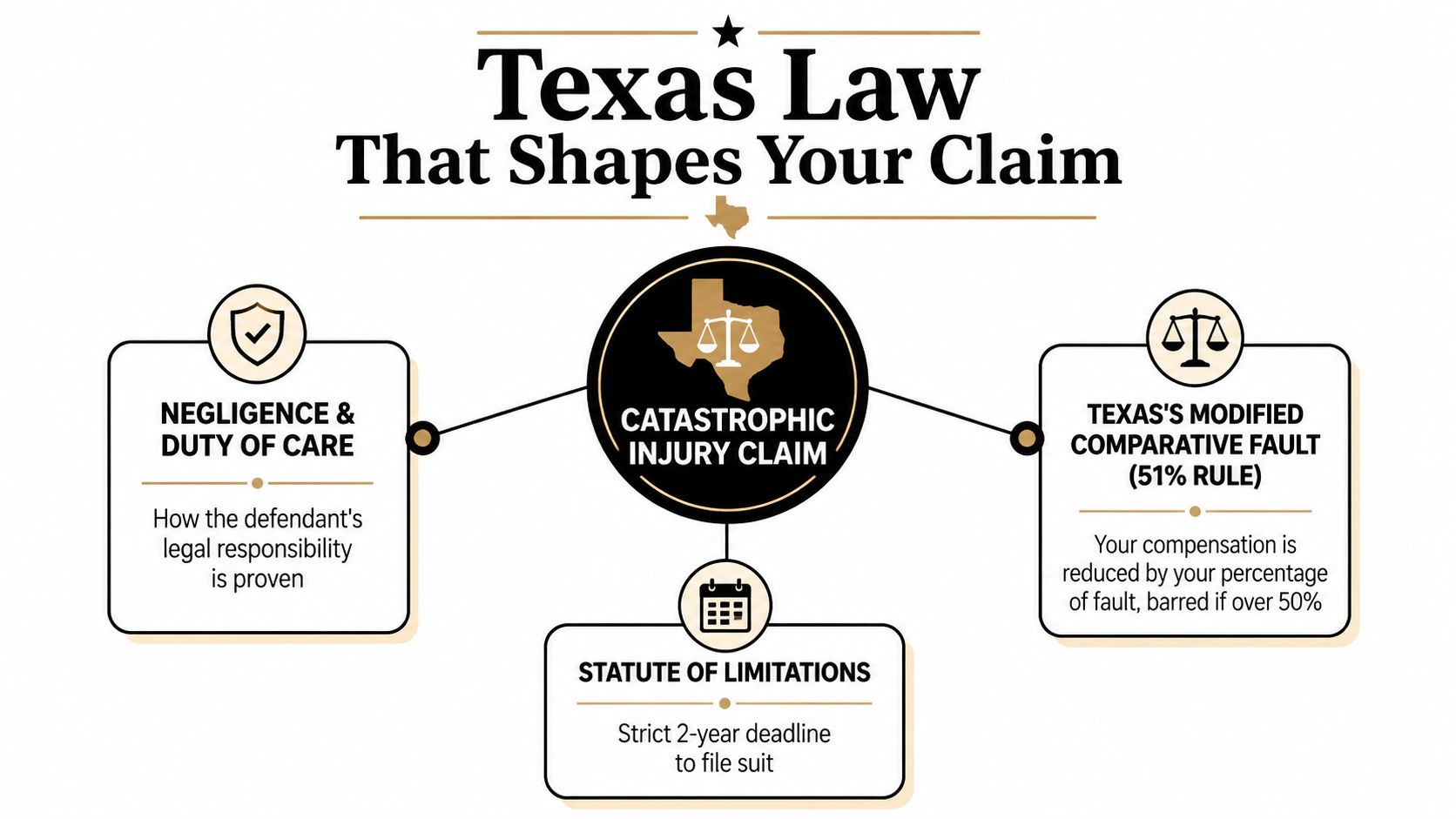
Before anyone calculates future care, the family must establish legal responsibility. Texas negligence law generally asks whether another person or company owed a duty of reasonable care, breached that duty, and caused the injury and resulting damages. In a crash, that may involve unsafe driving, distraction, intoxication, poor vehicle maintenance, inadequate training, or another failure supported by the evidence.
Fault and comparative responsibility
Texas follows a modified comparative responsibility system, commonly called the 51% bar. If the injured person is found more than 50% responsible, recovery is barred. If the person is found 50% or less responsible, the damages are reduced according to that percentage of fault. This rule is explained in Texas comparative responsibility guidance.
For example, if evidence supports a finding that another driver caused a collision but the defense argues that the injured person also acted carelessly, the final responsibility percentage can affect every category of damages, including future care. Insurers may focus heavily on fault because moving responsibility above the legal threshold can eliminate recovery altogether.
The filing deadline
Texas Civil Practice and Remedies Code Section 16.003 generally gives an injured person two years to file a personal injury lawsuit. The deadline can involve exceptions and special rules, so you shouldn't assume that negotiations with an insurer stop the clock. Review the issue promptly with counsel through this explanation of the Texas statute of limitations for injury claims.
A Texas personal injury lawyer can also help identify the damages supported by the evidence. Those may include past and future medical expenses, rehabilitation, lost earning capacity, physical pain, mental anguish, impairment, disfigurement, and loss of enjoyment of life. The Texas Personal Injury Lawyer resource describes representation for injury victims across Texas on a no-fee-unless-we-win basis.
The legal foundation matters because a life care plan alone doesn't prove negligence. Medical evidence describes the future needs. Liability evidence connects those needs to the defendant's conduct.
What Goes Into a Lifetime Care Calculation
A life care plan should read like a practical roadmap, not a vague estimate. It usually identifies the services, equipment, support, and adaptations the injured person is expected to need, then explains why each item belongs in the plan.
A systematic review of spinal cord injury costs found estimated lifetime expenditure per person ranging from US$0.7 million to US$2.5 million, with higher costs associated with earlier age at injury, neurological level, and whether non-medical costs were included. The findings appear in the 2024 systematic review of spinal cord injury costs. The figures aren't a prediction for every Texas claimant, but they show why future damages can dominate a serious injury case.
The major categories
Future surgeries, physician visits, therapy, prescriptions, nursing services, attendant care, and durable medical equipment may all belong in the analysis. A plan can also address home modifications, vehicle adaptations, transportation, vocational support, and replacement cycles for equipment that won't last indefinitely.
| Cost Category | What It Covers | Why It Matters |
|---|---|---|
| Future medical care | Physician visits, procedures, hospital treatment, and follow-up care | Captures treatment that may occur after the claim resolves |
| Rehabilitation | Physical, occupational, speech, cognitive, or other therapy | Connects functional goals to ongoing services |
| Equipment and supplies | Wheelchairs, prosthetics, communication devices, and medical supplies | Accounts for purchase, maintenance, and replacement needs |
| Home and vehicle modifications | Ramps, accessible bathrooms, adapted controls, and transportation changes | Supports safe living and mobility |
| Attendant care | Personal assistance, supervision, and caregiver support | Measures help required for daily activities |
| Earning capacity | The effect of permanent limitations on future work | Addresses income the injured person may no longer be able to earn |
For families providing daily support, a plain-language resource on care management for caregivers may help organize responsibilities and services. Caregiving information doesn't replace medical testimony, but it can help a family describe what assistance looks like at home.
From medical recommendations to present value
The life-care planner commonly creates a year-by-year schedule based on treating physicians' records, diagnoses, prognosis, and functional limitations. An economist then reviews the projected stream of costs and converts it into present value, accounting for inflation, replacement cycles, and the possibility that services may continue for decades.
That calculation doesn't mean the injured person receives less care. It gives a jury or insurer a defensible way to evaluate future expenses in today's dollars. The strongest claim traces every line item back to medical documentation and the person's actual limitations. Texas damages information about special damages can provide additional context about documented financial losses.
Life-Care Planners and Expert Witnesses
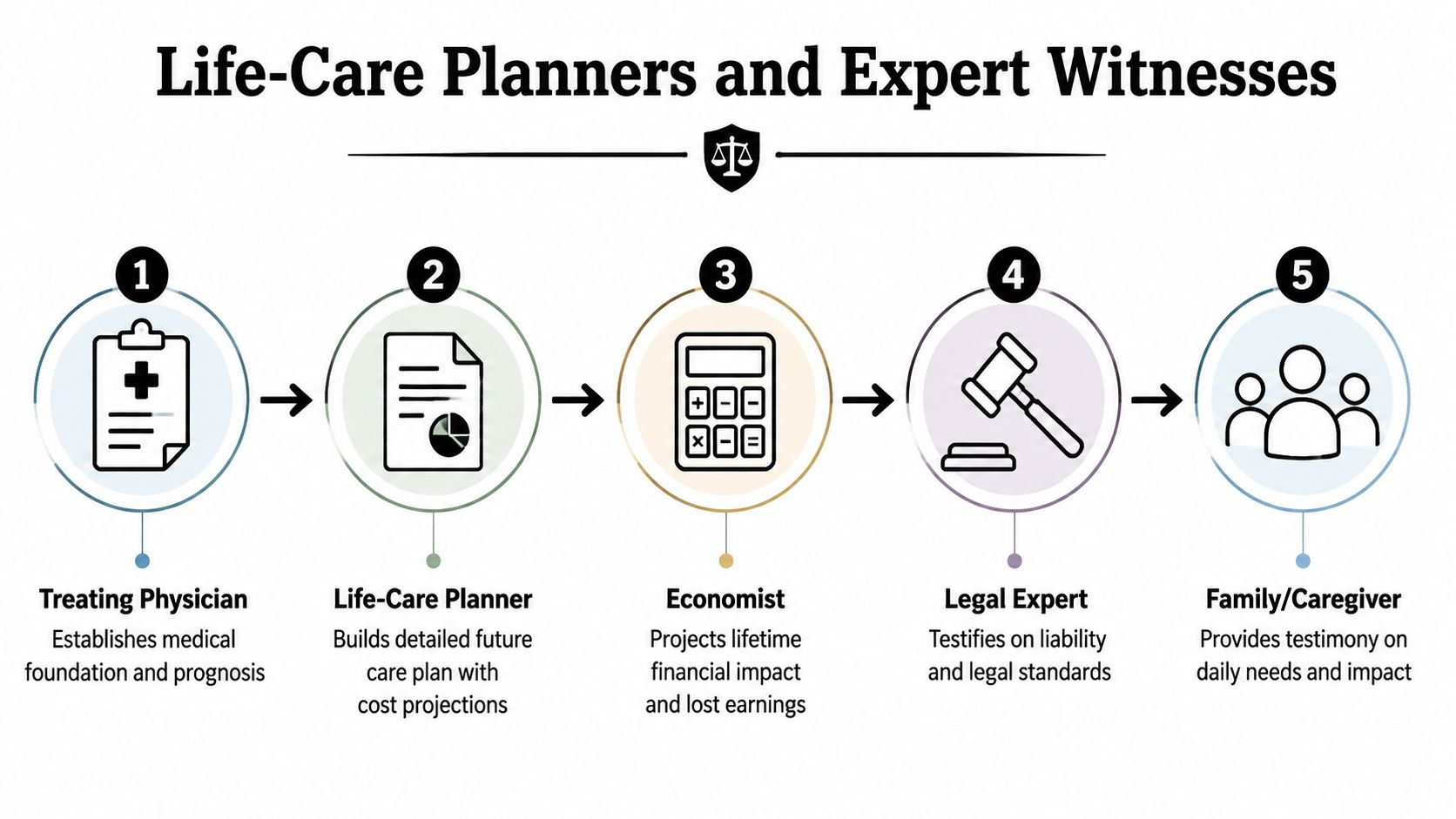
A credible plan depends on a chain of support. The treating physician supplies the medical foundation. The life-care planner translates that foundation into future services and equipment. A vocational professional evaluates work limitations, and an economist calculates financial effects, including present value and earning capacity.
Who contributes what
The treating doctor's records may address permanence, prognosis, treatment frequency, medication, complications, and functional restrictions. A life-care planner reviews that material and builds a detailed schedule. The vocational expert considers education, work history, transferable skills, and the practical effect of disability on employment.
The economist may then calculate the financial impact of future care and reduced earning capacity. Family members and caregivers also provide important factual evidence about bathing, dressing, transfers, supervision, transportation, and other daily needs. Their testimony can show how a medical condition affects real life outside the clinic.
A planner cannot add every imaginable treatment. The methodology is more defensible when physicians support the diagnosis and projected care. A line item that lacks medical support gives the defense an opening to challenge the entire plan.
How challenges affect the claim
Defense counsel may question an expert's qualifications, assumptions, data, life expectancy analysis, treatment frequency, or pricing. That doesn't mean the family's claim is weak. It means the legal team must be ready to explain the source of each projection and why it fits the injured person's condition.
Published practitioner guidance reports that quadriplegia life-care projections routinely reach $7 million to $12 million, while developing a defensible plan can cost about $7,500 to $25,000, with more complex matters exceeding $40,000. These figures come from Texas life-care planning guidance. They describe reported planning ranges, not an automatic value for any case.
The investment in experts is part of building a claim that can withstand settlement review, depositions, and trial. A lawyer should explain which professionals are needed and how their work supports the damages request.
Settlement or Trial How the Decision Is Made
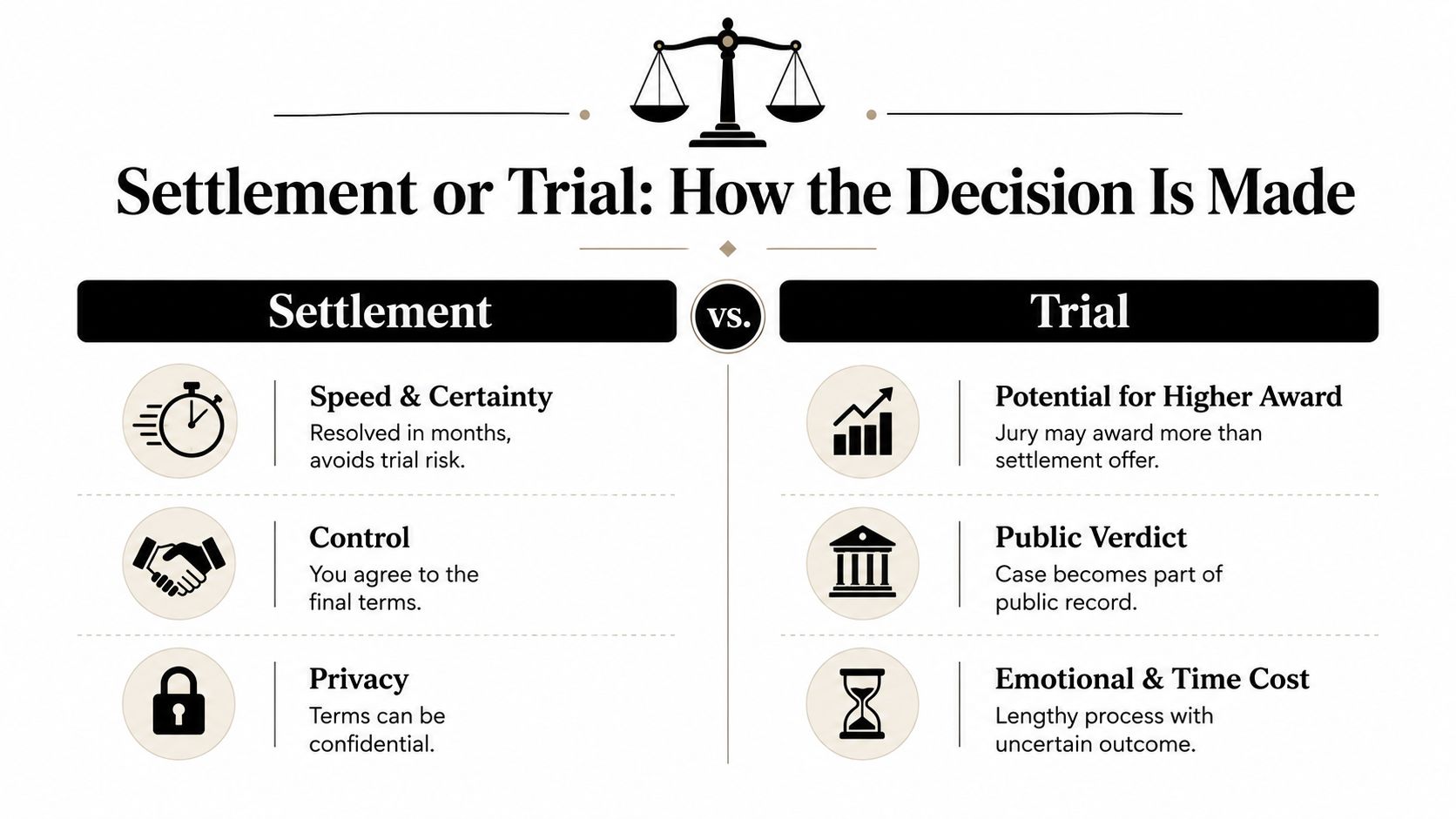
Settlement and trial serve different purposes. A settlement can provide certainty and allow the family to negotiate terms that fit long-term care planning. Trial gives a jury the authority to decide disputed liability and damages, but it also brings delay, expense, public proceedings, and an uncertain result.
What settlement can accomplish
A well-supported demand gives the insurer a clear picture of future care, lost earning capacity, and non-economic harm. Mediation, expert disclosures, medical records, and testimony from caregivers can create a stronger position before trial. The family may also negotiate payment terms, confidentiality, and protections related to public benefits.
A structured settlement can distribute funds over time rather than paying everything as one lump sum. The right choice depends on the injured person's needs, eligibility concerns, tax advice, and financial management. Families should review the difference between options in structured settlements and lump-sum recoveries with legal and financial professionals.
Medicare or other benefits may create reimbursement and coordination issues. A Medicare set-aside may be considered when future medical expenses overlap with covered services. The legal team must address those obligations before finalizing settlement documents, not after the funds are distributed.
When trial becomes necessary
Trial may be appropriate when the defense disputes fault, minimizes permanent limitations, or offers less than the documented future needs justify. A jury may respond differently to a detailed annual schedule than to a single unexplained total, especially when physicians and caregivers connect the numbers to everyday life.
Defense lawyers often attack assumptions about equipment replacement, attendant-care hours, life expectancy, inflation, and work capacity. The response should come from reliable records and qualified testimony, not exaggeration. The decision to settle or proceed should turn on the strength of liability evidence, the quality of expert support, available insurance and assets, the adequacy of the offer, and the family's tolerance for uncertainty.
Mistakes That Shrink the Value of a Lifetime Care Claim
Catastrophic cases can lose value through ordinary decisions made under extraordinary pressure. A missed appointment, an incomplete record, or an early release can later create questions about the injury's severity and future needs.
Common problems to avoid
- Gaps in treatment: Follow medical referrals and explain unavoidable gaps to providers and counsel. An insurer may use missing records to argue that symptoms improved or that future care is unnecessary.
- Early settlement: Don't accept a quick check before doctors can reasonably describe long-term needs. A release may end the claim even if later treatment becomes necessary.
- Unfiltered insurance communication: Adjusters may ask for recorded statements, broad medical authorizations, or opinions about fault. Speak carefully and consider legal advice before signing or recording anything.
- Social-media activity: Photos, comments, and videos can be taken out of context. Avoid posting about the crash, physical abilities, travel, activities, or the case.
- Untracked expenses: Keep receipts, mileage records, medication costs, home-care notes, and wage documents. Small records can help show the practical burden of care.
- Missed deadlines: Texas's two-year filing rule under CPRC 16.003 can end a claim if suit isn't filed on time. Discuss the date with counsel early.
A fast insurance payment may solve an immediate cash problem while creating a long-term care problem. Know the future before you release it.
Inflation and replacement cycles also matter. A wheelchair, vehicle adaptation, or home feature may require future maintenance or replacement, and a plan that ignores those realities may understate the cost of living with a permanent disability.
The at-fault driver's insurer isn't your family's financial planner. Its adjuster evaluates exposure for the insurance company. Your claim should be evaluated against documented medical needs, functional limitations, and realistic future expenses.
Practical Steps to Build a Strong Claim
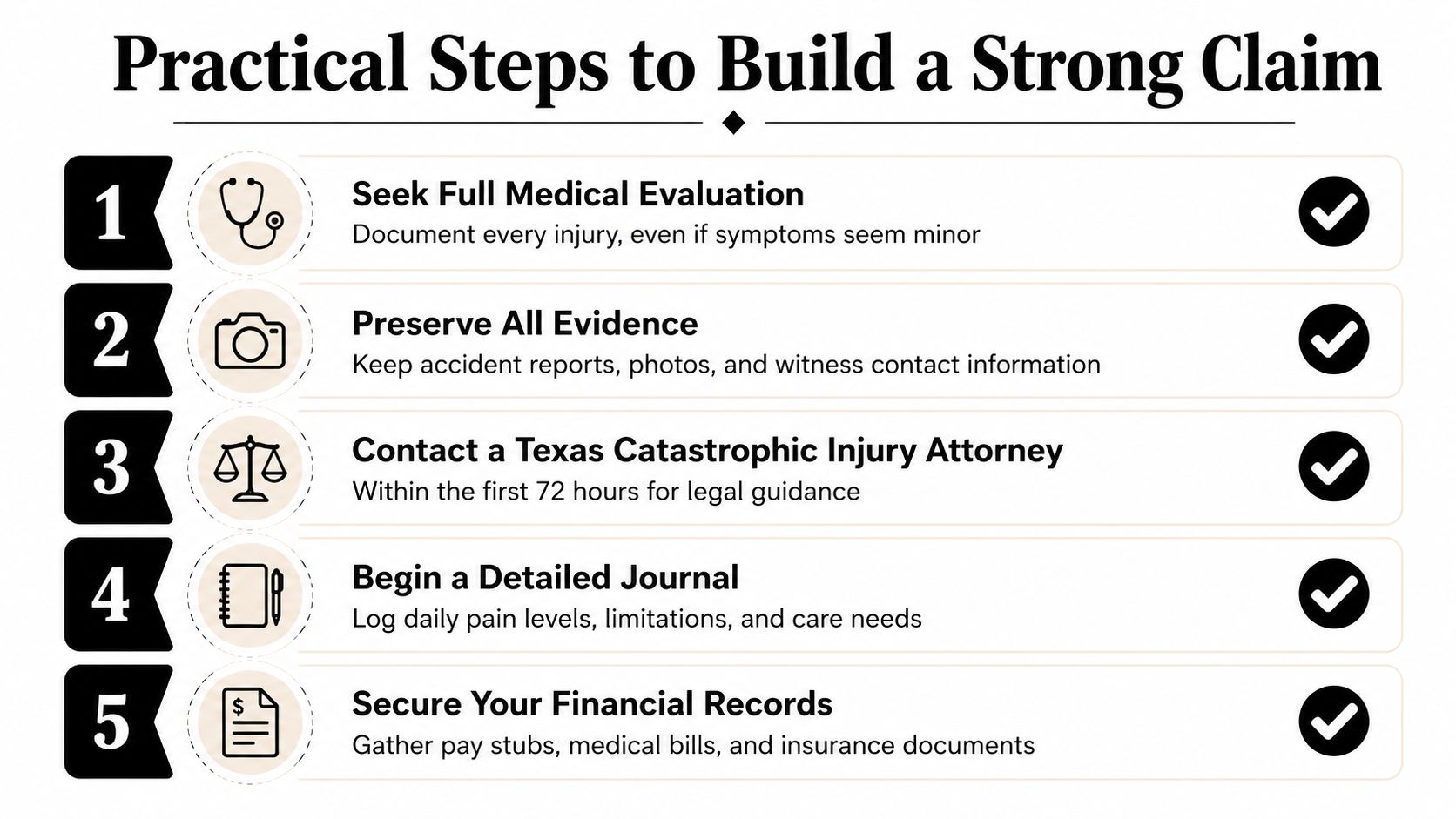
Start with health and documentation. During the first days after a serious crash, seek a complete medical evaluation, follow referrals, and tell providers about every symptom, including problems that seem minor. Keep a daily journal describing pain, sleep, mobility, medication effects, emotional changes, and the help needed with ordinary tasks.
A workable action plan
- Preserve evidence: Save crash reports, photographs, vehicle information, witness contacts, work records, and relevant messages. Ask counsel about preserving vehicle data, surveillance, and other evidence that may disappear.
- Notify the right insurers: Report the crash to the at-fault driver's insurer and to your own insurer if you have PIP, MedPay, or uninsured or underinsured motorist coverage. This practical step is described in the Texas personal injury claims process.
- Protect your records: Request medical records, bills, prescriptions, therapy notes, employment documents, and insurance correspondence. Store copies in one secure location.
- Limit recorded statements: You can provide necessary claim information, but don't guess about fault, prognosis, or future recovery. Ask a lawyer to review requests that go beyond basic reporting.
- Get legal guidance early: A catastrophic injury attorney can identify responsible parties, preserve evidence, coordinate experts, and assess whether a life-care plan is needed. The Law Office of Bryan Fagan, PLLC describes contingency-fee representation, meaning no fee unless the firm wins.
Families may also benefit from a plain-language Dr. Yaw Donkoh injury treatment guide when sorting through treatment and claim questions. Medical guidance must come from your own providers, but educational material can help you prepare better questions.
Don't wait until every record is complete before seeking legal advice. The lawyer can help preserve evidence and organize the investigation while treatment continues.
How Bryan Fagan PLLC Helps Texas Families Move Forward
The Law Office of Bryan Fagan, PLLC works with families affected by serious crashes and permanent injuries in Houston, Dallas–Fort Worth, Austin, San Antonio, and surrounding Texas communities. In a catastrophic case, the work may include investigating the collision, identifying all responsible parties, protecting evidence, obtaining medical records, and coordinating life-care, vocational, and economic professionals.
The firm handles motor vehicle, truck, wrongful death, uninsured or underinsured motorist, workplace, and catastrophic injury matters. A family seeking a Houston car accident attorney, a truck crash lawyer Houston, or a wrongful death lawyer Texas may need different evidence and legal strategies, but the need for careful documentation remains consistent.
A consultation can help you understand fault, deadlines, insurance coverage, future-care evidence, and the practical choices ahead. The firm offers free consultations and contingency-fee representation, so you can ask questions without paying an upfront legal fee.
Recovery after catastrophic harm may take time, but a careful claim can help protect medical care, independence, and family stability. You don't have to carry the legal burden while you focus on your loved one.
The Law Office of Bryan Fagan, PLLC can review your Texas catastrophic injury lifetime care claim, help preserve evidence, and coordinate the documentation needed to pursue future-care damages. Schedule a free consultation today so you can discuss your family's needs, deadlines, and legal options with a Texas personal injury team.