A serious accident can change your life in seconds — but you don’t have to face it alone. When another driver hits you and then speeds off, it's a shocking and infuriating experience. Your first instinct might be anger or panic, but what you do in the next few moments is critical. The most important things to focus on immediately are checking for injuries, calling 911, and gathering any details you can about the vehicle that fled. Taking these quick, decisive actions can protect your health and lay the groundwork for your legal rights.
Your First Steps After a Hit and Run
The fact that the other driver chose to flee adds a layer of injustice to an already traumatic event. It's completely normal to feel disoriented, angry, and unsure of what to do next. The key is to regain control by focusing on your well-being and securing the scene as best you can.
The initial steps you take can have a huge impact on both your physical recovery and your ability to get compensation later. For example, after a Houston freeway crash, one of our clients was in shock and didn't realize how badly he was hurt at first. By calling 911 immediately, he not only got the medical care he desperately needed but also created an official record of the incident that became a vital piece of evidence for his case.
Assess, Document, and Report
In the minutes after a hit and run, your response should zero in on three key areas: your safety, gathering information, and alerting the authorities.
- Prioritize Safety First: Before anything else, check yourself and your passengers for injuries. Adrenaline can easily mask pain, so don't assume you're okay. Call 911 right away to report the crash and request medical assistance if needed.
- Gather Every Detail: While you wait for help, try to jot down everything you remember about the other car. What was the make, model, and color? Can you recall the license plate, even just a partial number? Think about unique features like bumper stickers, roof racks, or visible damage. Every little bit helps.
- Make an Official Report: Giving this information to the police is absolutely essential. It helps them launch an investigation to find the driver and creates the official police report you will need to file an insurance claim.
The graphic below helps visualize this critical process.
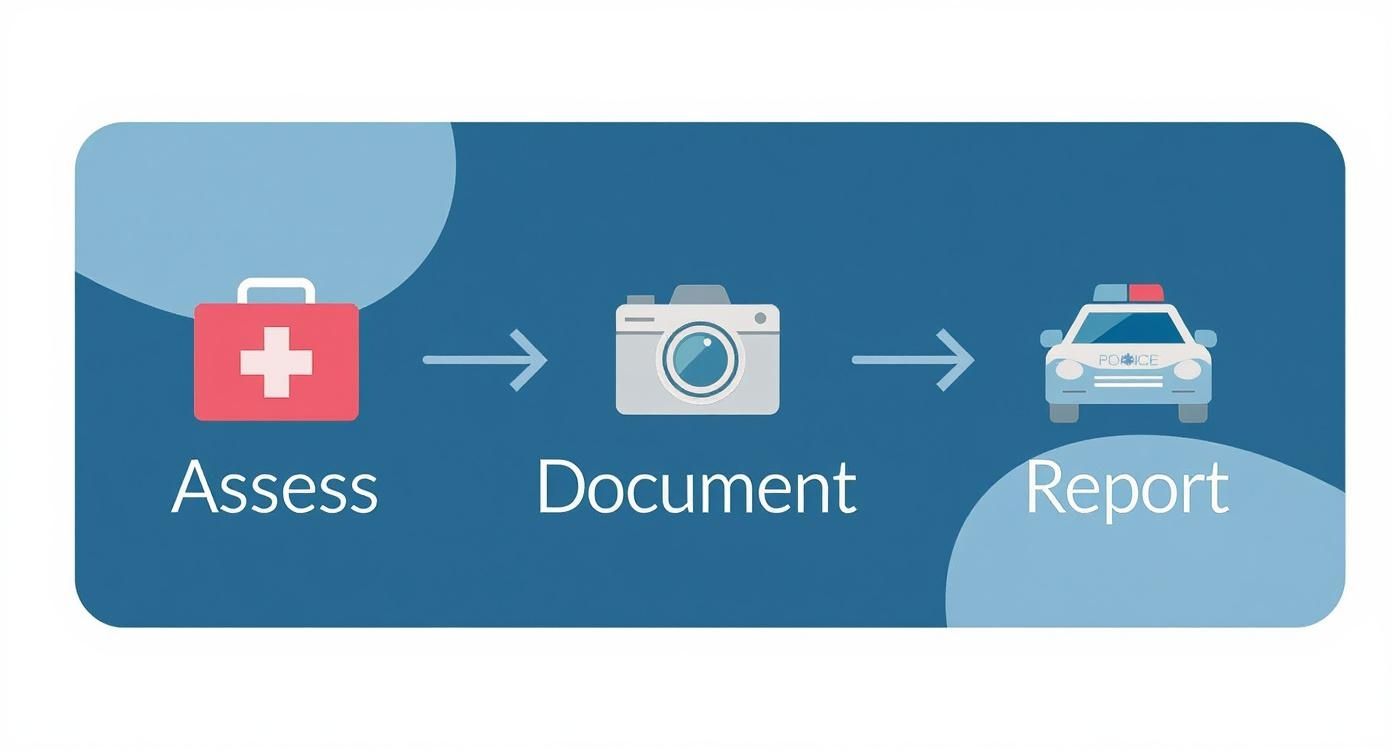
This simple sequence—Assess, Document, Report—gives you a clear framework to follow when you're under immense stress. While these actions are tailored for a hit and run, you can learn more about post-crash guidelines in our complete guide on what to do after a car accident.
For a quick reference, here’s a simple checklist to keep in mind. It breaks down the most important actions into a simple, scannable format.
Your Hit and Run Checklist
| Critical Action | Why It's Important | Who To Involve |
|---|---|---|
| Check for Injuries | Your health is the top priority. Adrenaline can hide serious pain. | Emergency Medical Services (EMS) via 911 |
| Move to a Safe Location | Prevents further accidents and protects you from oncoming traffic. | Yourself, if you are able |
| Call 911 | Creates an official record and gets police and medical help to the scene. | Local Police Department, EMS |
| Gather Evidence | Photos, witness info, and vehicle details are crucial for your claim. | Witnesses, your own observations |
| Contact Your Insurer | Starts the claims process, especially for uninsured motorist coverage. | Your insurance company |
| Speak to an Attorney | Protects your rights and helps you navigate the complex legal process. | A Texas personal injury lawyer |
Following these steps provides a solid foundation for handling the aftermath of a hit-and-run. It ensures your immediate safety is addressed while also protecting your ability to seek justice and compensation down the road.
Understanding Your Rights Under Texas Hit and Run Laws

After the initial shock of a hit and run wears off, it's natural to feel powerless and angry. But you need to know this: Texas law is on your side. Understanding your rights is the first, most important step toward getting back on your feet and holding the responsible driver accountable.
The person who fled didn't just make a mistake—they committed a serious crime. While the police will pursue criminal charges, you have a separate path to get compensated for your losses through a civil claim.
Criminal Penalties vs. Civil Justice
In Texas, a driver who leaves the scene of an accident involving injury has committed a felony. That criminal case is the State of Texas versus the driver, and its goal is punishment—fines, jail time, and a criminal record.
But what about your hospital bills, car repairs, and the paychecks you're missing while you recover? The criminal case won’t help you with that. For financial recovery, you must file a civil personal injury claim. This is your case, focused solely on making you whole again by securing the money you need to cover your damages.
And here's something crucial: even if the police never find the driver who hit you, you still have options. Your own auto insurance policy likely includes Uninsured Motorist (UM) coverage, which is designed for exactly this kind of nightmare scenario. A Texas personal injury lawyer can take the fight to your own insurance company to make sure they pay you the full benefits you're entitled to.
How Texas Fault and Negligence Laws Apply to You
Your civil case will be built around the legal principle of negligence. It sounds complicated, but it’s straightforward. You must prove the other driver was careless, their carelessness caused the wreck, and you suffered damages because of it. By fleeing the scene, that driver has already handed you powerful evidence of their negligence.
Texas is a modified comparative fault state, also known as the 51% rule. Here’s how that works:
- If you are found 50% or less at fault for the crash, you can still recover money for your damages, though your final award will be reduced by your percentage of fault.
- If you are found 51% or more at fault, you are barred from recovering any compensation.
Imagine a jury decides you were 10% at fault for an intersection crash in Houston. You would still be able to collect 90% of your total damages. In nearly all hit-and-run cases, the fleeing driver is considered 100% at fault, but it’s a vital rule to understand for any car accident claim in Texas.
A hit and run feels like a deep personal violation, and the law acknowledges that. It gives you a way to hold the driver accountable, not just in criminal court, but financially. Your job is to focus on healing; let a legal professional handle the fight.
The sheer scale of global traffic incidents shows just how critical these legal protections are. Every year, about 1.19 million people are killed in road crashes around the world, with pedestrians and cyclists being some of the most vulnerable victims. This sobering fact highlights the dangers innocent people face every day. To see more on these global driving statistics, you can read more about road safety facts.
How Long Do You Have to File a Claim in Texas?
This is one of the most critical pieces of information you need to know: the statute of limitations. In Texas, you typically have only two years from the date of the accident to file a personal injury lawsuit.
This isn't a suggestion—it's a hard deadline. If you miss it, you lose your right to seek compensation forever. It doesn’t matter how clear-cut your case is or how severe your injuries are.
Two years might seem like a long time, but it disappears quickly. Properly investigating a hit and run, gathering evidence, dealing with insurance adjusters, and preparing a solid lawsuit takes time. This is especially true if you're dealing with a catastrophic injury or the tragedy of a wrongful death. Reaching out to a lawyer right away is the only way to ensure every deadline is met and your right to justice is protected.
How to Document the Scene and Gather Evidence
Once you’re out of harm’s way and have called 911, what you do next can make or break your case. In these chaotic moments, your smartphone is your most important tool.
Every photo you take and every video you record becomes a piece of the puzzle. The goal is to build a detailed, visual record of exactly what happened and the damage it left behind. Capturing this evidence on the spot—before the scene is cleared—gives your Houston car accident attorney the raw material they need to build the strongest possible case for you.
Your Photographic Evidence Checklist
Your job is to document everything that could possibly be relevant, no matter how minor it seems. A thorough set of photos helps accident reconstruction experts, insurance adjusters, and even a jury understand the reality of the crash.
Your photo and video log should cover:
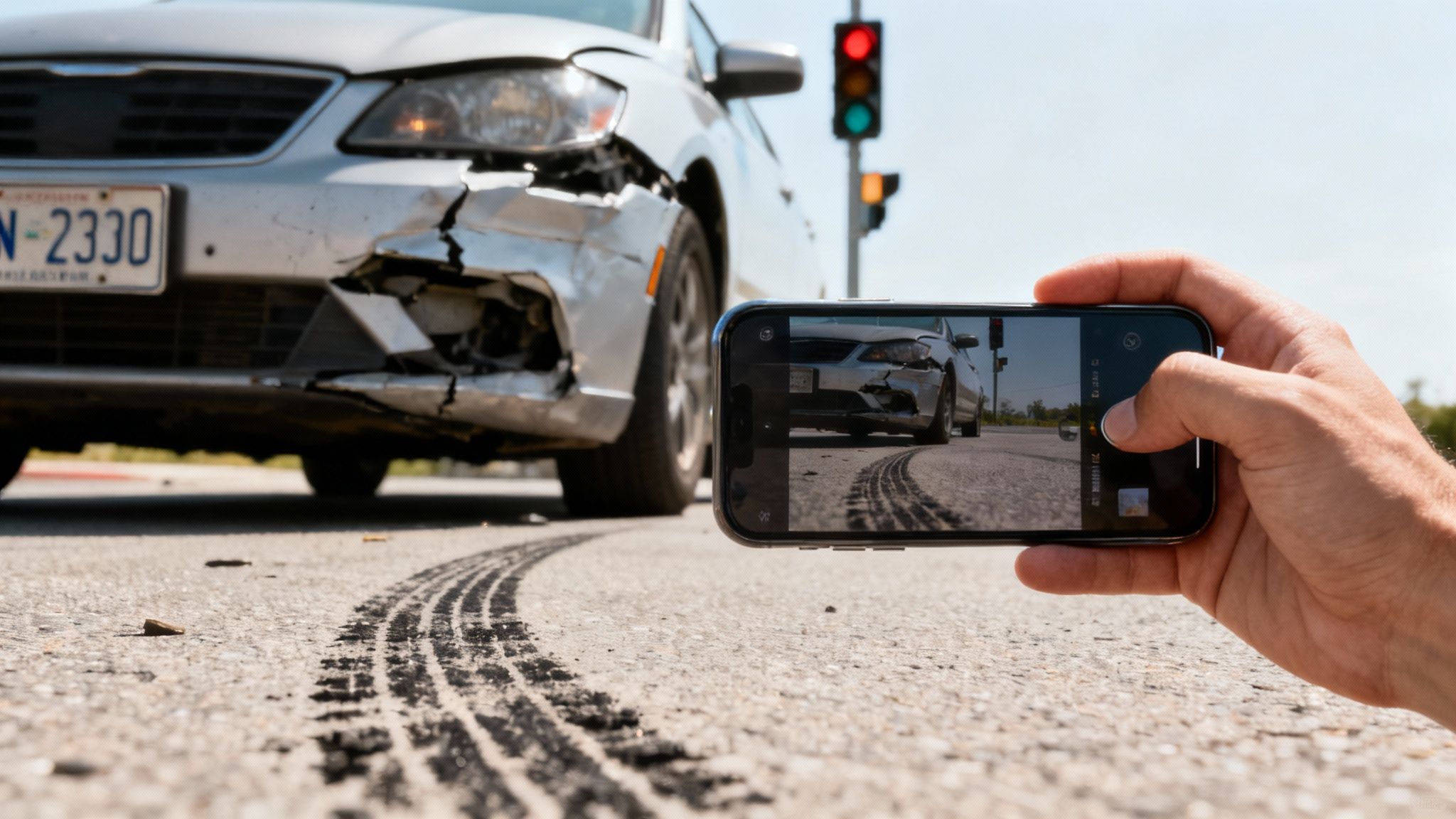
- Vehicle Damage: Start with wide shots of your entire car, then get close-ups of every point of impact. Be sure to shoot the damage from multiple angles.
- Your Injuries: If you have any visible cuts, bruises, or scrapes, photograph them right away. Injuries can heal or change appearance quickly, so these initial photos are critical.
- The Broader Scene: Pan out and capture the entire accident area. Look for skid marks, debris on the road, nearby traffic signs or signals, and any damage to public property.
- Weather and Road Conditions: Snap pictures that show the conditions. Was it raining? Was the sun causing glare? Was the road slick or covered in gravel?
This visual proof helps establish the facts and pushes back against any insurance company tactics to downplay the severity of the crash or your injuries.
The Power of Eyewitnesses
Photos are powerful, but they can't tell the whole story. Witnesses can fill in the gaps with details a camera can’t capture, like a description of the driver who fled or the direction they were heading.
On a busy Houston street, it’s not unusual for other drivers, pedestrians, or even employees at nearby shops to have seen something. In one case, a bystander at a coffee shop saw the entire crash and managed to get a full license plate number of the fleeing car. That one detail from a single witness was the key to tracking down the at-fault driver.
Never underestimate the value of a witness. Their perspective can fill in critical gaps, corroborate your story, and sometimes, break the case wide open.
When you talk to potential witnesses, make sure you get their full name and phone number. Ask them to jot down what they saw or, even better, record a quick video statement on your phone while the memory is fresh. Understanding the importance of evidence in a legal context drives home why collecting these details is so vital for your claim's success.
Look for Unseen Observers
Beyond people, don't forget about technology. Many hit-and-run cases are solved because of video footage from sources the victim never thought about in the heat of the moment.
Take a second to scan your surroundings for any cameras that might have recorded the accident. You might find:
- Traffic cameras mounted on intersection poles.
- Security cameras on the outside of nearby businesses or homes.
- Dashcams in other cars that pulled over to help.
Jot down the location of any cameras you spot. You likely won't be able to get the footage yourself, but your personal injury lawyer can take the formal legal steps needed to preserve that video and obtain a copy. The more leads you can give your legal team, the better their chances of fighting for you.
The Importance of the Police Report
After the shock of a hit-and-run, the arrival of a police officer can bring some order to the scene. The official report they draft isn't just a formality—it’s the cornerstone of your entire claim.
Think of this document as the authoritative, objective account of what happened. Insurance adjusters, lawyers, and courts will refer back to it constantly. It’s what transforms your side of the story into an official record, which is why your conversation with the responding officer is so critical. When they arrive, your job is to give them a calm, clear, and factual rundown.
Providing Your Statement to Law Enforcement
This is your chance to hand over all the crucial details you gathered in those first few moments. Take a breath and walk the officer through the events exactly as you remember them. Stick to the facts. Avoid getting emotional or guessing at the other driver’s motives.
Be ready to share the essentials:
- A description of the car that hit you (make, model, color, and any part of the license plate you caught).
- The direction the driver fled after the collision.
- A step-by-step explanation of how the accident happened.
- The names and phone numbers of any witnesses who stopped.
You're essentially handing the officer the investigative file you’ve already started. The more precise you can be, the stronger that official report will be. Before the officer leaves, be sure to get their name, badge number, and the police report number. You'll need this to get a copy of the final report once it’s been filed.
Reviewing Your Report for Accuracy
As soon as the report is available—usually within a few days to a week—get a copy and review it carefully. Officers are human, and mistakes can happen at a chaotic scene. A simple error in the report can create major headaches for your claim down the road.
Look for common inaccuracies like:
- Incorrect street names or locations.
- A misstatement of the facts you provided.
- Errors in your personal information or vehicle details.
- Missing witness statements or contact info.
If you spot a mistake, you can contact the officer or their department and request a correction or an amendment to the report. For instance, if the report says the hit-and-run happened on I-45 in Houston when it was actually on the 610 Loop, an insurance company could use that discrepancy to question your claim.
The police report is the official narrative of your accident. Ensuring its accuracy is a proactive step that protects you from an insurance company's attempts to deny or devalue your claim.
A detailed and accurate report provides an unbiased, third-party account that insurance companies find very difficult to argue with. It backs up your version of events and officially confirms that a hit-and-run occurred, a key requirement for using your Uninsured Motorist coverage. A skilled Texas personal injury lawyer will use this report as a primary piece of evidence to build your case.
Navigating Your Insurance and Uninsured Motorist Claims
After a hit-and-run, you're left with the very real problem of paying for your medical bills and car repairs. In these situations, your own insurance policy is usually the first place you'll turn for help. The key is to act fast and know how your coverage is supposed to protect you.
The first move is to report the accident to your insurer promptly. Even though you're the victim, this call gets the claims process started. Your claim will almost certainly be filed under a specific part of your policy: Uninsured Motorist (UM) coverage. This coverage was designed for this exact scenario—to step in when the at-fault driver cannot be found.
Understanding Uninsured Motorist Coverage
Think of Uninsured Motorist coverage as a stand-in for the insurance the hit-and-run driver should have had. It can be a genuine lifeline, covering the significant financial gaps a crash can leave in your life.
Here’s a breakdown of what UM coverage typically handles:
- Medical Bills: This covers everything from the ambulance ride and ER visit to ongoing physical therapy and any future medical care you might need.
- Lost Wages: If your injuries have you sidelined from work, UM can help make up for that lost income while you focus on getting better.
- Pain and Suffering: This is compensation for the physical pain, emotional trauma, and disruption the accident and your injuries have caused.
- Property Damage: In Texas, Uninsured Motorist Property Damage (UMPD) is the part of your policy that can pay for the cost of repairing or even replacing your vehicle.
When you file the claim, have your police report number handy along with all the evidence you collected at the scene. This documentation proves your story and confirms that a hit-and-run occurred. You can get a much deeper look into how these policies function in our detailed guide to uninsured and underinsured motorist claims.
Why You Still Need an Advocate on Your Side
It's a common mistake to think that since you're dealing with your own insurance company, the process will be smooth. Unfortunately, that's rarely the case. Your insurer is still a business, and its primary goal is to protect its bottom line by paying out as little as possible.
Remember, even your own insurance company may not be fully on your side. They have adjusters and lawyers working to minimize their payout, which is why having your own experienced advocate is so important.
The economic fallout from traffic accidents is staggering. Globally, road crashes cost most countries around 3% of their gross domestic product. That massive financial pressure is a big reason why insurance companies fight so hard to control what they pay on every claim.
An adjuster might try to downplay the severity of your injuries, argue that some of your medical treatments weren't necessary, or push a quick, lowball settlement that won't cover your future needs. This is where a Texas personal injury lawyer becomes essential. We can take over all the frustrating back-and-forth with the insurance company, package your evidence effectively, and negotiate aggressively to make sure you get every dollar you're entitled to under your policy.
While we handle the legal battle, you can focus on the practical steps of getting your life back on track. Once your insurance claim is moving forward, a great first step is finding a reliable mechanic shop with a solid reputation to get your car back on the road.
When Does It Make Sense to File a Civil Lawsuit?
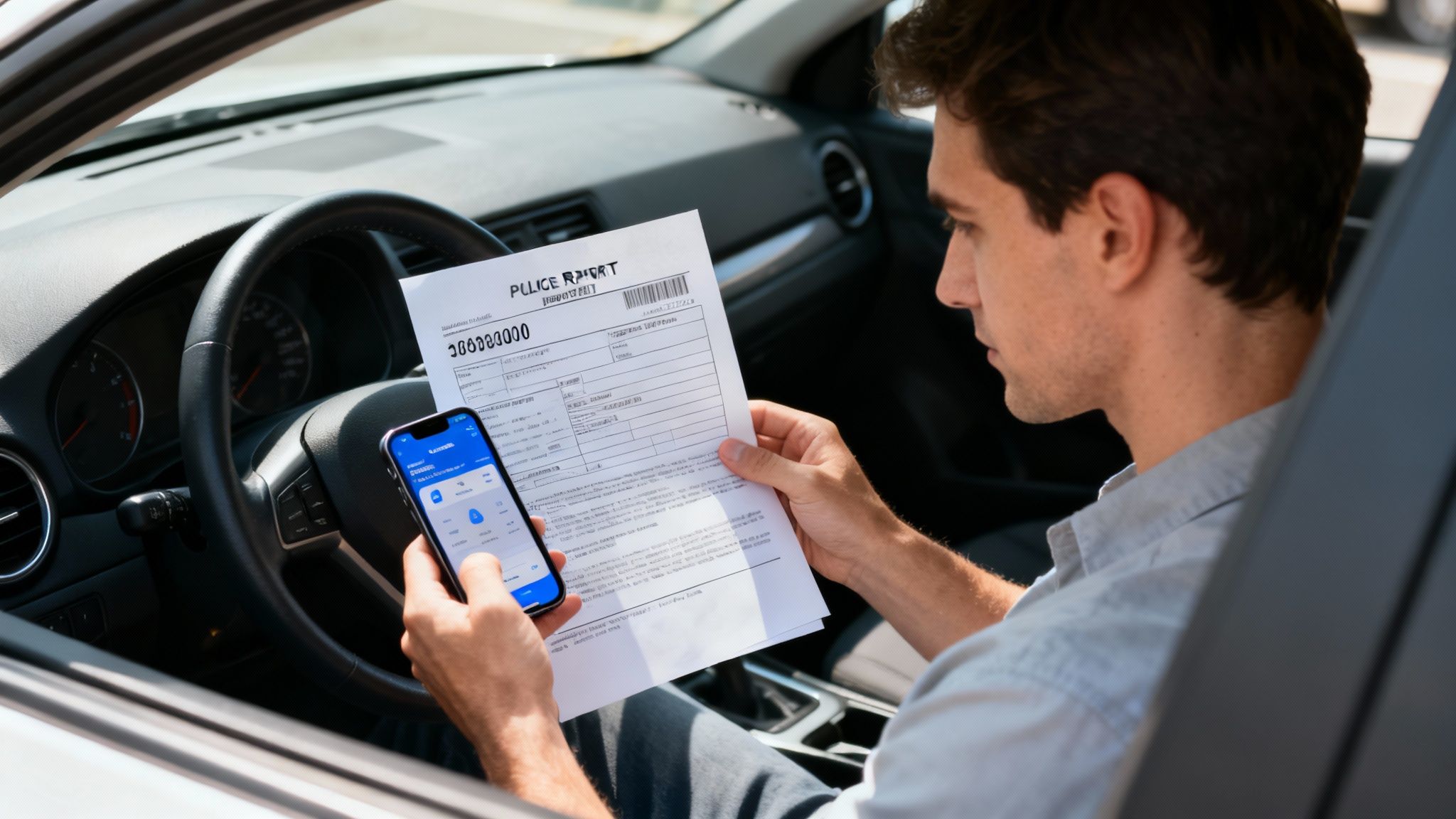
While your Uninsured Motorist (UM) policy is your first line of defense after a hit and run, sometimes it’s not enough. There are situations where the only path to getting the compensation you are owed is to pursue a civil lawsuit. This formal legal action is your strongest tool for seeking full and fair compensation, whether you're up against the driver who fled or even your own insurance company.
Deciding to sue is a big step, but it’s often the only way to recover the actual cost of your losses. Insurance companies, including your own, are in the business of paying out as little as possible. Filing a lawsuit sends a clear message that you're serious, forcing them to re-evaluate their lowball offers. It moves the fight into a formal arena where evidence is laid out and your rights are protected by Texas law.
Holding an Identified Driver Accountable
If the police track down the driver who hit you, your legal options open up significantly. You can file a personal injury lawsuit directly against them to recover damages that your own insurance policy may not fully cover. This is particularly important for non-economic damages—the personal, human costs of a crash.
A lawsuit against the at-fault driver allows you to demand compensation for:
- Pain and Suffering: The physical agony and emotional trauma caused by your injuries.
- Future Medical Expenses: The projected cost of ongoing care, therapies, or surgeries you might need years from now.
- Lost Earning Capacity: If your injuries have permanently limited your ability to work and earn a living.
- Punitive Damages: In cases of extreme recklessness, like a drunk driver causing the crash, a court may award these damages to punish the wrongdoer.
For example, if a truck crash lawyer in Houston is representing a client hit by a commercial vehicle that fled, a lawsuit forces the trucking company and its insurer to the negotiating table. This allows the victim to pursue the full, lifelong costs of their injuries.
Suing Your Own Insurance Company
It’s a frustrating thought, but you might have to sue your own insurance provider. This happens when an insurer acts in bad faith by unreasonably denying, delaying, or underpaying your valid UM claim.
Filing a lawsuit against your insurer is about holding them to the contract you signed. You’ve paid your premiums, and you have a right to the benefits you paid for. An experienced Texas personal injury lawyer can prove the full extent of your damages and show that the insurance company's offer is inadequate, compelling them to pay what your claim is actually worth.
Filing a lawsuit isn't about being aggressive; it's about leveling the playing field. It ensures your claim is valued based on your actual losses, not an insurance company's bottom line.
Knowing when to take this step can be tough. For more insight, check out our guide on when to hire a personal injury lawyer to see how legal help protects you right from the start.
How a Lawsuit Gives You Leverage
Once a lawsuit is filed, a formal process called "discovery" begins, giving your attorney powerful tools to build your case. They can legally demand documents, send written questions (interrogatories), and take depositions—sworn testimony from the other driver and any witnesses.
This legal pressure is often what brings the other side to the table to negotiate a fair settlement. While most personal injury cases settle out of court, it's the real threat of a trial that gives you leverage. A good attorney prepares every case as if it's going before a jury, which puts you in the strongest possible position to get the justice you deserve.
Still Have Questions? Let's Clear Things Up.
After a hit-and-run, your mind is probably racing with questions. It's a stressful, confusing time, and getting clear answers is the first step toward feeling in control again. Here are a few of the most common concerns we hear from people across Texas who find themselves in this tough situation.
"I only got a partial license plate number. Is that even useful?"
Absolutely. Don't ever think a piece of information is too small to matter. Even a fragment of a license plate can be the key that unlocks the whole case for investigators.
When you pair that partial number with other details—the car's make, model, color, maybe a dent you noticed or the direction it was heading—it gives law enforcement a much narrower field to search. It’s often more than enough to track down the driver who left you behind.
"If I use my own insurance to file a UM claim, won't my rates skyrocket?"
This is a huge fear for many drivers, and it’s completely understandable. But here’s the good news: Texas law is on your side.
It is illegal for an insurance company to raise your rates for filing a claim for an accident that wasn't your fault. That protection specifically includes hit-and-run claims filed under your Uninsured/Underinsured Motorist (UM/UIM) coverage. You paid for that coverage for this exact reason—to be your safety net when the unexpected happens.
"What if they find the driver, but they don't have insurance?"
This scenario is unfortunately common, but it's precisely what your UM/UIM coverage is designed for. If police identify the at-fault driver and it turns out they're uninsured (or their policy is too small to cover your damages), your own insurance steps in to fill that gap.
This is why we always stress how critical it is to carry enough UM/UIM coverage. It protects you and your family when the person who caused the harm can't be held financially responsible.
While you aren't legally required to hire a lawyer, having an experienced personal injury attorney in your corner is a massive advantage. We handle the investigation, deal with the insurance adjusters, calculate the full extent of your damages, and make sure critical deadlines aren't missed. This frees you up to focus on what truly matters: your recovery.
A dedicated Houston car accident attorney or wrongful death lawyer in Texas takes on these complexities so you can heal without the added burden of a legal fight.
A serious accident can change your life in seconds—but you don’t have to face it alone. At The Law Office of Bryan Fagan, PLLC, we’re here to offer the compassionate guidance and aggressive representation you deserve. Recovery is possible, and legal help is available. We invite you to schedule your free, no-pressure consultation today and learn how we can fight for you.
Schedule a Free Consultation with The Law Office of Bryan Fagan, PLLC