A serious car accident can change your life in seconds — but you don’t have to face it alone. One moment you're driving, the next you're dealing with the searing pain of a back injury and a future that feels completely uncertain. Back injuries from car accidents can be anything from nagging muscle strains to catastrophic spinal damage, leaving you with a mountain of physical, emotional, and financial stress.
But recovery is possible, and legal help is available. The first step is understanding your rights and knowing you don't have to face the aftermath on your own.
Your Life After a Crash: You Don't Have to Face It Alone
A serious accident is more than just a legal problem—it’s a life-changing event. We’ve seen it time and again, whether it’s a jarring rear-end collision on a busy Houston freeway or a violent T-bone crash at a Dallas intersection. The force is enough to cause herniated discs, spinal fractures, and other severe back injuries that result in constant, debilitating pain.
Right now, you’re probably feeling overwhelmed. You're worried about the medical bills piling up and stressed about missing work. This is a heavy burden, and it’s not a journey you should have to walk by yourself. Our goal is to give you the clear, practical knowledge you need to get through this.
The Hidden Impact of a Back Injury
The true cost of a back injury goes far beyond what you see on an ER bill. The consequences can ripple through every corner of your life, creating challenges you never saw coming.
Think about a construction worker from San Antonio who suffers a lumbar spine injury. He might not just lose his job; he could also lose the ability to play with his kids or enjoy a weekend fishing trip. These are real, tangible losses that deserve to be compensated.
After a crash, the physical pain is only part of the story. The emotional toll of chronic pain, lost independence, and financial strain can be just as devastating. You deserve support for every part of your recovery.
The Path to Physical and Emotional Recovery
Your recovery involves more than just doctors and physical therapy. The road back from a serious car accident often includes significant emotional and psychological hurdles. Seeking professional guidance can make a world of difference, and resources like Kelowna Counselling can provide crucial support for your mental well-being during this tough time.
At The Law Office of Bryan Fagan, PLLC, our team is here to offer the compassionate, experienced guidance you need right now. We firmly believe there is always a path forward to recovery and justice. We'll walk with you through every step, protecting your health and your legal rights while being a reassuring voice in a time of chaos.
If you've suffered a back injury in a car accident, contact a Texas personal injury lawyer for a free consultation to understand your options.
Critical Actions to Take in the First 48 Hours
The first 48 hours after a car accident are a whirlwind of adrenaline, stress, and confusion. It’s easy to get overwhelmed. But what you do in these crucial first two days can make or break your physical recovery and your ability to get fair compensation for a back injury.
The shock from a crash can hide just how badly you’re hurt. That’s why the steps you take right away are absolutely critical.
The chart below shows the different paths your journey can take after a collision. The decisions you make early on will shape everything that follows.
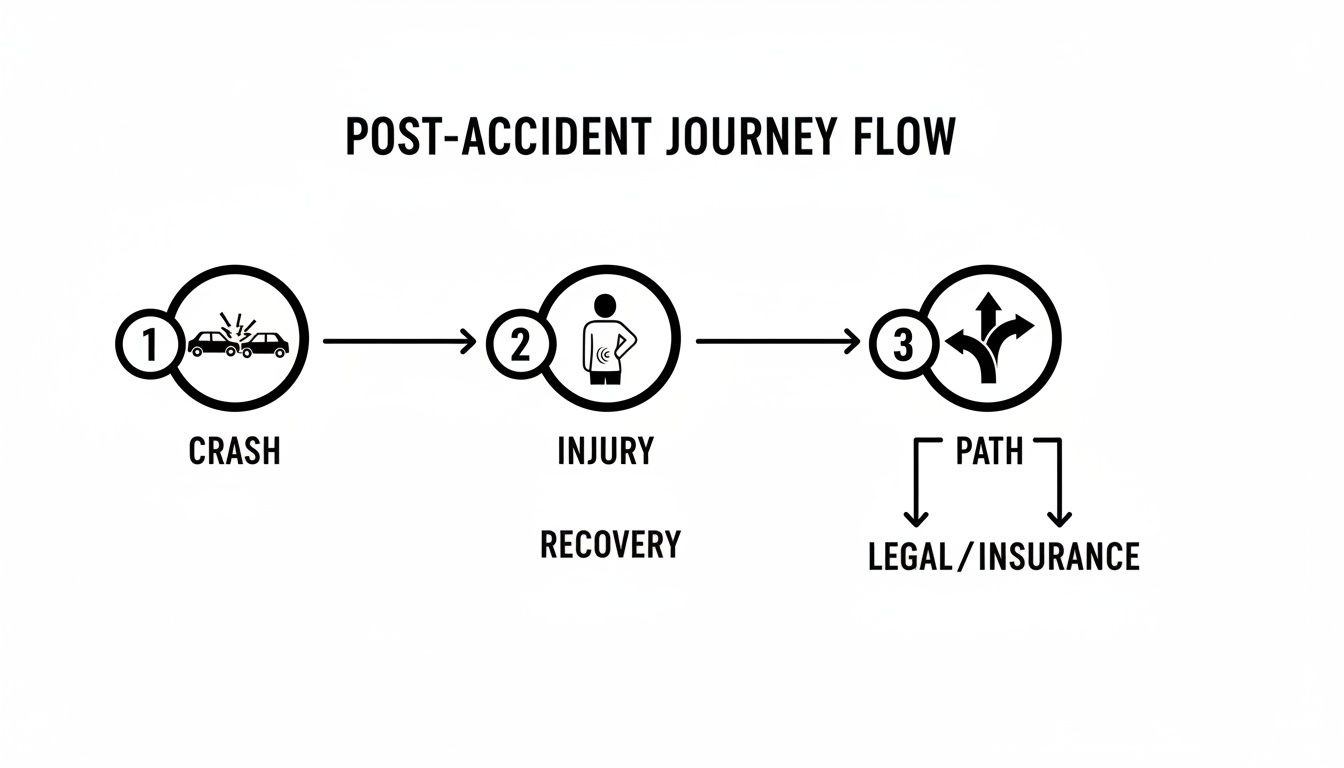
As you can see, seeking immediate care versus waiting creates two very different outcomes for your health and your potential claim.
Don't Delay Medical Care
After any collision—even a fender bender—your health is the top priority. Adrenaline is a powerful chemical that masks pain incredibly well. You might feel a little sore at the scene but wake up a day later with severe back pain from a herniated disc or a serious soft tissue injury.
Putting off a trip to the doctor is one of the biggest mistakes you can make. Insurance companies love to see a gap in treatment. They’ll use it to argue your injuries happened somewhere else, not in the accident.
Go to an ER, an urgent care clinic, or your family doctor right away. This creates a time-stamped medical record that serves as the cornerstone of your case, linking your back injury directly to the crash.
When you talk to the doctor or nurses, be specific. Tell them you were just in a car wreck and describe exactly what happened and how your body felt on impact. Be sure to mention every single symptom, no matter how small it seems.
- Sharp, shooting, or burning pain anywhere in your back.
- Numbness, tingling, or weakness that radiates down your arms or legs.
- Stiffness or muscle spasms that stop you from moving freely.
- Pain that gets worse when you sit, stand, or walk.
Getting this on the record ensures your medical chart clearly shows the accident caused your back problems. This is essential for any back injuries car accidents claim here in Texas.
Preserve Every Piece of Evidence
While your health comes first, evidence gathering is a close second. If you’re physically able to, use your phone to document everything you can in those first 48 hours. This evidence is what we use to piece the accident back together and prove the other driver was at fault.
Key Evidence to Collect:
- Photos of All Vehicles: Get shots of the damage to every car from different angles. Take close-ups of the impact points to show the force of the collision.
- The Accident Scene: Photograph skid marks, traffic signals, road conditions, and the overall layout. If you were rear-ended on a Houston freeway, for example, photos showing the on-ramp and traffic flow provide critical context.
- Your Visible Injuries: Take pictures of any bruises, cuts, or swelling. These images are powerful proof of what you’ve been through.
- Obtain the Police Report: This report contains the officer’s initial thoughts on who was at fault, contact information for witnesses, and other key details. You can usually request a copy a few days after the crash.
For a more in-depth checklist, you can learn more about what to do after a car accident in our complete guide. Following these steps helps protect your rights from the very start.
Do Not Speak to the Other Driver’s Insurer
It won’t take long—usually a day or two—before you get a call from the at-fault driver’s insurance adjuster. They might sound friendly and helpful, but their only job is to save their company money by paying you as little as possible.
They will ask you to give a recorded statement.
Politely decline.
You are not legally required to give them a statement. Anything you say can be taken out of context and used to weaken your claim. Just tell them you are getting legal advice and your attorney will be in touch. This one simple move can protect you from tanking your case before you even know what it's worth.
Calculating the True Cost of Your Back Injury
After a car wreck, the first bill from the emergency room is just the beginning. A serious back injury creates a ripple effect of costs that can follow you for years, and insurance companies know this all too well. They often push for a quick, lowball settlement, hoping you’ll take it before you realize the true financial toll of what you’re facing.
To get what you're owed, you have to look at the big picture. This means tallying up every single expense—not just the bills on your desk today, but everything from future medical needs to the money you can no longer earn.

What Are the Actual Bills I Can Claim?
In Texas, we call these tangible, out-of-pocket expenses economic damages. These are the costs you can prove with a paper trail—receipts, invoices, and pay stubs. It’s tempting to only focus on the bills piling up right now, but a complete claim must account for the road ahead.
Think of it this way: a back injury isn't a single event. It's the start of a long journey, and your compensation needs to cover the entire trip.
Make sure you account for all of these economic costs:
- Current Medical Bills: This covers everything from the ambulance ride and ER visit to MRIs, doctor’s appointments, and prescriptions.
- Future Medical Needs: This is a huge one people often miss. Will you need ongoing physical therapy? Pain management injections? What about a future surgery? All of that should be included.
- Specialized Medical Gear: Your recovery might require special equipment. This can include anything from walkers and braces to more significant items like hospital beds for at-home care.
- Lost Wages: This is straightforward—it’s the income you lost because you were out of work recovering.
- Loss of Future Earning Capacity: This might be the most critical financial loss of all. If your back injury stops you from returning to your old job—or from working at all—you deserve to be compensated for the lifetime of income you’ll lose.
For example, after a Houston freeway crash, a commercial truck driver we represented suffered a herniated disc that required spinal fusion surgery. He could no longer endure the long hours on the road. His loss of earning capacity claim was based on the massive difference between his old trucking wages and what he could now make in a local, less-demanding job, calculated over the rest of his expected career.
What About the Human Cost?
Just as real—but much harder to put a price on—are non-economic damages. These compensate you for the human toll of the injury and how it has shattered your quality of life. In Texas, these damages are a vital part of any serious injury claim.
When we build a case for our clients, we look at both the financial and human side of the story. In a back injury claim, there are several types of compensation you may be able to recover.
Types of Compensation for a Car Accident Back Injury in Texas
| Damage Category | What It Covers | Example |
|---|---|---|
| Pain and Suffering | The physical pain, chronic discomfort, and emotional distress you've dealt with since the accident. | The constant, gnawing ache in your lower back that never truly goes away. |
| Mental Anguish | The psychological impact, like anxiety, depression, PTSD, or a new fear of driving. | Having a panic attack every time you get behind the wheel of a car. |
| Physical Impairment | The loss of your ability to handle everyday tasks, from basic self-care to household chores. | No longer being able to lift your toddler, mow the lawn, or even tie your own shoes without help. |
| Loss of Enjoyment of Life | The hobbies, social activities, and simple joys you can't participate in anymore due to your injury. | Giving up your weekend fishing trips or being unable to join your family on hikes. |
These damages don't have a price tag, but their impact is profound. We have a detailed guide on how to calculate pain and suffering damages that explains this in more depth.
An experienced Houston car accident attorney knows how to tell your story in a way that shows an insurance adjuster or a jury exactly how this wreck turned your world upside down. It’s about more than just numbers; it’s about painting a clear picture of your new reality to secure the full and fair compensation you deserve.
Navigating Texas Fault Laws and Critical Deadlines
To protect your right to fair compensation after a car accident, you first have to understand the legal rules that will govern your case. The laws in Texas can feel tangled and confusing, but knowing the fundamentals gives you the power to make smart decisions. These rules ultimately decide who is responsible for paying for your back injury and, just as importantly, how long you have to take action.
When you're already dealing with the constant pain of a back injury, the last thing you need is a mountain of legal jargon. Our goal here is to break down these concepts in a way that’s clear and straightforward, so you can move forward with confidence. We'll walk through Texas’s fault system, the critical deadlines you can't afford to miss, and the insurance coverage that could be your financial lifeline.
Understanding Texas Negligence and the 51% Bar Rule
Texas operates under a legal system known as modified comparative fault, often called the 51% Bar Rule. This rule is based on the concept of negligence, which means a driver had a duty to operate their vehicle safely but failed to do so, causing your injuries. The 51% rule dictates whether you can recover any money for your injuries based on each driver's percentage of fault.
Put simply, you can only seek compensation from the other driver if you are found to be 50% or less at fault for the crash. If a jury decides you were 51% or more responsible, you are legally barred from recovering a single penny.
Real-World Example: Let's say you were in a collision on a busy street in San Antonio. The other driver ran a red light, but an investigation shows you were slightly distracted by your radio at the time. If a jury finds the other driver was 80% at fault and you were 20% at fault for the crash, your final settlement would be reduced by your share of the blame—in this case, 20%.
This is a go-to tactic for insurance companies trying to lower or flat-out deny claims for back injuries. They will dig for any reason—speeding, a slightly delayed reaction, an improper lane change—to pin more of the blame on you and protect their own bottom line.
How Long Do You Have to File a Claim in Texas?
In Texas, there's a strict deadline for filing a personal injury lawsuit, known as the statute of limitations. For the vast majority of car accident claims, including those for back injuries, you have exactly two years from the date of the crash to file your case in court.
Two years might sound like a long time, but it flies by when you’re wrapped up in doctor's appointments, physical therapy, and just trying to manage your daily life. Evidence gets lost, witnesses' memories fade, and if you miss that deadline, you lose your right to seek compensation forever. No exceptions.
The clock starts ticking the moment the accident happens. It is absolutely vital to contact a truck crash lawyer Houston or a car accident attorney quickly to preserve your rights. For a more detailed look at this critical timeline, you can learn more about the statute of limitations for Texas car accidents in our complete guide.
The Importance of Uninsured and Underinsured Motorist Coverage
What happens if the driver who caused your back injury has no insurance, or not nearly enough to cover your mountain of medical bills? This is a frighteningly common situation in Texas. It's precisely why Uninsured/Underinsured Motorist (UM/UIM) coverage can become your single most important financial safety net.
UM/UIM is a part of your own auto insurance policy that steps up to cover your damages when the at-fault driver simply can’t.
- Uninsured Motorist (UM): This kicks in when the at-fault driver has no liability insurance at all.
- Underinsured Motorist (UIM): This applies when the at-fault driver has insurance, but their policy limits are too low to cover the full scope of your injuries and losses.
If you have a severe back injury that requires surgery and months of rehabilitation, your total costs can easily soar past the state’s minimum liability coverage of $30,000. An experienced Texas personal injury lawyer can help you navigate the tricky process of filing a UM/UIM claim with your own insurance company, fighting to make sure you get the resources you need for your recovery.
Why an Insurance Offer May Be a Red Flag

When you're hurt and watching medical bills pile up, a quick settlement offer from the other driver's insurance company can feel like a lifeline. It’s tempting to just take the money and try to move on. But based on our experience, this is almost always a major red flag.
Insurance companies are for-profit businesses, and their primary goal is to protect their bottom line. An early offer is a calculated tactic. It's designed to get you to settle for far less than your claim is actually worth, long before you understand the full extent of your back injury and its true long-term costs.
Common Tactics Insurers Use to Minimize Payouts
Insurance adjusters are trained to close claims as quickly and cheaply as possible. Recognizing their playbook is the first step to protecting your rights. If you hear any of the following, it’s a strong signal that you need a legal advocate in your corner.
- Disputing Injury Severity: The adjuster might try to call your herniated disc a simple “strain” or “soreness,” even when your own doctors have diagnosed a serious injury.
- Blaming a Pre-existing Condition: This is a classic defense. They’ll claim your pain is from an old issue, like degenerative disc disease, not the accident. Even if the crash made a dormant condition much worse, they'll use it to try and avoid paying.
- Contesting Who Was at Fault: In Texas, they'll search for any excuse to shift blame onto you. Under the state's comparative fault rules, this can significantly reduce or even eliminate your ability to recover compensation.
- Making a Low, "Final" Offer: You might hear a "take it or leave it" offer. This is a pressure tactic, plain and simple, meant to intimidate you into accepting a lowball amount without question.
A quick offer from an insurer is rarely a gesture of goodwill. It's a calculated business move to close your case before you discover what you’re truly owed for future medical care, lost income, and your pain and suffering.
The Staggering Reality of Accident-Related Back Injuries
Car accidents are a leading cause of life-altering spinal injuries. Picture this: you're driving on I-10 near Houston when a distracted driver slams into you. That sudden, violent jolt doesn't just damage your car; it can wrench your spine with devastating force. Globally, road injuries were responsible for 95,734 new spinal injuries in 2021 alone, contributing to over 2.6 million people worldwide living with the consequences. Here in North America, the rate is stark, showing just how frequently these crashes cause permanent harm. You can find more details in the complete study on the global burden of road injuries.
As a law firm that has represented countless Texas families, we know firsthand the immense financial and personal cost of back injuries from car accidents. The expenses for MRIs, surgeries, and physical therapy skyrocket while lost wages make a difficult situation even worse. Whether your case involves a standard car accident or requires a wrongful death lawyer Texas, understanding the true stakes is the first step toward justice.
Leveling the Playing Field with an Experienced Attorney
This is where a Houston car accident attorney becomes your greatest asset. We level the playing field by taking over all communications with the insurance company. We handle gathering the medical evidence, consult with experts to project your future needs, and build a powerful case that shows the full impact of the injury on your life.
Our job is to fight for every dollar you deserve, handling the complex negotiations and, if necessary, litigation. This allows you to focus completely on what matters most: your recovery.
Of course, a major concern for many families is the cost of hiring a lawyer. That’s why we, like many personal injury firms, work on a contingency fee basis.
Here’s what that means for you:
- You pay no upfront costs to hire us.
- We only get paid if we win your case by securing a settlement or a court award.
- Our fee is simply a percentage of the total amount we recover for you.
This model removes any financial barrier to getting the expert legal help you need. You can have a powerful advocate fighting for you without worrying about out-of-pocket expenses. If you’ve suffered a back injury in a crash, you don’t have to face the insurance companies alone. Your recovery is too important to leave to chance.
Your Questions About Texas Back Injury Claims Answered
After a serious car wreck, the pain from a back injury can be overwhelming. When you add the legal confusion and insurance company runaround on top of that, it's easy to feel lost. We've seen it countless times.
Let's cut through the noise and address some of the most pressing concerns we hear from clients dealing with the aftermath of a back injury.
What if I Had a Back Problem Before the Accident?
This is one of the first things people worry about, and for good reason—it’s an argument insurance companies love to use to deny or lowball a claim. But here’s the truth: under Texas law, having a pre-existing condition does not stop you from getting compensation.
The key is proving the crash made your old condition worse. This is where the “eggshell plaintiff” rule comes in. It basically means the at-fault driver is responsible for the full extent of the harm they cause, even if you were more fragile or susceptible to injury than someone else.
Think of it this way: maybe you had mild degenerative disc disease that only bothered you occasionally. Then, a pickup truck slams into you on I-45, causing a severe disc herniation right at that same spot. The crash didn't create your underlying condition, but it aggravated it into something debilitating that now requires surgery. You absolutely can and should demand compensation for that new level of pain, the expensive medical care, and all the suffering that came with it.
This is where an experienced Texas personal injury lawyer becomes essential. We work directly with your doctors to get the specific medical evidence needed to draw a clear line between your old condition and the new, more severe injuries the wreck caused.
How Long Will My Back Injury Settlement Take?
Every client asks this, and the honest answer is: it depends. The timeline for a personal injury settlement in Texas can swing wildly based on the details of what happened to you.
A few big factors will influence how long it takes:
- The Severity of Your Injury: A claim for a minor back strain that heals in a few weeks might wrap up in a few months. But a case involving a spinal fusion or permanent nerve damage is going to take much longer. We have to wait until you reach Maximum Medical Improvement (MMI) to truly understand what your future medical needs and costs will be.
- How Clear Fault Is: If the other driver was arrested for DWI at the scene, the case will likely move faster. If the insurance company tries to blame you for the crash, it will take more time to investigate and prove they're wrong.
- The Insurance Company's Attitude: Some adjusters are reasonable and negotiate in good faith. Others will deny, delay, and fight you on every single point, forcing a lawsuit just to get them to the table.
A straightforward claim might settle in 6-9 months. A complex case that has to go to trial, on the other hand, can easily take one to two years or more. Our priority is never just getting a fast check; it’s getting a fair settlement that truly covers everything you’ve lost and everything you'll need.
What Should I Do if the Insurance Company Denies My Claim?
Getting a denial letter in the mail can feel like a punch to the gut. It's designed to make you feel defeated and hopeless. The insurance company is counting on you to just give up. Don't let them win.
Your first move is to stay calm. Don’t get into a shouting match with the adjuster—it won’t help. Your very next move should be to call a lawyer.
A claim denial is the exact moment when having legal representation goes from being a good idea to absolutely critical. We'll take that denial letter, pick apart their bogus reasoning, and start building a powerful counter-attack. Whether that means tracking down more evidence, hiring medical experts, or filing a lawsuit to show them you mean business, we know how to fight back against an unjust denial and hold them accountable.
At The Law Office of Bryan Fagan, PLLC, we believe you deserve clarity, support, and an aggressive advocate in your corner. If you're struggling with a back injury after a car accident, you don’t have to face the insurance companies and the legal system alone. We are here to answer your questions and fight for the recovery you deserve. Schedule your free, no-obligation consultation today by visiting our contact page and let us help you move forward.