A serious accident can change your life in seconds — but you don’t have to face it alone. When you're dealing with the aftermath of a car wreck, the term "settlement" comes up frequently. So, what is it, exactly?
A car accident settlement is a formal, out-of-court agreement between you (the injured party) and the at-fault driver's insurance company. It is the most common way accident victims in Texas get the financial resources they need for medical bills, lost paychecks, and the many other costs a crash creates. In fact, more than 95% of personal injury cases end this way, avoiding a long and stressful trial.
What a Car Accident Settlement Means for You

A serious crash can turn your world upside down in an instant. Whether you were hit on a busy Houston freeway or a quiet neighborhood street, you're now facing pain, stacks of medical bills, and a ton of uncertainty. A car accident settlement is the legal tool that provides the resources you need to start putting the pieces back together.
Think of it as a negotiated resolution. Instead of letting a judge and jury decide your future, your attorney crafts a powerful demand package for the insurance company. This isn't just a letter asking for money; it's a detailed breakdown of your losses, backed by hard evidence like police reports, medical records, and expert opinions. The goal is simple: to reach a fair agreement that covers all your needs, now and in the future.
Understanding Your Rights Under Texas Law
Here in Texas, the law is built on a clear principle: the person who caused the accident is responsible for the damages. This is rooted in the legal concept of negligence—they failed to act with reasonable care, and you got hurt as a result. A fair settlement must account for every single way that crash has impacted your life.
Your claim for damages is the foundation of your settlement. It's a comprehensive list of all the losses—both financial and personal—you've suffered.
Key Parts of a Texas Car Accident Claim
This table breaks down the main types of compensation, known as damages, that can be included in your settlement, helping you see what you may be entitled to recover.
| Type of Damage | What It Covers |
|---|---|
| Economic Damages | These are the tangible, out-of-pocket costs with a clear dollar value. Think of things like medical bills (ER visits, surgery, physical therapy), lost wages from missed work, and the cost to repair or replace your vehicle. |
| Non-Economic Damages | This category covers the immense personal toll of the accident. It includes compensation for physical pain, emotional distress (like anxiety or PTSD), and loss of enjoyment of life. These losses are harder to quantify but are just as real. |
| Punitive Damages | In rare cases where the at-fault driver's behavior was especially reckless—like in a severe drunk driving crash—punitive damages may be awarded. These aren't meant to compensate you but to punish the wrongdoer and deter similar behavior. |
Knowing what you can claim is the first step. Each category represents a crucial piece of the puzzle in making you whole again.
A settlement isn't just about paying today's bills. It's about securing your financial stability for the long road to recovery, ensuring one moment of someone else's carelessness doesn't derail your entire future.
The path to a settlement demands meticulous documentation and tough negotiation. It starts the moment the crash happens and doesn't end until you have the compensation you rightfully deserve. Knowing your rights is the first and most critical step toward taking back control.
Calculating the True Value of Your Claim
Before you can begin to discuss a settlement, you need to understand what your claim is really worth. The insurance adjuster has a number in mind, but it is almost never the one that reflects the full reality of what you have lost.
A proper valuation goes far beyond the initial emergency room bill. It must account for every single way the accident has impacted your life—and how it will continue to do so in the future.
In Texas, your claim is built on two types of damages: economic and non-economic. Knowing how to document and calculate both is the key to building a strong case for the compensation you deserve.
Economic Damages: The Tangible Costs of a Crash
Economic damages are the most straightforward part of your claim because they have a clear dollar amount attached. Think of these as all the measurable, out-of-pocket expenses you're facing because of someone else's negligence.
A skilled Houston car accident attorney will meticulously gather every receipt, bill, and pay stub to build the foundation of your claim. This includes:
- Current Medical Bills: Everything from the ambulance ride and ER visit to surgeries, hospital stays, and follow-up appointments.
- Future Medical Expenses: A serious injury often means long-term care. This could be physical therapy, future surgeries, prescriptions, or even in-home nursing care. We work with medical experts to project these future costs accurately.
- Lost Wages: If you were unable to work while you recovered, you are entitled to be compensated for that lost income.
- Loss of Future Earning Capacity: This is one of the most critical—and most overlooked—types of damages. If a catastrophic injury means you can't go back to your old job or limits your ability to work, you can claim the wages you would have earned for the rest of your career.
- Property Damage: This covers the cost to repair or replace your car and anything else you owned that was damaged in the crash.
These costs add up quickly. A fair settlement must cover not just the bills you have today, but the medical and financial support you’ll need for months or even years to come.
Non-Economic Damages: The Human Cost of an Injury
While economic damages cover your financial losses, non-economic damages are about the very real human cost of the accident. These losses are deeply personal and don't come with a neat price tag, but Texas law recognizes that they are just as real and just as compensable.
For example, after a Houston freeway crash involving a large commercial truck, you might be left with chronic pain. Suddenly, you can't play with your kids, enjoy your hobbies, or even get a good night's sleep. That loss of enjoyment has tremendous value, and an experienced truck crash lawyer in Houston knows how to demonstrate it.
These damages cover:
- Pain and Suffering: Compensation for the physical pain your injuries have caused.
- Mental Anguish: This addresses the emotional trauma—the anxiety, depression, fear, or PTSD that often follows a serious crash.
- Physical Impairment: If you've lost the use of a limb or have permanent scarring, this compensates you for that loss.
- Disfigurement: Visible scarring, especially on the face or hands, can cause significant emotional distress and is a key part of a claim.
Putting a number on these losses is complex, and this is where the experience of a Texas personal injury lawyer is truly invaluable. We can help you understand the methods used in Texas to assign a monetary value to your suffering. You can get more information by checking out our guide on how to calculate pain and suffering damages.
When Punitive Damages Are a Factor
In rare and extreme cases, a third category of damages may come into play: punitive damages. These are not meant to compensate you for your losses. They are designed to punish the at-fault party for exceptionally reckless behavior and to send a message to the community that such conduct will not be tolerated.
A classic example is a drunk driving accident where the driver had an extremely high blood alcohol level. In such a case, a jury might award punitive damages to hold the driver accountable.
Building a Complete Picture of Your Claim
Looking at the "average" car accident settlement amount can be misleading, because no two cases are the same. While some data suggests the average payout for car accident injuries is around $30,416, this number swings wildly.
A settlement for minor injuries might be in the $8,200 to $30,000 range, but a catastrophic injury case can easily soar past six figures.
It's also important to have context. Beyond the immediate costs of your accident, understanding the impact of tort reform can provide a bigger picture when assessing what your claim might be worth. A thorough, detailed calculation is the bedrock of a successful negotiation—it ensures you demand what you are truly owed.
Handling the At-Fault Driver's Insurance Company
After a car wreck, the phone will ring much sooner than you expect. It will be the at-fault driver’s insurance company, and the person on the other end—the insurance adjuster—will probably sound incredibly friendly and concerned. It is absolutely critical to remember who they really work for.
Insurance adjusters are not your friends. Their primary job is to protect their company's bottom line, which means paying out as little as possible on your claim. Every conversation you have is a strategic move on their part to find reasons to devalue or deny your car accident settlement.
Understanding the Adjuster's Goals and Tactics
Picture this: you were just in a major pile-up on a Dallas freeway. You're hurt, overwhelmed, and just trying to figure out what to do next. An adjuster calls, full of sympathy, asking if you can "just quickly go over what happened" for their records.
This isn't a friendly chat. It’s an attempt to get you on record, often before you've had a chance to fully process your injuries or speak with an attorney. Their goal is to get you to say something—anything—that can be used against you later. They might ask leading questions designed to get you to admit partial fault, downplay your injuries, or speculate about details you couldn't possibly know for sure.
Here are a few common tactics they use:
- Requesting a Recorded Statement: They will almost always ask for this. You are not required to give them one, and you should politely refuse until you have a lawyer. A recorded statement can easily be twisted to hurt your case.
- Offering a Quick, Lowball Settlement: If the other driver was clearly at fault, an adjuster might offer you a fast check, sometimes for just a few thousand dollars. This can be tempting when bills are piling up, but it's a trap. Once you accept, you sign away your right to any future compensation, even if your injuries turn out to be far more serious.
- Asking for Broad Medical Authorizations: They’ll ask you to sign a medical release form. But the forms they send are often intentionally broad, giving them access to your entire medical history—not just records from the accident. They will dig for any pre-existing condition to argue your injuries weren't caused by the crash.
An adjuster's friendly tone is a calculated strategy. Remember that you are in a business negotiation, and their goal is to minimize their company's financial exposure at your expense.
Protecting yourself means being cautious and strategic from the very first call. An experienced Texas personal injury lawyer acts as a crucial shield, managing all communication and ensuring your rights are protected. For a deeper dive, you can learn more about how to deal with insurance adjusters in our detailed guide.
Your Best Defense Is a Good Offense
So, what should you do when the adjuster calls? Your best move is to be polite, professional, and provide only the most basic information. Confirm your name, address, and the date of the accident. That’s it. Never discuss fault, the details of the crash, or how you're feeling.
A simple, powerful response is all you need: "I am still processing everything and will be seeking legal counsel. My attorney will be in touch with you."
This statement shuts down the conversation and signals that you won't be pressured or tricked into weakening your claim.
Insurance Adjuster Tactics and Your Best Response
Insurance adjusters have a playbook they follow to minimize payouts. Knowing their moves allows you to protect your rights effectively. Here’s a quick guide to their common tactics and how you should respond.
| Adjuster's Tactic | Your Empowered Response |
|---|---|
| "We just need a quick recorded statement to process your claim." | "I'm not prepared to give a recorded statement at this time. My attorney will be in contact with you." |
| "We can offer you $2,500 today to settle this quickly." | "I'm not discussing any settlement offers until the full extent of my injuries and losses is known. Thank you." |
| "We need you to sign this medical release to verify your injuries." | "I can't sign any documents without my lawyer reviewing them first. Please forward all paperwork to their office." |
By directing all communication through your attorney, you take back control of the situation. Your lawyer understands these tactics and knows exactly how to counter them. They will handle the phone calls, the paperwork, and the negotiations, letting you focus on what truly matters: your physical and emotional recovery. This isn't just about convenience; it’s a critical step to ensure you are positioned to receive a fair settlement that covers all your needs.
How Long Do You Have to File a Claim in Texas?
"How long is this going to take?" It's almost always one of the first questions our clients ask, and for good reason. You're hurt, medical bills are piling up, and the uncertainty is stressful. You need to know when you can put this behind you.
The honest, straightforward answer is: it depends on the unique details of your case. There is no standard, one-size-fits-all timeline for a Texas car accident claim.
A simple rear-end collision in Austin with minor injuries might be settled within a few months. On the other hand, a complex truck accident claim from a crash on a San Antonio highway could easily take a year or longer to resolve properly. Patience is difficult when you're under pressure, but a careful, thorough process is the only way to get the fair outcome you deserve.
Key Factors That Influence Your Settlement Timeline
Before we can even think about settling your claim, several critical milestones have to be met. Each one takes time. If you rush through any of these steps, you risk leaving a significant amount of money on the table—money you’ll need for your recovery.
Here are the main things that dictate the timeline:
- Reaching Maximum Medical Improvement (MMI): This is the most important factor. MMI is the point when your doctors determine that you’ve either fully recovered or your condition is as good as it’s going to get. We cannot know the full value of your claim until we understand the full extent of your medical needs, both now and in the future. Settling before this point is a huge gamble.
- Evidence Collection and Investigation: A strong case is built on solid proof. This means gathering police reports, tracking down witness statements, collecting all your medical records, and sometimes even hiring experts like accident reconstructionists. This all takes time.
- Negotiating with the Insurance Company: After we’ve gathered all the evidence and sent a detailed demand package to the insurer, the back-and-forth begins. This negotiation process can take weeks or even months, depending on how reasonable the adjuster is.
- Filing a Lawsuit: If the insurance company refuses to offer a fair settlement, we may need to file a lawsuit to show them we are serious. Most cases still settle before ever seeing a courtroom, but the litigation process itself adds significant time to the clock.
This is why it's so critical to handle that first call from the adjuster correctly. It sets the tone for the entire process.
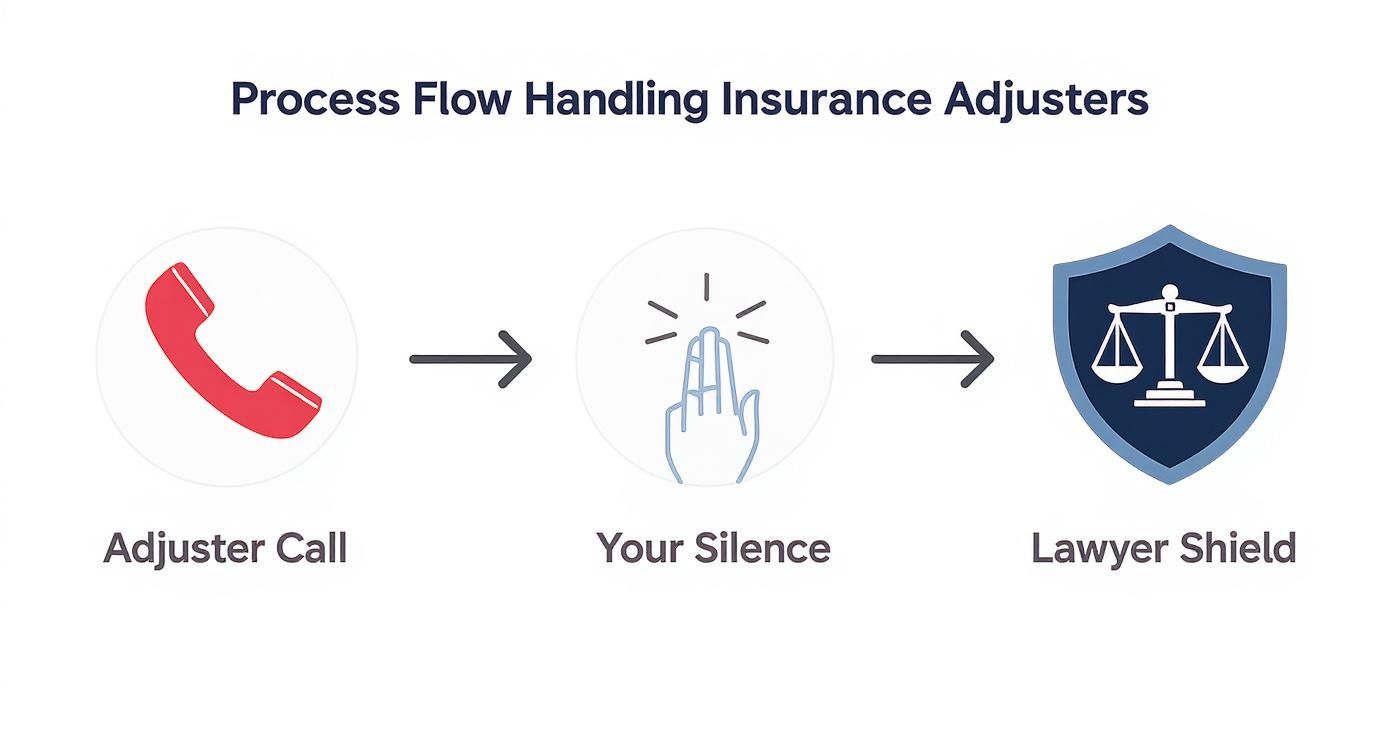
As you can see, the best move you can make is letting a legal professional shield you from the start. It prevents you from saying something that could hurt your claim and shows the insurer you're serious.
Understanding Texas's Statute of Limitations
While most of the timeline is flexible, there’s one deadline that is set in stone: the statute of limitations.
In Texas, you generally have just two years from the date of the accident to file a personal injury lawsuit. If you miss that deadline, you lose your right to recover any compensation, period. It’s a harsh rule, but it’s the law.
Two years might seem like a lot of time, but it disappears in the blink of an eye when you're juggling doctor's appointments and trying to get your life back on track. This is why you must contact a Houston car accident attorney long before the deadline gets close.
This strict cutoff is exactly why we advise crash victims not to wait. An attorney needs ample time to build your case, negotiate with the insurance company, and prepare to file a lawsuit if necessary—all before that two-year clock runs out.
For a deeper dive, check out our guide that answers the question, "How long does it take to settle a car accident claim in Texas?"
The more complex your accident, the longer the process will likely take. Simpler cases might wrap up in 6 to 12 months, but severe crashes involving T-bones or head-on collisions often take 24 to 36 months or more, especially if a lawsuit is needed to force a fair offer. Our goal is to set realistic expectations from day one and show you why a patient, strategic approach is essential to getting the full value your case is worth.
Why an Attorney Makes a Critical Difference

After a serious accident, the last thing you want to think about is a legal battle. It's completely overwhelming. While you technically have the right to represent yourself, years of experience and industry data tell the same story: victims with a skilled personal injury attorney almost always recover more compensation.
It’s not just about knowing the law. It’s about leveling a playing field that is heavily tilted in the insurance company’s favor.
When an insurer sees someone without a lawyer, they see an opportunity to save money. They know you probably aren't an expert on Texas negligence laws, how to value pain and suffering, or the quiet tactics they use to lowball claims.
Hiring an attorney flips that dynamic instantly. It sends a clear message: you won’t be taken advantage of, and you’re ready to fight for a fair car accident settlement.
Leveling the Playing Field with Legal Expertise
The insurance adjuster has a team of lawyers and a playbook they've used thousands of times. Your attorney is your equalizer. We bring a deep, specialized knowledge of Texas law to your corner, which is absolutely essential for navigating this process.
Here’s how that expertise makes a real difference:
- Accurate Claim Valuation: An experienced lawyer knows how to calculate the full cost of your injuries, not just the immediate bills. This includes future medical care and lost earning potential—things most people don't even think to include.
- Evidence Gathering: We don't just stop at the police report. Our team digs deeper, securing witness statements, bringing in medical experts or accident reconstructionists, and preserving critical evidence before it disappears.
- Navigating Comparative Responsibility: Texas uses a modified comparative responsibility rule (often called comparative fault). If you're found even partially to blame, your settlement gets reduced. A huge part of our job is building a case that minimizes any fault assigned to you, protecting your right to full compensation.
An insurer is far more likely to negotiate in good faith when they’re looking at a meticulously prepared case from a reputable law firm. It tells them you have the proof—and the muscle—to back up your demand.
The Power of a Credible Threat of Trial
The single biggest piece of leverage you have in a settlement negotiation is the willingness and ability to take your case to court. Insurance companies are businesses, and for them, a trial is expensive, risky, and unpredictable. They would much rather settle a claim than face a jury.
When you have a seasoned Texas personal injury lawyer fighting for you, the insurer knows the threat of a lawsuit is real. It isn't a bluff. At The Law Office of Bryan Fagan, PLLC, we prepare every single case as if it’s going to trial. This intense preparation puts us in a much stronger negotiating position and leads to better settlement offers.
The reality is that the vast majority of cases settle out of court. An attorney's job is to build a case so strong that the insurance company has no reasonable choice but to offer a fair settlement that fully covers your losses.
In fact, only about 4% of car accident cases ever make it to a courtroom; the rest are resolved through settlements. This statistic shows just how vital the negotiation phase is. And when you consider that the economic cost of fatal crashes in the U.S. hits a staggering $417 billion annually, it's clear why insurers want to resolve claims efficiently—but always on their terms. Your attorney makes sure those terms are fair to you. You can discover more insights about personal injury law statistics and how they impact cases like yours.
Your Advocate and Your Shield
Beyond legal strategy, your attorney serves an important personal role. When you should be focused on healing, the last thing you need is the stress of handling aggressive adjusters, endless paperwork, and tight deadlines. A dedicated Houston car accident attorney or a compassionate wrongful death lawyer in Texas takes that entire burden off your shoulders.
We handle every phone call. We file every document. We manage every negotiation. We become your shield, protecting you from the insurance company's pressure tactics and giving you the peace of mind to focus on what truly matters: your recovery. That support is invaluable, providing reassurance that an experienced professional is fighting for your future while you work on putting your life back together.
What’s Next? Taking Your First Step Toward Recovery
A serious car accident can shatter your sense of stability in an instant, but you don’t have to pick up the pieces alone. Getting a fair settlement isn't just about paying off medical bills that are piling up. It’s about securing the resources you need to actually rebuild your life—the stability to heal without financial stress breathing down your neck.
This compensation is what covers your ongoing medical care, makes up for the wages you’ve lost while out of work, and acknowledges the very real personal toll your injuries have taken. You've been through more than enough. Now is the time to get clear, honest answers from someone who knows the system inside and out.
Schedule Your Free Consultation Today
The most important step you can take right now is getting trusted legal advice. Let our team at The Law Office of Bryan Fagan, PLLC, take the legal burdens off your shoulders. Your only job should be focusing on your health and your family.
We invite you to a free, no-strings-attached consultation where we’ll sit down and listen to your story. We'll walk you through your rights under Texas law and show you exactly how we plan to fight for the maximum compensation you deserve.
You won't pay us a dime unless we win your case.
Contact a Texas personal injury lawyer today. Let’s start moving forward, together.
Your Top Questions About Texas Accident Settlements Answered
When you're trying to piece your life back together after a crash, the legal process can seem overwhelming. You’ve got questions, and you deserve clear answers. Here are some of the most common concerns we hear from our clients every day.
Will My Case Go to Court?
Almost certainly not. It's a common fear, but the reality is that the vast majority of Texas car accident cases—well over 95%—are settled out of court through negotiation.
Insurance companies are businesses, and trials are expensive and unpredictable. They would much rather settle. That said, the single most powerful tool you have is an experienced Houston car accident attorney who prepares every case as if it will go to trial. When the insurer sees you're ready and willing to go before a jury, they're far more motivated to come to the table with a serious, fair offer.
How Does Texas Determine Fault?
This is a big one. Texas uses a rule called “modified comparative responsibility,” and it directly impacts how much money you can recover.
In simple terms, it means you can still get compensation even if you were partially to blame for the crash, as long as your share of the fault is 50% or less. Your final settlement is just reduced by your percentage of fault.
For example, if your total damages are $100,000 but a jury finds you were 20% at fault, your recovery would be reduced by that 20%, leaving you with $80,000.
This is exactly why a thorough, independent investigation is non-negotiable. The insurance company will do everything it can to shift more blame onto you to reduce their payout.
What Happens if the Other Driver Is Uninsured?
It’s a frustratingly common problem on Texas roads. If the driver who hit you has no insurance—or not enough to cover all your damages—you’re not out of options. This is where your own policy comes into play.
You can file a claim under your Uninsured/Underinsured Motorist (UM/UIM) coverage. This is an optional add-on, but we tell every single person we know to get it. It's an absolute lifesaver. Filing a UM/UIM claim can be just as tricky as dealing with the other driver's insurer, so having a lawyer handle it is crucial.
How Do I Pay My Medical Bills Before the Case Is Settled?
Your health is the priority, but the bills can start piling up fast. While your health insurance is a good starting point, there's a better way to manage these costs without the stress.
A personal injury attorney can send what’s called a “letter of protection” to your doctors and other medical providers. This is a formal agreement that guarantees they will be paid directly out of your future settlement. It allows you to get the critical care you need to heal right now, without the financial pressure, while your lawyer focuses on building your case.
A serious accident can change your life in seconds — but you don’t have to face it alone. Recovery is possible, and legal help is available. At The Law Office of Bryan Fagan, PLLC, we handle the legal complexities so you can focus on healing. To discuss your case with an experienced and compassionate attorney, schedule your free, no-obligation consultation today.