
A serious accident can change your life in seconds, but you don't have to face it alone.
If your child slipped under the water at a Houston apartment pool, or a family member was pulled from a backyard pool in Dallas and now can't speak for themselves, you're probably dealing with fear, confusion, and a stack of medical questions. The legal questions come fast too, who is responsible, what evidence still exists, and whether the property owner, landlord, hotel, or city had a duty to prevent what happened. A Texas swimming pool drowning accident lawyer should give you clear answers, not courtroom theater.
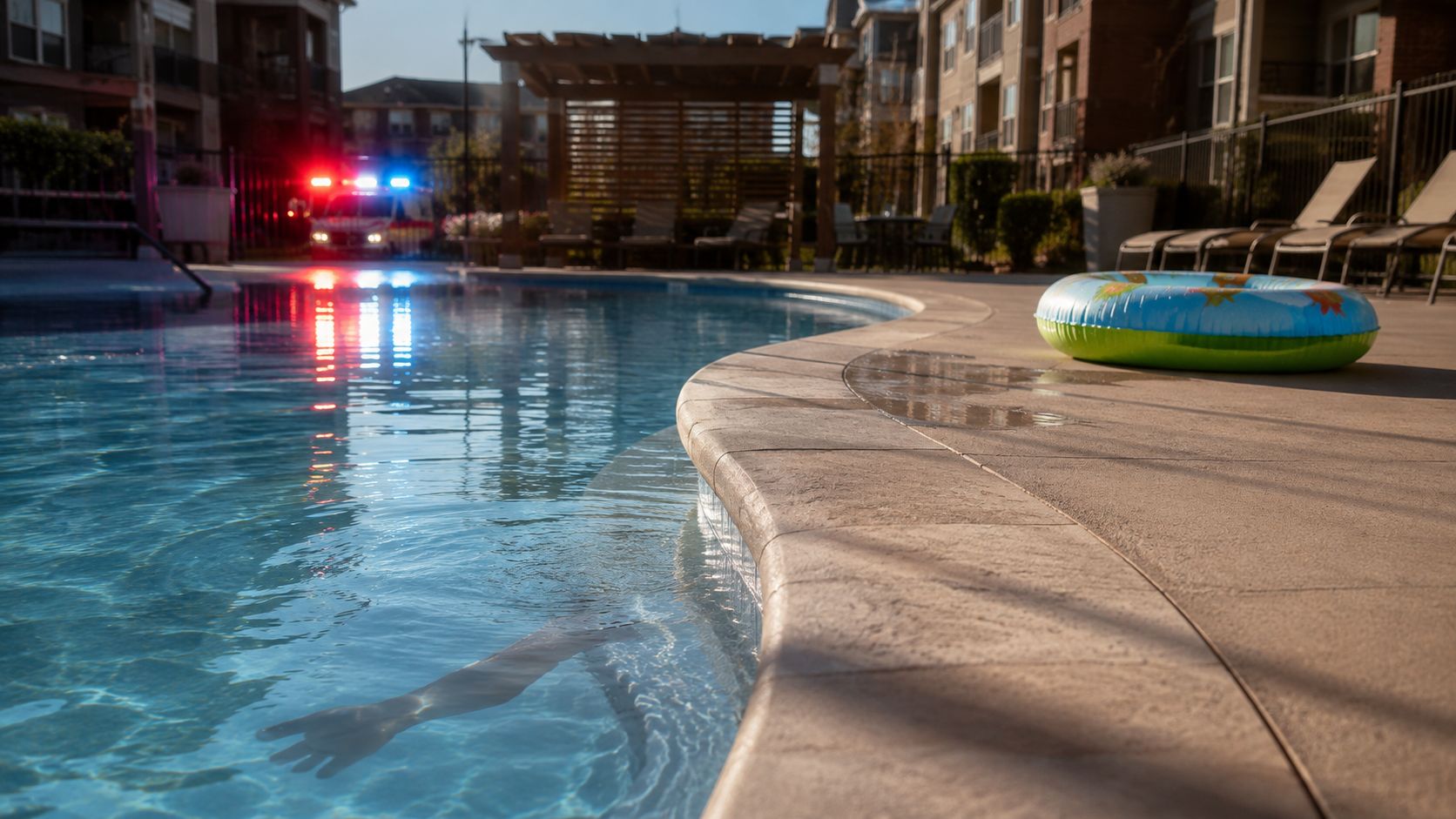
The hard truth is that Texas has lived with a heavy drowning burden for years. A state health report covering 2006 to 2020 found 5,401 unintentional drowning deaths in Texas, with pools involved in 1,157 deaths, or 21.4% of the drowning deaths analyzed Texas DFPS drowning report. Those numbers matter in real cases because they help show why fencing, supervision, access control, and emergency response timing are often central to liability.
When families call after a near-drowning or a fatal pool accident, they don't need lectures. They need someone to tell them what to save, what to ask for, and what deadline is already running. That's the job here, and it's the same practical approach we use in serious injury and wrongful death cases across Texas.
When a Pool Becomes More Than a Summer Memory
A Saturday afternoon at an apartment pool in Houston can turn in a few seconds. One child is playing near the steps, another family is talking by the grill, and then someone realizes a small body is under the water and not moving. After that, everything gets narrow, sirens, emergency care, hospital lights, and a silence that feels wrong.
That kind of event doesn't just leave a medical crisis. It leaves a legal one too, because the scene starts changing almost immediately. Someone drains water, locks a gate, moves furniture, or rewrites the story in a way that makes the hazard harder to prove.
For families, the first job is stability. Get the victim treated, keep people close, and don't let the insurance process pull you into giving a recorded statement before you understand the facts. If the case involves a serious injury, the compensation categories described in What Damages Can You Recover in a Texas Injury Case? are often part of the first attorney conversation, especially when medical care, future rehab, and family losses are all on the table.
Practical rule: if the pool scene still exists, treat it like evidence, not a cleanup project.
A Texas pool case is usually not about drama. It's about whether someone failed to do the basics, and whether that failure led to a drowning, a near-drowning, or a catastrophic brain injury. In a child case, the law can become even more protective, especially when the pool wasn't properly secured.
What to Do in the First Days After a Pool Drowning
The first 24 to 72 hours matter because memories fade and evidence disappears fast. Start with the scene if you can safely do so. Take photos and video of the fence, gate, latch, depth markers, warning signs, water clarity, drain area, and rescue equipment before anything gets repaired or cleaned up.
Gather the documents that still exist
Ask for the EMS report, any police incident report, and the hospital records that show when the child was found, when CPR started, and what condition the victim was in on arrival. Write down the names of anyone who saw the incident, heard the alarm, or helped pull the child from the water. If the pool is at an apartment complex, hotel, or shared neighborhood facility, ask in writing for maintenance logs, inspection records, and any safety or service paperwork.
Save the child's clothing, swimwear, shoes, flotation devices, and anything else that was in use. Small items matter more than people expect because they help confirm timing, supervision, and what the child could or couldn't do in the water.
Insurance adjusters often call early, and they're usually looking for statements that reduce the claim, not protect it.
If a property owner or manager has insurance, the adjuster may contact you within days. Be polite, but don't give a detailed account until you've spoken with counsel. Texas families sometimes assume a quick explanation will help. In practice, it usually gives the insurer an opening to question fault, supervision, or the severity of the injury.
The first-week checklist is simple. Preserve the scene, save the paperwork, identify witnesses, and keep insurers at arm's length until you understand the legal stakes.
Who Can Be Held Liable for a Texas Pool Accident
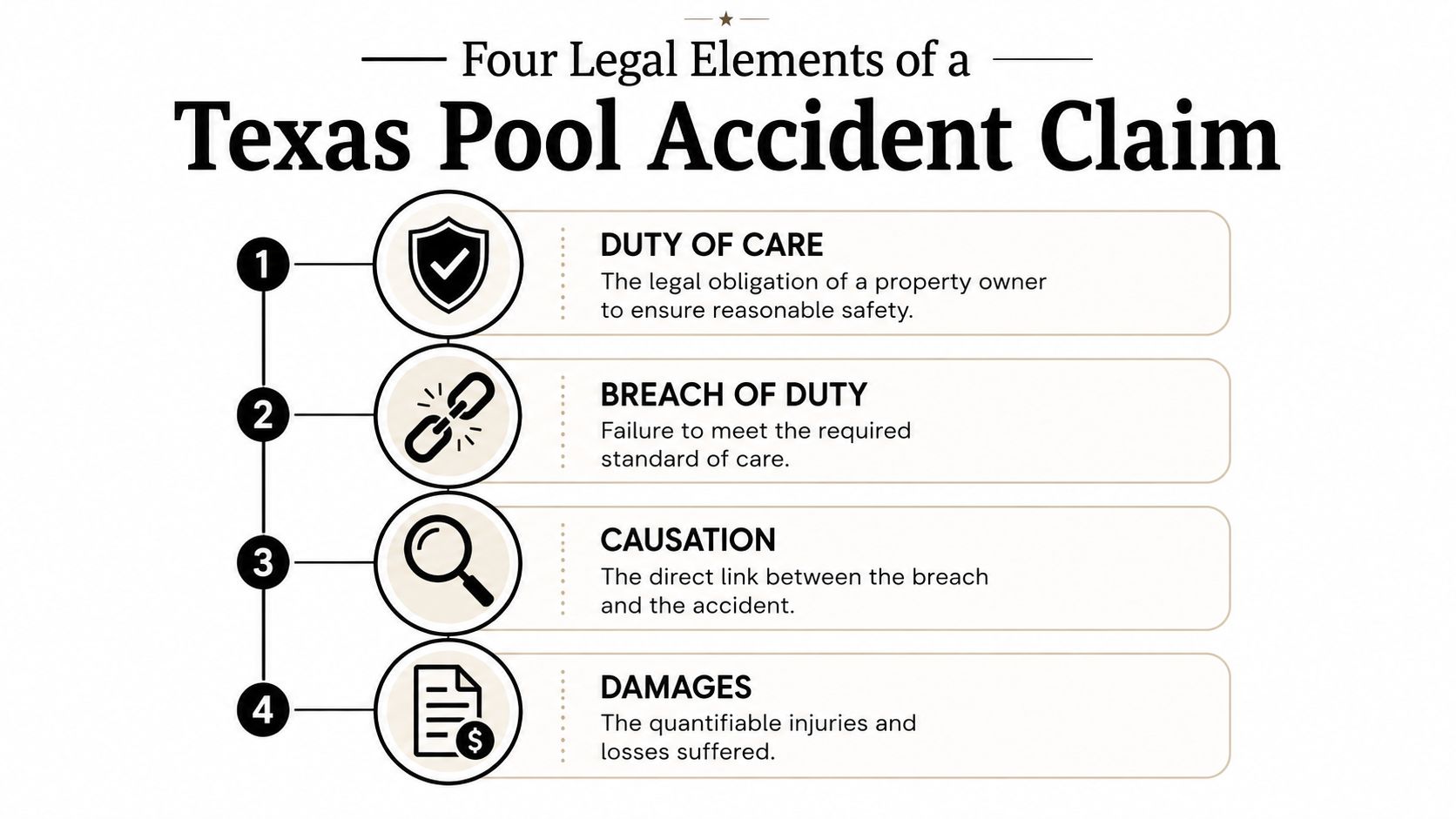
A pool case turns on duty of care, breach, causation, and damages. In plain English, someone had to keep the pool reasonably safe, that person failed, the failure helped cause the drowning or injury, and real harm followed. Texas premises liability law is built around those elements, and they matter whether the pool is behind a house, inside an apartment complex, or run by a business. For a basic overview of that framework, see premises liability law in Texas.
The property type changes the analysis
A backyard pool, an apartment pool, a hotel pool, a waterpark, and a city pool are not treated the same way. A homeowner who leaves a gate open faces a different fact pattern than a public operator that has lifeguards, signage, and government immunity questions. If the pool is government-owned, the Texas Tort Claims Act and Recreational Use Statute can narrow the claim and change the deadlines and defenses.
Children bring in a separate rule under attractive nuisance. Texas law can still put responsibility on an owner when a child gets into a pool that was not secured with fencing and locking mechanisms, even if the child was technically a trespasser. That matters because the law focuses on whether the danger was made too easy to reach, not whether a child understood the risk.
Comparative fault matters too. Texas uses modified comparative responsibility, and recovery is barred if the claimant is 51% or more at fault. That rule can matter in a pool case involving a distracted parent, a broken gate, or a lifeguard who was not on duty. It does not erase a claim by itself. Texas comparative fault and pool accidents
If a child gets into an unsecured pool, the question is usually not “who made a mistake,” but whose failure made the danger reachable.
The hardest cases are fact-specific. A lawyer should inspect the barriers, latches, signage, supervision, and emergency response before naming defendants.
A useful outside reference for insurance documentation is a certificate of currency public liability insurance, because pool cases often involve carriers, contractors, or managers who may all point fingers at each other about coverage and responsibility.
For children, timing can be different, and Injury Claims Involving Children in Texas is the kind of rule families need to understand early, because the filing deadline can differ when the injured person is a minor.
Building the Case With the Right Evidence
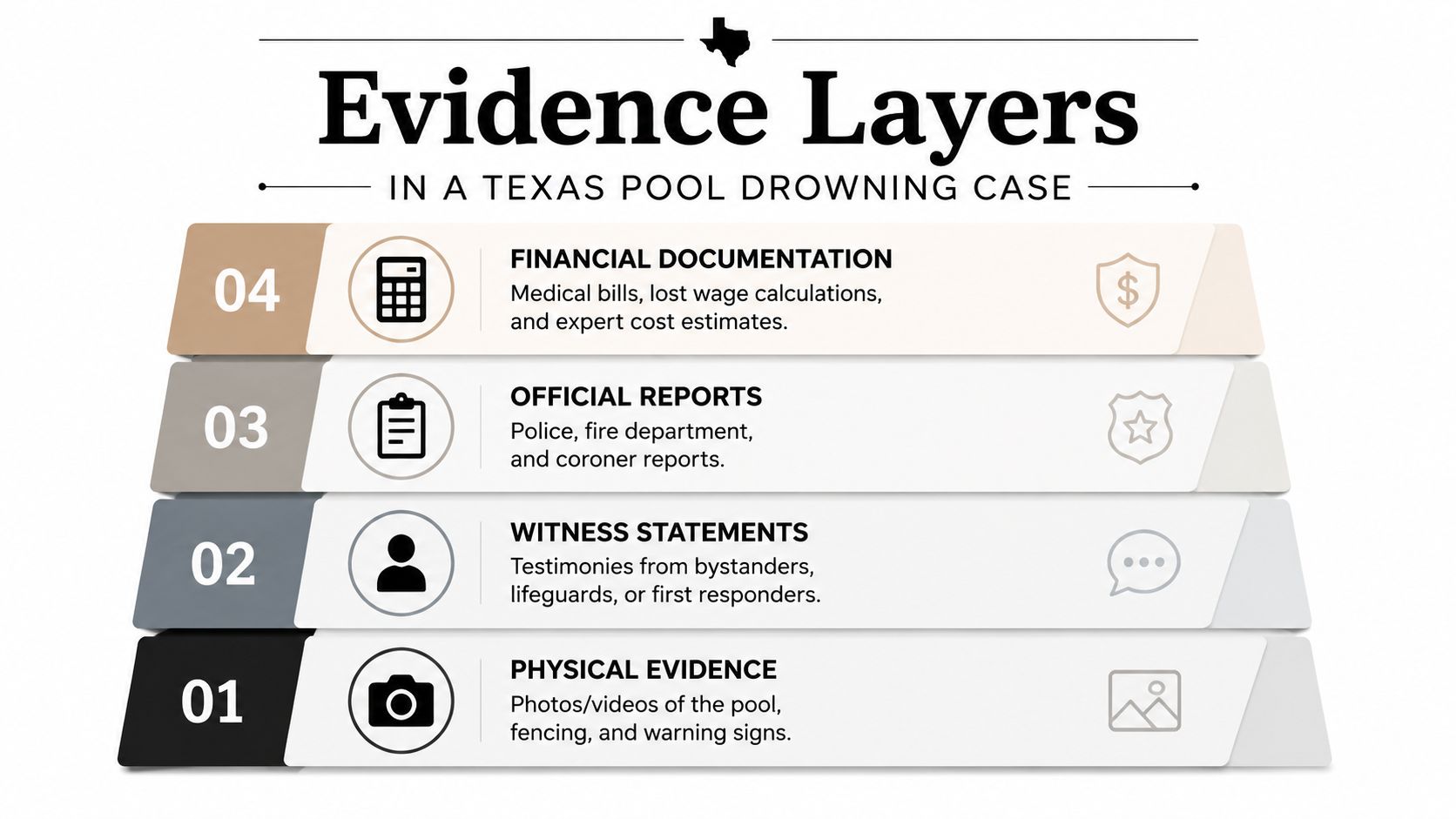
The strongest Texas pool cases are built on what you can prove, not what people remember weeks later. Start with the physical scene. Photos and video of the fence, gate, latch, drain covers, depth markers, warning signs, and rescue equipment can make or break the liability story because they show whether the property was secured.
Evidence that disappears first
Surveillance footage is often the most fragile evidence in these cases. Pool cameras, apartment-lot cameras, and nearby security systems can overwrite footage quickly, sometimes before a family even knows it exists. Maintenance and inspection logs can also vanish if a property owner repairs a latch, replaces a gate, or edits records after the incident.
That's why the order matters. Get the scene documented first, then seek the paper trail, then line up the official reports and witnesses. EMS records, police reports, hospital charts, vendor contracts for pool service or lifeguard coverage, and inspection records all help answer the same question, what happened before the child went under and who had control of the pool at that moment.
If the pool is at a business or apartment complex, keep an eye on who controlled access. Managers, owners, maintenance vendors, and security staff may each have a piece of the timeline. A clear record of who opened the gate, who saw the child, and who called for help often matters as much as the physical defect.
A practical insurance note belongs here too. Dealing With Insurance Companies After a Texas Accident is worth understanding because insurers often push for quick statements before the evidence has been preserved.
If a property owner says the pool was “safe,” ask for the records that prove it.
The fastest path to a stronger case is simple. Preserve the scene, demand the records, and don't let anyone treat a drowning like a routine insurance file.
Wrongful Death and Survival Claims After a Pool Drowning
Texas law gives families two different paths after a fatal drowning. A wrongful death claim belongs to the surviving family for their own losses. A survival claim belongs to the estate for the harm the victim suffered before death. Those are not the same thing, and a good case should evaluate both.
A wrongful death claim can include losses like funeral costs, financial support, and the loss of companionship the family now lives without. A survival claim focuses on what the decedent experienced before death, including pre-death pain and suffering and medical bills. Families often assume they only have one option. They usually have more than that.
The near-drowning case is just as important. A child who survives a submersion event may face a hypoxic brain injury that changes the rest of life. Those claims can involve future rehabilitation, neuropsychological care, special education, and lost earning capacity. The immediate rescue may look like a close call, but the legal claim can be larger and more medically complex than a fatal case because the long-term damage can be severe.
A Texas wrongful death lawyer should move quickly to preserve both paths, especially when the victim is a child or the medical picture is still unfolding. That's why the firm handling the case has to think beyond the first hospital visit and look at the full future cost of the injury.
For a deeper look at fatal injury claims, Texas wrongful death laws explain how these cases fit together under Texas law.
A child who survives a drowning can still have a civil case that's every bit as serious as a fatal one.
The right lawyer won't rush to label the case too early. They'll look at the medical course, the family's losses, and whether the estate and surviving relatives both need to be protected.
Texas Deadlines, Comparative Fault, and Government Pools
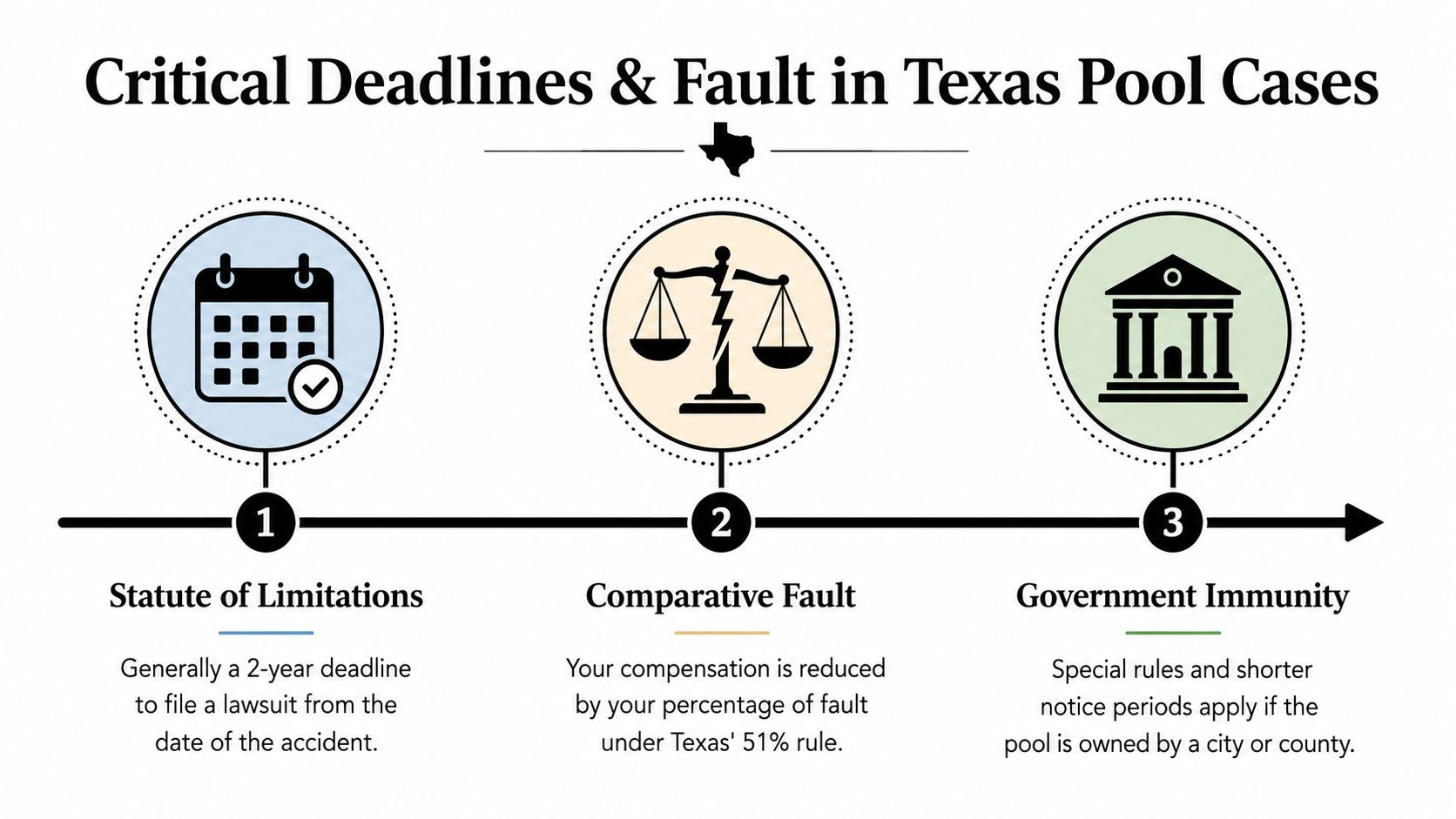
Texas gives families a short window to act, and the clock usually starts running right away. In most pool injury cases, the deadline is two years from the accident date. In wrongful death claims, it is generally two years from the date of death. If you miss that window, the court can throw the case out before anyone reaches the merits.
Three rules can decide the case early
The first rule is the statute of limitations. The second is the 51% comparative fault bar, which can wipe out recovery if the defense pushes enough blame onto the injured person or the family. The third is government ownership, because city-run pools and other public facilities can trigger immunity issues under the Texas Tort Claims Act and Recreational Use Statute Texas government pool liability.
For minors, Texas law may toll the deadline until age 18, but families should not assume every child case gets automatic protection. The safer move is to get legal advice early, especially if the property owner has already started repairs or is already blaming supervision. If you want a clearer overview of the filing deadline, navigating the statute of limitations for a Texas personal injury claim explains how the timing rules fit together.
The practical takeaway is simple. The clock is running, fault percentage matters, and the owner's status can change the entire strategy. A case at a private apartment complex is handled differently than a claim against a city pool or a school facility.
Do not wait for the insurance company to “finish investigating.” By the time they are done, the time to file may be much closer than you think.
Choosing the Right Texas Swimming Pool Drowning Accident Lawyer
Ask hard questions before you hire anyone. Does the firm handle premises-liability and pool cases, or does it mainly do car wrecks and truck crashes? Who investigates the scene, how fast do they move, and will they preserve the evidence before the property gets repaired?
You also need to know how the fee works. A contingency fee means you don't pay attorney's fees unless there's a recovery, which matters when you're already dealing with hospital bills and time off work. Just as important, ask how the firm communicates with families during the case. You want clear updates, not silence.
The Law Office of Bryan Fagan, PLLC handles Texas injury matters across Houston, Dallas–Fort Worth, Austin, and San Antonio, including wrongful death and catastrophic injury claims, so it can review a pool-drowning case alongside other serious injury issues when that helps the family understand the full picture. It also matters that the lawyer can explain how a pool case differs from a Houston car accident attorney or a truck crash lawyer Houston search result, because not every serious injury claim uses the same evidence or the same defenses.
Good counsel should be able to tell you, in plain English, what the case needs and what it probably won't have.
Past results and case handling style matter too, but don't let marketing replace judgment. You're hiring someone to preserve evidence, fight the insurer, and decide whether the facts support wrongful death, survival, or a serious brain-injury claim after a near-drowning.
If you're ready for answers, speak with a lawyer who can review the pool, the records, and the deadlines with you now. Recovery is possible, and you don't have to figure out the next step alone.
If your family is dealing with a drowning or near-drowning in Texas, contact the Law Office of Bryan Fagan, PLLC for a free consultation and a clear review of your options. Visit Law Office of Bryan Fagan, PLLC to talk with a Texas personal injury lawyer about what happened, what evidence still needs to be preserved, and what your claim may include.