 Skip to content
A serious accident can change your life in seconds, but you don't have to face it alone. After a Houston freeway crash, you may be focused on pain, missed work, vehicle damage, and follow-up care. Then medical bills arrive before the settlement does, and an insurance company may say it wants repayment from any money you recover.
That repayment claim is called subrogation. It can affect the amount you keep, especially when private health insurance, Medicaid, Medicare, workers' compensation, hospital claims, or auto benefits are involved. Understanding the rules early can help you avoid accepting a settlement without knowing what will be deducted.
A Serious Accident Can Change Your Life in Seconds
After a collision on Interstate 10, the hospital may bill your health plan before anyone decides who caused the crash. Your insurer might pay some covered medical expenses, while you use other benefits to get treatment and manage daily costs. Later, if the at-fault driver's insurance offers a settlement, the health plan or another payor may seek reimbursement from that recovery.
The settlement amount you hear first is the gross recovery. It isn't necessarily the amount deposited into your account. Attorney fees, case costs, medical liens, and valid subrogation claims may be addressed before your share is distributed.
Your settlement is not your net recovery until every valid claim against it has been reviewed and resolved.
This issue affects many Texas injury claims, including car and truck crashes, pedestrian and motorcycle collisions, workplace accidents involving a third party, and fatal crashes. It can also matter in a wrongful death claim when medical care occurred before a loved one passed away.
Texas law doesn't treat every payor the same. Private health plans may fall under Texas Civil Practice and Remedies Code Chapter 140, while Medicaid, Medicare, CHIP, workers' compensation, and self-funded ERISA plans are outside that chapter's reach. Personal Injury Protection, or PIP, also has a narrow Texas rule that often prevents subrogation.
You'll learn what subrogation means, who may claim part of your recovery, how fault affects reimbursement, and what steps can protect your net settlement. If you've received a lien letter or reimbursement demand, don't ignore it. A Texas personal injury lawyer can review the claim and help you understand what you may keep.
What Subrogation Means in a Texas Personal Injury Case
A Houston driver runs a red light, and you need emergency care after the crash. Your health plan pays the hospital bills while you focus on treatment. Later, after the at-fault driver's insurer offers a settlement, the health plan may seek repayment from that recovery. The plan may argue that the responsible driver, rather than the plan, should ultimately bear the injury-related costs.
The insurer usually is not demanding that you immediately write a personal check. Instead, it may claim a right to receive money from the settlement or judgment tied to your accident.
Three related ideas
Subrogation allows a payor to step into your legal position and pursue the party responsible for the loss. Reimbursement means the payor asks to recover benefits it already paid. A lien is a claim used to secure payment from funds recovered in your injury case.
The terms overlap, but they describe different rights. A private health insurer may rely on its plan contract for reimbursement. A hospital or other provider may assert an interest in settlement funds through a medical lien. A government program uses its own recovery procedure.
The process generally follows four steps:
- You suffer an injury because another person or entity may be legally responsible.
- A health plan, auto insurer, government program, or workers' compensation carrier pays covered expenses.
- The payor examines whether a third party may owe compensation.
- The payor seeks repayment from the settlement or judgment, subject to the rules governing that plan.
Texas Civil Practice and Remedies Code Chapter 140 creates a framework for certain health-plan reimbursement and subrogation rights. A health-plan issuer may contract for repayment from a tort recovery, but allocation rules can limit that right. Those limits help balance the plan's claim against your ability to keep part of the recovery. Texas Civil Practice and Remedies Code Chapter 140
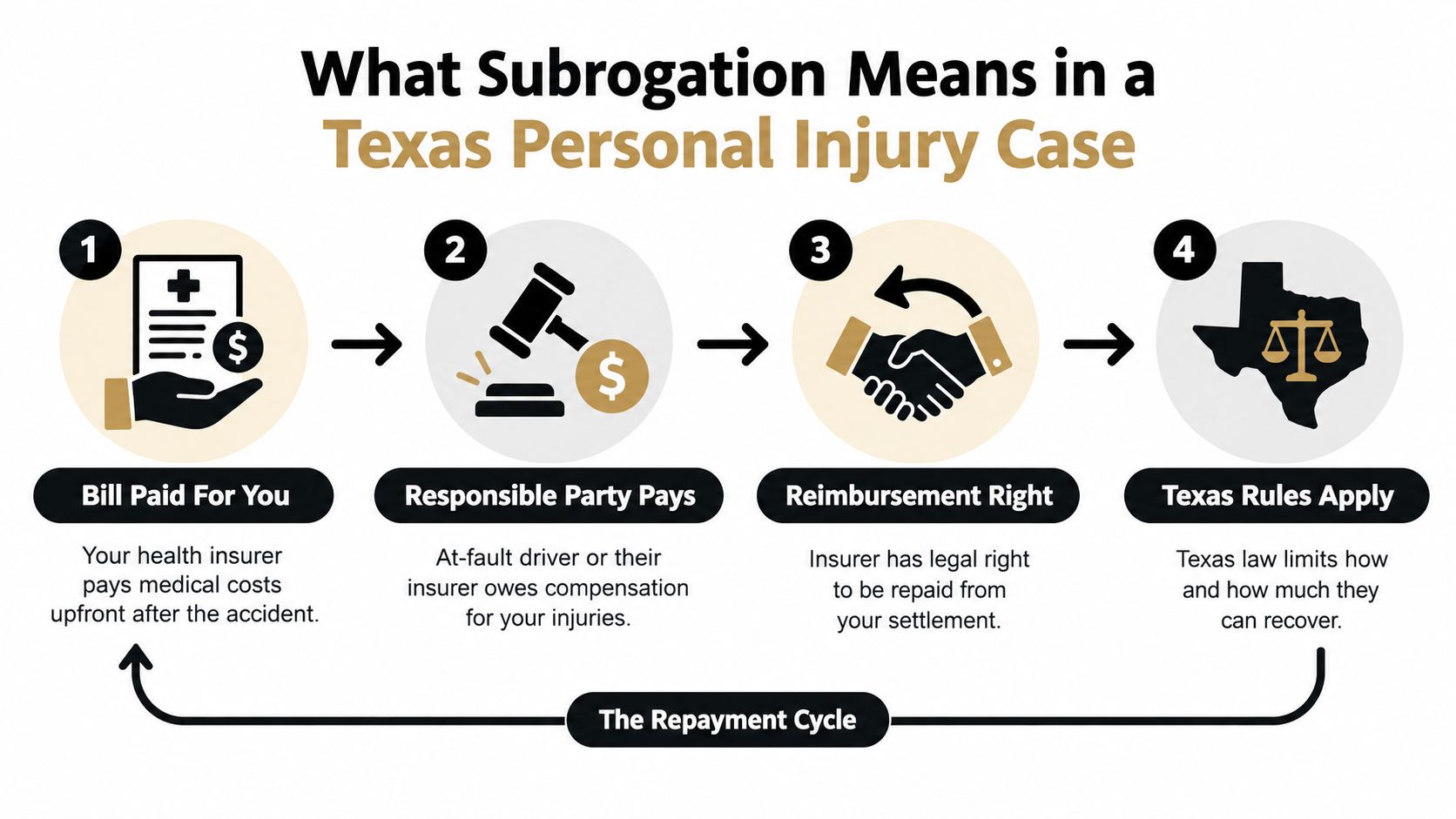
A payment alone does not prove that the demand is valid. Ask which plan paid, what contract applies, whether Texas law controls, and whether the amount demanded is accurate. The answers can change how much of your settlement remains after the claim is resolved.
Who Can Assert Subrogation or Liens on Your Texas Settlement
Several parties may seek payment from an injury recovery, but their rights come from different laws and agreements. A private health insurer, Medicaid, a workers' compensation carrier, and your own auto insurer may not have the same ability to reach your settlement.
Start by identifying the source of every payment connected to your treatment. Your attorney may need the health-plan documents, payment history, policy language, government notices, workers' compensation records, and medical billing information.
| Payor Type | Texas Rule and Limit | What It Means for You |
|---|---|---|
| Private health plan | Chapter 140 may allow contractual reimbursement, subject to allocation rules | The plan's contract and Texas limits must be reviewed before payment |
| Self-funded ERISA plan | Outside Chapter 140's reach | Federal plan language may control the reimbursement claim |
| Medicaid | Texas Human Resources Code Section 32.033 assigns recovery rights and uses a state recovery process | Report potential settlement funds and address the state's claim directly |
| Medicare and CHIP | Outside Chapter 140's reach | Separate government recovery rules may apply |
| Workers' compensation carrier | Texas Labor Code Chapter 417 allows recovery from a third-party claim | The carrier's interest is reduced by the employer's share of responsibility |
| PIP insurer | Generally no subrogation right under Texas Insurance Code Section 1952.155 | A narrow exception may apply when the at-fault driver lacked insurance or proper proof |
| Hospital or medical provider | May assert a medical lien or payment claim under applicable Texas law | The claim should be verified, itemized, and resolved before distribution |
Government benefits require early reporting
Texas Human Resources Code Section 32.033 provides that applying for or receiving Medicaid assigns recovery rights from personal insurance, other sources, and a third person responsible for the injury. The statute also says a personal-injury claim cannot be used to deny or stop Medicaid assistance. Texas Medicaid guidance directs recipients to report potential subrogation funds involving trusts, annuities, and court settlements to the state's Third Party Liability unit. Texas Human Resources Code Section 32.033
Medicare, Medicaid, CHIP, and self-funded ERISA plans aren't handled like a private Texas health plan under Chapter 140. That distinction can be easy to miss, and it's one reason you should preserve every letter you receive.
For a broader explanation of how medical claims may affect settlement proceeds, you can navigate medical liens in settlements. You can also review how medical bills are paid after an accident in Texas while gathering your records.
Auto benefits and workers' compensation are different
Texas Insurance Code Section 1952.155 generally denies an insurer a subrogation right for required PIP benefits. The exception is narrow and involves an at-fault driver who lacks insurance or proper proof of insurance. Your policy language and the other driver's coverage status can therefore matter after a Houston crash. Texas Insurance Code Section 1952.155
Workers' compensation creates another layered-coverage problem. If you were hurt while working or traveling for work and a third party caused the injury, the carrier may seek reimbursement from the third-party recovery under Texas Labor Code Chapter 417. The carrier's interest is reduced by the employer's proportionate responsibility, which can change the amount available to you.
How Subrogation Affects Your Negotiation and Net Recovery
A liability settlement usually starts as a single gross number, but several obligations may be addressed before you receive your share. The practical question is not, “How much did the insurer offer?” It's, “How much will remain after valid deductions?”
Consider a Houston crash where the other driver's insurer accepts responsibility and offers a settlement. Your health plan paid treatment, a hospital has a payment claim, and your attorney spent time investigating liability and preparing the demand. Each claim may affect the final distribution, but each must also be supported by the correct legal authority and documentation.
Fault controls the underlying recovery
To recover damages, you generally must show that another party's negligence caused your injury. That often means proving a duty, a breach of that duty, causation, and damages. Evidence can include crash reports, photographs, witness information, medical records, vehicle data, and testimony about how the collision happened.
Texas uses modified comparative responsibility, also called proportionate responsibility. Under Civil Practice and Remedies Code Section 33.001, you can recover if you're 50% or less responsible, but your compensation is reduced by your assigned percentage. If you're found more than 50% responsible, recovery is barred. Texas proportionate responsibility and subrogation overview
That finding can also affect reimbursement analysis. For workers' compensation claims, the carrier's interest is reduced by the employer's share of responsibility, so the allocation of fault may influence both the carrier's recovery and your net result.
Allocation and negotiation matter
Your settlement may include compensation for medical expenses, lost income, pain, disability, disfigurement, and future needs. A careful settlement analysis identifies what the recovery compensates and compares those categories with what each payor paid.
A demand from an insurer isn't automatically correct. Review whether:
- The payment relates to this accident: Unrelated treatment shouldn't be included.
- The amount is supported: Ask for an itemized payment history and current balance.
- The plan has authority: The controlling policy or plan document matters.
- Fees and costs are considered: A payor benefiting from your work may need to account for the cost of creating the recovery.
- The settlement leaves you undercompensated: Limited funds can support a reduction request, depending on the plan and applicable law.
You may also find practical guidance on negotiating medical bills after settlement. A Texas Personal Injury Lawyer may represent injury victims across Texas on a no-fee-unless-we-win basis, with the fee arrangement explained before representation begins.
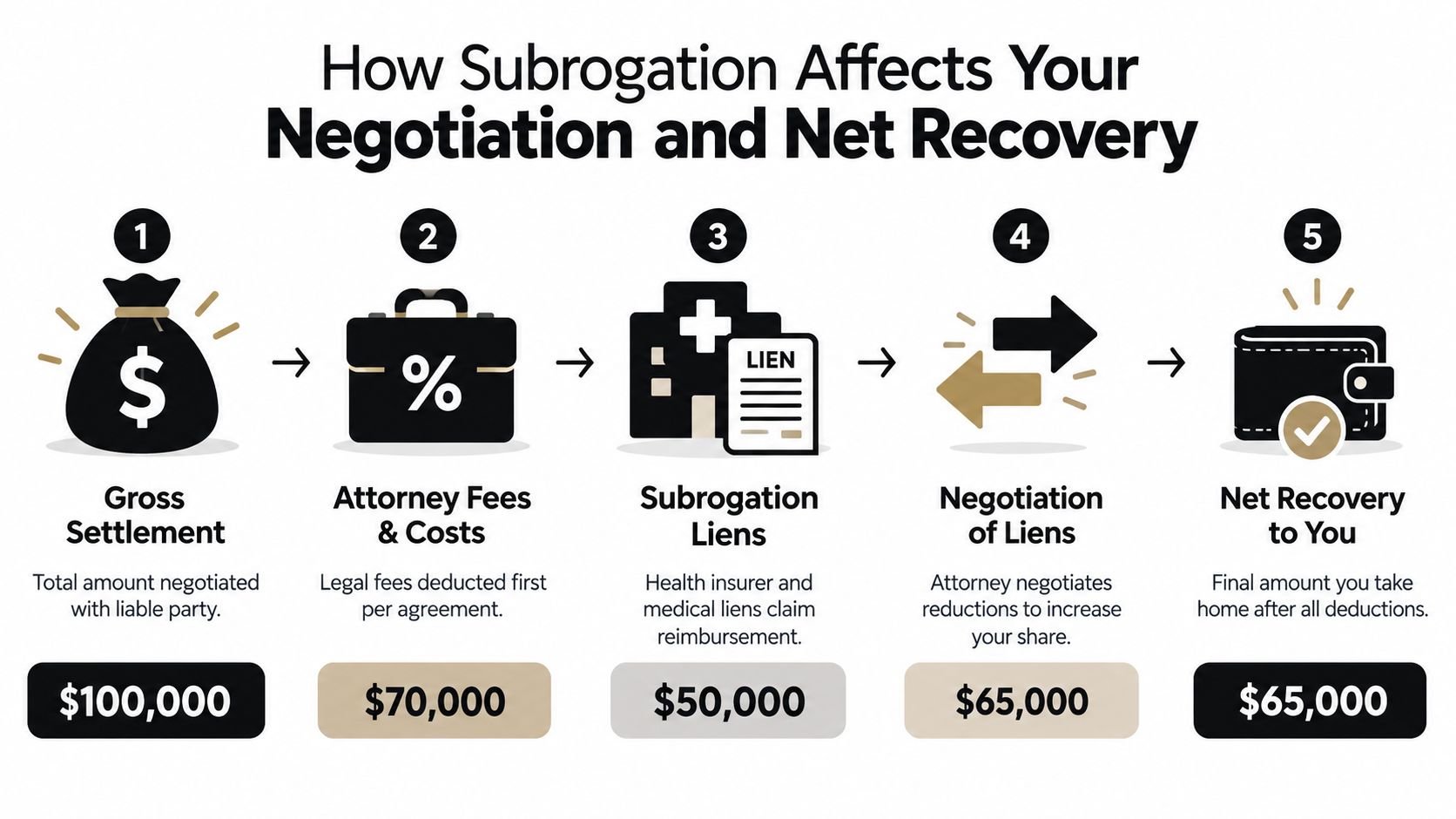
This video provides another visual explanation of how settlement funds may move through fees, liens, negotiation, and final distribution:
Common Defenses and Statutory Limits That Protect You in Texas
Texas limits reimbursement rights differently depending on who paid your medical bills. A rule that applies to a health plan may not apply to Medicaid, workers' compensation, or an auto policy. Identify the payor and the governing agreement before judging a demand.
Chapter 140 allocation rules
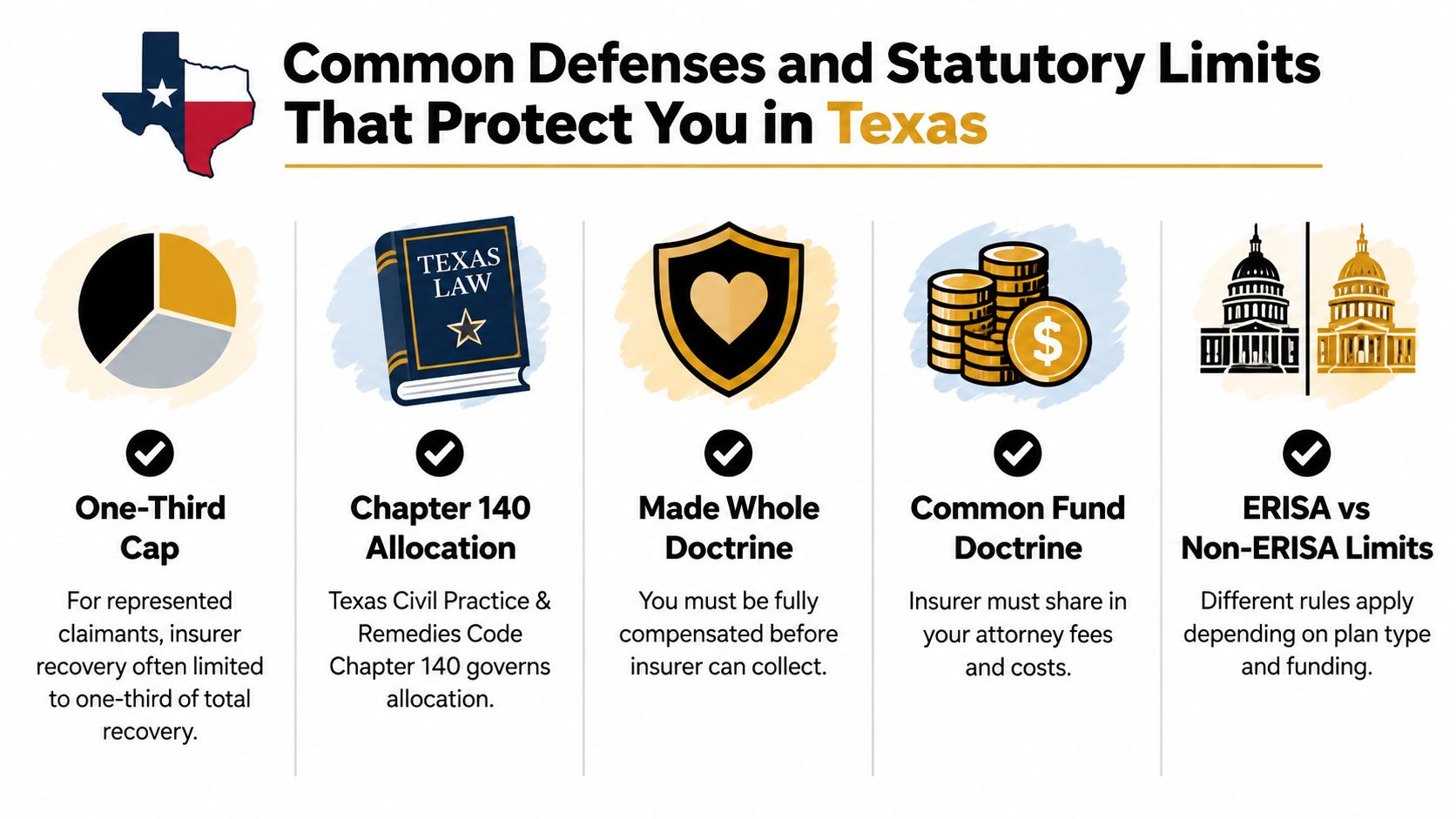
Chapter 140 can limit certain contractual subrogation and reimbursement rights held by health-plan payors. For represented claimants, the statute may cap recovery at one-third of the plaintiff's settlement, if its requirements are met. The rule does not cover Medicaid, Medicare, CHIP, workers' compensation, or self-funded ERISA plans.
As noted earlier, that limit cannot be applied automatically to every reimbursement claim. Match the demand to the plan documents and the law governing that specific payor.
Made-whole and common-fund arguments
The made-whole concept asks whether you were fully compensated before a payor collects from your recovery. A Houston crash can leave you with unpaid treatment, lost income, and lasting pain even after a settlement. Those losses may matter when your lawyer argues that repayment should wait or be reduced.
The common-fund concept addresses a different issue. If a payor benefits from the settlement your attorney created, the payor may need to share in the fees and costs that produced that fund. Contract language and plan type can change the result, so neither doctrine guarantees an automatic reduction.
Workers' compensation reimbursement
Texas workers' compensation reimbursement follows a statutory formula. The carrier may seek payment from your net recovery in a claim against a third party, such as a driver who caused a crash while you were working. Its interest is limited by law and reduced by the employer's proportionate responsibility.
A comparative-fault finding can therefore shrink the carrier's reimbursement. It may also affect whether future workers' compensation benefits resume after the carrier's interest is satisfied. Texas Department of Insurance workers' compensation guidance
Ask for the formula, not just the balance. The demand should show how the carrier calculated its interest and applied responsibility.
PIP's narrow exception
If your auto insurer paid required PIP benefits, Texas law generally prevents subrogation. A limited exception may apply when the at-fault driver lacked insurance or proper proof of insurance. That distinction can affect the money you keep from a Houston collision settlement.
Before settling, confirm whether the first-party payment was PIP, MedPay, UM, or UIM. These coverages can follow different rules, especially when coverage layers overlap.
Practical Steps to Protect Your Settlement After a Texas Accident
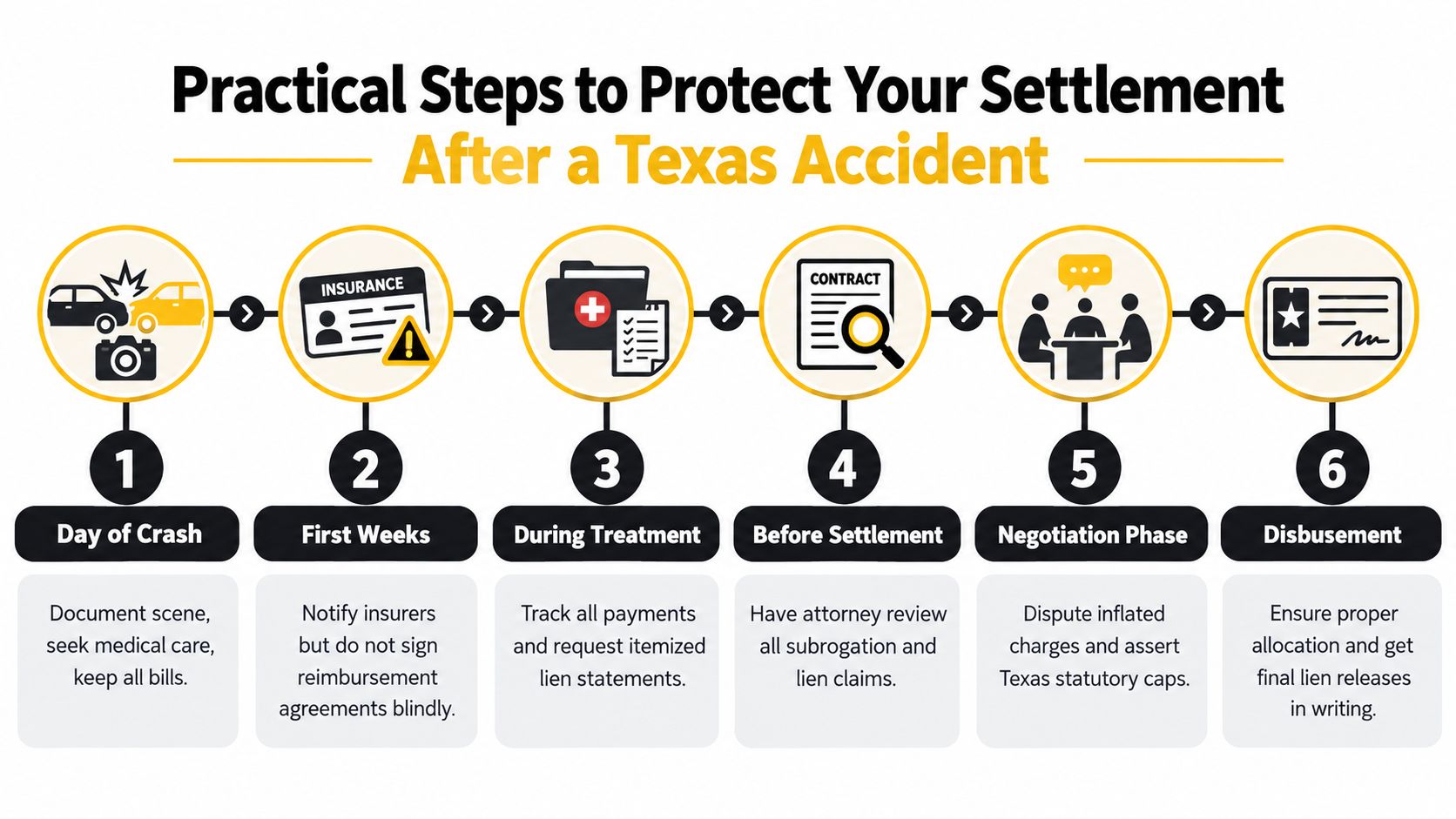
Subrogation protection starts on the day of the accident, not when a settlement check is ready. Small records gaps can make it harder to identify what was paid and whether a demand is tied to your injuries.
At the crash scene and during treatment
Call for emergency help when needed, obtain medical care, and follow the treatment plan. Photograph the vehicles, roadway, signs, visible injuries, and surrounding conditions when it's safe. Keep the crash report information, witness contacts, medical bills, explanation-of-benefits statements, prescriptions, mileage records, and proof of missed work.
Notify your insurers, but don't sign a reimbursement agreement or recorded statement you don't understand. Tell your lawyer about every plan that paid care, including employer-sponsored coverage and public benefits.
Before settlement discussions
Request written, itemized lien or reimbursement statements. Ask the payor to identify the plan, the contract provision, the dates of service, the amount paid, and the current demand. If you're covered by an employer plan, request the plan document and determine whether it's self-funded and governed by ERISA.
For Medicaid, report potential settlement funds to the state's Third Party Liability unit as required by the program's process. For workers' compensation, preserve evidence about whether the accident occurred during work duties and whether an outside driver or company caused the injury.
A letter of protection in Texas may help coordinate medical care and payment arrangements, but you should understand exactly what you're signing and how it could affect the final distribution.
During negotiation and disbursement
Don't accept a quick settlement before the claims against it are verified. Your attorney can challenge unrelated charges, seek reductions, apply statutory limits, and document the final agreement.
Before funds are distributed, confirm that each resolved claim has a written release or final lien statement. You should also review the proposed settlement statement so you can see the gross recovery, fees, costs, lien payments, and estimated net amount.
Texas personal injury claims generally have a two-year filing deadline under Civil Practice and Remedies Code Section 16.003. Waiting too long can permanently end your right to sue, even if the evidence of fault looks strong. Texas personal injury statute of limitations information
If the case involves a commercial vehicle, speak with a truck crash lawyer Houston about preserving company records and identifying all responsible parties. For severe injuries, a catastrophic injury attorney can help account for long-term care and future losses. Families facing a fatal crash may need a wrongful death lawyer Texas to address both the liability claim and benefit reimbursements.
Get Trusted Help to Keep More of Your Texas Recovery
Subrogation can be manageable when you identify each payor early, verify the legal basis for each demand, and negotiate before settlement funds are released. The most important rules depend on the type of coverage involved, not only on the fact that an insurer paid a bill.
Act promptly because Texas generally gives most personal injury claimants two years to file suit under Civil Practice and Remedies Code Section 16.003. A Texas personal injury lawyer can investigate fault, evaluate negligence and comparative responsibility, identify liens, and work toward a settlement that reflects both your losses and the claims against your recovery.
You may also benefit from coordinated care focused on the underlying effects of an injury. Resources discussing root-cause care for injury patients can help you explore supportive treatment while your legal claim proceeds.
Recovery may take time, but it's possible to move forward with the right information and support. If you're searching for a Texas personal injury lawyer or a Houston car accident attorney, bring every reimbursement letter, insurance notice, medical bill, and plan document to an initial consultation.
The Law Office of Bryan Fagan, PLLC can help investigate your accident, review subrogation and lien claims, and work to protect the portion of your recovery that belongs to you. Schedule a free consultation through Law Office of Bryan Fagan, PLLC, with representation handled on a no-fee-unless-we-win basis.


