A serious accident can change your life in seconds, but you don't have to face it alone. You may be dealing with pain, missed work, insurance calls, and medical bills that arrive before you know whether the other driver will accept responsibility. If you can't afford treatment upfront, a letter of protection in Texas may help you receive necessary care while your personal injury claim moves forward. It can also affect what you owe later, how your settlement is evaluated, and how much money reaches you after the case ends.
This guide explains the arrangement in plain English. You'll learn how an LOP works, how it differs from a hospital lien and health insurance, what risks to ask about, and how a Texas personal injury lawyer can help you make an informed choice.
A Real Moment When an LOP Changes Everything
After a Houston freeway crash, you're taken for emergency care and sent home with instructions to see a specialist. In the following days, your neck pain worsens. You need diagnostic testing, follow-up appointments, and physical therapy, but you're missing work and don't have enough money available for every bill. Your health insurance may be limited, or the provider you need may not accept it.
That's where a letter of protection, often called an LOP, can become a bridge between immediate medical care and a future injury recovery. A willing provider agrees to treat you now and delay payment until your claim reaches a settlement or judgment. In exchange, you promise that the provider will be paid from available case proceeds under the agreement.
The arrangement doesn't erase the bills. It changes when payment may be collected and creates a direct repayment obligation tied to your injury claim. Texas ethics guidance recognizes this type of arrangement as a contractual promise connected to future case proceeds, not as a guarantee that the provider will be paid in full. Texas ethics guidance on letters of protection explains the payment-assurance nature of the relationship among the patient, attorney, and provider.
The three interests involved
You need appropriate care without an unaffordable upfront charge. The provider needs a reasonable path to payment. Your attorney must protect the claim while accounting for medical balances, attorney fees, case expenses, liens, and your final recovery.
A carefully written LOP should identify:
- Treatment covered: The services and providers included in the arrangement.
- Billing terms: How charges are calculated and updated.
- Payment source: Whether payment comes from a settlement, judgment, or another agreed source.
- Case failure: What happens if the claim is denied, lost, or resolves for less than the medical balance.
- Attorney duties: What the lawyer must do with settlement funds and provider notices.
An LOP may exist alongside a hospital lien under Texas law. That can create additional settlement consequences and timing concerns. Before signing, ask your lawyer to compare projected treatment costs with the likely available recovery. You shouldn't promise repayment without understanding whether the case can realistically support it.
What a Letter of Protection Actually Is
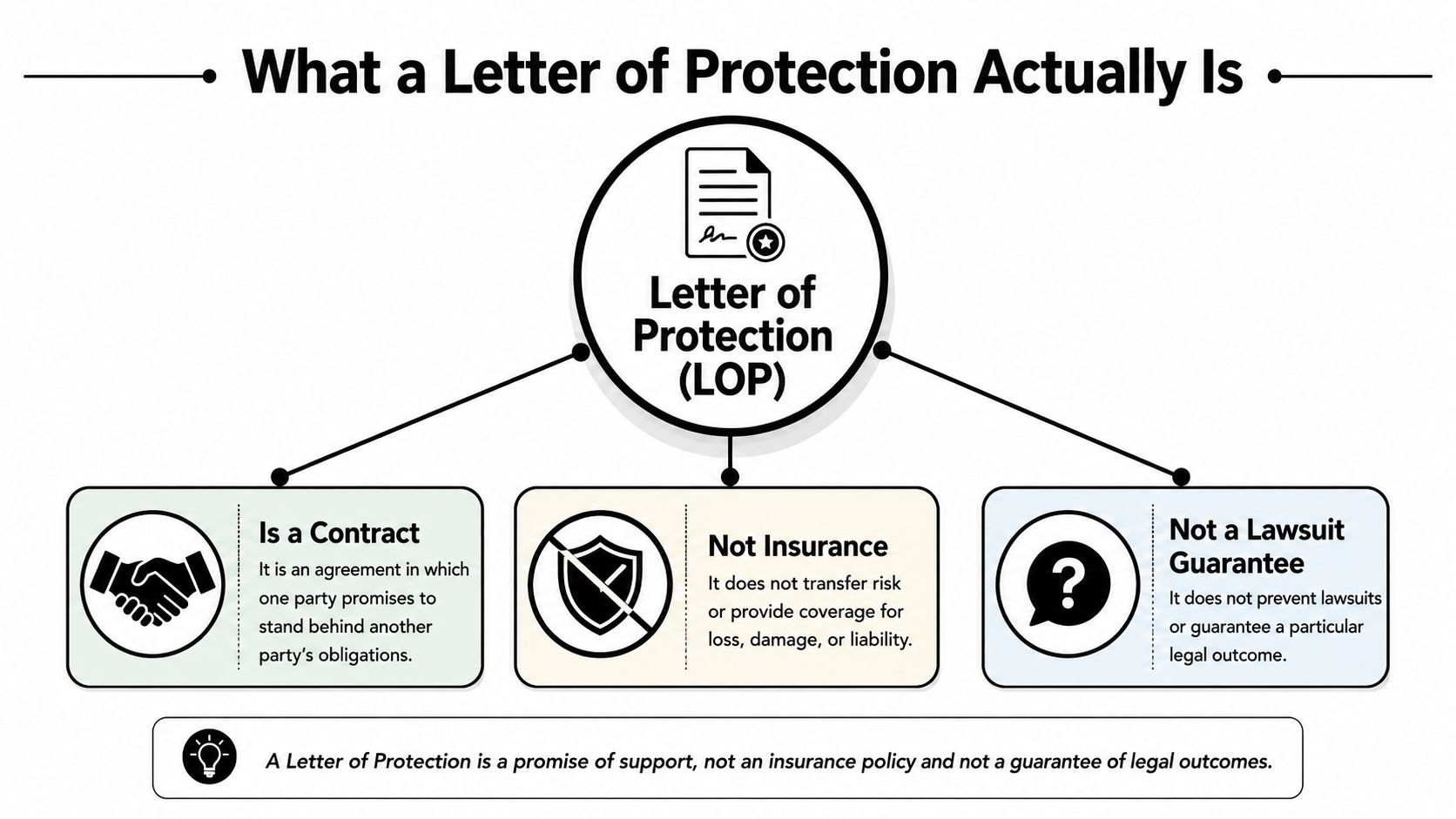
A Texas LOP is a contractual payment arrangement, not health insurance and not a promise that your lawsuit will succeed. In a typical injury case, you, your attorney, and a medical provider agree that the provider will delay collection while your claim is pending and seek payment from a settlement or judgment if money is recovered.
The relationship usually works in several connected steps:
- You receive treatment. The provider treats accident-related injuries under the agreed terms.
- The attorney provides information. The lawyer may identify the claim, liable parties, insurance carriers, and expected source of payment.
- The provider waits for resolution. The balance generally remains outstanding while the case is investigated, negotiated, or litigated.
- The case resolves. If the claim produces a recovery, the attorney accounts for the LOP balance before distributing the remaining funds.
- The balance is addressed. The provider may be paid in full, or the attorney may negotiate a reduction based on the recovery and the claim's circumstances.
What an LOP does not promise
An LOP doesn't establish that another person caused your injuries. It doesn't control what an insurer thinks your treatment is worth. It also doesn't guarantee that a settlement or judgment will be large enough to cover the entire balance.
You're generally still responsible for treatment charges under the agreement. The provider may have contractual rights even though payment is postponed. That's why you should read provisions about missed appointments, additional treatment, billing rates, interest, collection activity, and what happens if there's no recovery.
An LOP also isn't the same as a hospital lien. A lien can arise under Texas law without your signature when statutory requirements are met, while an LOP is a voluntary private agreement. If you're evaluating representation after a crash, a Car Accident Lawyer in Texas may review how treatment arrangements fit within the broader claim.
Before signing: Ask, “What will I owe if the case ends with no recovery or a small recovery?” The answer should be clear in writing.
LOP vs Hospital Liens and Health Insurance
These payment methods can appear in the same injury claim, but they don't operate in the same way. An LOP is a private agreement among you, your lawyer, and a provider. A hospital lien comes from statute. Health insurance pays according to a policy, while cash payment requires you to fund treatment directly.
| Option | How payment works | Main caution |
|---|---|---|
| Letter of Protection | The provider delays payment and seeks payment from settlement or judgment proceeds under a contract. | You may remain responsible for the balance if the recovery is inadequate or the case fails. |
| Hospital lien | A qualifying hospital or emergency medical services provider may assert a statutory lien against part of an injury recovery. | Notice, filing, timing, and statutory limits can affect distribution. |
| Health insurance | The insurer pays covered care according to the policy, subject to its terms and reimbursement rights. | Deductibles, exclusions, subrogation, and repayment claims can reduce the net recovery. |
| Cash payment | You pay the provider directly at or near the time of treatment. | You need the funds available, and the charge may still be substantial. |
Texas Property Code Chapter 55 provides the statutory framework for qualifying hospital and emergency medical services liens. Under that law, a lien can attach to an injured person's recovery when the statutory requirements are met, and some lien situations limit recovery to no more than 50% of the settlement or judgment. The law also includes a 72-hour admission rule for certain hospital liens, so the timing of treatment after a crash can matter. Review the Texas rules for hospital and emergency medical services liens before assuming an LOP is the only payment issue.
Health insurance may be preferable when it covers necessary care on workable terms. But a health plan, including a government program or an employer-sponsored plan, may seek reimbursement from a later recovery. A provider may also offer a payment plan or reduced cash rate. Comparing these options before treatment can protect both your health and your net settlement recovery. For a broader explanation of payment sources, review how medical bills are paid after an accident in Texas.
How to Get and Use a Letter of Protection
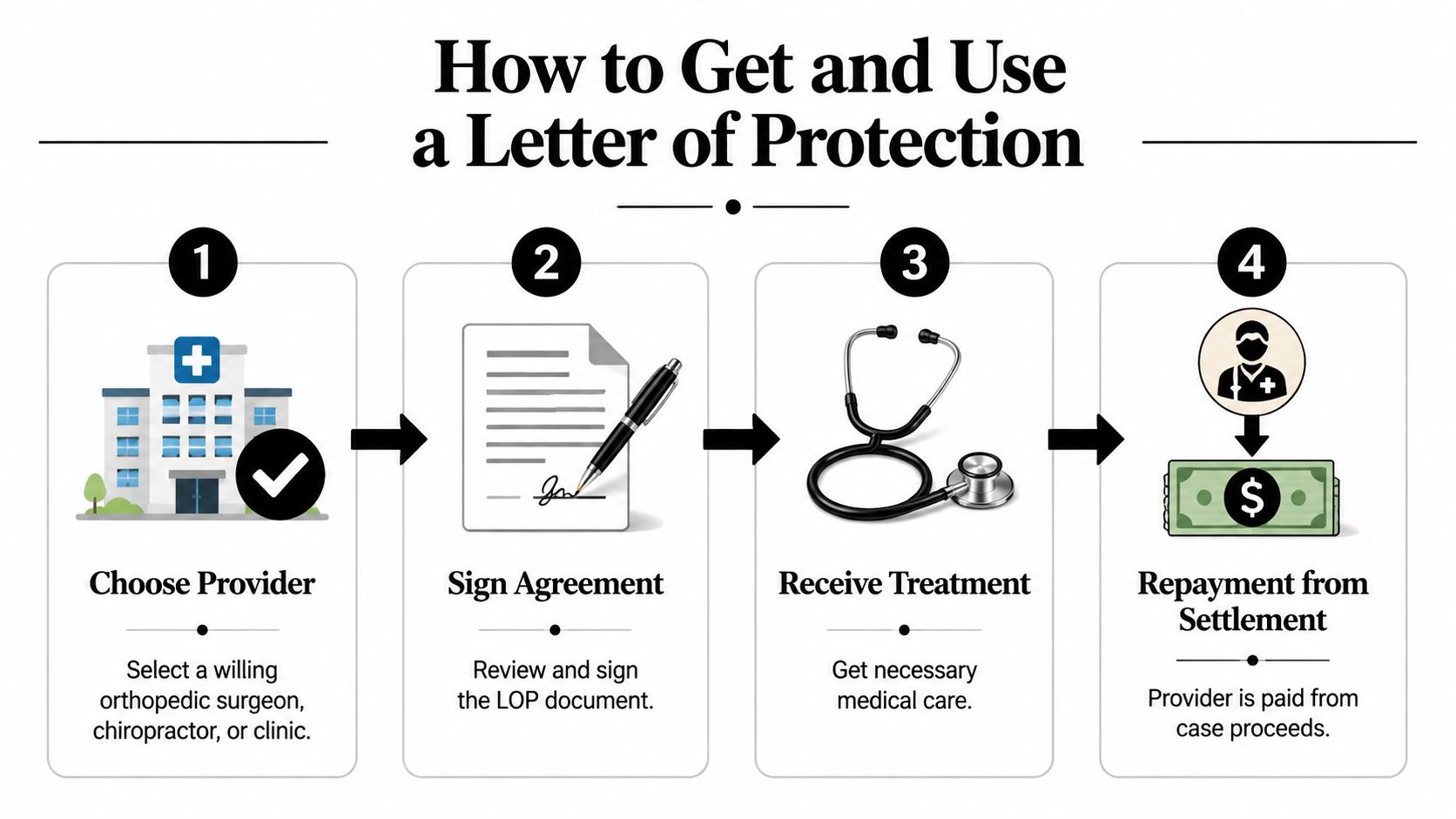
Obtaining an LOP should be a deliberate process, not a form you sign while you're in pain. Start by asking whether a provider accepts treatment on a lien or LOP basis. Orthopedic practices, imaging centers, physical therapists, pain-management clinics, and other specialists may have different billing policies.
Follow the agreement from provider to payment
Choose the provider carefully. Confirm what care the provider offers, whether treatment is medically appropriate, how charges are calculated, and whether the provider expects to continue care if the case enters litigation or a deposition. Ask for an explanation of the expected treatment path without assuming every recommended service is necessary.
Review the document before treatment begins. The LOP may identify the accident, the claim, the responsible parties, insurance carriers, covered services, payment instructions, and your responsibility if the case produces no recovery. Your lawyer should explain language you don't understand and identify terms that could affect your final balance.
Keep medical records current. Attend appointments, follow reasonable instructions, and tell providers about changes in your symptoms. Your treatment records and bills can become important evidence, but the defense may challenge care that appears disconnected from the accident or unsupported by medical documentation.
If your injuries include persistent spinal pain, ask qualified medical professionals about conservative care and available back and neck treatments. The treatment decision should come from medical need, not from the effect a bill might have on a claim.
Attorney coordination matters
Your attorney should request updated records and itemized bills, monitor the growing balance, communicate with the provider, and address any separate lien notices. If a provider files or asserts a statutory lien, the lawyer must account for that claim as well as the LOP.
Treatment without insurance may be possible in some cases, but the agreement can create obligations you'll need to understand. Learn more about getting treatment without insurance after a Texas accident.
LOPs in Real Texas Injury Cases
Consider a rear-end collision on I-45 in Houston. The passenger has a herniated disc, no health insurance, and missed wages that make upfront treatment unrealistic. A Memorial-area orthopedic group agrees to treat under an LOP, and the patient receives injections and physical therapy while the attorney works on the claim.
The case later reaches a substantial settlement, but the insurer disputes the reasonableness of the imaging charges. The dispute doesn't mean the treatment never happened. It means the parties must examine the records, the services provided, the medical necessity, and whether the charges fairly reflect the care. The LOP gives the provider a path to delayed payment, but it doesn't prevent the defense from challenging the bill.
Now consider a delivery truck sideswiping a vehicle on I-635 in Dallas. The claimant suffers a torn rotator cuff, and an LOP helps cover surgery and postoperative care. The commercial insurer contests both causation and the reasonableness of the surgical-facility charges.
What these examples show
The timing of treatment matters. So does the quality of documentation. A clear connection between the crash, the symptoms, the diagnosis, and the treatment gives the claim a more understandable medical story.
The financial negotiation also matters. LOP-backed charges may be higher than insurance-negotiated rates, and Texas legal commentary recognizes that defendants may contest whether those charges are reasonable and how they should affect damages. Texas guidance on LOP billing and settlement effects describes why medical charges can become a central settlement issue.
An LOP doesn't turn a difficult claim into an easy one. It helps address access to care while placing more importance on provider selection, treatment discipline, billing review, and settlement planning.
Risks and Trade-Offs You Should Understand
The main trade-off is simple: an LOP may let you obtain care now, but it can leave a larger balance to address later. Providers treating under an LOP may bill amounts that differ from insurance-negotiated rates. The defense may then argue that the charges are unreasonable, excessive, unrelated, or influenced by the expectation of payment from a recovery.
That challenge can affect both the gross value assigned to medical damages and the amount you ultimately receive. A large medical balance may appear in the claim, but it doesn't automatically increase the settlement by the same amount. Your lawyer may need to negotiate with the provider, the insurer, and other claimants before distributing funds.
| Risk | What happens | Net recovery impact |
|---|---|---|
| Higher billed charges | The provider's charges may exceed rates commonly accepted by insurers. | More of the recovery may be allocated to medical balances, or the defense may dispute the claimed damages. |
| Reasonableness challenge | The insurer questions whether treatment and charges were necessary and fair. | Settlement negotiations may slow, and disputed charges may not receive full value. |
| Weak liability | The defendant denies fault or argues that you caused the crash. | A smaller recovery may leave less money available for provider payment and your other losses. |
| Insufficient recovery | The case resolves for less than the outstanding medical balance or produces no recovery. | You may still owe money under the LOP terms. |
| Unclear billing | Records, invoices, or treatment descriptions are incomplete. | Your attorney may have less leverage to seek reductions or defend the charges. |
Comparative responsibility still matters
Texas uses a modified comparative responsibility rule. Under Texas Civil Practice and Remedies Code § 33.001, you can't recover damages if your percentage of responsibility is greater than 50 percent. If you're 50 percent or less responsible, you may recover, but your damages are reduced by your share of responsibility. Texas comparative negligence principles can therefore affect the funds available to address LOP balances.
You should also understand that an LOP may be discoverable in litigation. The defense can use the arrangement to question billing, treatment choices, and the relationship among the parties. That doesn't make an LOP improper. It means your medical care should be guided by genuine medical need and supported by consistent records.
Smart Alternatives and Decision Points
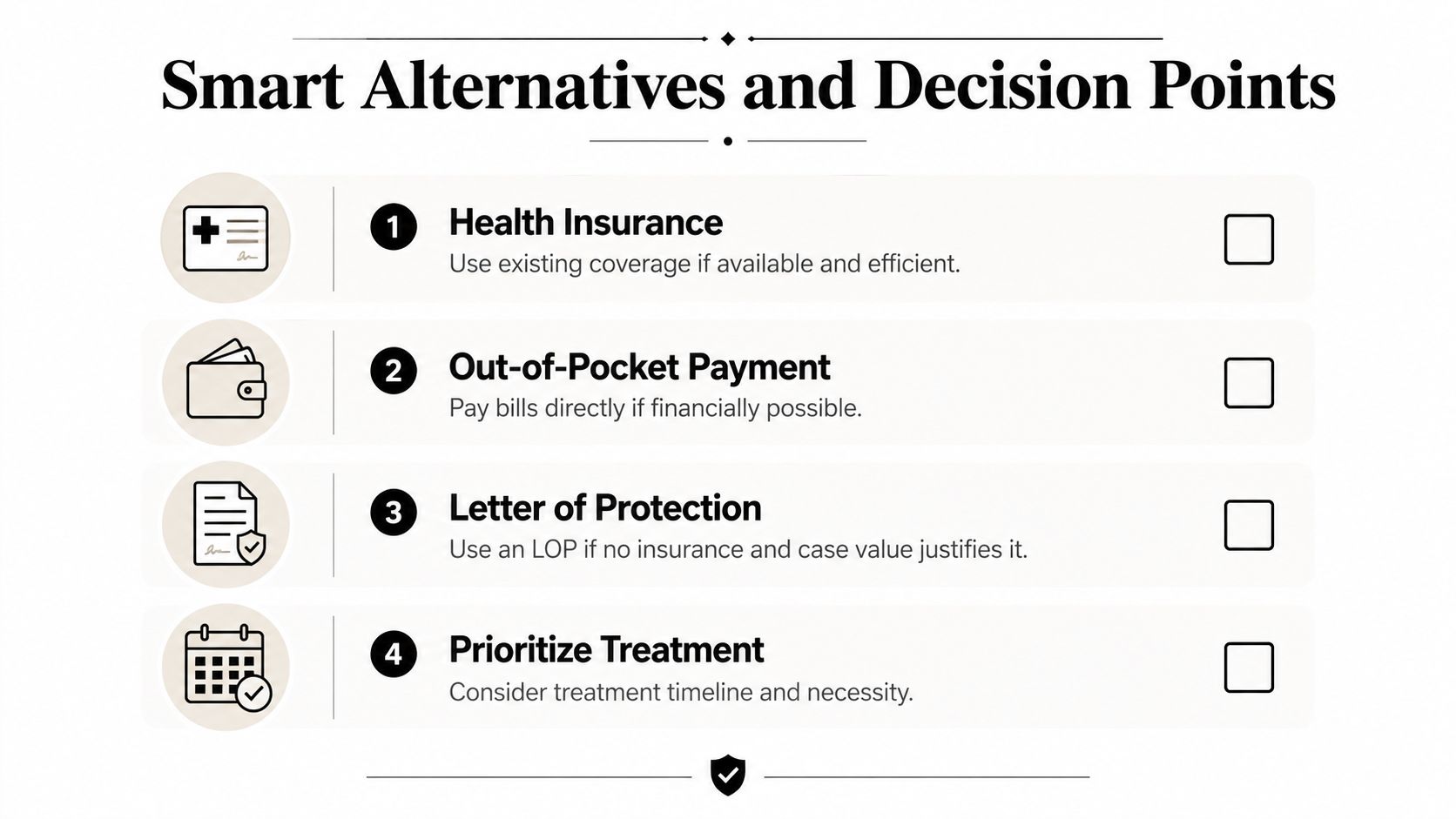
An LOP is one funding option, not an automatic answer. Your best choice depends on your coverage, the seriousness of your injury, the strength of the liability evidence, the available insurance, and the likely effect of each payment method on your final recovery.
Start with the alternatives that may already be available:
- Health insurance: Use existing coverage when the provider participates and the policy will pay for appropriate care. Check whether the plan expects repayment from a settlement.
- Medical-payment coverage: Review your own auto policy for MedPay or other applicable first-party benefits. These benefits may help with covered accident-related expenses, subject to the policy terms.
- Public or employer coverage: Medicare, Medicaid, and employer-sponsored plans may pay eligible care but can create reimbursement questions later.
- Provider payment plans: Ask whether the provider will accept scheduled payments or a reduced self-pay amount.
- Cash arrangements: If you can afford direct payment, request a written estimate and understand whether paying cash changes the provider's rights.
An LOP may make sense when you lack usable insurance, need specialist care, and can't fund treatment upfront. It deserves more caution when liability is uncertain, available policy limits appear limited, or the provider's charges may be difficult to defend as reasonable.
Use four questions before signing
- Care: Is this treatment medically necessary and connected to the accident?
- Funding: What payment sources are available besides an LOP?
- Case strength: What evidence supports fault, causation, and damages?
- Net recovery: After fees, expenses, liens, and provider balances, what may remain?
Don't judge an LOP only by whether it lets you avoid payment today. Judge it by whether it supports necessary recovery without creating an obligation your eventual claim can't reasonably satisfy.
How a Texas Personal Injury Lawyer Can Help
A lawyer's role should go beyond handing you an LOP. A Texas personal injury lawyer can screen providers, review billing terms, identify treatment covered by the agreement, and explain what happens if your case produces a limited recovery or no recovery.
The attorney can also track medical charges against the claim, request itemized records, and challenge unreasonable amounts during negotiation or trial. Texas-specific knowledge matters when hospital liens under Chapter 55, statutory billing evidence, reasonableness disputes, and insurer tactics all affect the distribution of settlement funds.
A typical workflow may include:
- Free consultation: Review the accident, injuries, insurance, and immediate treatment needs.
- Case evaluation: Assess fault, available coverage, causation, and potential barriers.
- Provider coordination: Identify willing providers and review the proposed LOP.
- Medical monitoring: Collect records and bills while you follow your treatment plan.
- Demand preparation: Present medical evidence, wage losses, and other damages.
- Resolution and disbursement: Negotiate the claim, address provider balances and liens, and distribute funds according to the agreements.
You can also review how contingency-fee personal injury representation works in Texas before choosing counsel. Whether you need a Houston car accident attorney, a truck crash lawyer Houston families can reach, or a wrongful death lawyer Texas families trust to explain their options, you deserve clear answers before agreeing to treatment financing.
If you've lost someone, an LOP may be only one part of a wrongful death claim. If your injuries affect your ability to work or require long-term care, the same financial review becomes even more important. You don't have to decide alone.
The Law Office of Bryan Fagan, PLLC offers free consultations to help Texas accident victims review LOP terms, medical bills, hospital liens, insurance coverage, and potential personal injury claims. Visit Law Office of Bryan Fagan, PLLC to discuss your options before signing an agreement that could affect your recovery. Recovery is possible, and compassionate legal help is available.