A serious accident can change your life in seconds, but you don't have to face it alone. If a hip implant starts clicking, a mesh repair starts causing pain, or a pacemaker leaves you dizzy and short of breath, you're not dealing with a minor inconvenience. You're dealing with a medical device that may have failed, and you need a Texas defective medical device lawyer who knows how to move fast, preserve evidence, and hold the right companies accountable.
In Texas, these cases are product-liability cases, not guesswork. The fight usually turns on what failed, who handled the device, and whether that failure caused your injury, not just whether the device had a bad reputation. I'm going to show you how these cases really work, what evidence matters before revision or explant surgery, and how I would approach the claim if you were sitting across from me right now.
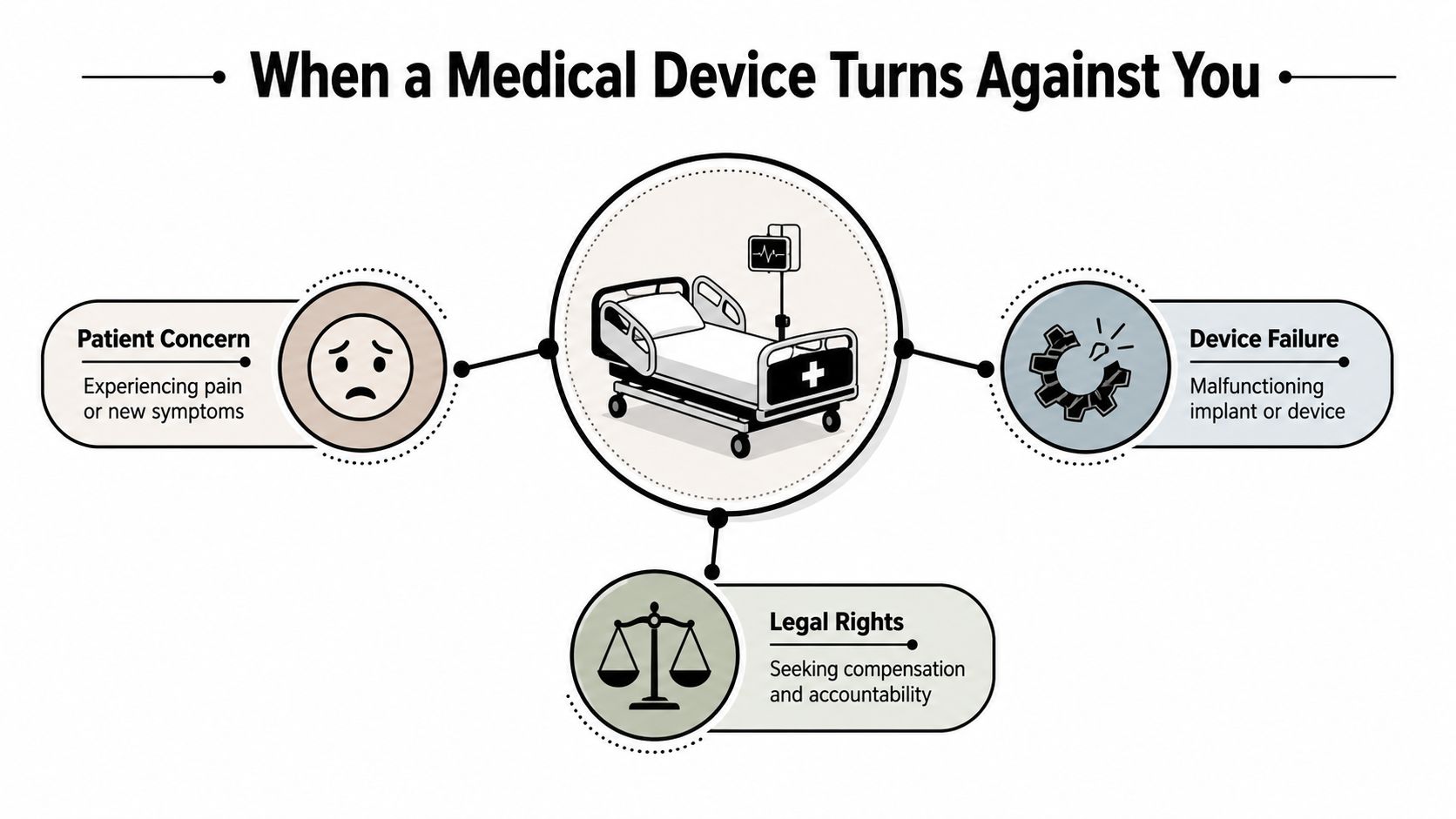
When a Medical Device Turns Against You
A Houston parent comes home from a follow-up visit and hears the same sound every time she stands up, a faint clicking in her hip that was not there before. A Dallas grandfather sees a pacemaker battery warning sooner than anyone expected, and now he is afraid to sleep, drive, or shower alone. That is the point where Texas patients realize the problem is not normal recovery, it is a failed device.
A defective-device claim is different from a car crash or truck wreck because the proof sits in medical records, implant labels, operative notes, and sometimes the removed hardware itself. Texas product-liability law usually focuses on design defect, manufacturing defect, and failure to warn. A design-defect claim asks whether the device was built around a dangerous design when a safer alternative was available. A manufacturing-defect claim asks whether this specific unit came off the line wrong. A failure-to-warn claim asks whether the manufacturer gave doctors enough warning to make a safe decision.
Those theories sound technical, but the practical question is simple. Did the implant, pump, valve, or pacemaker behave the way it should have, or did it put you in harm's way? That same practical lens guides a Texas personal injury lawyer handling a device case, a wreck case, or another dangerous product claim.
Practical rule: if your symptoms changed after implantation, do not assume it is just your body “failing.” Get the records, save the device, and make the manufacturer prove its product worked.
The legal frame Texas product-liability practice materials use is straightforward, duty, breach, causation, and damages. The manufacturer had a duty to make and warn properly. It breached that duty if the product was defective. The defect must have caused your injury. And your case has to show real damages, medical bills, lost income, pain, and long-term harm.
A good starting point is a broader Texas product-liability resource like Texas Product Liability Defective Product Lawyer, because the same proof structure often applies here. If you need a technical review of how a device moved through the regulatory pathway, an FDA approval partner can help examine the paperwork that may later matter in litigation. That early review matters because device cases turn on details patients never see.
The other piece people miss is the liability chain. The manufacturer is only one part of it. A distributor, a hospital, a surgeon, or a sales representative can also matter depending on what they knew, what they supplied, and what they told the treating doctor. I would also preserve the evidence before any revision or explant surgery, because once the device comes out, you may lose the best proof you have. Keep the implant cards, packaging, lot numbers, discharge papers, photos of the surgical site, messages about symptoms, and every note about when the pain started and how it changed.
Devices and Injuries We See Most Often
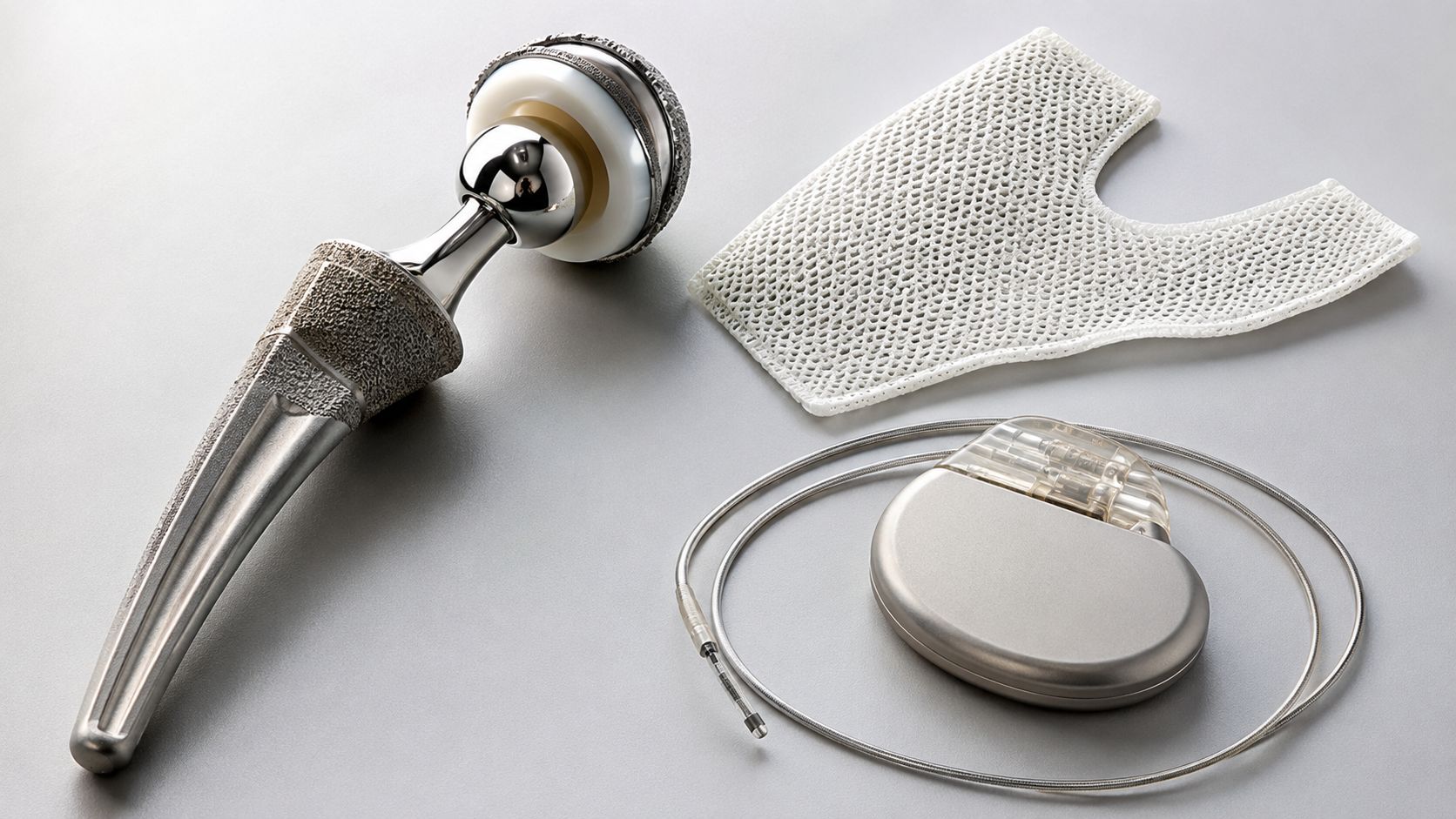
Some devices show up again and again because the failure patterns are predictable. Hip and knee implants can shed metal, loosen early, or force revision surgery. Surgical mesh can erode, migrate, or cause chronic pain. Pacemakers and defibrillators can fail because of battery problems or lead fractures. Heart valves, spinal hardware, infusion pumps, breast implants, and certain intrauterine devices can each create their own injury pattern.
The FDA says it receives more than 2 million Medical Device Reports each year describing suspected deaths, serious injuries, and malfunctions, and a Texas legal source notes 2024 saw 1,059 medical device recall incidents, described as a four-year peak in a national recall index. Those numbers tell you something important, device failure isn't rare enough to dismiss as a fluke. A recall doesn't automatically prove liability, but it can help show that a problem existed.
The devices matter, but the supply chain matters too
A lot of people assume the lawsuit is only against the name on the box. That's too narrow. A modern device can involve the manufacturer, a component supplier, a distributor, a sales representative, the hospital or surgical center that bought and stocked it, and the surgeon who implanted it. When the original manufacturer has merged, sold off assets, or restructured, a Texas lawyer has to trace successor liability and the chain of custody early.
That chain matters because a patient's injury may come from the way the device was designed, stored, marketed, or implanted. A sales rep may have pushed an off-label use. A distributor may have mishandled storage. A hospital may have ignored recall alerts. None of that gets fixed by blaming only the company name printed on the packaging.
If you're trying to understand how people identify devices and hazards before surgery or after a recall, it can help to find AED machines as a reminder that medical-device safety is always tied to preparation, maintenance, and documentation. The same mindset applies here.
Three legal theories, one real example
Take a hip implant. If the design itself releases metal ions and there was a safer alternative design, that points toward a design defect. If one batch was contaminated or assembled incorrectly, that points toward a manufacturing defect. If the warnings didn't clearly explain the risk of premature failure or revision surgery, that points toward failure to warn.
The same framework applies to mesh. A patient with erosion, infection, or migration doesn't need legal jargon, they need a lawyer who knows how to map the medical facts onto the defect type. That's what separates a real device case from a complaint that never gets past screening.
What Happens Inside a Texas Defective Device Case
A case usually starts with a free consultation, but the actual work begins the moment you call. I would want the device name, the surgery date, the hospital, the symptoms, and whether the implant has already been removed. If the device is still inside you, I'd move quickly to preserve evidence before anyone throws it away or sends it back to the manufacturer.
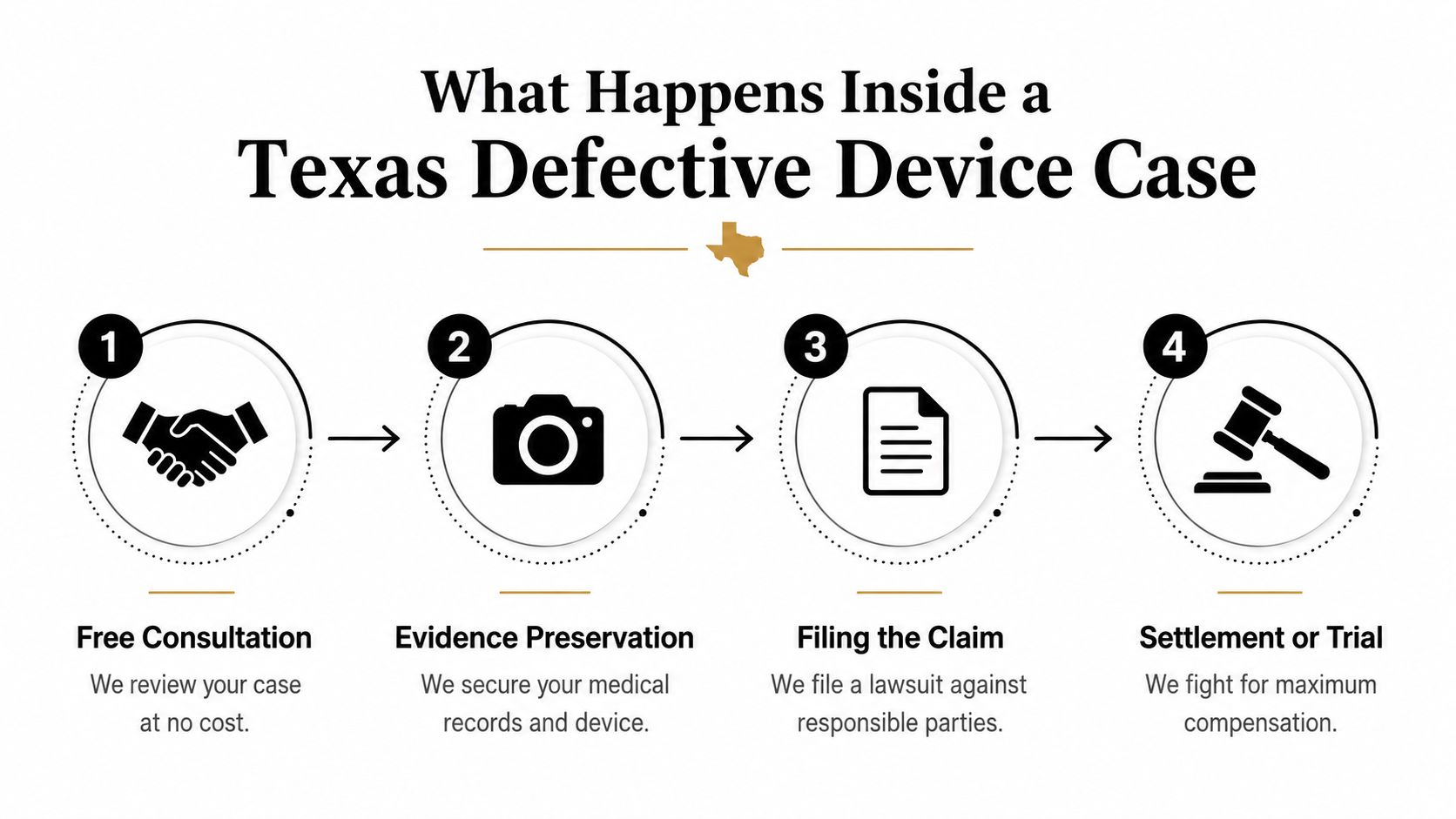
Once I've got the intake facts, the next step is document control. That means asking for operative reports, pathology records, implant stickers, UDI labels, lot numbers, and serial numbers. Texas evidence-preservation guidance also stresses keeping the device and packaging, because those pieces can help experts verify exactly what was implanted and whether the product matched the manufacturer's specifications.
The first fight in a device case is often over proof, not money. If the hardware disappears, the defense gets stronger fast.
After that, counsel investigates recall history, talks with qualified biomedical or materials experts, and sends formal preservation notices to the likely defendants. In larger matters, the case may overlap with multidistrict litigation, which can affect timing and settlement posture. For a government-owned hospital or clinic, shorter notice rules can also matter, so a resource like Suing a Government Entity: The Texas Tort Claims Act is worth reviewing when a public facility is involved.
I'm blunt about this, if you wait until after revision surgery to start collecting records, you're making your own case harder. If you're already in a gray area about whether the device caused the problem, the sooner a lawyer reviews it, the better.
Texas Deadlines That Can Make or Break Your Claim
Texas deadlines are unforgiving. Multiple Texas legal sources say a product-liability claim is generally subject to a 2-year statute of limitations from the date of injury, while the discovery rule may delay that clock if the defect or injury wasn't immediately knowable. They also note a separate 15-year statute of repose that can bar claims based on when the device was first sold, regardless of when you discovered the problem.
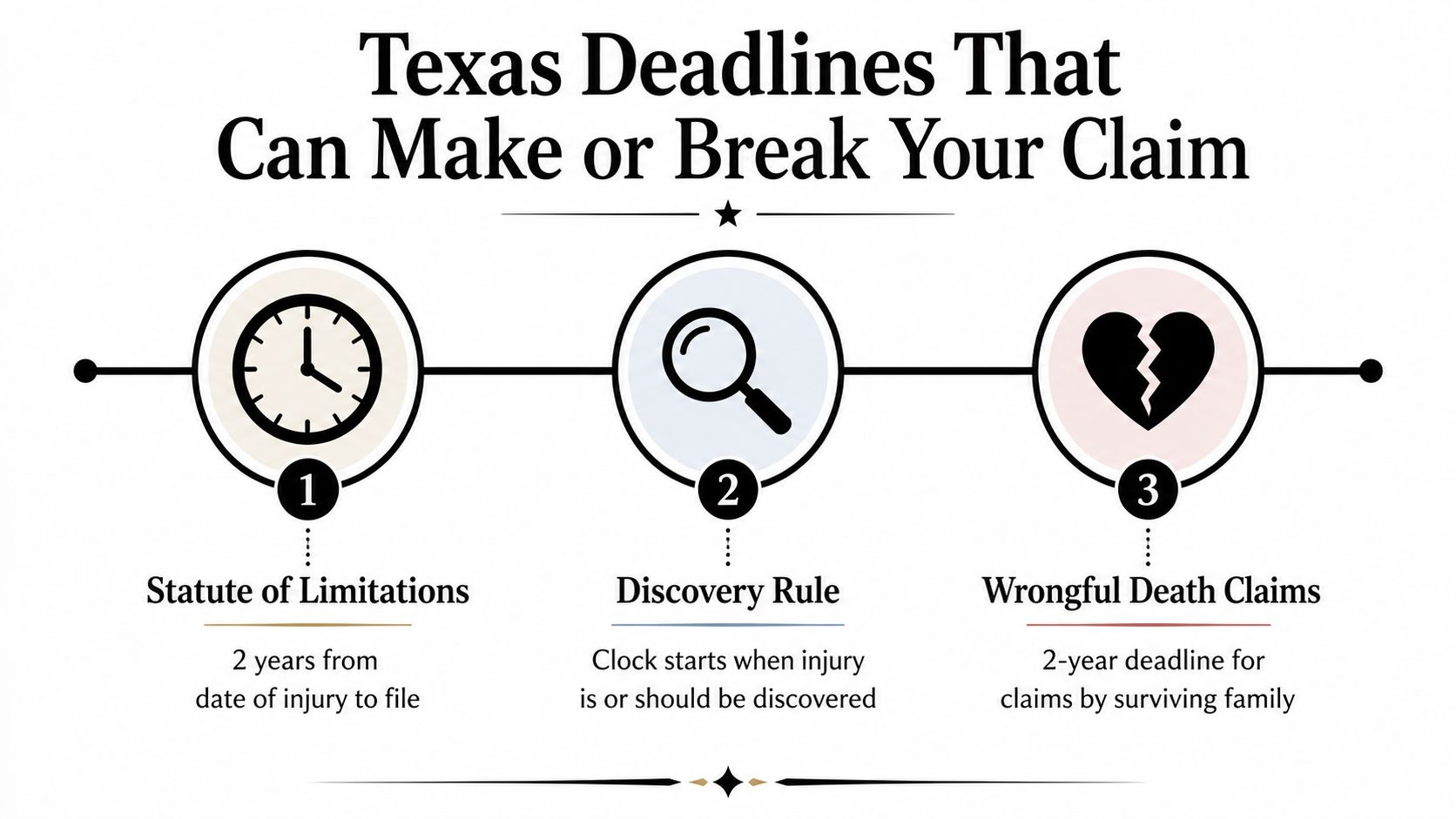
That means a slow-moving mesh injury, a battery that fails years later, or a recalled implant doesn't automatically buy you unlimited time. The clock can start when you knew, or should have known, the device was the problem. But even then, the statute of repose can still cut the claim off if the device was first sold too long ago.
If you want a plain-English breakdown of the two-year rule, The Two-Year Deadline for Texas Injury Claims explains why most Texas injury lawsuits have to be filed within that window under CPRC 16.003. For device cases, I also compare that rule with the medical-malpractice timing rules in Medical Malpractice Statute of Limitations Texas when both a surgeon and a product may be part of the story.
Don't assume the manufacturer is the only defendant
The device company is usually the main target, but it isn't always the only one. Depending on the facts, liability may also touch a distributor, hospital, surgical center, or other party that handled the product. The key is to identify every responsible entity before evidence goes stale.
If the case involves a fatality, the family may need a wrongful death lawyer Texas style strategy, because the timing rules and damages questions become even more urgent. The deadline doesn't pause because grief is heavy. It runs.
Damages You Can Recover in Texas
A serious device failure can affect every part of your life, not just your medical chart. You may be facing revision surgery, ongoing treatment, missed work, and the kind of pain that doesn't show up in a quick scan. Texas law lets you pursue compensation for those losses if the defect caused them.
| Damage Category | What It Covers | Typical Evidence |
|---|---|---|
| Medical expenses | Emergency care, revision or explant surgery, follow-up treatment, rehab | Bills, records, operative notes |
| Lost wages | Time missed from work because of surgery, pain, or recovery | Pay stubs, employer records, tax records |
| Diminished earning capacity | Long-term limits on your ability to work | Doctor opinions, vocational proof |
| Pain and suffering | Physical pain from the device and treatment | Testimony, medical records, symptom logs |
| Mental anguish | Anxiety, sleep loss, stress, fear of future surgery | Counseling notes, family testimony |
| Loss of enjoyment of life | Activities you can't do anymore | Personal statements, witness accounts |
Texas product-liability defendants often try to shift blame to the surgeon or the patient's underlying condition. That's why causation matters so much. You need proof that the defect, not just the disease or the procedure, caused the injury and the losses.
A Houston car accident attorney handles wreck cases by proving fault, medical harm, and financial damage. The same logic applies here, except the evidence is inside the operating room record and the device itself. If the case is fatal, surviving family members may recover wrongful-death damages through the proper claim structure.
For a deeper look at the difference between loss categories, Economic vs Non-Economic Damages is a useful companion resource. If the injury is severe enough to require lifelong care, the case should also be evaluated like a catastrophic-injury claim, because future needs matter as much as the first round of bills.
How a Texas Defective Medical Device Lawyer Builds Your Case
Once you hire counsel, the first job is to stop evidence from disappearing. That means litigation-hold letters, requests to the hospital for the UDI label and lot or serial numbers, and direct instructions to preserve any explanted hardware. It also means pulling the records that identify exactly what was implanted and when.
The work starts before the lawsuit is filed
A Texas lawyer should also review recall activity, then bring in biomedical or materials experts early enough to understand the failure mode. In device cases, expert analysis is not window dressing, it's the core of causation. If the device was removed, the chain of custody has to be clear so the defense can't say the evidence was contaminated or tampered with.
My rule: if there's any chance the device will be removed, tell the surgeon and the hospital now that the hardware needs to be preserved.
On the fee side, these cases are usually handled on contingency, which means no attorney's fee unless the firm recovers money for you. The Law Office of Bryan Fagan, PLLC works on that kind of structure in serious injury matters, and the point is simple, you shouldn't have to bankroll a device case while you're already paying medical bills. In a strong case, the lawyer's job is to build pressure through evidence, expert support, and a clean liability narrative.
If the harm is severe enough, the file may overlap with a catastrophic injury claim or a wrongful death claim, and that changes the stakes but not the basic approach. The deadlines still matter, the preservation still matters, and the sooner you act, the better your position.
Choosing the Right Lawyer for Your Texas Case
A woman in San Antonio kept her implant card, saved every discharge summary, and called a lawyer before her revision surgery. That let her team identify the device, preserve the hardware, and get the right experts involved before the evidence disappeared. Another patient waited until after the hospital discarded the explanted device, and the defense immediately had a stronger argument that the defect couldn't be proved.
That's the difference a careful first move makes.
What I'd ask before hiring anyone
- Device case experience: Have they handled hip implants, mesh, pacemakers, or other device claims before?
- Trial readiness: Are they comfortable trying the case if settlement talks stall?
- Expert network: Do they know how to get biomedical, materials, and medical experts involved early?
- Communication style: Will they explain the timeline and keep you updated?
- Multi-court strategy: Can they handle an MDL issue if one applies, or keep the case in state court when that's better?
If you want to understand how clients think through firm selection, discover how clients choose firms offers a useful lens on the decision process. The point is not to chase a brand name. It's to hire a lawyer who knows how to prove defect, causation, and damages in a real Texas courtroom.
A truck crash lawyer Houston has to know how to deal with insurers and black-box evidence. A device lawyer has to know how to deal with implant records, recall notices, and expert medicine. Different facts, same requirement, the lawyer has to be ready to prove the case.
Steps You Can Take This Week and a Path Forward
Write down your symptoms and dates. Start with when the problem began, what changed, and which doctors saw you. That timeline helps connect the device to the injury.
Gather every device document you have. Keep the implant card, discharge summary, packaging inserts, hospital stickers, and any follow-up instructions. If the device was removed, ask who has it and where it's being stored.
Photograph anything visible. If there's redness, swelling, a wound issue, or a surgical site concern, take clear photos and keep them dated. Don't edit them.
Don't sign anything from the manufacturer or insurer yet. That includes broad releases, “patient assistance” forms, or quick settlement papers. Those documents can limit your rights.
Call a lawyer before revision or explant surgery if you can. The device and its packaging may be the strongest evidence in the case, and once it's discarded, your options can narrow fast.
Keep working notes on missed time and costs. Save pay records, travel receipts, and any out-of-pocket expenses tied to the device injury.
A serious device injury is overwhelming, but you don't need to solve it alone. A careful legal review can tell you whether you have a product claim, whether a surgeon or hospital issue also exists, and whether the deadlines still give you room to act. If you're unsure where you stand, get the case reviewed now, not after more evidence disappears.
If you're dealing with a failed implant, a recalled device, or a family member's death tied to a medical product, the Law Office of Bryan Fagan, PLLC can review the records, identify the responsible parties, and explain your options in plain English. Visit Law Office of Bryan Fagan, PLLC to schedule a free consultation and get a direct answer about your Texas defective medical device claim.