A serious accident can change your life in seconds—but you don’t have to face it alone. In the aftermath, you're not just dealing with physical pain but also emotional trauma and a mountain of financial stress. The language used by insurance companies can be confusing, but understanding one key distinction is critical for protecting your rights: the difference between bodily injury and personal injury.
Think of it this way: ‘Bodily injury’ is a narrow insurance term. It’s what the at-fault party's insurance company focuses on—things like broken bones, hospital bills, and ambulance rides. ‘Personal injury,’ on the other hand, is a much broader legal term that covers the full scope of your losses. It includes your physical injuries plus the wages you’ve lost, your emotional distress, and the pain and suffering you’ve endured.
At The Law Office of Bryan Fagan, PLLC, our goal is to bring you clarity and hope. We want to empower you with the knowledge you need to demand the full compensation you deserve.
Understanding Injury Claims After a Texas Accident
While you're trying to heal, the last thing you need is to be tripped up by confusing jargon from an insurance adjuster. Getting a handle on the difference between bodily injury and personal injury is the first step toward securing the full and fair compensation you are owed after an accident in Texas.
One term is what an insurance company uses to limit what they have to pay; the other is the term you and your lawyer use to demand true justice. A personal injury claim is designed to cover every single way the accident has impacted your life, not just the initial trip to the emergency room.
Bodily Injury vs. Personal Injury At a Glance
The terms might sound similar, but in the world of Texas law and insurance, they have vastly different meanings. This table breaks down the core differences in a way that’s easy to understand.
| Aspect | Bodily Injury (Insurance Term) | Personal Injury (Legal Claim) |
|---|---|---|
| Scope | Narrow: Physical harm only | Broad: All physical, emotional, and financial harm |
| Coverage | Medical bills, ambulance fees, rehabilitation | All medical bills, lost wages, pain and suffering, emotional distress |
| Context | An auto insurance liability policy | A civil lawsuit filed to recover full damages |
As you can see, the insurance company’s definition is intentionally limited. This visual summary helps clarify the key differences.
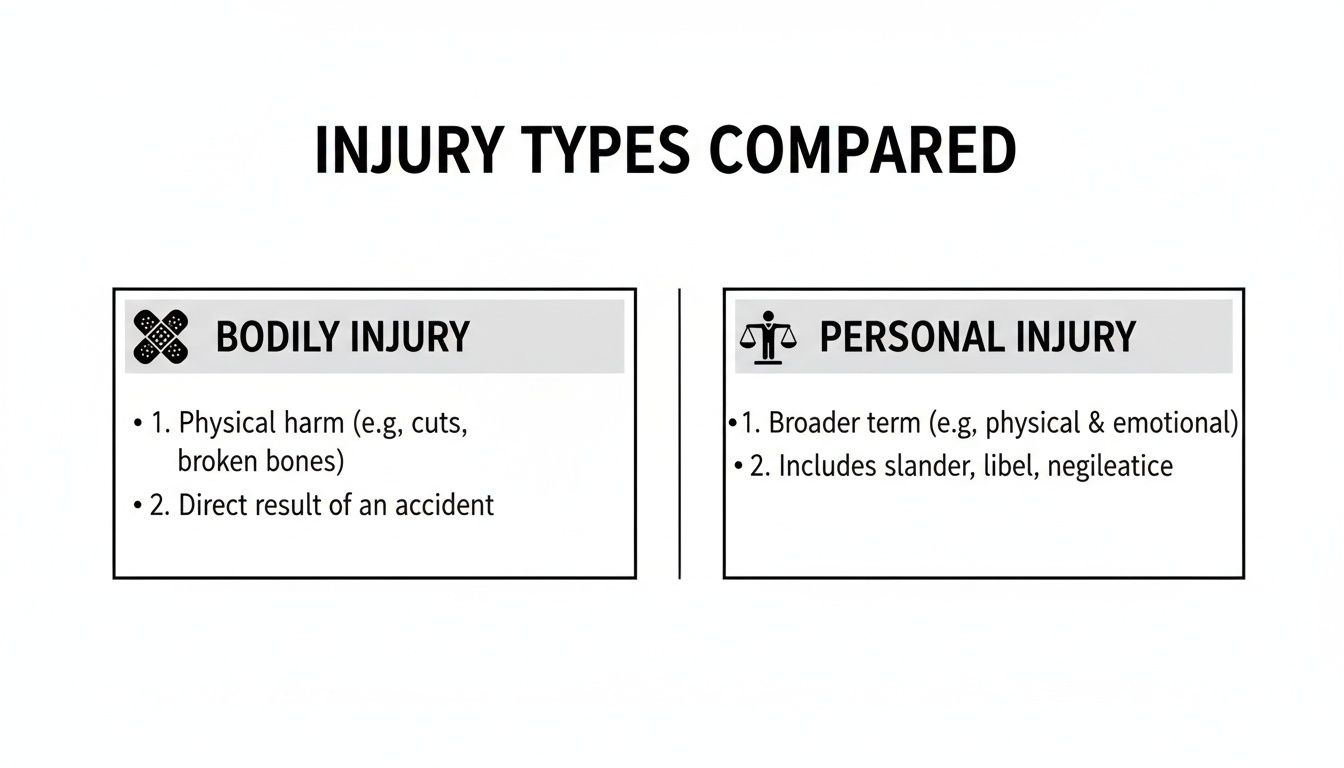
The takeaway here is that a "bodily injury" claim is just one piece of a much larger, more comprehensive personal injury case.
A common mistake is accepting an insurance company's initial offer based on their limited 'bodily injury' assessment. This often leaves victims without compensation for lost income, future medical needs, or the immense pain and suffering they endure.
Recognizing this difference gives you the power to fight for what you are truly owed. An experienced Houston car accident attorney knows how to build a case that accounts for every loss, ensuring no part of your suffering is ignored.
What Is Bodily Injury in an Insurance Context?
When you hear an insurance adjuster talk about “Bodily Injury” (BI), it’s critical to understand they aren’t talking about everything you’ve been through. They are using a specific, narrow insurance term that refers to a particular type of liability coverage. In Texas, every driver is required to carry Bodily Injury liability insurance specifically to pay for the medical bills and related costs of people they injure in a crash they cause.
This coverage is strictly about tangible, physical harm. It’s designed to handle concrete expenses that come with a clear price tag.
What Bodily Injury Coverage Actually Pays For
BI liability is meant to cover the immediate and direct costs stemming from physical harm to another person. This typically includes things like:
- Emergency Medical Care: The ambulance ride from the scene and emergency room treatment.
- Hospital Stays and Surgeries: Costs from being admitted, undergoing procedures, and receiving in-patient care.
- Rehabilitation: Physical therapy, chiropractic care, and other treatments needed for your physical recovery.
- Lost Wages: In some situations, it can cover the income you lost while you were physically unable to work.
But that’s where the insurance company’s definition ends. It completely ignores the other profound ways a serious accident turns your life upside down, like the emotional trauma or the long-term pain and suffering you endure. You can learn more about the specifics of what is bodily injury liability coverage in our detailed guide.
The Problem with Texas Minimums
While Texas law mandates drivers carry this coverage, the required minimums are often dangerously inadequate. State law only requires $30,000 per injured person and $60,000 per accident.
For example, after a Houston freeway crash involving multiple vehicles, the medical bills can easily exceed the at-fault driver's policy limits. A multi-car pileup can generate medical bills far exceeding $100,000, leaving victims underinsured and facing immense financial pressure through no fault of their own.
The insurance company’s definition of "bodily injury" is designed to limit their financial responsibility. It treats you like a set of medical bills, not a person whose entire life has been disrupted.
This is exactly why you have to understand that BI coverage is just a starting point. It is not the final word on what you are rightfully owed. An experienced Texas personal injury lawyer knows how to look beyond these restrictive policy limits and fight for the full and fair compensation you truly deserve.
Understanding the Scope of a Personal Injury Claim
While "bodily injury" is a narrow insurance term, "personal injury" is your legal path to getting real justice and a complete financial recovery. A personal injury claim is a civil lawsuit you file against the person or company whose negligence caused your harm. It’s your chance to demand accountability that goes far beyond the tight limits of an auto insurance policy.

Unlike an insurance claim that zeroes in on specific physical harm, a personal injury lawsuit is designed to make you whole again. It takes into account every single way the accident has turned your life upside down, from your finances to your emotional health.
Economic and Non-Economic Damages in Texas
Under Texas personal injury law, you can pursue compensation for two types of damages. Together, they paint the full picture of your losses.
- Economic Damages: This covers every measurable financial loss. We meticulously document all medical bills, lost wages from being out of work, and any damage to your future ability to earn a living.
- Non-Economic Damages: This category gets to the profound human cost of an accident. It provides compensation for your physical pain and suffering, mental anguish, permanent disfigurement, physical impairment, and the loss of enjoyment of life.
This comprehensive approach ensures your final compensation reflects the total impact on your life, not just a pile of medical receipts. The goal is to get you the resources needed to rebuild your life with security and dignity.
How a Personal Injury Lawsuit Works in Texas
The process begins when your attorney files a petition in court on your behalf. This formal legal action demands that the at-fault party be held responsible for the harm they caused. From there, your legal team gathers evidence, consults with experts, and builds a powerful case proving negligence. For a more detailed look at the specific steps involved, you can learn more about how to file a personal injury claim in Texas in our comprehensive guide.
An experienced Texas personal injury lawyer knows how to calculate the true, long-term cost of your accident. We make sure your claim accounts for future surgeries, ongoing therapy, and the invisible scars that don't show up on an X-ray. This is the critical difference that secures your family’s future.
How This Legal Distinction Impacts Your Recovery
Knowing the difference between these two terms is more than just legal jargon—it directly shapes the outcome of your case and your ability to put your life back together. When you file a claim, the insurance adjuster sees it through the narrow lens of the at-fault party's bodily injury liability policy. Their goal is to make a quick, lowball offer that might barely cover your first emergency room visit. They aren't on your side; their job is to minimize the payout.
Filing a personal injury claim, on the other hand, empowers your attorney to fight for the true, full value of everything you've lost. It takes the focus off the insurance company's restrictive definition and paints the complete picture of how this accident has impacted your life.
Building a Comprehensive Personal Injury Case in Texas
A strong personal injury case in Texas is built on proving the other party’s negligence. Your attorney will work to establish four key elements:
- Duty: The other driver had a responsibility to operate their vehicle safely.
- Breach: They failed in that duty—for example, by texting while driving.
- Causation: Their failure directly caused the crash and your injuries.
- Damages: You suffered real, measurable losses as a result.

We also navigate complex Texas laws, like the modified comparative responsibility rule. This rule states that you can still recover damages even if you were partially to blame, as long as you weren't more than 50% responsible. Insurance adjusters often use this rule to reduce what they owe you, but an experienced attorney knows how to counter those tactics. Our deep understanding of the various types of damages available in a Texas injury claim ensures no part of your suffering gets ignored.
The Power of a Personal Injury Claim in Action
Let’s look at a real-world example. Imagine you are injured in a catastrophic truck crash on a Dallas freeway. The at-fault driver's insurance might offer $60,000—the state minimum for bodily injury liability. That amount might not even cover your initial hospital bill, let alone account for a lifetime of necessary medical treatments.
But a personal injury lawsuit can secure a settlement or verdict that covers everything: lifelong medical care, lost earning potential, chronic pain, and the profound emotional toll. This is the power of knowing your full legal rights and refusing to let an insurance company decide what your life is worth.
How Long Do You Have to File a Claim in Texas?
Time is critical. In Texas, the statute of limitations for most personal injury claims is just two years from the date of the accident. Waiting too long can mean losing your right to seek justice forever.
An experienced truck crash lawyer in Houston or a dedicated wrongful death lawyer in Texas can ensure all deadlines are met, protecting your right to compensation.
Practical Advice: What to Do After an Accident
In the chaotic moments after a serious accident, the choices you make can protect your right to fair compensation. Taking the right actions from the beginning builds a strong foundation for your personal injury claim.
First, get immediate medical attention. You might feel fine, but some serious injuries—like internal bleeding or a traumatic brain injury—don't show symptoms right away. A medical evaluation creates an official record linking your injuries to the accident.
Next, document everything. If you are able, take photos and videos of the scene, including vehicle damage, road conditions, and any visible injuries. Get the names and contact information of any witnesses.
How to Handle Insurance Companies
After an accident, you will likely get a call from the at-fault driver's insurance adjuster. They may sound friendly, but their job is to minimize the amount their company has to pay you. Here’s how to handle them:
- Never give a recorded statement without talking to a lawyer first. Adjusters are trained to ask questions designed to get you to say something they can use against you.
- Do not accept a quick settlement offer. These initial offers are almost always lowball amounts that won't cover your claim's true value.
- Avoid signing any documents from their insurance company. You could unknowingly sign away your right to pursue fair compensation.
If your claim is met with resistance, knowing how to approach disputing an insurance claim is a critical part of protecting yourself.
An insurance company's goal is to close your file as quickly and cheaply as possible. Every step you take to document your injuries gives your Texas personal injury lawyer the leverage needed to fight for you.
These initial steps are vital. They arm your attorney with the evidence needed to prove the full extent of your damages—both bodily and personal—and to fight for the recovery you and your family deserve.
Why an Experienced Texas Injury Lawyer Is Essential
Trying to navigate the aftermath of an accident on your own means going up against insurance companies whose business model is built on protecting their profits by paying you as little as possible. An experienced Texas personal injury lawyer from The Law Office of Bryan Fagan, PLLC, levels that playing field.

From the moment you hire us, our team takes over all communication with the insurers. This is critical. It protects you from their tactics and shields you from the stress of these conversations so you can focus on one thing: healing.
Maximizing Your Financial Recovery
While you concentrate on your physical and emotional recovery, we get to work building a powerful case for you. We launch our own investigation into the accident, gathering evidence that insurance companies might overlook.
An attorney meticulously calculates the true, long-term value of your personal injury claim. This goes far beyond the initial hospital bills. It includes all the damages you're entitled to under Texas law, like:
- Future medical treatments and rehabilitative care
- Lost earning capacity if you can't return to your old job
- Chronic physical pain and emotional suffering
- Loss of enjoyment of life and mental anguish
Armed with a comprehensive valuation of your losses, we then negotiate from a position of strength. This ensures any settlement offer reflects what you actually deserve, not just the lowball number the insurer wants to pay.
You do not have to face this battle alone. Having an expert truck crash lawyer in Houston or a dedicated wrongful death lawyer in Texas on your side ensures your rights are protected every step of the way.
Choosing the right legal partner means choosing a team committed to securing the justice and financial stability you need to move forward. Recovery is possible, and we are here to help you achieve it.
Questions We Hear All The Time About Texas Injury Claims
We know you have questions about the difference between bodily injury and personal injury and what it all means for your family’s future. Here are some clear, straightforward answers to the concerns we hear most often from our clients.
How Much Is My Personal Injury Claim Worth?
There's no simple calculator for this—the value is unique to your specific case. It comes down to factors like the severity of your injuries, the total cost of your medical treatment, the wages you've lost, and the overall toll the accident has taken on your quality of life. Our attorneys meticulously calculate this total value to make sure nothing gets overlooked when we demand your compensation.
What If the Other Driver Has No Insurance?
This is a scary but common situation in Texas. If the at-fault driver is uninsured, your own Uninsured/Underinsured Motorist (UM/UIM) coverage can be a lifeline. We can help you navigate the process of filing a claim with your own insurance company to get the benefits you've been paying for.
Don't assume your own insurance company will make it easy for you. We're prepared to hold them accountable and make sure they honor the policy you paid for.
Will I Have to Go to Court?
The vast majority of personal injury cases settle without ever setting foot in a courtroom. However, our reputation as trial-ready lawyers gives you a powerful advantage. Insurance companies know we are fully prepared to take your fight to a Texas courtroom. That seriousness often motivates them to offer much better settlements to avoid facing us before a judge and jury.
At The Law Office of Bryan Fagan, PLLC, we believe you deserve clarity, compassion, and strength during this difficult time. You don't have to face the insurance companies alone. Recovery is possible, and legal help is available. Schedule a free, no-obligation consultation today to discuss your case and learn how our dedicated Texas personal injury lawyers can help you fight for the justice you deserve. Visit us at https://texaspersonalinjury.net or call us to get started.