A serious accident can change your life in seconds—but you don’t have to face it alone. After you've been hurt, you might hear lawyers and news reporters talk about a "class action lawsuit." It can sound complicated, but the idea behind it is simple: it’s a way for a large group of people, all harmed in a similar way by the same product or company, to band together and file one single, powerful lawsuit.
Finding Strength in Numbers
When you’re trying to recover from a serious injury, the thought of taking on a massive corporation by yourself can feel impossible. The legal system is intimidating, and big companies have endless resources. You don't have to face that fight alone.
A class action lawsuit is built on the principle of strength in numbers. Instead of one person trying to get justice, this legal tool allows hundreds or even thousands to stand together. Think of it this way: one person shouting for help might not be heard, but when a whole crowd shouts together, they can’t be ignored. That’s the core idea. A few individuals, called “lead plaintiffs,” step up to represent the entire group (the “class”), which streamlines the process and gives everyday people a real chance to win against a powerful opponent.
The Power of a Unified Voice
This approach is perfect for situations where many people have suffered similar injuries. Imagine a popular SUV model with a defective airbag that injures drivers in crashes all across Texas. Or think about a rideshare company whose unsafe background checks lead to multiple assaults. Filing individual lawsuits in these cases would clog the courts and be incredibly inefficient.
A class action combines all those claims into one. This isn't a new concept—it was formalized in the U.S. with Rule 23 of the Federal Rules of Civil Procedure way back in 1966. And it's more relevant than ever. In just one recent year, federal courts saw 222 new class action cases filed. Globally, that same year saw over 135 class action settlements pay out more than $5.2 billion to victims. These numbers, detailed in the 2025 Global Class Action Annual Report, prove that these lawsuits are a critical way to hold corporations accountable.
By grouping similar claims together, a class action lawsuit levels the playing field. It gives a voice to people who might not have the money or resources to sue on their own, making sure that widespread harm doesn’t just get swept under the rug.
If you believe a defective product or a company’s negligence has harmed you, understanding your legal options is the first step. Whether you were hurt in a crash on a Houston freeway because of a faulty car part or a loved one was the victim of a widespread safety failure, help is available. Our experienced Texas personal injury lawyers can help you figure out if a class action is the right path for your situation.
How a Lawsuit Becomes a Class Action in Texas
Just because a large group of people were all harmed in the same way doesn't automatically create a class action lawsuit. Before a case can move forward as one, it has to clear a major legal hurdle in court known as class certification. This is where a judge takes a hard look at the case to decide if bundling all the individual claims into a single lawsuit is fair, efficient, and makes practical sense for everyone involved.
Think of it as a gatekeeper step. This process ensures that cases aren't unfairly lumped together and that the rights of every single person are protected. A judge won't give the green light unless the case meets very specific legal requirements designed to make sure the representation is strong and the lawsuit is manageable. It’s a built-in safeguard to ensure your voice is actually heard.
The Four Pillars of Class Certification
For a judge in Texas to certify a case, the attorneys bringing the lawsuit must prove it stands on four solid pillars. These requirements come from Rule 42 of the Texas Rules of Civil Procedure, which closely follows the federal standard for class actions.
- Numerosity: The group of injured people, or the "class," has to be so big that it would be completely impractical for each person to file their own separate lawsuit. There's no magic number, but imagine hundreds or even thousands of Texans harmed by a faulty medical device. The court system simply couldn't handle that many individual trials.
- Commonality: Everyone in the group must share a "common" legal or factual question. For instance, if a chemical plant in an East Texas town contaminated the local water supply, the central question—"Was the plant negligent in allowing the contamination?"—is the same for every single resident who got sick. This concept of negligence, or a failure to act with reasonable care, is a core element of Texas personal injury law.
- Typicality: The lead plaintiffs—the people who step up to represent the entire group—must have injuries and legal claims that are "typical" of everyone else in the class. Their personal story has to mirror the experiences of the larger group they’re fighting for.
- Adequacy of Representation: The court has to be convinced that the lead plaintiffs and their lawyers can, and will, fight vigorously and fairly for the entire class. The legal team must be experienced and qualified, and the representatives can't have any conflicts of interest that would get in the way of protecting the group.
The diagram below shows how a lead plaintiff stands in for the much larger group of class members, taking on the corporation that caused the harm.
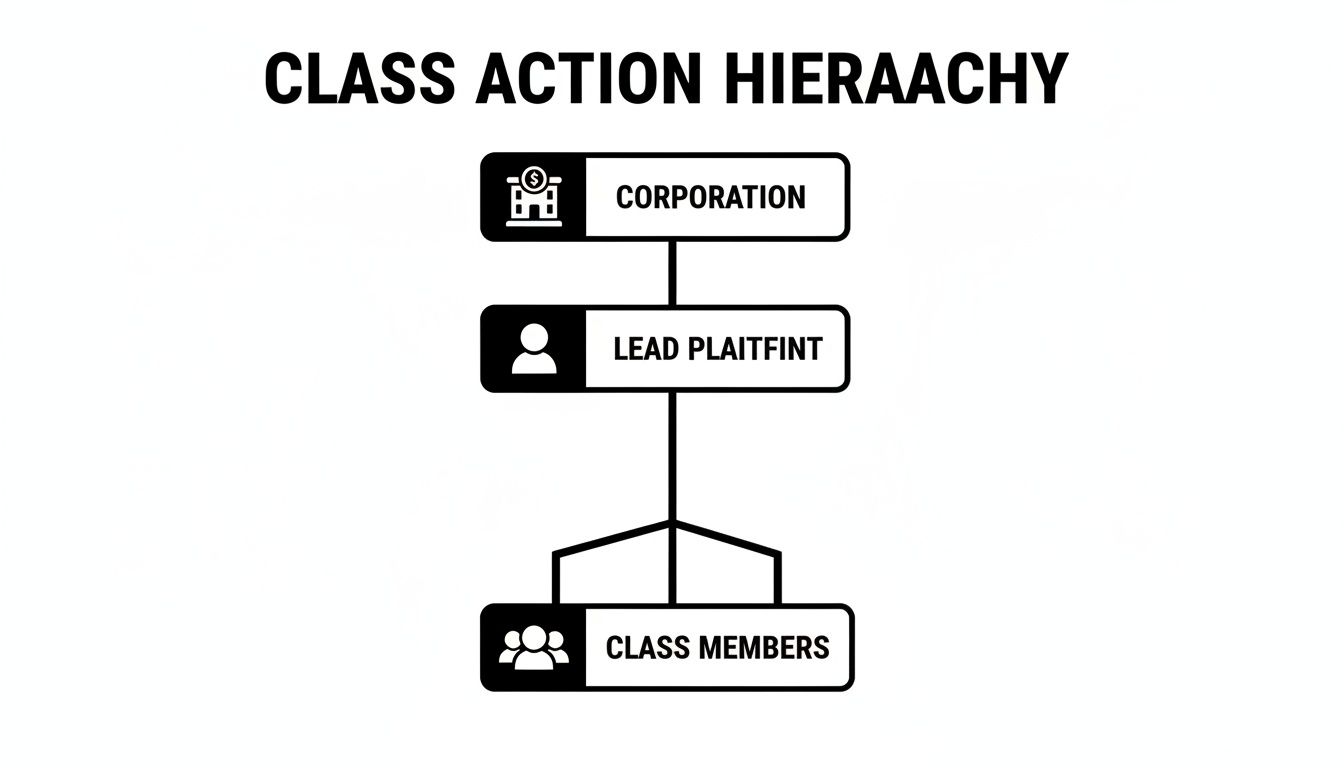
This structure is what gives a class action its power. A few designated people and their legal team can represent the rights and interests of everyone who was affected. Only when a judge confirms that all four of these pillars are firmly in place will the lawsuit be certified, allowing it to proceed as a powerful, unified force for justice.
When you’ve been hurt because someone else was careless, figuring out your next move can feel like you're standing at a fork in the road with confusing signs. Should you file a lawsuit on your own? Or are you one of many people who were harmed in the same way? Getting a handle on your main legal options—an individual lawsuit, a class action, or a mass tort—is the first, most important step toward getting back on your feet.

Each of these paths works differently. They offer different levels of control for you, the victim, and can lead to very different outcomes when it comes to compensation. The right choice really comes down to the specifics of what happened to you, the type of injury you have, and how many other people were affected.
Your Legal Options After an Injury
This table breaks down the key features of Individual Lawsuits, Class Actions, and Mass Torts to help you see which path might make the most sense for your situation.
| Feature | Individual Lawsuit | Class Action Lawsuit | Mass Tort |
|---|---|---|---|
| Who's Involved? | Just you against the at-fault party. | One or a few "lead plaintiffs" representing a large group of people. | A group of individuals with similar, but separate, lawsuits. |
| Control Level | Maximum control. You and your lawyer call all the shots. | Minimal control. The lead plaintiffs and lawyers make decisions for the group. | Moderate control. You still have a say in major decisions for your specific case. |
| Compensation | Payout is tailored specifically to your unique damages. | All class members (except lead plaintiffs) typically share a portion of a single settlement. | Your compensation is based on the individual severity of your injuries and damages. |
| Efficiency | Can be slow and expensive for one person. | Very efficient. Resolves thousands of claims in a single case. | More efficient than individual suits but less so than a class action. |
| Best For… | Unique injuries from a specific incident (e.g., a car wreck, a slip and fall). | A large number of people with nearly identical, often small, damages from a single product or action. | A group of people who suffered different, significant injuries from the same product or event (e.g., a defective medical device). |
Ultimately, choosing the right legal strategy is a critical decision. It’s a conversation you should have with an experienced Texas personal injury attorney who can lay out the pros and cons of each path for you.
Individual Lawsuits vs. Group Actions
An individual lawsuit is exactly what it sounds like: it’s your case, and you’re in the driver's seat. You and your personal injury lawyer make all the key decisions, from whether to accept a settlement offer to taking the fight to a jury. This path gives you total control, and any money you recover is tailored specifically to your medical bills, lost income, and personal suffering.
But going it alone can be tough. You have to carry the entire weight of the legal battle, often against a corporation with deep pockets and a team of lawyers.
That’s where group actions like class actions and mass torts come in. They give everyday people strength in numbers, letting them pool their resources to take on huge corporate defendants. Frankly, it’s often the only realistic way to hold a company accountable when its actions harm thousands of people at once.
The financial stakes in these cases are staggering. Resolutions for the largest class actions jumped 11% in a recent year, and the median settlement hit a 10-year peak of $17 million. Major wins that year included a $398 million antitrust settlement and a $45 million data breach payout—numbers an individual could never hope to achieve alone.
A mass tort is a sort of middle ground. It bundles similar individual lawsuits together to make the process more efficient, but each person’s case is still judged on its own. This allows for personalized compensation that reflects the true extent of your specific injuries.
Think of it this way: if you were badly hurt in a multi-car pileup on I-35 caused by a single drunk driver, an individual lawsuit is probably your best bet. But if that same pileup happened because of a known brake defect in one model of car, you and the other victims might be better off exploring a class action or mass tort.
Figuring out which path to take is a conversation you need to have with a lawyer who has been down these roads before. A compassionate Texas personal injury attorney can look at what happened to you, walk you through the real-world pros and cons of each option, and help you choose the strategy that best serves your family’s needs and goals.
The Pros and Cons of Joining a Class Action
When you hear about a class action lawsuit, it can sound like a great idea. There’s power in numbers, after all. But deciding whether to join is a huge decision, and it’s not the right move for every injured victim.
You have to weigh the potential upside against what you might be giving up. This isn't just a financial calculation; it’s about your sense of control, your individual needs, and what you need to feel whole again after a devastating injury.
Advantages of a Class Action
For many, joining a class action makes perfect sense, especially when you’re up against a massive, well-funded corporation. The main benefits really come down to access and impact.
- Lower Personal Costs: In a class action, all the legal fees and the high costs of litigation get spread across the entire group. Since our lawyers work on a contingency fee basis—we only get paid if you win—you won’t pay a dime out of pocket. This opens the door to justice for people who could never afford to hire a top-tier legal team on their own.
- Strength in Numbers: One person filing a lawsuit is easy for a corporate giant to dismiss. But a unified group of hundreds, or even thousands, of victims is a force to be reckoned with. This collective power can drag a stubborn company to the negotiating table and often leads to real changes in how they do business, preventing others from getting hurt in the future.
Disadvantages to Consider
On the flip side, that group approach has some serious drawbacks you need to think about, particularly if your injuries are severe.
The biggest trade-off is control. When you join a class action, you’re bound by the decisions made by the lead plaintiffs and their lawyers—including the final settlement amount they agree to.
Here are the key disadvantages:
- Less Individual Control: You’ll have very little, if any, say in the legal strategy or the settlement talks. The lawyers are making decisions for the good of the class as a whole, which might not line up with what’s best for you personally.
- Standardized Compensation: Class action settlements are divided among all members, which usually means a smaller, one-size-fits-all payment for each person. That amount may be nowhere near enough to cover the true costs of a catastrophic injury or the profound loss from a wrongful death claim.
- Finality of the Outcome: Once a settlement is approved or a court makes a final ruling, that’s it. You give up your right to ever sue that defendant for the same harm again, even if your injuries get worse down the road.
If you were seriously hurt in a Houston truck crash, for example, an individual lawsuit might be the only way to get the compensation you truly need for your unique, long-term care. A compassionate Texas personal injury lawyer can help you weigh these pros and cons to figure out which path gives you and your family the best shot at justice.
What to Do After an Accident in Texas
Feeling lost and overwhelmed after a serious accident is a perfectly natural reaction. The legal system is complicated, and when you hear terms like "class action lawsuit," it's easy to feel even more confused. But taking a few clear, practical steps can help you get back a sense of control and start protecting your rights.

If you think a defective product or some other form of corporate negligence caused your injuries, your first move should be to check if a class action lawsuit is already underway. You can often find this out with a quick online search—just use the company or product name along with "class action." You might also get a formal notice in the mail if you’ve been identified as a potential class member.
What to Do If You Receive a Class Action Notice
Getting a legal notice can be unnerving, but it’s actually there to empower you by explaining your rights. The document will outline the lawsuit and present you with a critical choice: stay in the class or "opt out."
- Staying in the class means you agree to be bound by whatever the final outcome is, whether it's a settlement or a court decision. You typically don’t need to do anything to remain a member.
- Opting out means you're formally removing yourself from the group lawsuit. This is crucial because it saves your right to file your own individual lawsuit—often the smarter path for anyone with severe injuries who needs significant, personal compensation.
A class action notice isn't a bill or an accusation. Think of it as an invitation and a notification of your legal rights, giving you the power to choose the best path forward for your specific situation.
Pay close attention to the deadlines in these notices—they are firm. If you’re even considering filing your own claim, you must formally opt out before that deadline. This is a big decision, and it’s one you should absolutely discuss with a Houston car accident attorney who can review your specific damages and help you weigh your options.
How Long Do You Have to File a Claim in Texas?
No matter which path you choose—joining a class action or filing your own claim—time is not on your side. In Texas, the statute of limitations for most personal injury claims is just two years from the date you were injured. If you let that deadline pass, you lose your right to seek compensation forever.
The money involved in these cases can be staggering. In a single recent year, securities class action settlements topped $3 billion, and the median payout reached a nearly 30-year high of $17.3 million. Some of these claims involved losses that climbed as high as $2.8 trillion. These figures, from a recent Cornerstone Research analysis, show just how much is at stake and why you have to act fast.
If you suffered serious injuries or lost a family member, talking to a wrongful death lawyer in Texas isn’t just a good idea; it’s a necessary step to protect your family’s future. For more details on the process, take a look at our guide on how to file a personal injury claim in Texas.
How a Texas Personal Injury Lawyer Can Guide You
After a serious accident, it’s easy to feel lost and overwhelmed. Your life can change in an instant, and suddenly you’re facing a mountain of medical bills, missed work, and complex legal questions. You don’t have to go through this alone. An experienced Texas personal injury lawyer can be your guide, helping you find the clearest path forward for you and your family.
You might be asking yourself if you should join a class action, file your own lawsuit, or even pursue a wrongful death claim. There’s no single right answer—it all comes down to your unique situation. Our first job is to listen to your story, understand your specific injuries and financial losses, and give you the clarity you deserve.
A Legal Strategy Built Around Your Recovery
At The Law Office of Bryan Fagan, PLLC, we believe you should be empowered with knowledge. We will sit down with you and walk through all your options, explaining the pros and cons of each in plain English, not legal jargon.
- Individual Lawsuit: If you've suffered severe or catastrophic injuries, this is often the best route. It allows us to fight for compensation tailored specifically to your needs, covering all your medical bills (past and future), lost income, and the real-world impact of your pain.
- Class Action: Joining a class action might make sense if your damages are similar to what many others have experienced. We’ll make sure you understand the trade-offs, like giving up some control for a potentially more streamlined process.
- Mass Tort: This can offer a middle ground, combining the efficiency of a group action with the potential for an individualized payout that reflects your personal harm.
Our compassionate team is always here for you, a value we hold whether we're handling a case ourselves or ensuring clients can always reach us through a specialized law firm phone answering service. You can learn more about our hands-on approach in our guide on what a personal injury lawyer does.
Your story deserves to be heard. You are not just another case number to us. Our goal is to find the legal strategy that best supports your personal recovery and your family’s future.
Recovery is possible, and you have every right to seek justice. Contact The Law Office of Bryan Fagan, PLLC for a free, no-obligation consultation. We're here to help you take that first step.
Frequently Asked Questions About Texas Class Actions
When you're dealing with an injury, the legal world can feel overwhelming. You have questions, and you deserve clear, straightforward answers. Here are some of the most common ones we hear from injured Texans just like you.
Do I Have to Pay a Lawyer to Join a Class Action?
No, you shouldn’t have to pay a single penny upfront. Reputable personal injury firms, including ours, handle class action cases on a contingency fee basis.
This means our payment—both attorneys' fees and all the litigation costs—comes out of the final settlement or court award. Simply put, if the class action isn't successful, you owe us nothing.
How Long Does a Class Action Lawsuit Take?
You should prepare for a long road ahead. Class actions are incredibly complex legal machines that can take several years to fully resolve. The process involves multiple stages, from investigating the initial claim and getting the class certified by a judge to gathering evidence, negotiating settlements, and possibly handling appeals. Patience is absolutely essential.
The ultimate goal is to secure a fair and just outcome for every single person in the group, and a process that thorough simply can’t be rushed. An experienced lawyer will keep you updated on the major milestones as they happen.
What Should I Do If I Get a Class Action Notice in the Mail?
Whatever you do, don't just toss it in the trash. A class action notice is an official court-approved document that explains your legal rights and lays out your options. It will tell you how to stay in the lawsuit, how to opt out, and the strict deadlines for making your choice.
Read every word of that notice carefully. If your injuries are serious, it's critical to speak with a lawyer about the notice before the opt-out deadline passes.
Can I Still File My Own Lawsuit?
Yes, but only if you formally opt out of the class action before the deadline listed in the notice. Choosing to opt out is how you preserve your right to file an individual personal injury lawsuit.
This is often the best path for those who have suffered severe, life-altering injuries. Filing your own claim allows you to seek compensation that is specifically tailored to your unique medical bills, lost income, and personal suffering—damages that might be much higher than what a general class settlement can offer.
You might even wonder how so many people find out about these cases in the first place. Law firms use a number of outreach methods to find and inform potential class members, and legal professionals often explore high-impact law firm marketing strategies to make sure they connect with the people who need this critical guidance.
At The Law Office of Bryan Fagan, PLLC, we believe your story matters. You are not just a case number to us; your recovery and your future are our priority. If you've been hurt and you're not sure what to do next, we are here to offer the clarity and support you need.
Contact us today for a free, no-obligation consultation to talk about your situation. We're ready to listen and help you find the right path forward. You can learn more at https://texaspersonalinjury.net.