A serious accident can change your life in seconds—but you don’t have to face it alone. As a pedestrian, your only job after a crash is to focus on your health and safety. Let a pedestrian accident injury lawyer handle the rest—protecting your legal rights and fighting for the compensation you need to heal.
What to Do After a Pedestrian Accident in Texas
The moments after being hit by a car are almost always a blur of confusion, pain, and fear. It doesn't matter if you were struck in a bustling Houston crosswalk or on a quiet residential street; what you do right after the incident is critical. Your actions not only protect your immediate well-being but also lay the groundwork for a personal injury claim.
Feeling overwhelmed is completely normal, but taking a few clear, deliberate steps can make a massive difference. Your absolute first priority is your health. The adrenaline coursing through your system can easily mask the severity of your injuries, and what feels like a minor ache could actually be a sign of a serious internal problem.
Seek Immediate Medical Attention
Your first call should be to 911. Or ask someone nearby to make the call for you. This is non-negotiable for two reasons: it gets paramedics on the way to provide medical care, and it ensures a police officer comes to the scene to create an official report. That police report becomes a vital piece of evidence, documenting the time, location, and initial details of the collision.
Even if you think you can walk away, resist the urge to say, "I'm okay." Insurance companies love to twist those three little words to argue that your injuries aren't serious. Let a trained medical professional make that call, not you.
Gather and Preserve Key Evidence
If you are physically able to, try to gather some essential information right there at the scene. If you're too injured, don't hesitate to ask a bystander to help you out.
Here’s what you need:
- Driver Information: Get the driver's full name, address, phone number, driver's license number, and their insurance policy details.
- Vehicle Details: Jot down the car's make, model, color, and, most importantly, its license plate number.
- Witness Contacts: Politely ask anyone who saw what happened for their name and phone number. Independent witness testimony can be incredibly powerful.
- Scene Photos: Use your smartphone to take pictures of everything—the vehicle (including any damage), your injuries, the crosswalk or intersection, nearby traffic signals, and any property damage.
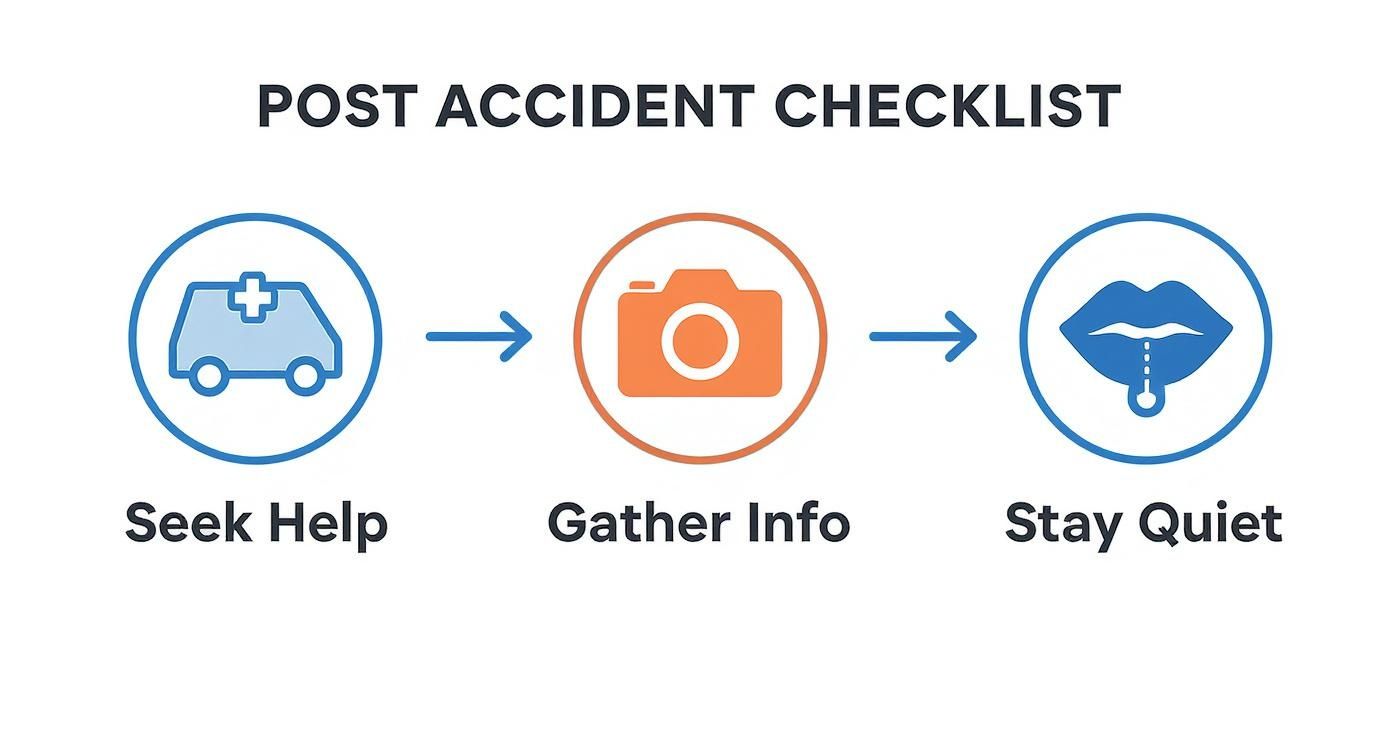
The key takeaway is a simple, three-part strategy: put your health first, document everything you possibly can, and protect your legal rights by being careful about what you say.
Be Careful What You Say
This is crucial: avoid discussing who was at fault right after the crash. Don't apologize or accept any blame, as those words can and will be used against you later on. When you speak with the police, stick to the facts. The steps you take here are very similar to other vehicle-related incidents, and you can learn more by reading our guide on what to do after a car accident.
A serious accident can feel isolating, but you don’t have to go through this alone. Protecting your rights starts the moment the accident happens, and having an experienced advocate on your side ensures your voice is heard.
How Texas Law Defines Fault in a Pedestrian Accident
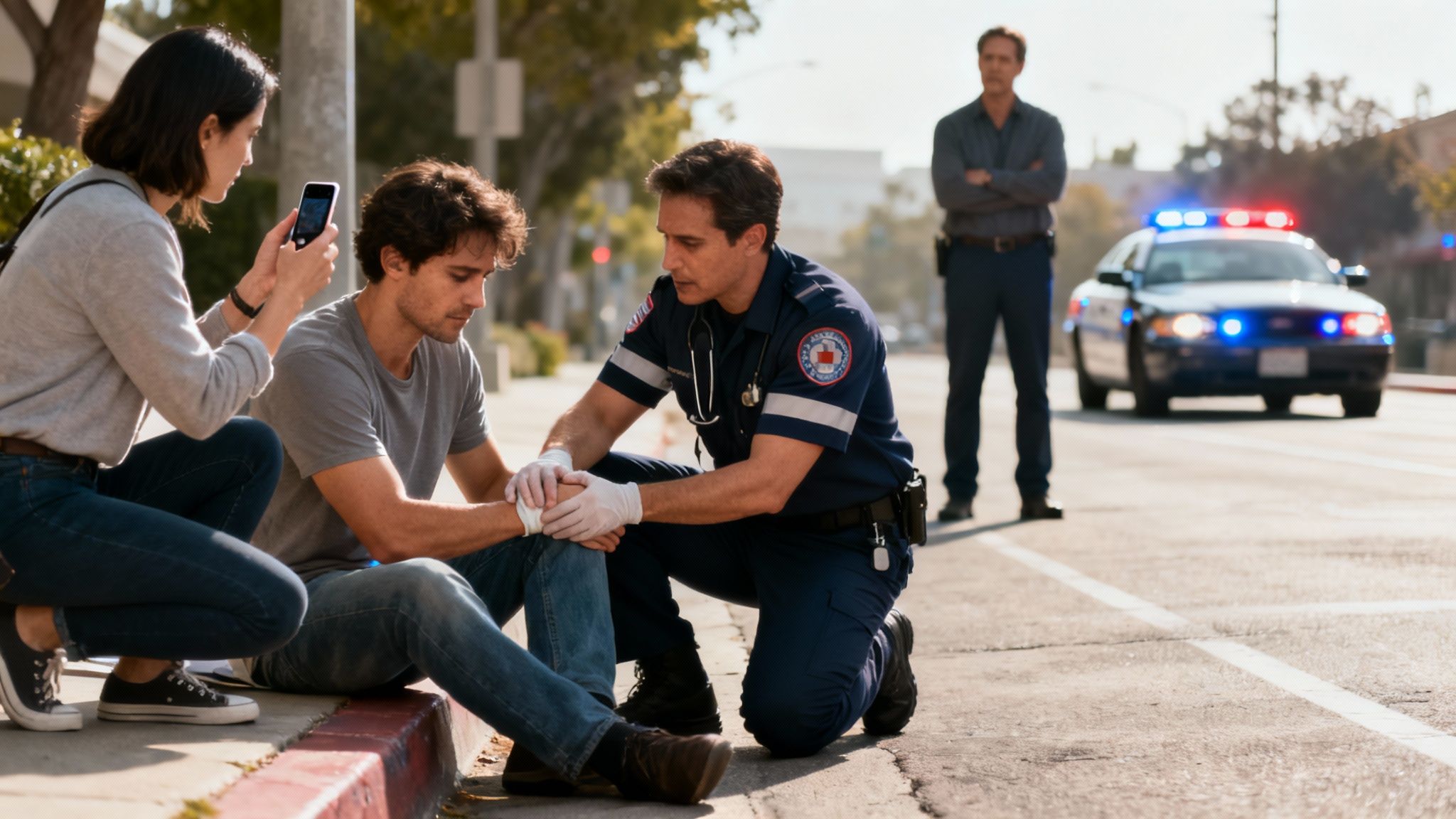
When you're hit by a car, the legal maze can feel just as overwhelming as the physical recovery. But understanding your rights is the first step toward getting justice. In Texas, the foundation for any personal injury claim rests on a legal concept called negligence.
It’s a simpler idea than it sounds. Negligence just means someone failed to act with reasonable care, and that failure caused you harm.
For pedestrians, this is the heart of the matter. We work to prove the driver was negligent—that they failed to operate their vehicle safely. Think of a driver texting at an intersection, speeding through a school zone, or refusing to yield to someone in a crosswalk. Those are all clear acts of negligence. Because their carelessness caused your injuries, Texas law says they are financially responsible for the damage done.
Unfortunately, this kind of negligence is all too common. The U.S. has seen a frightening increase in pedestrian fatalities, with numbers reaching a staggering 7,314 in 2023. This trend is often tied to distracted driving and the sheer size of modern SUVs and trucks, which inflict far more severe injuries. You can dig into the full traffic safety report on the NHTSA's website.
What If the Insurance Company Blames You?
It’s one of the first things an insurance adjuster will try to do: shift the blame to you. Maybe you were crossing mid-block, or perhaps you glanced at your phone for a second. It's a classic defense tactic, but it doesn't automatically kill your case.
Texas operates under a rule called proportionate responsibility, which you might also hear called comparative negligence.
This law allows you to recover damages as long as you are found to be 50% or less responsible for the accident. Your final compensation is just reduced by whatever percentage of fault is assigned to you.
Here’s how it plays out: After a Houston freeway crash, a pedestrian is hit by a speeding driver. The insurance company argues the pedestrian was partially at fault for not using a designated crosswalk. A jury might decide the driver was 80% at fault for speeding, but the pedestrian was 20% at fault. If your total damages were $100,000, you would be able to collect $80,000.
This is exactly why having an experienced pedestrian accident injury lawyer is so critical. Our job is to build a wall of evidence that proves the driver's negligence while fighting back against any unfair blame they try to pin on you.
How Long Do You Have to File a Claim in Texas?
It's crucial to know that your right to demand justice has an expiration date. Texas imposes a strict statute of limitations for personal injury claims, giving you only two years from the date of the accident to file a lawsuit.
If you miss that two-year deadline, the court will almost certainly throw out your case. You lose your right to compensation—forever.
Two years sounds like a long time, but it flies by when you're focused on doctor's appointments, surgeries, and just trying to get back on your feet. This is why you should speak with a Texas personal injury lawyer as soon as you are able. We can get to work protecting your rights, ensuring all legal deadlines are met, and building your case while the evidence and witness memories are still fresh.
How a Lawyer Levels the Playing Field with Insurance Companies
Trying to deal with an insurance company after a pedestrian accident can feel like you're in an impossible fight you didn't ask for. It's critical to remember one thing: the at-fault driver's insurance company is a business. Its main goal is to protect its bottom line—not to make sure you get a fair settlement.
Their adjusters are professional negotiators, trained to minimize what they pay out and to close your claim as quickly and cheaply as possible.
This is where a pedestrian accident injury lawyer becomes your single most important ally. We immediately level the playing field. From the moment you hire an attorney, the insurance company is legally barred from contacting you directly. Every call, every question, and every lowball offer has to go through your lawyer. This one simple move shields you from their pressure tactics and keeps you from accidentally saying something that could damage your claim.
Your Advocate and Investigator
But an experienced lawyer does a lot more than just field phone calls. While you focus on what truly matters—healing—we launch our own independent investigation to build a powerful, evidence-backed case for you.
We immediately get to work on the things you can't handle from a hospital bed or doctor's office:
- Gathering Critical Evidence: We’ll secure the official police report, find and interview witnesses, and get our hands on any traffic camera or nearby business surveillance footage that might have caught the crash.
- Documenting Your Losses: We meticulously gather every medical record, bill, and pay stub to prove your lost wages. This creates an undeniable record of the immediate financial damage your injuries have caused.
- Calculating Future Needs: We don't just look at the bills you have now. We bring in medical and financial experts to project the long-term costs of your recovery, like future surgeries, ongoing physical therapy, and your diminished ability to earn a living down the road.
Without this level of detailed documentation, it's almost impossible to prove the full, true value of your claim. The insurer will only ever offer to pay for what you can concretely prove you've lost.
Insurance adjusters are trained to sound helpful and concerned, but their objective is to pay as little as possible. They often try to get a recorded statement from you, hoping you'll say something they can use to assign you partial blame for the accident.
Knowing how to handle these interactions is absolutely essential. You can find some valuable strategies in our guide on how to deal with insurance adjusters. When facing the complexities of an accident claim, getting skilled legal help on your side is a crucial first step. For those needing immediate help, a great starting point is finding personal injury attorneys near you who specialize in these specific types of cases.
Hiring an attorney isn't about being aggressive; it's about being prepared. It sends a clear message to the insurance company that you know your rights and you're ready to fight for the full and fair compensation you need to protect your future.
Calculating the True Value of Your Injury Claim

How much is your pedestrian accident claim truly worth? This is the most critical question you'll face, and the answer is nearly always far more than just the first stack of hospital bills.
The at-fault driver's insurance company wants you focused on those immediate costs. Why? Because it lets them dangle a quick, lowball settlement that completely ignores the full, life-altering impact of the crash.
To get to the real number, we have to look at every single loss you've suffered—both the ones with a clear price tag and the ones that are deeply personal. Under Texas law, these losses fall into two main categories of damages.
Economic Damages: The Tangible Costs
This first category covers all the direct financial losses you've already paid and will have to pay because of the accident. Think of these as the measurable, out-of-pocket expenses we can prove with receipts, bills, pay stubs, and expert financial projections.
Your economic damages can include:
- Medical Expenses: This is everything. From the ambulance ride and ER visit to surgeries, hospital stays, prescriptions, and the long road of physical therapy ahead.
- Lost Wages: If you couldn't work while recovering, you are owed compensation for every dollar of income you lost during that time.
- Loss of Earning Capacity: This is crucial, especially for a catastrophic injury. If your injuries keep you from returning to your old job or limit your ability to earn a living down the road, we calculate that long-term financial devastation.
- Other Out-of-Pocket Costs: This bucket catches everything else, like expenses for home modifications (a wheelchair ramp), necessary medical equipment, or in-home nursing care.
Pedestrian injuries are often severe. We know from research that the most common serious injuries are to the head, neck, and lower extremities. These high-impact injuries lead to staggering medical bills and potential long-term disability, making it vital to account for every single dollar.
Non-Economic Damages: The Human Cost
The second category is just as important, but it’s much harder to put a number on. Non-economic damages are meant to compensate you for the intangible, personal losses—the ones that don’t come with a receipt but have changed your life forever. This is where the true human cost of the accident is recognized.
These damages acknowledge that your life has been fundamentally altered. For example, a client hit in a devastating truck crash in Houston might lose the ability to play with their kids or enjoy hobbies that once brought them joy. That loss has immense value, and it deserves to be compensated.
Non-economic damages include money for:
- Pain and Suffering: The physical pain, discomfort, and agony you've been forced to endure.
- Mental Anguish: The emotional toll—the anxiety, depression, fear, or PTSD that stems from the trauma.
- Physical Impairment: Compensation for losing the use of a body part or a key physical function.
- Disfigurement: The emotional impact of permanent scarring or other changes to your appearance.
Putting a dollar amount on these losses isn't simple, but it is a critical part of making you whole again. Here’s a breakdown of the types of compensation you can pursue.
Types of Compensation in a Texas Pedestrian Accident Claim
| Type of Damage | What It Covers |
|---|---|
| Past Medical Bills | Ambulance, ER visits, surgeries, hospital stays, medications, and all treatment received to date. |
| Future Medical Care | Ongoing physical therapy, rehabilitation, future surgeries, prescription drugs, and long-term care needs. |
| Lost Wages | Income lost from being unable to work during your recovery period. |
| Loss of Earning Capacity | The reduction in your ability to earn a living in the future due to permanent injuries. |
| Pain and Suffering | The physical pain and discomfort caused by your injuries, both past and future. |
| Mental Anguish | Emotional distress, including anxiety, depression, PTSD, and loss of enjoyment of life. |
| Physical Impairment | Compensation for the loss of use of a body part or a bodily function. |
| Disfigurement | Compensation for permanent scarring, amputation, or other changes to your physical appearance. |
An experienced pedestrian accident injury lawyer knows how to build a case that proves the full extent of both your economic and non-economic damages. We partner with medical experts, life care planners, and financial analysts to paint a clear, undeniable picture of your total losses.
This ensures you don’t accept an offer that leaves your future unprotected. You can learn more about the different types of damages in our detailed guide.
Navigating the Legal Process from Claim to Settlement

Filing a personal injury claim can feel overwhelming, especially when you’re trying to recover from a serious accident. But you don't have to walk this path alone. A pedestrian accident injury lawyer is here to guide you through every stage, handling the legal heavy lifting so you can focus completely on your healing.
The journey of a pedestrian accident case in Texas follows a structured path. Our goal is to pull back the curtain on this process, giving you clarity and peace of mind from the moment you hire us.
The Initial Investigation and Claim Filing
As soon as you bring us on board, your legal team launches a thorough investigation into the accident. We move fast to preserve crucial evidence—things like traffic camera footage and witness statements that can disappear over time. We also immediately notify the at-fault driver's insurance company that we are representing you. This formally opens your claim and, just as importantly, stops them from contacting you directly.
This initial phase is all about building the strongest possible foundation for your case. We meticulously gather your medical records, document your lost wages, and create a comprehensive file that paints a clear picture of how the accident has turned your life upside down.
Discovery and Evidence Exchange
Once a lawsuit is filed, the case moves into a formal stage known as discovery. This is where both sides are legally required to exchange all relevant information and evidence. The whole point is to make sure there are no surprises down the road and that everyone is working with the same set of facts.
Discovery typically involves a few key steps:
- Written Questions (Interrogatories): We send a list of specific, targeted questions to the other party, which they are required to answer under oath.
- Requests for Documents: We can demand key documents, like the driver's cell phone records from the time of the crash or their vehicle's maintenance logs.
- Depositions: This is where we question the at-fault driver and other key witnesses under oath. It’s a formal interview with a court reporter transcribing everything that’s said.
In complex cases, especially those involving catastrophic injuries or fatalities, the testimony of forensic expert witnesses can be a game-changer. These experts can reconstruct the accident scene or explain complicated medical evidence in a way that provides powerful, persuasive testimony.
Negotiation and Achieving a Settlement
Here’s a fact that surprises many people: the vast majority of personal injury cases—over 95%—are resolved through a settlement before ever setting foot in a courtroom. After discovery is complete and we have a full, detailed picture of your damages, we assemble and present a demand package to the insurance company. This package lays out our legal arguments and the full compensation you deserve.
From there, the negotiation process begins. Our reputation as trial-tested attorneys sends a powerful message to the insurance company: we are fully prepared to take your case to a jury if they refuse to make a fair offer. This readiness to go to trial is often the key motivator that brings insurers to the table to negotiate in good faith, leading to a just settlement.
For families grieving an unimaginable loss, we provide compassionate guidance through the wrongful death claim process, fighting to secure justice for your loved one. No matter which path your case takes, our commitment is to shoulder the legal burdens so you can focus on what matters most—your recovery.
Common Questions About Pedestrian Accident Claims
After a pedestrian accident, your mind is probably racing with questions. That uncertainty can feel overwhelming, but getting clear answers is the first real step toward getting your life back on track. We've put together some straightforward responses to the most common concerns we hear from injured Texans just like you.
What If the Driver Who Hit Me Was Uninsured or Fled the Scene?
This is a nightmare scenario, and it’s one we see far too often. But you are not out of options.
If you were the victim of a hit-and-run or were struck by a driver carrying no insurance, your own auto insurance policy is often the first place we look. Most Texas policies include Uninsured/Underinsured Motorist (UM/UIM) coverage, which was designed for exactly this kind of situation.
Don't own a car? You might still be covered under a policy held by a family member in your household. A good pedestrian accident injury lawyer will dig into every possible source of recovery so you aren’t left holding the bag for someone else’s recklessness.
Can I Still Get Compensation If I Was Partially At Fault?
Yes, you absolutely can in many cases. Texas operates under a legal rule known as proportionate responsibility, which is basically a modified version of comparative fault. This principle lets you recover damages as long as you're found to be 50% or less responsible for what happened.
How it works is simple: your final compensation is just reduced by whatever percentage of fault is assigned to you. For instance, if a jury decides you were 10% at fault, your total award would be reduced by that 10%. The job of an experienced Houston car accident attorney is to fight to minimize any fault placed on you to maximize what you take home.
The vulnerability of pedestrians isn't just a local problem. Globally, road traffic incidents cause around 1.19 million deaths each year, with pedestrians making up a staggering 21% of those fatalities. That comes out to nearly 250,000 pedestrian deaths annually—a sobering reminder of the risks people face just walking down the street. You can read more about these global road safety findings on the Pan American Health Organization's website.
In Texas, the clock is ticking. You have a two-year statute of limitations for personal injury claims, starting from the date of the accident. This is a hard deadline. If you miss it, you almost certainly lose your right to seek compensation forever. That's why it is so critical to contact a lawyer as soon as possible to protect your rights.
A serious accident can turn your world upside down, but you don't have to face the legal fight on your own. Recovery is possible, and legal help is available. The team at The Law Office of Bryan Fagan, PLLC is here to give you the compassionate support and aggressive advocacy you deserve.
Schedule your free, no-obligation consultation today by visiting us at https://texaspersonalinjury.net. Let us fight for the justice and recovery you need.