A serious motorcycle accident can change your life in seconds—but you don’t have to face it alone. One moment you're on the road, the next you're dealing with injuries, stacks of medical bills, and a future that feels completely uncertain. This guide will give you clear answers about your rights and the complexities of motorcycle helmet laws in Texas.
When a Motorcycle Accident Changes Everything

A serious accident can change your life in seconds — but you don’t have to face it alone. Here at The Law Office of Bryan Fagan, PLLC, we understand the emotional, physical, and financial toll these accidents take. We created this guide to give you clarity and support when everything feels overwhelming.
After a crash, your mind is probably racing with questions.
- How am I supposed to pay for my hospital stay and future medical care?
- What are my rights if the other driver caused the wreck?
- How will Texas's motorcycle helmet laws impact my injury claim?
- What should I say if the other driver's insurance adjuster calls me?
These are all valid concerns, and the answers aren't always straightforward. Insurance companies will often try to use Texas's helmet rules and other legal details to deny your claim or pay you less than you deserve. Our job is to shield you from these tactics and protect your rights.
You Are Not Alone in This Fight
We have seen firsthand how a negligent driver’s mistake can derail a rider's life. For example, after a Houston freeway crash, a sudden lane change by a distracted driver can cause catastrophic injuries, forcing you out of work and into a world of pain and uncertainty.
Our experienced team is here to be your advocate. We manage every detail of the legal fight so you can put all your energy into healing.
We will walk you through the specifics of Texas personal injury law, explain how we counter unfair insurance company strategies, and lay out the practical steps you need to take to protect your future. Many of the legal principles in motorcycle cases, such as negligence and fault, also apply to other crashes, like those involving electric scooters. You can find out more in our guide to e-scooter accidents in Texas.
Whether you were hurt in Dallas, Austin, or anywhere else in the state, our compassionate Texas personal injury lawyer team is ready to stand with you. Recovery is a journey, and help is available. We invite you to schedule a free consultation to go over your case and find out how we can help you get justice.
Understanding Texas Motorcycle Helmet Requirements
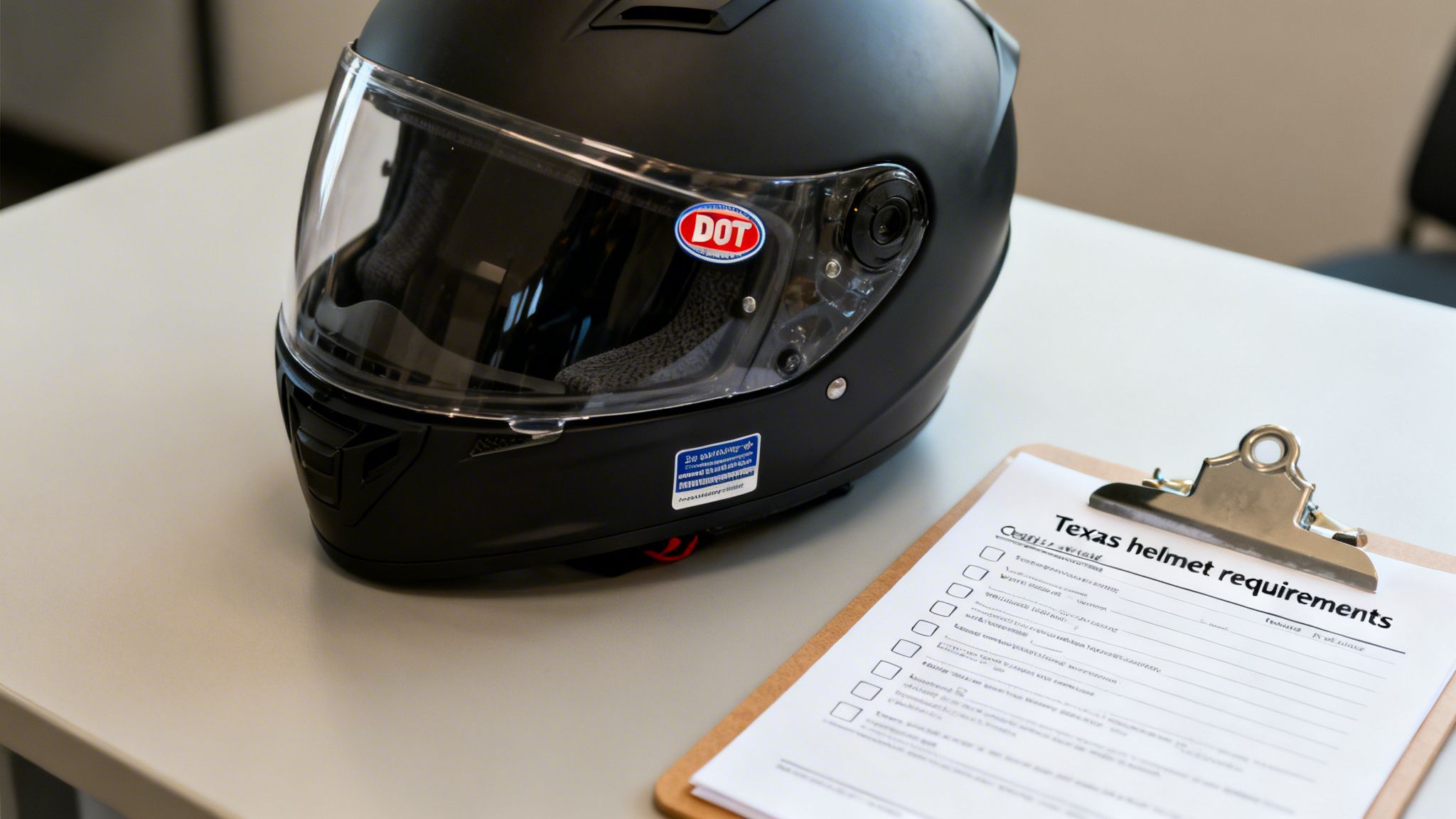
Trying to make sense of the motorcycle helmet rules in Texas can be confusing, especially when you're already trying to heal from an injury. The law isn't a simple "yes or no," and knowing the details is a crucial first step in protecting your rights after a crash. We’re here to break it down in plain English, so you have clear information and feel empowered.
The core of the motorcycle helmet laws in Texas comes down to the rider's age. This single factor sets the baseline for who must wear a helmet before any exceptions can be considered.
For anyone under the age of 21, the law is black and white: you must wear a helmet at all times when riding or operating a motorcycle. There are no exceptions for younger riders. This rule is in place to provide extra protection to a group that is statistically at a higher risk for devastating accidents.
Exceptions for Riders 21 and Older
Once a rider turns 21, the law opens a door to legally ride without a helmet. But—and this is a very important point—you can't just decide to leave your helmet at home. You must meet specific requirements first. This is a major point of confusion, and it's one that insurance companies often use against injured riders after an accident.
To ride without a helmet in Texas, a rider 21 or older must meet one of these two conditions:
- Health Insurance Coverage: You must be covered by a health insurance plan that provides at least $10,000 in medical benefits for injuries from a motorcycle accident.
- Motorcycle Safety Course: You must have successfully completed an approved motorcycle operator training and safety course.
It's absolutely critical to carry proof of either your insurance or your course completion certificate with you. While failing to show proof might just result in a ticket, it can seriously complicate your injury claim if a negligent driver hurts you.
It's a common myth that just being over 21 is enough to ride helmet-free. You must actively qualify under the insurance or safety course rule to be legally compliant.
Texas Motorcycle Helmet Requirements at a Glance
To make these rules crystal clear, we've put together a quick summary. Think of this as your go-to guide for staying on the right side of the law.
| Rider's Age | Helmet Required? | Legal Exceptions for Not Wearing a Helmet |
|---|---|---|
| Under 21 | Yes, always. | None. A helmet is mandatory for all riders and passengers under 21. |
| 21 and Older | No, if you qualify. | You are exempt if you have completed an approved safety course OR carry at least $10,000 in qualifying health insurance coverage. |
Knowing these distinctions is vital. For example, picture a 25-year-old rider hit in a crash on a Dallas highway. If they weren't wearing a helmet but had the required health insurance, they were following the law. A skilled Texas personal injury lawyer can use this fact to shut down an insurer's attempt to unfairly blame the rider for their own injuries.
The helmet law is just one piece of the puzzle. When a crash causes serious harm, like a catastrophic injury, you need an attorney who knows how to prove the other driver's negligence was the true cause of the damage. In the next section, we’ll dive into how insurance companies use the so-called "helmet defense" to try and pay you less—and how we fight back.
How Helmet Use Impacts Your Injury Claim
When you’re in a motorcycle crash, it’s about more than a wrecked bike and a trip to the ER. It’s a fight for your future. Even if you followed every rule of the road, the other driver's insurance company will be looking for any excuse to pay you less than you deserve. This is where Texas helmet laws and your right to fair compensation collide.
Even if you were legally riding without a helmet, the insurance adjuster will almost certainly try to use that choice against you. Their main goal is to shift blame away from their driver and onto you, the victim. A common tactic for this is the "helmet defense."
The Helmet Defense and Comparative Responsibility
The "helmet defense" is an argument insurance companies use to reduce the value of your claim. They’ll argue that while their driver might have caused the crash (an act of negligence), your decision not to wear a helmet is what made your head injuries so much worse. This argument is based on a Texas legal principle called comparative responsibility.
Under Texas law, a jury can assign a percentage of fault to everyone involved in an accident—including you. If the insurance company can convince a jury that not wearing a helmet made your injuries worse, they might assign you a percentage of the fault for the severity of your injuries.
Crucial Takeaway: If a jury finds you were 20% responsible for your own injuries because you weren't wearing a helmet, your total compensation will be cut by 20%. This tactic can cost you tens or even hundreds of thousands of dollars.
For example, you’re legally riding without a helmet on a Houston freeway when a distracted driver slams into you. You suffer a serious traumatic brain injury. The insurance company might argue you are 30% responsible for the severity of that injury. If your total damages add up to $500,000, that 30% fault would reduce your recovery by $150,000, leaving you with a massive financial hole.
The Tragic Rise in Fatalities After the Law Changed
The life-saving power of helmets isn't just a talking point; it's a fact backed by devastating statistics. After Texas repealed its universal helmet law in 1997, the results were immediate and tragic. In the three years that followed, Texas saw a shocking 52% surge in motorcyclist deaths compared to the years before the law changed.
During that same time, helmet use among injured riders plummeted from over 90% to as low as 50%. The data makes it painfully clear what happens when helmet use declines. You can learn more about the research on helmet law repeals and the impact on rider safety.
How We Fight Back for You
At The Law Office of Bryan Fagan, PLLC, our experienced Texas personal injury lawyers have seen the helmet defense used countless times. We know exactly how to build a powerful counter-argument to protect your right to full compensation. We fight back by proving the other driver's negligence was the true cause of your injuries.
Our strategy includes:
- Accident Reconstruction: We bring in experts to show precisely how the crash happened and demonstrate that the force of the impact would have caused severe injuries, helmet or not.
- Medical Expert Testimony: We work with medical professionals who can explain the real-world mechanics of your injuries and push back on the insurance company's biased claims about what a helmet could have prevented.
- Focusing on Negligence: We force the jury's attention back where it belongs: on the at-fault driver. Whether they were texting, speeding, or making an illegal turn, their reckless actions caused the crash, and they must be held fully accountable.
Even if you lost a family member in a wreck, our wrongful death lawyer Texas team can pursue justice through a wrongful death claim, fighting to ensure your family's financial future isn't another casualty of someone else's carelessness. You should never be punished for making a choice the law allows, especially when another person’s recklessness is the real reason you're suffering.
Critical Steps to Take After a Motorcycle Crash
The aftermath of a motorcycle crash is a chaotic blur of noise, pain, and confusion. What you do in those first few minutes and hours can dramatically shape both your physical recovery and your ability to get the financial compensation you need. Here is some practical advice on what to do after an accident to build a solid foundation for your injury claim.
The most important thing you can do is seek immediate medical attention. Adrenaline is a powerful painkiller and can easily mask severe injuries. You might feel like you can just walk it off, but serious problems like internal bleeding or traumatic brain injuries often have delayed symptoms. Going to an ER or doctor right away gets you the care you need and creates an official medical record linking your injuries to the accident.
Document Everything at the Scene
If you're physically able, it’s time to become your own best investigator. The evidence you gather at the scene is priceless.
- Call the Police: Always dial 911. A police report is an official account of the crash, often containing diagrams, witness statements, and the officer’s initial thoughts on who was at fault.
- Take Photos and Videos: Use your phone to capture everything: vehicle damage, skid marks, traffic signs, and the entire scene from different angles. Make sure to take photos of your visible injuries, too.
- Exchange Information: Get the other driver’s name, address, phone number, driver's license number, and insurance policy details. If anyone saw what happened, get their contact information as well.
A common mistake is apologizing at the scene. Even a simple "I'm sorry" can be twisted by an insurance company and used to argue you admitted fault. Stick to the facts when you talk to the other driver and the police.
When to Call a Lawyer: Protect Your Legal Rights
Once you’ve seen a doctor, the next battle begins: dealing with the insurance companies. It won’t be long before the other driver’s insurer calls you, acting friendly and concerned. Their real goal is to get you to give a recorded statement or accept a quick, lowball offer before you know the true extent of your injuries.
It is critical that you do not give a recorded statement without talking to a lawyer first. Insurance adjusters are trained to ask tricky questions designed to get you to say something that undermines your claim. For example, after a wreck in Fort Worth, an adjuster might press you for details about your speed, hoping you'll say something inconsistent. A Houston car accident attorney will handle all of these conversations for you.
This is even more important in complex crashes, like those involving maneuvers insurers love to blame on the rider. You can learn more about how these situations are viewed in our article explaining whether lane splitting is legal in Texas.
An experienced lawyer will take over all communications, gather evidence, and build a case that clearly shows the other driver’s negligence. Whether you're recovering from a life-altering catastrophic injury or starting a long road to recovery, having a legal advocate fighting for you means you can focus on one thing: getting better.
Securing The Compensation You Deserve
When you're dealing with the aftermath of a motorcycle crash, the bills can pile up fast. But a successful personal injury claim is about much more than just covering your initial medical bills. It’s about securing your future after a negligent driver has turned your life upside down.
In Texas, the compensation you can pursue is broken down into two main types: economic and non-economic damages. You can think of these as the tangible, receipt-based losses and the more personal, human losses.
What Are Economic Damages?
Economic damages are the clear, documentable costs that come directly from your injuries. We work to document every single penny to build a strong foundation for your claim.
Typically, these damages cover:
- All Medical Bills: This includes everything from the emergency room and surgeries to your hospital stay, medications, and follow-up doctor’s appointments.
- Future Medical Needs: Serious injuries require long-term care. This can include physical therapy, visits to specialists, medical devices, or even in-home care.
- Lost Wages: If your injuries forced you to miss work, you have the right to recover the income you lost.
- Loss of Earning Capacity: For a catastrophic injury that makes it impossible to return to your job, this compensates you for the income you will no longer be able to earn.
We often work with medical and financial experts to accurately project these future expenses to ensure you aren't left paying out-of-pocket for accident-related costs years from now.
Understanding Non-Economic Damages
Non-economic damages are meant to compensate you for the losses that don't come with a price tag. This is where the law acknowledges the human cost of the crash—the pain, trauma, and the ways your life has been permanently changed. It is vital to document every aspect of your suffering, including any chronic persistent pain you develop, to secure the full compensation you are owed.
These damages often include:
- Pain and Suffering: This is compensation for the physical pain and discomfort you've had to endure.
- Mental Anguish: This addresses the emotional fallout from the crash, like anxiety, depression, fear, or PTSD.
- Physical Impairment: If your injuries now limit your ability to walk, work, or enjoy your daily life, this provides compensation for that loss.
- Disfigurement: This is for permanent scarring or other lasting changes to your appearance.
While no amount of money can truly undo your pain, non-economic damages are the legal system's way of holding the at-fault party accountable for the immense personal suffering they caused.
Proving these kinds of losses requires a compassionate and skilled Texas personal injury lawyer who knows how to tell your story in a powerful way.
The simple flowchart below shows the crucial first steps to take after any crash. These actions help preserve the evidence needed for your claim.
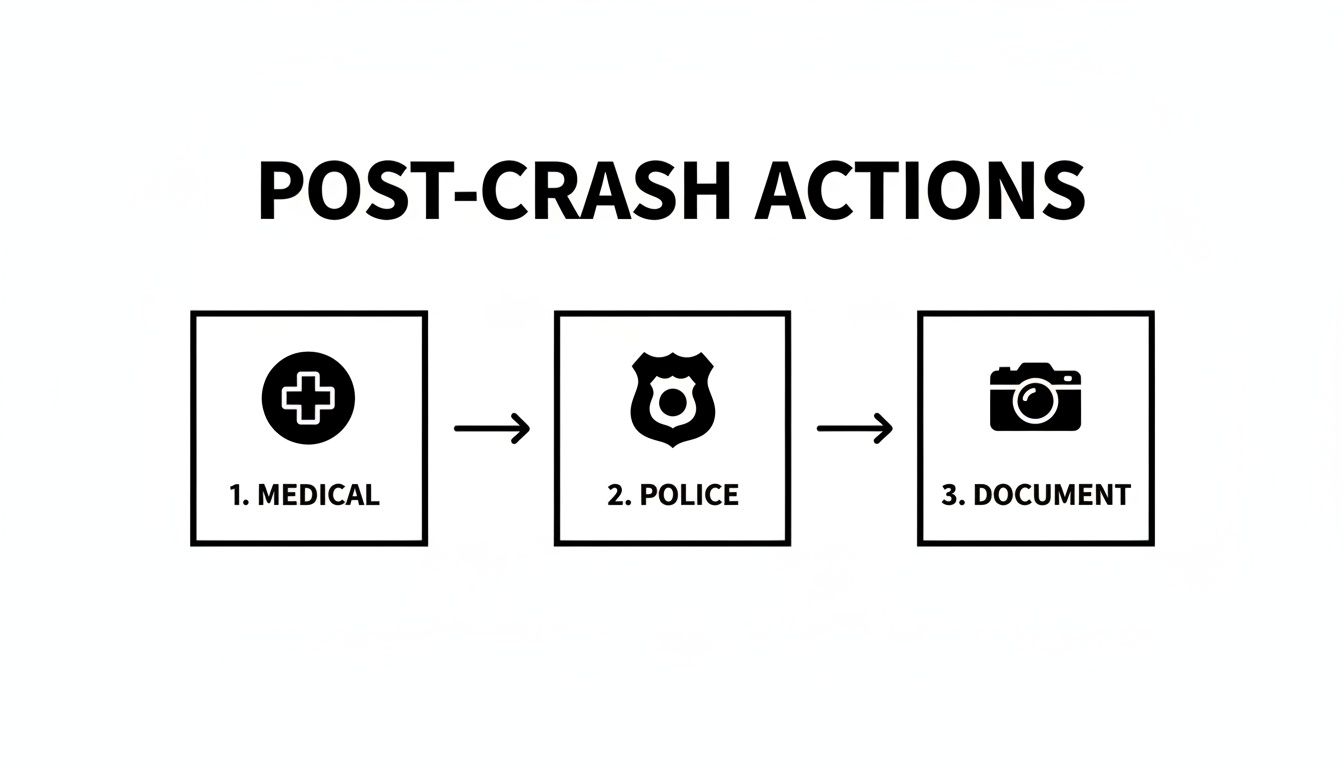
These three actions—getting medical care, calling the police, and documenting everything—create the bedrock of evidence for a strong case.
If you have tragically lost a loved one, our wrongful death lawyer Texas team can help your family file a wrongful death claim to recover damages for lost income, funeral costs, and the loss of companionship. We prepare every case as if it’s going to trial. This aggressive approach lets insurance companies know we won’t settle for a lowball offer. We are always ready to fight for the maximum compensation you need. You can learn more in our detailed guide to motorcycle accident claims.
Why an Experienced Motorcycle Accident Lawyer Is Essential
Trying to take on an insurance company by yourself after a serious motorcycle crash is a fight you shouldn't have to wage while you're focused on healing. Having a dedicated lawyer from The Law Office of Bryan Fagan, PLLC in your corner isn't just helpful—it's essential for protecting your future. We're here to level the playing field against powerful insurers whose real goal is to protect their profits, not your well-being.
Insurance adjusters are skilled at minimizing what they pay out. They might offer you a quick, lowball settlement before you grasp the full extent of your injuries or the long-term costs you'll face. As your advocate, we step in immediately to shield you from these tactics, handle all communication, and fight for the full compensation you are owed.
An Advocate Who Understands the Stakes
Understanding Texas motorcycle law goes deeper than just the current rules. Between 1968 and 1977, Texas had a universal helmet law for all riders, a policy that is estimated to have saved 650 lives. This history shows how quickly the legal landscape can shift and why having an expert who knows every angle of the law is so vital. You can read more about these historical safety findings on the CDC's website.
Our team does the hard work your case requires. This includes:
- Conducting a thorough investigation of the crash scene.
- Gathering critical evidence like police reports, witness statements, and traffic camera footage.
- Working with accident reconstruction and medical experts to build an undeniable case of negligence.
- Aggressively shutting down any unfair "helmet defense" arguments the insurer tries to use.
We prepare every case as if it's going to trial. This sends a powerful message to the insurance company: we won't back down, and we won't accept an inadequate offer.
A Houston car accident attorney from our firm will manage every legal deadline and filing, freeing you to pour your energy into recovery. Whether your crash involved a car or a massive commercial vehicle, our experience as truck crash lawyer Houston professionals gives us the insight needed to handle even the most complex claims.
Don't let an insurance company's bottom line determine your future. You pay us nothing unless we win your case. Take the first step toward getting justice and peace of mind by scheduling a free consultation with our compassionate team today. We're here to listen to your story, answer your questions, and show you the path forward.
How Long Do You Have to File a Claim in Texas?
The deadline in Texas is strict. You have two years from the date of the accident to file a lawsuit. This is known as the statute of limitations.
If you miss this two-year window, the court will almost certainly refuse to hear your case, and you will lose your right to seek compensation forever. It is absolutely vital to contact a lawyer as soon as possible after a crash to preserve evidence and protect your legal rights before it's too late.
Can I Still Get Compensation if the Wreck Was Partially My Fault?
Yes, you often can. Texas law uses a rule called modified comparative fault (or comparative responsibility), which is a legal way of saying that fault can be shared. As long as you are found to be 50% or less responsible for the crash, you can still recover damages.
However, your final compensation will be reduced by whatever percentage of fault is assigned to you. For instance, if you're found 10% at fault, your total award is cut by 10%. This is exactly why it's so critical to have an experienced Texas personal injury lawyer—insurance companies will try to pin as much blame on you as possible to pay you less. We fight to make sure that doesn't happen.
What Happens if the Other Driver Doesn't Have Insurance?
If you were hit by a driver with no insurance—or not enough to cover all your damages—you may still have a path to compensation. This is what Uninsured/Underinsured Motorist (UM/UIM) coverage on your own policy is for.
Filing a claim with your own insurance company can be surprisingly difficult, as they often try to minimize their payout just like the other driver's insurer. Our attorneys can manage this entire process for you, fighting to make sure you receive every penny of the benefits you've been paying for.
A serious motorcycle accident can make you feel lost and alone, but you don’t have to walk the road to recovery by yourself. The experienced and compassionate team at The Law Office of Bryan Fagan, PLLC is here to fight for the justice and fair compensation you deserve. We’ll handle all the legal complexities so you can focus on one thing: healing.
Your story is important, and we are ready to listen. Schedule a free, no-obligation consultation with us today. We'll help you understand your rights and show you how we can help you take back control of your future. Recovery is possible, and getting the right legal help is just a phone call away.