A serious accident can change your life in seconds, but you don’t have to face it alone.
One moment you are driving home on I-45, heading through Houston traffic, thinking about dinner or your next meeting. The next, you are hearing metal crush, feeling pain spread through your back or hips, and trying to understand what just happened. Many people leave the scene shaken and assume they will sort it out later. Then the medical bills start. Work gets interrupted. The insurance company calls before you have even had time to process the crash.
That confusion is normal. So is the feeling that everything now depends on one question: Why did this happen?
The causes of car accident cases matter for more than curiosity. The cause usually points to the evidence that will prove fault. If the other driver was texting, the case may depend on phone records, witness statements, and traffic camera footage. If the crash happened in a construction zone, the key evidence may be signage, lane markings, contractor records, and scene photographs taken before repairs are made.
Some injuries also show up in ways people do not expect. After a side-impact or twisting collision, symptoms may involve the hips, lower back, or pelvic area. If that sounds familiar, this explanation of pelvic pain after a car accident gives a useful overview of why those symptoms can linger and why early treatment matters.
You deserve clear answers. You deserve to know your rights under Texas law. Most of all, you deserve a practical path forward that protects your health, your finances, and your future.
You Are Not Alone After a Serious Car Accident
The first days after a crash are often the hardest.
After a Houston freeway crash, many clients tell us the same thing. They were not just hurt. They were overwhelmed. They were trying to manage pain, missed work, family stress, and constant calls from adjusters who sounded friendly but were already building a defense.
That is why understanding the cause of the collision matters early. In Texas, fault is not decided by guesswork. It is built from evidence. The sooner you identify what likely caused the wreck, the sooner you can protect the proof that may decide your case.
Why the cause matters so much
A rear-end crash may look simple, but the details still matter. Was the driver distracted. Was traffic stopped suddenly because of poor road design. Did a commercial vehicle have brake trouble. Did an unsafe lane change trigger a chain reaction.
Each answer changes the investigation.
For injured drivers and grieving families, the legal process can feel cold. It does not have to. Good case work starts by listening carefully, then matching the facts to existing evidence.
Key takeaway: The cause of the crash is not just part of the story. It is the roadmap to proving negligence and recovering compensation.
What many people miss in the first week
People often focus on the damaged vehicle and overlook the rest.
Your medical records, photographs of the roadway, names of witnesses, dashcam footage, employer confirmation of missed work, and even the angle of impact can all matter. Small details disappear fast. Skid marks fade. Video gets deleted. Road hazards get repaired. Memories change.
That is why acting quickly is not about being aggressive. It is about being careful.
The Most Common Causes of Car Accidents in Texas
Every crash has a story, but in a Texas injury case, the part that matters most is the proof. The cause of the collision shapes what evidence needs to be preserved, what defenses the insurance company is likely to raise, and whether they will try to put part of the blame on you under comparative negligence rules.
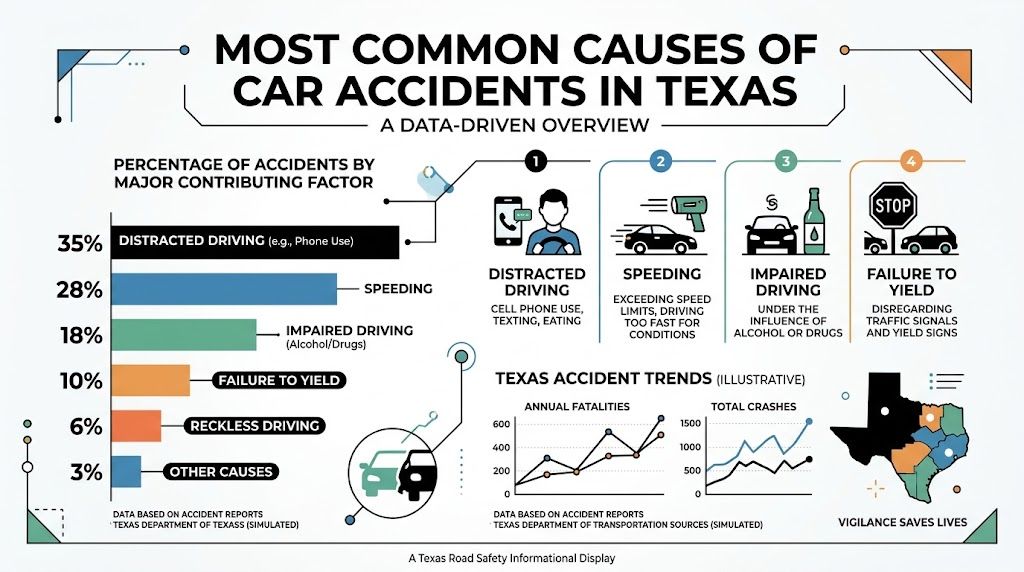
Distracted driving and recognition errors
Distracted driving cases often turn on a simple question. Did the other driver have enough time to see and respond to what was already in front of them?
That sounds straightforward, but these claims are rarely proved by accusation alone. A driver may deny touching a phone, deny looking away, or argue that traffic stopped too suddenly for anyone to avoid the impact. In Texas, that matters because the defense may argue you also contributed by braking hard, changing lanes without warning, or failing to use your signals.
The strongest distracted driving cases are built with evidence that shows delayed perception or delayed reaction, such as:
- Phone records showing calls, texts, or app activity near the time of the crash
- Vehicle data showing late braking or no braking at all
- Dashcam or surveillance video capturing drifting, failure to stop, or missed traffic signals
- Witness statements from drivers or pedestrians who saw the phone in the driver’s hand or noticed inattentive driving
I often tell clients that distraction cases are won in the details. A timestamp, a traffic-light sequence, or a few seconds of video can make the difference between a denied claim and a clear liability case.
For practical prevention tips, this guide on how to avoid car accidents offers useful defensive-driving reminders. For Texas-specific rules, our page on distracted driving laws in Texas explains how these violations can affect liability.
Speeding and aggressive driving
Speeding is not just about a number on a sign. In many Texas cases, the key consideration is whether the driver was traveling too fast for traffic, weather, visibility, or road conditions.
That distinction matters because drivers are often within the posted limit and still driving unsafely. On a wet Houston freeway, in a construction corridor, or during heavy evening traffic, a driver can create a dangerous closing distance without ever receiving a citation for extreme speed.
Proof in these cases usually comes from several places at once:
| Evidence | Why it matters |
|---|---|
| Police report | May note unsafe speed, following too closely, or aggressive maneuvers |
| Event data recorder | Can show pre-impact speed, throttle input, and braking |
| Scene evidence | Skid marks, crush damage, and vehicle rest positions help reconstruct force and timing |
| Witness accounts | Other drivers may describe weaving, racing, tailgating, or unsafe lane changes |
Aggressive driving adds another layer. Tailgating, cutting across lanes, and trying to beat a light often give insurers room to argue shared fault against everyone involved. Good case preparation narrows that argument by showing who created the risk first.
Drunk driving and alcohol impairment
Alcohol-related crashes usually present strong liability facts, but victims still need to move quickly to protect the proof.
A drunk driver may face criminal charges, yet the civil case still requires evidence. Police observations, body camera footage, field sobriety testing, blood or breath results, open-container evidence, bar receipts, and surveillance video can all help establish what happened and how impaired the driver was.
There is also a practical trade-off here. People assume a DWI arrest automatically resolves fault. It helps, but it does not answer every issue in a personal injury claim. The defense may still dispute how the crash occurred, argue that your injuries were not caused by this collision, or claim you could have avoided the impact.
If impairment is suspected, early witness statements matter. So do photographs, the officer’s narrative, and any record showing where the driver had been before the wreck.
Practical tip: Tell law enforcement exactly what you observed, including slurred speech, the odor of alcohol, bloodshot eyes, unsteady movement, or admissions about drinking. Specific observations are more useful than general suspicion.
Road design and infrastructure failures
Some collisions involve more than careless driving. Poorly marked lane shifts, missing warnings, blocked sight lines, malfunctioning signals, loose gravel, standing water, and unsafe construction setups can all contribute to a wreck.
These cases are easy to overlook because insurers prefer a two-driver dispute. That approach can leave important evidence on the table. If the roadway itself contributed to the crash, the investigation has to expand fast, especially before repairs are made or temporary traffic control changes.
The proof is different here. Lawyers often look for:
- Immediate scene photographs and video
- Roadway measurements and diagrams
- Construction plans or traffic-control records
- Maintenance logs and prior complaint history
- Engineering review of sight distance, signage, and lane guidance
This kind of claim also changes the comparative negligence analysis. If the road condition forced a sudden stop or evasive maneuver, that may weaken the argument that an injured driver reacted unreasonably.
Vehicle defects and mechanical failures
Mechanical failure cases demand discipline from the first day.
Brake loss, tire failure, steering defects, lighting problems, and airbag or safety-system malfunctions can shift fault beyond the driver. Sometimes the responsible party is a manufacturer, repair shop, fleet owner, or the person who ignored obvious maintenance problems. Sometimes fault is shared.
That is why the vehicle itself becomes evidence. If it is repaired, salvaged, or destroyed before inspection, the best proof may disappear. In a Texas case where comparative negligence is in play, the other side may argue that the wreck happened because you failed to maintain your own vehicle or continued driving after noticing a problem. A proper inspection helps answer that early.
Fatigue and poor driver judgment
Fatigue causes many of the same driving behaviors seen in distraction and impairment. Delayed braking, drifting across lanes, missing signals, and poor decision-making are common patterns.
These cases are harder to prove because there is rarely a chemical test or a citation that tells the whole story. Instead, proof usually comes from work schedules, trip history, phone data, dispatch records, toll records, witness observations, and the driver’s own statements about sleep, travel time, or exhaustion.
Commercial vehicle cases make this issue more obvious, but it shows up in ordinary passenger-car wrecks too. A driver finishing a double shift or driving overnight across Texas may create the same danger as someone who is texting or drinking.
From a legal standpoint, fatigue cases often require patience. From a practical standpoint, they reward early investigation.
How Fault Is Determined Under Texas Law
Knowing what caused the crash is only the first step. The next question is whether you can prove that someone else’s conduct legally caused your injuries.
Negligence in plain English
In Texas, most car accident claims are based on negligence.
That means a person failed to act with reasonable care and caused harm. A driver who texts in traffic, speeds through a crowded merge, runs a light, or drives drunk may all be negligent because a careful driver would not act that way.
To prove negligence, you generally need to show four things:
- Duty: The other driver had a duty to drive reasonably safely.
- Breach: That driver violated that duty.
- Causation: The violation caused the crash.
- Damages: You suffered injuries, financial losses, or both.
Here, cause and proof come together. The cause tells you what kind of breach occurred. The evidence proves it.
Comparative responsibility in Texas
Texas follows a modified comparative responsibility rule. If you were partly at fault, your compensation can be reduced by your share of responsibility. If you are more responsible than the other side under Texas law, recovery may be barred.
Our page on comparative fault definition gives a deeper explanation, but the basic idea is simple.
Assume a jury decides your losses are worth a certain amount. If the jury also decides you were partly responsible because, for example, you changed lanes carelessly before the other driver hit you, your recovery would be reduced by your percentage of fault.
That is why insurance adjusters look so hard for statements they can use against you. They want to shift part of the blame onto you.
Key takeaway: In Texas, even a strong injury case can lose value if the insurer convinces people that you caused part of the crash.
Why the angle of impact matters
The way vehicles collide often says a lot about fault.
Angle of collision is critical for determining liability and injury severity. T-bone crashes account for 30% of accidents and are far deadlier due to side impacts lacking crumple zones. Even low-speed side-swipes can cause disproportionate spinal injuries, and crash reconstruction data can help prove fault based on impact angles (discussion of impact angles and crash types).
If a driver claims you “came out of nowhere,” impact damage can test that story. A side-impact pattern at an intersection may support a failure-to-yield claim. A scrape pattern across doors and quarter panels may support an unsafe lane-change claim. Crush depth and contact points also help explain why your injuries are more serious than an adjuster wants to admit.
A short explanation may help if you want to see how lawyers think about proof in real cases.
Evidence that usually carries the most weight
Not all evidence is equal.
A strong case often depends on a combination of records, not one dramatic piece of proof. In a disputed crash, the most useful items usually include:
- Police report details: Helpful, but not always final. Officers can miss facts.
- Witnesses with no stake in the outcome: Often persuasive because they appear neutral.
- Vehicle damage and photos: These can support or undermine both sides.
- Surveillance and dashcam video: Often the clearest answer to who did what.
- Medical records tied closely to the crash: These connect the collision to your injuries.
- Crash reconstruction when needed: Especially important in severe or disputed cases.
How long do you have to file a claim in Texas
Texas generally gives injured people a limited time to file a personal injury lawsuit. In many car accident cases, that deadline is two years.
That may sound like plenty of time, but evidence problems start much earlier. Video can be erased in days. Vehicles can be sold. Witnesses forget details. Construction zones change. If a wrongful death lawyer Texas families trust is involved, that urgency becomes even more important because multiple parties may need notice.
Practical Steps to Take Immediately After an Accident
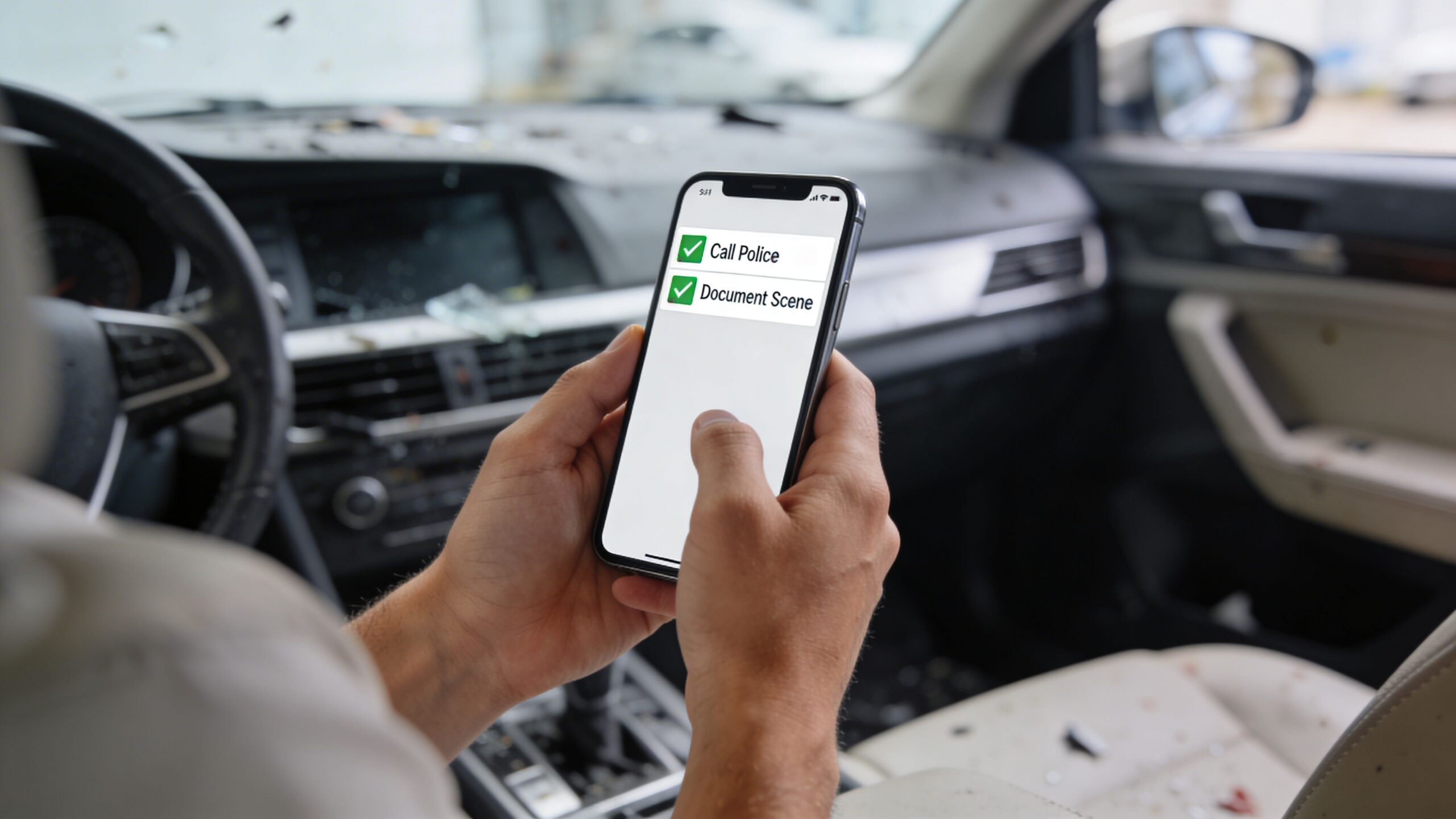
A serious crash throws people into confusion fast. In the first minutes, the right steps protect your health and also preserve the proof that often decides fault under Texas comparative negligence rules.
1. Get to safety and call 911
If you can move without making your injuries worse, get out of active traffic and call 911.
Police and EMS records often become the first neutral account of what happened. That matters when the other driver later claims you changed lanes, stopped short, or contributed to the crash. The report may not settle every dispute, but it usually locks in the time, place, vehicle positions, road conditions, and the names of the people involved.
2. Get medical care early
Pain does not always show up at the scene.
Head injuries, neck injuries, back injuries, and internal trauma can surface hours later. Early treatment protects your health and creates a clear timeline between the collision and your symptoms. If there is a gap in care, an insurance adjuster may argue that something else caused the problem or that your injuries are less serious than you claim.

3. Document the scene before the evidence disappears
Road evidence changes quickly. Cars get moved. Debris gets cleared. Weather shifts. Skid marks fade.
If you are physically able, use your phone to photograph the vehicles, damage points, license plates, lane markings, traffic signals, debris, road defects, weather, and any visible injuries. The goal is not just to show that a crash happened. The goal is to capture the facts tied to the cause. Rear-end cases often turn on following distance and damage patterns. Intersection wrecks may depend on signal placement, sight lines, and final vehicle positions. A speeding claim may require photos of long gouge marks, heavy front-end crush, or a short stopping area. In a distracted driving case, witness names and the timing of events can matter as much as the vehicle damage.
Try to gather:
- Driver information: Name, license, plate number, insurance, and vehicle details
- Witness contacts: Independent witnesses can help when the stories conflict
- Location details: Cross streets, nearby businesses, mile markers, or landmarks
- Road conditions: Construction, missing signs, poor lighting, pooled water, or blocked views
4. Watch what you say
Give facts. Do not guess.
You can answer basic questions from the officer without estimating speed, distance, reaction time, or fault. Statements like “I never saw you” or “I may have been going a little fast” can be used later to shift part of the blame onto you. Under Texas law, even a partial fault finding can reduce what you recover.
Practical tip: Stick to what you know for sure. Your lane, your direction of travel, what you saw, what you heard, and what you felt on impact.
5. Report the crash to your insurer carefully
Your policy may require prompt notice. That does not mean you need to give a detailed recorded statement before you understand your injuries or the evidence.
Report the date, time, location, and vehicles involved. If liability is disputed, keep your description short and accurate. A careful approach is especially important in cases involving lane changes, left turns, speeding, or distraction, where insurers often look for reasons to assign you a percentage of fault. For a fuller checklist, review this guide on what to do after a car accident before speaking at length with adjusters.
6. Preserve the losses and disruptions the crash caused
Keep every record that shows what changed after the wreck.
Save discharge papers, prescriptions, imaging orders, repair estimates, towing bills, rental car receipts, and work absence records. Photograph bruising, casts, stitches, and mobility aids as your recovery progresses. If you cannot sleep, lift your child, drive, or return to normal job duties, write that down in plain language. In real cases, those details help prove both the extent of your injuries and that the crash, not some unrelated event, caused the disruption.
Recovering Compensation for Your Injuries and Losses
By the time an injury claim reaches the compensation stage, the crash has usually already affected far more than a repair bill. I see it in nearly every serious case. The medical treatment keeps going, work becomes uncertain, and ordinary routines at home start falling apart.
What compensation covers under Texas law depends on two things. The extent of your losses, and the quality of the proof connecting those losses to the crash. Under Texas comparative negligence rules, that proof also has to hold up if the insurer argues that you caused part of the collision or made your injuries worse.
Economic damages
Economic damages are the financial losses you can usually measure with records.
They often include emergency care, hospital bills, imaging, surgery, physical therapy, medication, follow-up treatment, lost wages, reduced earning capacity, vehicle damage, towing, rental car costs, and out-of-pocket expenses tied to recovery. In a stronger case, those numbers are supported by billing records, payroll documents, tax returns, repair estimates, and medical opinions about future care.
The cause of the crash often shapes what evidence matters most. A rear-end collision may require less liability proof but careful medical proof if the insurer claims your neck or back pain came from a prior condition. A speeding or distracted-driving case may call for phone records, black box data, or witness statements to lock down fault before the carrier starts arguing over your wage loss or treatment.
Non-economic damages
Some of the hardest losses to explain are the ones that do not come with a bill.
Pain, physical limitations, anxiety, interrupted sleep, headaches, scarring, and the loss of normal daily activities can all support non-economic damages. These harms are real, but insurers often challenge them because they are easier to minimize than an ER invoice.
That is why details matter. If a shoulder injury keeps you from lifting your child, if a leg injury changes how you do your job, or if you now avoid driving on Houston freeways because of panic after the wreck, those facts belong in the case. Medical notes, photographs, mental health treatment records, and your own consistent description of how life changed can make the difference between a token offer and a serious evaluation.
How the cause of the crash affects the compensation claim
The legal value of a claim is not just about how badly you were hurt. It is also about whether the evidence clearly ties the crash, the fault, and the losses together.
If the wreck involved drunk driving, the liability proof may be stronger, but the defense may still dispute whether all treatment was necessary. If a commercial truck was involved, company records, driver logs, maintenance files, and onboard data may affect both fault and the amount of available insurance. If poor road conditions, missing warnings, or a construction setup contributed to the collision, the case may expand beyond one driver and require early preservation of photographs, incident reports, and notice to the right entity.
Those trade-offs matter. A case with obvious fault but modest injuries is different from a case with life-changing injuries and a hard fight over who caused the wreck. Compensation rises or falls on how well those issues are proved.
Catastrophic injury and wrongful death claims
Some crashes change the next decade of a family’s life.
Traumatic brain injuries, spinal cord damage, severe fractures, burns, and other permanent injuries usually require proof of future medical care, future lost earning capacity, and day-to-day limitations that may never fully resolve. These cases often depend on treating physicians, specialists, rehabilitation records, and sometimes life-care planning or vocational evidence. If fault is disputed, the liability proof must be just as developed as the damages proof. Texas law does not separate those problems for you, and insurers will use any gap in either one.
If a loved one died, the claim may involve wrongful death and survival damages. That can include lost financial support, funeral expenses, and the loss of the person’s care, guidance, and presence in the family. It also requires careful evidence about how the death happened, who was legally responsible, and what the family has lost because of it.
Key takeaway: Compensation is built from evidence. The cause of the crash helps determine which evidence will prove fault, and that same proof often shapes how much of your medical, income, and personal losses you can recover under Texas comparative negligence rules.
When to Contact a Houston Car Accident Attorney
A week after a crash, many people are still trying to do two jobs at once. They are getting medical care and trying to figure out what the insurance company is really asking for. That is usually the point when legal help stops feeling optional.
The right time to call is often earlier than injured people expect, especially if the cause of the crash is likely to turn into a fight over fault. In Texas, that matters because your recovery can be reduced if the insurer persuades a jury that you were partly responsible. A lawyer’s job is not just to file paperwork. It is to identify what caused the wreck and secure the proof that cause requires, before it disappears.
Signs you should not handle the claim alone
Some cases become difficult almost immediately. Others look manageable for a few days, then the fault arguments start.
These are common warning signs:
- The insurer asks for a recorded statement right away: That can be an attempt to lock you into details before the medical picture and crash facts are clear.
- The other side says you were partly at fault: In Texas, even a small shift in blame can change the value of a case.
- Your injuries are getting worse or lasting longer than expected: Longer treatment usually means more records, more disputed medical issues, and more money at risk.
- A company vehicle, delivery driver, or work truck was involved: That can add employer liability, corporate insurance, driver logs, and vehicle maintenance records.
- Road design, debris, poor signage, or a vehicle defect may have contributed: Those cases depend on photographs, inspections, repair history, and sometimes notice evidence.
- A family member died or suffered a permanent injury: Early mistakes in evidence preservation are hard to fix later.
Drunk driving claims show why timing matters. If alcohol is suspected, the proof may include blood alcohol testing, police body camera footage, bar receipts, surveillance video, and witness accounts from the hours before the wreck. Delay can cost you that evidence.
What a lawyer does in a car accident case
A good attorney should connect the cause of the crash to the evidence needed to prove fault.
If the case involves distracted driving, phone records and time-stamped videos may matter. If it involves speeding, black box data, skid marks, and scene measurements may matter. If it involves an unsafe lane change, witness statements and vehicle damage patterns often become central. That cause-and-evidence analysis is how serious cases are built under Texas comparative negligence rules.
| Problem | What legal help can do |
|---|---|
| Missing evidence | Send preservation letters, request video, and secure records before they are erased or discarded |
| Disputed fault | Gather witness statements, scene photographs, electronic data, and expert analysis to show how the crash happened |
| Low settlement offer | Tie medical records, wage loss, and daily limitations to clear proof of liability |
| Unclear medical future | Organize treating records and opinions that explain future care, work limits, and long-term impact |
| Multiple insurance issues | Identify every policy that may apply, including employer coverage and uninsured or underinsured motorist benefits |
The Law Office of Bryan Fagan, PLLC handles investigations, insurer communication, and litigation for Texas injury claims, including car wrecks, truck collisions, serious injury matters, and wrongful death cases.
Concerns people have before they call
Many injured people hesitate because they assume a lawyer will add stress or expense. I understand that concern. The better question is what happens if no one starts protecting the case while the insurer builds its defense.
Early legal help often prevents avoidable damage. It can stop careless recorded statements, preserve video before it is overwritten, and focus the claim on the facts that prove fault. This is especially important when the crash cause is not just "an accident" but a specific act like texting, following too closely, drunk driving, fatigue, unsafe loading, or a road hazard.
You do not need a complete file before you call. You need enough information to know something is wrong, the bills are growing, or the insurer is minimizing what happened.
The right time is usually sooner than people think
Waiting helps the defense more than it helps you.
Cars get repaired. Dashcam footage is deleted. Witnesses forget details. Commercial carriers and insurers begin their investigation almost at once, and their version of events may harden before you have even finished the first round of treatment.
If your crash involved serious injuries, a fatal loss, a disputed cause, or a business-owned vehicle, a prompt legal review can shape what evidence survives and how fault is presented from the start.
If you were hurt in a crash, or if your family is dealing with the loss of a loved one, Law Office of Bryan Fagan, PLLC is available to help you understand your rights and your options. A free consultation can answer your questions, review the available evidence, and explain what recovery may look like under Texas law. You do not have to sort through the aftermath alone.