A serious accident can change your life in seconds—but you don’t have to face it alone. The sudden, searing pain of a sprained clavicle joint is a common and severe injury that can stop you from working, caring for your family, or simply living your life. If someone else's negligence caused your injury, you have the right to seek justice and compensation under Texas law.
Your Life After a Sudden Accident and Clavicle Injury

The moments following an accident are often a blur of shock, confusion, and pain. Whether you were caught in a violent pile-up on a Houston freeway or struck by a car as a pedestrian, the force of the impact can be brutal. A common, yet frequently misunderstood, injury from this kind of trauma is a sprained clavicle joint.
Most people hear "clavicle" and think of the collarbone as one solid bone that can only be broken. But the truth is more complex. Your clavicle connects to your skeleton at two critical points: the acromioclavicular (AC) joint at the shoulder and the sternoclavicular (SC) joint at the chest. When the ligaments holding these joints together are violently stretched or torn in an accident, you are left with an incredibly painful sprain.
How a Common Accident Causes This Injury
Picture this: you're driving along I-10 in Houston when another driver runs a red light and T-bones your car. The impact slams your body against the seatbelt. While the seatbelt saved your life, the sheer force can crush your shoulder, tearing the delicate ligaments of your AC or SC joint.
This is a real-world example of how a sprained clavicle joint happens. A severe sprain isn't a simple injury; it can lead to chronic instability, persistent pain, and even a visible bump if the joint separates. The physical limitations can be immense, making it a struggle to do simple things like lift a bag of groceries, type on a keyboard, or even pull on a shirt.
A serious accident can feel like your life has been turned upside down. The path to recovery may seem long and uncertain, but it’s a path you do not have to walk by yourself.
The pain and disruption are just the beginning. Now you're facing a mountain of medical bills, losing income from time off work, and dealing with the emotional weight of it all. This is where understanding your legal rights becomes absolutely critical.
If someone else's negligence caused your accident, Texas law gives you the power to hold them financially responsible for what you've lost. You may be able to recover compensation for:
- All your medical bills, both present and future
- Lost wages and any impact on your future earning ability
- Physical pain and emotional suffering
- Disfigurement and long-term physical impairment
At The Law Office of Bryan Fagan, PLLC, our experienced Texas personal injury lawyers understand the heavy toll an injury like a sprained clavicle joint takes on you and your family. We're here to offer clear, compassionate guidance and support, letting you focus on healing while we handle the legal fight. We want to empower you with the knowledge that recovery is possible, and we're ready to help you secure the resources to put your life back together.
Understanding Your Clavicle Joint Sprain
To make sense of your legal options after an accident, you first need to understand the injury itself. A sprained clavicle joint is far more than a simple shoulder strain—it’s serious damage to the critical ligaments that keep your shoulder stable. Getting a handle on your diagnosis is the first step toward taking back control of your life.
Your clavicle, or collarbone, is the strut connecting your arm to your skeleton. It forms a joint at two key points:
- The Acromioclavicular (AC) Joint: This is where your clavicle meets the top of your shoulder blade (the acromion). You can feel it as the bony point at the top of your shoulder.
- The Sternoclavicular (SC) Joint: This joint connects your clavicle to your breastbone (the sternum), right at the base of your neck.
Think of the ligaments holding these joints together as tough ropes. They are designed to provide stability while allowing for a wide range of motion. When a violent force—like being slammed against a car door in a car accident—hits your shoulder, those "ropes" can stretch, fray, or snap completely.
The Medical Grades of a Clavicle Sprain
Doctors use a grading system to classify the severity of a clavicle joint sprain. This grade is incredibly important because it dictates your treatment plan, recovery time, and risk of long-term problems—all vital components of your personal injury claim.
- Grade 1 (Mild): The ligaments are stretched but not torn. You'll feel pain and tenderness, but the joint remains stable.
- Grade 2 (Moderate): The main AC ligament tears, while others are just stretched. This causes a partial separation of the joint and often creates a small, visible bump on the shoulder.
- Grade 3 (Severe): Multiple ligaments are completely torn, leading to a full and obvious joint separation. The bump on the shoulder becomes much more noticeable, and the joint is unstable.
In cases of even more severe trauma, such as a high-speed truck crash, doctors use Grades 4, 5, and 6 to describe injuries with major displacement of the clavicle, often requiring surgery. For instance, a pedestrian struck by a car in Dallas who lands hard on their shoulder could easily suffer a Grade 3 or higher sprain, leading to a long road of medical intervention and recovery.
Why a Proper Diagnosis is Crucial for Your Claim
A clear, official medical diagnosis is the foundation of both your physical recovery and any successful personal injury claim. It provides the objective proof needed to show an insurance company exactly how badly you were hurt. Without it, you are just a claim number. With it, you are a person who has suffered a specific, medically documented injury because someone else was negligent.
Understanding the grade of your sprain helps you and your attorney articulate the true impact of the injury—from the immediate pain and medical costs to the potential for future arthritis or chronic instability.
While many people think of collarbone injuries as something that happens in sports, the forces involved in a motor vehicle accident are often far more destructive. Sports account for about 45% of all clavicle fractures, with the highest rates in people aged 10 to 19. This puts into perspective how a similar injury from a car or truck accident can derail a young adult's life, impacting their education, career, and future earning potential—all critical factors when calculating fair compensation. You can read more about the research on clavicle injury demographics and their implications.
Ultimately, knowing the specifics of your sprained clavicle joint gives your Houston car accident attorney the facts needed to build a powerful case. It allows us to prove not just that you were hurt, but precisely how you were hurt and what you will need to truly recover.
Your Path to Recovery After a Clavicle Sprain
The moment you get hurt, your path forward can feel uncertain. After a doctor diagnoses you with a sprained clavicle joint, you need a clear roadmap of what to expect. Understanding your treatment isn’t just about getting better—it’s about planning for your future and building a solid foundation for your legal claim.
Before anything else, your doctor will need a clear picture of the damage. A physical exam provides clues, but diagnostic imaging is necessary to confirm the grade of your sprain.
- X-rays are the typical first step to show if the joint is separated or if there are any broken bones.
- CT Scans may be ordered for a more detailed, 3D view of the bones, especially if the injury is severe.
- MRIs are the best tool for looking at soft tissues, allowing your doctor to see exactly how badly the ligaments and muscles are torn.
This medical proof is the bedrock of your personal injury case. It provides hard evidence of your injury's severity, which is vital when demanding fair compensation from an insurance company.
From Conservative Care to Surgical Intervention
Your treatment plan will depend entirely on the grade of your sprain. For milder sprains, the goal is to manage pain and allow the ligaments to heal on their own.
Conservative treatment usually involves:
- Rest and Immobilization: Using a sling is essential to take weight off your shoulder and keep the joint from moving too much.
- Pain and Swelling Management: To manage discomfort and help your body heal, it's important to know your options, like the difference between heat therapy vs cold therapy.
- Physical Therapy: Once the initial pain subsides, you will begin specific exercises to restore your range of motion, flexibility, and strength.
For severe sprains (Grade 3 and up), where the joint is completely unstable, surgery is often necessary. The surgeon will repair the torn ligaments and realign the clavicle. This is increasingly common after the high-impact forces of a catastrophic injury from a car or truck accident.
The ultimate goal of any treatment is to reach Maximum Medical Improvement (MMI). This is the point where your condition has stabilized and is not expected to improve further. Reaching MMI is a crucial milestone, as it allows your attorney to accurately calculate the full, long-term costs of your injury before settling your claim.
This infographic breaks down how clavicle sprains are graded based on ligament damage.
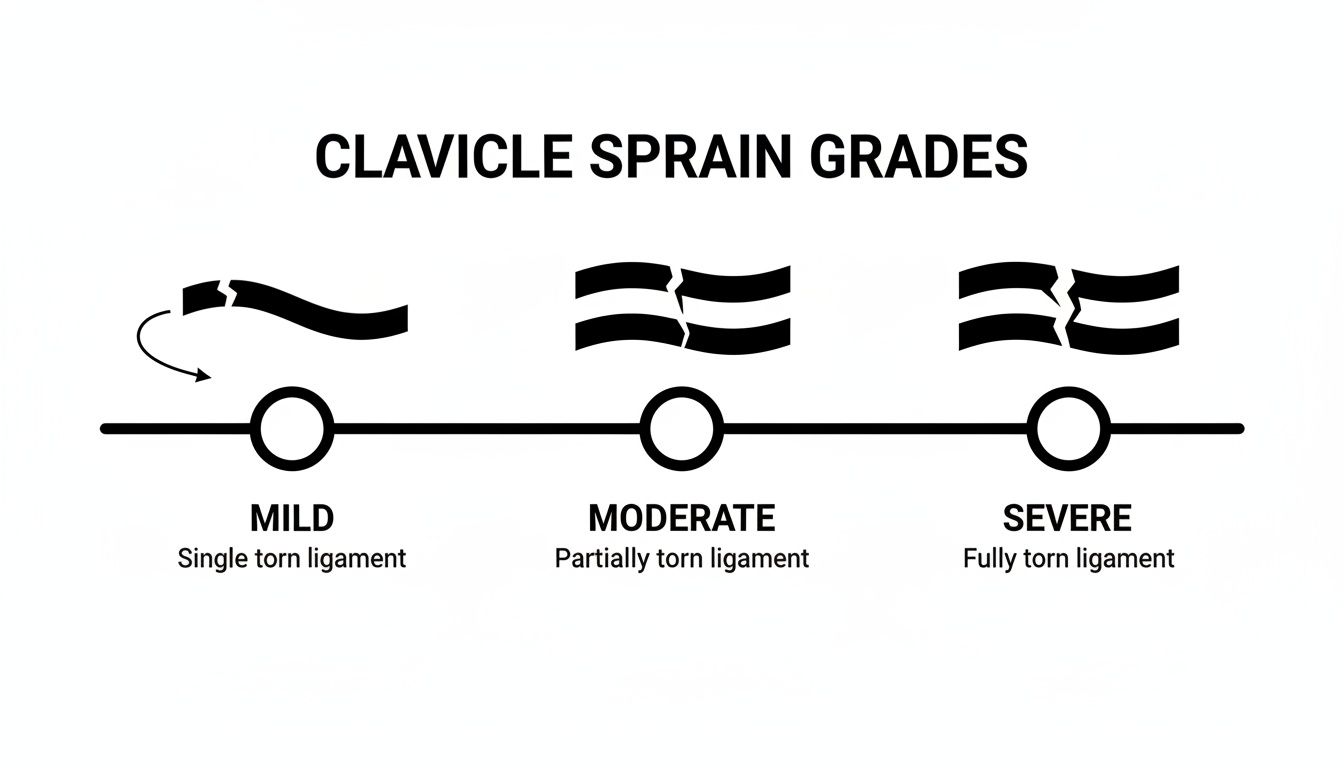
As you can see, the sprain’s grade is directly tied to the physical damage, which in turn dictates the treatment path and recovery timeline.
Typical Recovery Timelines for a Sprained Clavicle Joint
| Sprain Grade | Typical Treatment | Estimated Time for Return to Light Activity | Estimated Time for Full Recovery |
|---|---|---|---|
| Grade 1 (Mild) | Rest, sling, ice, physical therapy | 1-2 weeks | 2-4 weeks |
| Grade 2 (Moderate) | Sling for 2-4 weeks, physical therapy | 4-6 weeks | 6-12 weeks |
| Grade 3 (Severe) | Sling or surgery, extensive physical therapy | 6-8 weeks (conservative), 8-12 weeks (surgical) | 3-6 months |
| Grades 4-6 (Very Severe) | Surgery is almost always required | 3-4 months | 6+ months |
These are just estimates. Your personal recovery timeline will depend on your specific injury, your overall health, and how closely you follow your medical team's instructions.
Long-Term Effects and What They Mean for Your Claim
Unfortunately, a sprained clavicle joint can leave you with problems that last long after the initial healing. These potential long-term issues are a critical part of your damages, representing a lifetime of cost and consequences.
You might be left dealing with:
- Chronic pain and stiffness
- A noticeable deformity or a permanent "bump" on your shoulder
- Shoulder instability, weakness, or limited range of motion
- Early-onset arthritis in the damaged joint
The trend toward surgery for these injuries is another key factor. Research shows that the surgical rate for clavicle injuries increased by 582% between 2005 and 2019. This means if you're hurt in a serious accident today, you are more likely to need a complex operation, face a longer recovery, and accumulate higher medical bills—all of which a skilled Texas personal injury lawyer will factor into your demand for compensation.
Trying to manage your recovery while thinking about legal matters can feel overwhelming. You can read more about motor vehicle accident injuries and their treatment in our in-depth guide. By understanding what’s ahead, you empower yourself to make the best decisions for both your health and your financial future.
How to Build Your Texas Personal Injury Claim
After a serious accident, your first priority is your health. But as you begin the long road to recovery from a sprained clavicle joint, it's equally important to understand how to build your legal case. Texas personal injury law is designed to hold negligent people accountable and help you get the resources you need to heal.
Understanding Negligence and Fault in Texas
In Texas, most injury claims are based on the legal principle of negligence. Simply put, negligence occurs when someone fails to act with reasonable care, and that failure causes you harm.
For example, imagine you’re in a multi-car pile-up on a Dallas freeway caused by a commercial truck driver who was speeding. That driver had a legal duty to operate his rig safely. By speeding, he breached that duty, and the wreck he caused gave you a severe SC joint sprain. Under Texas law, his negligence makes him and his employer legally at fault for your injuries.
Texas also uses a “modified comparative fault” rule, also known as proportionate responsibility. This rule means you can still recover compensation even if you are partially to blame for the accident, as long as your share of the fault is not 51% or more. Your final compensation would simply be reduced by your percentage of fault. A skilled truck crash lawyer in Houston is essential for fighting back against unfair blame and protecting your right to full compensation.
The Evidence That Powers Your Claim
A strong personal injury claim is built on solid evidence. While you focus on healing, your legal team will gather all the proof needed to establish who was at fault and the full extent of your losses.
Key evidence in these cases includes:
- The Official Police Report: This document provides an initial account of the accident, often noting the officer's opinion on the cause and contributing factors.
- Witness Statements: Eyewitnesses can provide unbiased details that corroborate the other party’s negligence.
- Photos and Videos: Images of the accident scene, vehicle damage, and your visible injuries (like bruising or a deformity from a clavicle separation) are powerful forms of proof.
- Medical Records and Bills: Every doctor’s note, X-ray, physical therapy session, and prescription receipt creates a paper trail documenting the severity and cost of your injury.
Think of your claim as a story you have to tell the insurance company. Each piece of evidence is a chapter that proves your story is true and that you deserve to be compensated for every loss you’ve suffered.
A sprained clavicle rarely happens in a vacuum after a violent crash. It often points to more widespread trauma. Research shows that in patients with clavicle fractures from such accidents, 15.3% also had spine fractures and 8.8% had skull fractures. These related injuries complicate recovery and significantly increase a claim's value. You can discover more about how clavicle injuries often signal more extensive trauma.
Your Role in Documenting the Impact
While your attorney manages the official investigation, you can take simple steps to strengthen your case. Your personal documentation helps tell the human story of how this injury has impacted your life.
Start a journal and keep a file for everything related to the accident. Be sure to document:
- Your Pain Levels: Each day, rate your pain on a simple 1-10 scale.
- Daily Limitations: Write down everything you can no longer do or that has become a struggle—from picking up your child to typing at your desk.
- Missed Events: Log family gatherings, social events, or hobbies you were forced to miss because of your injury.
- All Expenses: Keep every receipt for co-pays, prescriptions, medical supplies, and even the gas you use driving to doctor's appointments.
This detailed record helps your Houston car accident attorney paint a vivid picture of your non-economic damages—the pain, suffering, and loss of enjoyment of life you’ve been forced to endure.
What Compensation Can You Recover for Your Injuries?

When an accident leaves you with a painful sprained clavicle joint, you’re suddenly facing more than just physical pain—you’re also facing a mountain of financial stress. It’s natural to wonder, "What is my claim actually worth?"
Under Texas law, you have the right to seek compensation—or "damages"—for the full impact of your injuries. This isn't just about covering bills; it's about making you as whole as possible after someone else’s negligence. These damages fall into two main categories: economic and non-economic.
Economic Damages: The Tangible Costs
Economic damages are the most straightforward part of a personal injury claim. These are the specific, calculable financial losses you’ve incurred because of the accident.
For a serious clavicle sprain, these costs can add up quickly. They typically include:
- All Medical Expenses: This covers every dollar spent on your healthcare, including the ER visit, X-rays or MRIs, any required surgery, physical therapy sessions, and prescription drugs. It also includes the projected cost of any future medical care you might need.
- Lost Wages: If your injury forced you to miss work, you are entitled to compensation for that lost income.
- Loss of Earning Capacity: If your injury prevents you from returning to your old job or forces you to take a lower-paying position, you can seek damages for this loss of future earning power. This is especially relevant for wrongful death cases where a family has lost its primary provider.
To prove these costs, your lawyer will rely on hard evidence like medical bills, pay stubs, and employment records to build an undeniable picture of your financial losses.
Non-Economic Damages: The Human Cost
While economic damages cover your financial losses, non-economic damages address the profound, personal ways an injury has impacted your life.
These damages acknowledge that your suffering goes far beyond financial strain. They place a value on the pain, emotional distress, and loss of quality of life that you have been forced to endure.
For a sprained clavicle joint, non-economic damages often cover:
- Pain and Suffering: This compensates you for the physical pain and emotional anguish you’ve had to live with.
- Physical Impairment: This addresses the loss of ability to perform daily tasks, such as caring for your children, exercising, or even sleeping without pain.
- Disfigurement: A severe AC or SC joint separation can leave a permanent, visible bump or scar. This damage addresses the emotional toll of living with such a physical change.
- Loss of Enjoyment of Life: This is for the hobbies, activities, and simple joys that your injury has taken from you.
Calculating the value of these damages is complex. This is where the experience of a dedicated attorney becomes absolutely critical in telling the full story of your losses. You can learn more about the differences between economic vs. non-economic damages in our comprehensive guide.
Types of Compensation in a Texas Clavicle Injury Claim
| Type of Damage | What It Covers | Examples |
|---|---|---|
| Economic | All direct, verifiable financial losses. | Medical bills, lost income, physical therapy costs, future medical care. |
| Non-Economic | The intangible, human cost of the injury. | Pain and suffering, emotional distress, physical impairment, disfigurement. |
How Long Do You Have to File a Claim in Texas?
It is critical to know that you don’t have unlimited time to act. In Texas, the statute of limitations for most personal injury claims is just two years from the date of the accident.
If you miss that two-year deadline to file a lawsuit, you will lose your right to seek compensation forever. The law is incredibly strict. That’s why it is so important to speak with a Texas personal injury lawyer as soon as possible after an injury. This gives them the time needed to investigate your accident, preserve crucial evidence, and protect your rights before the clock runs out.
Why You Need an Advocate Against the Insurance Companies
After an accident, you can expect a call from the other driver's insurance adjuster almost immediately. It is vital to remember who they work for. Their only job is to protect their company's bottom line by paying you as little as possible for your sprained clavicle joint claim—or denying it altogether.
These adjusters are trained negotiators. They may sound friendly and concerned, but their goal is to get you to accept a quick, lowball settlement before you understand the full extent of your injury and your future medical needs.
Leveling the Playing Field
Hiring a personal injury attorney isn't about being aggressive; it's about ensuring you are on equal footing. While you focus on healing, your lawyer will step in to handle every phone call, email, and negotiation with the insurance company.
This is especially true for injuries like a clavicle sprain, where the total financial impact isn't clear right away. A good attorney ensures that every part of your suffering—from months of physical therapy to potential long-term pain—is factored into your claim.
You have the right to decline a recorded statement and to refuse to sign any documents until you have spoken with a lawyer. An insurance company's first offer is almost never its best offer.
A skilled lawyer takes the stress off your shoulders so you can focus on what matters most: getting better. Your attorney will take charge of the investigation, gather all medical records and evidence, and build a solid case designed to secure the full compensation you are owed. You can step back from the fight, knowing your rights are being protected by an experienced professional.
As you build your claim, it's also important to understand your rights with your own health plan, especially if they deny coverage for treatment. Knowing how to appeal health insurance denial can be a critical part of managing your medical bills.
You Don't Have to Fight Alone
This isn't a battle you should wage by yourself. With an experienced legal advocate in your corner, you can force the insurance company to take your claim seriously. For more practical advice on navigating this process, you can check out our guide on how to deal with insurance adjusters.
Expert legal help is just a phone call away. It all starts with a free, no-cost conversation to help you understand your options. Recovery is possible, and a strong legal team can help you get the resources you need to put your life back together.
Frequently Asked Questions About Clavicle Injury Claims
After a serious accident, your mind is probably racing with questions. It’s a stressful and confusing time. We’ve put together answers to some of the most common questions we hear from people dealing with a painful sprained clavicle joint and trying to figure out what comes next.
How Much Is My Sprained Clavicle Joint Claim Worth in Texas?
This is the number one question on everyone’s mind, and the honest answer is: it depends entirely on the specifics of your case. The value of your claim hinges on factors like the medical grade of your sprain, the total cost of your medical treatment, and how much income you’ve lost. A minor Grade 1 sprain that heals quickly might resolve for a few thousand dollars. But a severe sprain needing surgery and causing permanent limitations could be worth significantly more.
An experienced Texas personal injury lawyer can evaluate the details of your accident and injuries to give you a clearer idea of what your claim could be worth.
Do I Need a Lawyer If the Insurance Company Already Made an Offer?
You should always speak with an attorney before accepting any offer from an insurance company. Their first offers are almost always lowball figures designed to close your case quickly and cheaply. These initial offers rarely cover the true long-term costs of a serious injury like a clavicle sprain, ignoring future medical bills, permanent impairment, and the real value of your pain and suffering.
Remember, the insurance adjuster’s job is to save their company money, not to ensure you are made whole. A lawyer's job is to fight for you.
A skilled attorney knows how to properly value your claim, negotiate from a position of strength, and fight for the full and fair compensation you actually deserve.
Can I Still File a Claim If the Accident Was Partially My Fault?
Yes, you absolutely can. Texas follows a rule called "modified comparative fault," or what the law refers to as "proportionate responsibility." This rule means you can still recover money for your damages as long as you are not found to be 51% or more responsible for the accident. Your final compensation will simply be reduced by whatever percentage of fault is assigned to you. For example, if a jury finds you were 20% at fault, your total damage award would be reduced by 20%.
This is a complex area of Texas law. Having a Houston car accident attorney on your side to argue against unfair blame is critical to protecting your right to a fair recovery.
A serious injury can leave you feeling lost and overwhelmed, but you don’t have to face this journey alone. The dedicated team at The Law Office of Bryan Fagan, PLLC is here to provide the clear answers and strong advocacy you need. We are committed to helping you secure the resources necessary for a full recovery, allowing you to focus on healing while we handle the fight for justice.
If you or a loved one has suffered a sprained clavicle joint in an accident, contact us today. Your recovery is possible, and legal help is available. We invite you to schedule a free, no-obligation consultation to understand your rights and next steps. Let us show you how we can help. Schedule your free consultation online or call us now.