A serious accident can change your life in seconds — but you don’t have to face it alone. After you’ve been hurt, the first moves you make are crucial, not just for your health but for your ability to get fair compensation later on. Taking the right steps right away builds the foundation for a strong personal injury claim and protects you from the very beginning.
Your First Steps After an Injury
The moments after an accident can be a blur of confusion and shock. Whether you were in a multi-car pileup on a Houston freeway or slipped on a wet floor in a Dallas grocery store, what you do next is what counts. Your first priority is always your well-being, but a few key actions can make a huge difference in your recovery, both physically and financially.
Those initial hours and days are critical. Evidence can vanish, memories can get hazy, and you can be sure the insurance companies will try to call you before you've even had a chance to think straight. By putting your health first, documenting the scene, and officially reporting what happened, you take back control and start building your case on solid ground.
Prioritize Your Medical Care
Your health is everything. Even if you think you’re fine or believe your injuries are minor, get a medical evaluation immediately. You’d be surprised how many serious issues, like traumatic brain injuries or internal bleeding, don't show symptoms right away. Adrenaline is a powerful painkiller, and it can trick you into thinking you're okay when you're not.
Heading to an urgent care clinic or the ER does two vital things:
- It protects your health. Getting an early diagnosis and starting treatment is the key to a full recovery. It can stop a small problem from turning into a chronic one.
- It creates an official record. A doctor's visit produces a medical report that directly connects your injuries to the accident. This document is powerful evidence that proves the harm you suffered, and you'll need it when you file a personal injury claim.
Without that medical link, an insurance adjuster will argue that your injuries were pre-existing or happened after the accident. Don't give them that opening.
This infographic breaks down the essential actions to take right after an injury to protect both your health and your rights.
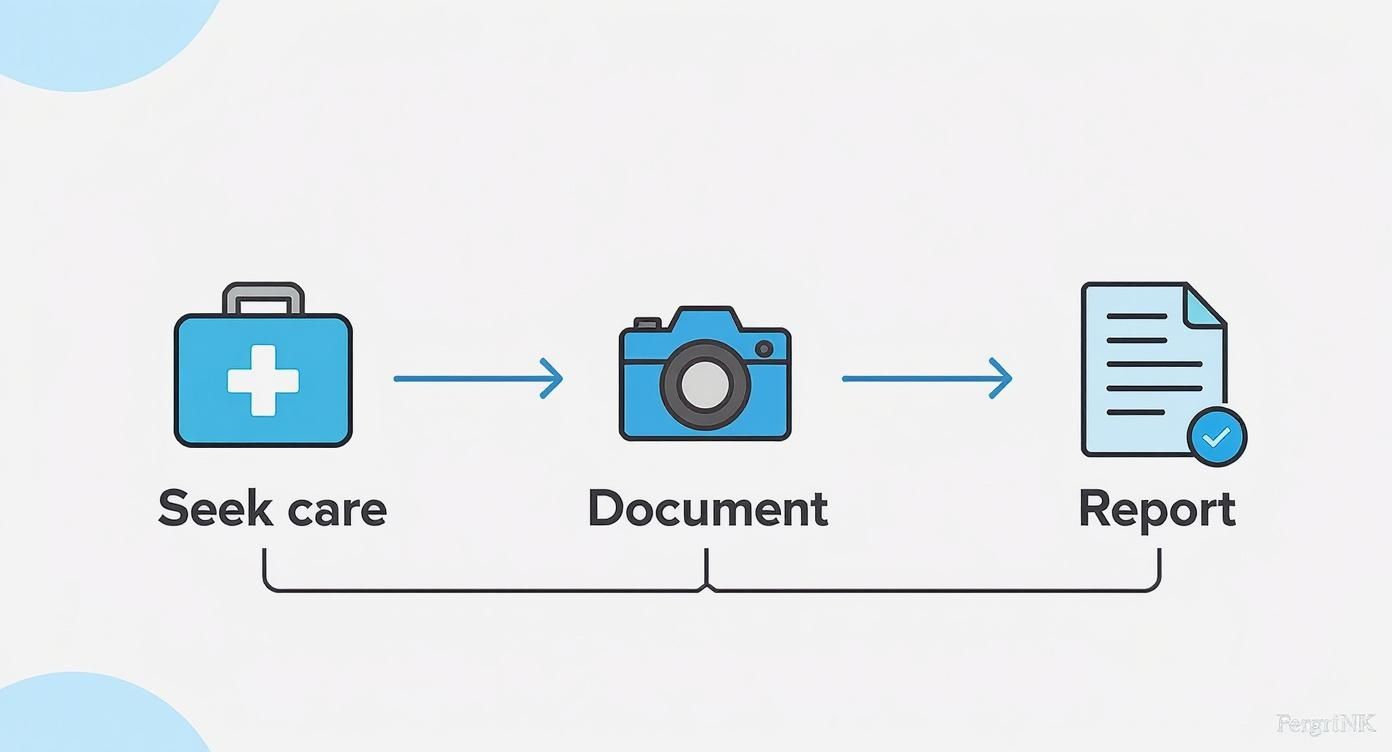
This visual guide drives home the point: seeking care, gathering evidence, and reporting the incident are the pillars of a successful claim.
Document Everything You Can
If you're physically able to, start gathering as much information from the scene as you can. This evidence will be invaluable later. Think of yourself as an investigator, and your phone is your most important tool.
The more details you can capture immediately after an accident, the stronger your position will be when dealing with insurance companies. They will scrutinize every aspect of the incident, and your documentation is your first line of defense.
Use your phone to take photos and videos of everything:
- The entire accident scene from multiple angles
- Damage to any vehicles or property involved
- Any visible injuries you have, like cuts, bruises, or swelling
- The hazard that caused the accident (a wet floor, a broken stair, debris in the road)
- The weather, traffic signs, and even the time of day
Next, get information from everyone involved, including any witnesses. You'll want names, phone numbers, addresses, driver's license numbers, and insurance details. If people saw what happened, ask them for their contact info. An impartial account from a witness can be incredibly persuasive. For more specifics, you can learn what to do after a car accident in our detailed guide.
Report the Incident Officially
Finally, make sure the accident is officially documented. If you were in a car crash, call 911. A police officer will come out and create an official accident report, which is a key piece of evidence that lays out the facts.
If you were hurt on someone else’s property, like in a store or an apartment complex, report it to the manager or owner on the spot. Ask them to file an incident report and make sure you get a copy for your records. This formal report creates a timeline and proves you took the incident seriously right from the start.
These initial steps can feel overwhelming when you're hurt and shaken, but they are your best defense. They put the power back in your hands, protect your legal rights, and set the stage for a just recovery.
Understanding Texas Personal Injury Law
When you’ve been hurt in an accident, trying to make sense of the legal system can feel overwhelming—especially when all you want to do is heal. But taking a moment to understand a few core principles of Texas personal injury law gives you power. It helps you know where you stand and is the first step toward getting the compensation you deserve.

The entire legal process boils down to one critical concept: negligence. In simple terms, for your claim to be valid, you have to show that someone else was careless, and their carelessness is what caused your injuries.
What is Negligence in a Texas Injury Claim?
Proving negligence in Texas isn't just about pointing fingers; it’s about presenting the facts. To succeed, your case must clearly establish four specific elements:
- Duty: The other party had a legal responsibility to act with reasonable care. For example, every driver has a duty to obey traffic laws and pay attention to the road.
- Breach: They failed in that responsibility. This could be a driver running a red light, a grocery store manager ignoring a puddle on the floor, or a manufacturer selling a defective product.
- Causation: Their failure was the direct cause of your injuries. The harm you suffered must be a direct result of their actions.
- Damages: You suffered real, measurable harm. This covers everything from your medical bills and lost wages to your physical pain and emotional suffering.
Think of these four elements as the legs of a table. If one is missing, your entire claim can fall apart. A good Texas personal injury lawyer knows how to gather the evidence needed to support each point, building a rock-solid foundation for your case.
How Shared Fault Affects Your Claim in Texas
But what happens if you might have been partly at fault? Imagine a crash on a Houston freeway. Maybe you were following a bit too closely, but the driver who slammed into you was texting. This is where a Texas rule called modified comparative fault (or proportionate responsibility) becomes incredibly important.
This rule says you can still recover compensation as long as you aren't 51% or more to blame for the accident. However, your final award will be reduced by your percentage of fault.
For example, if a jury decides you were 20% at fault for an accident and your total damages are $100,000, you will receive $80,000. But if they find you 51% responsible, you get nothing.
This is exactly why having an experienced lawyer in your corner is so critical. Insurance companies often use this rule to shift as much blame as possible onto you to reduce what they have to pay—or deny your claim entirely.
How Long Do You Have to File a Claim in Texas?
In Texas, the clock starts ticking the moment you get hurt. You have a limited amount of time to take legal action, a deadline known as the statute of limitations. For most personal injury cases, that window is two years from the date of the accident.
Two years might sound like a long time, but evidence can disappear quickly. Security camera footage gets erased, and witness memories fade.
If you miss that two-year deadline, you will almost certainly lose your right to seek compensation forever, no matter how strong your case is. Exceptions are extremely rare, so it's vital not to wait.
Filing a personal injury claim is a complex journey. While hundreds of thousands of claims are filed in the U.S. each year, only a small fraction end up in a courtroom trial. The vast majority are settled through strategic negotiation, which highlights how important it is to have solid legal guidance from day one.
If you’ve been injured, don't let your rights slip away. A compassionate Houston car accident attorney can step in to evaluate your case, preserve crucial evidence, and ensure every deadline is met, freeing you to focus on what matters most: your recovery.
Calculating the Full Cost of Your Injuries
After a serious accident, your first thought is getting better. It’s only when the medical bills start arriving that the true financial weight of what happened begins to sink in. So, how do you put a number on everything you’ve lost?
Calculating the full value of your personal injury claim is about more than just adding up receipts. It’s about accounting for every single way this injury has impacted your life, both today and in the future. A fair settlement must cover not just your visible expenses, but your unseen struggles as well.
Under Texas law, the compensation you can seek falls into two main categories: economic damages and non-economic damages.
Identifying Your Economic Damages
Economic damages are the straightforward, tangible losses—the ones that come with a clear price tag. You can prove these with bills, invoices, and pay stubs. Your job here is to collect documentation for every single expense tied to your injury.
This list often includes:
- Medical Bills: This is the big one. It covers everything from the ambulance ride and ER visit to surgeries, hospital stays, physical therapy, prescription drugs, and any future medical care you’ll need.
- Lost Wages: If your injuries forced you to miss work, you have a right to be compensated for every dollar of income you lost.
- Loss of Earning Capacity: This is different from lost wages. If your injuries are permanent and you can no longer do your old job or earn what you used to, you can claim damages for this future loss.
- Property Damage: This is common in car crashes. It covers the cost to repair or replace your vehicle and any other personal items destroyed, like a laptop or phone.
- Out-of-Pocket Costs: Don't forget the smaller expenses that add up, like mileage for driving to doctor’s appointments or hiring help for household chores.
Gathering this paperwork is the foundation of your claim. It’s the hard evidence you’ll present to the insurance company.
Valuing Your Non-Economic Damages
While bills are easy to tally, some of the worst losses from an accident don't come with a receipt. This is where non-economic damages come in. They are meant to compensate you for the intangible, personal suffering you've been forced to endure. They might be harder to put a number on, but they are just as real—and just as important.
For instance, a truck crash lawyer Houston might work with a client who not only has a mountain of hospital bills but is also now unable to coach their kid’s soccer team or enjoy weekend fishing trips. That loss of enjoyment is a very real, and compensable, damage.
These damages can include:
- Pain and Suffering: This is for the physical pain, chronic discomfort, and emotional distress your injuries have caused.
- Mental Anguish: This addresses the emotional trauma—the anxiety, depression, fear, or PTSD that often follows a serious accident.
- Loss of Enjoyment of Life: This acknowledges your inability to participate in the hobbies and activities that brought you joy before you were hurt.
- Disfigurement: This provides compensation for permanent scarring or physical changes that impact your appearance and self-esteem.
- Loss of Consortium: In some cases, a spouse can file a claim for the loss of companionship, intimacy, and support resulting from their partner's injuries.
An experienced Texas personal injury lawyer knows how to build a case that paints a clear picture of these profound personal losses. We often use testimony from family, friends, and experts to show the insurance company exactly how much your life has changed.
Types of Damages in a Texas Personal Injury Claim
| Type of Damage | What It Covers | Examples |
|---|---|---|
| Economic Damages | Tangible financial losses that can be proven with receipts, bills, and pay stubs. | Medical Bills (past and future), Lost Wages, Lost Earning Capacity, Property Damage, Prescription Costs, Physical Therapy |
| Non-Economic Damages | Intangible losses related to the personal and emotional impact of the injury. | Pain and Suffering, Mental Anguish, Loss of Enjoyment of Life, Disfigurement, Loss of Consortium (for a spouse) |
Understanding both categories is the key to ensuring you don’t leave money on the table. A fair settlement must cover every single loss, not just the obvious ones.
Whether you need a Houston car accident attorney to handle a complex crash claim or a wrongful death lawyer Texas to fight for your family, making sure every single damage is counted is our top priority.
Handling Insurance Companies and Your Claim

After an accident, the other driver’s insurance adjuster will likely call you. It’s critical to remember their job: protecting the company’s bottom line by paying out as little as possible. These adjusters are trained negotiators, and anything you say can be used to devalue your claim.
Dealing with them can be stressful, but knowing what to expect gives you an advantage. They aren’t on your side. Their friendly, concerned tone is a tactic designed to get you to let your guard down.
Your First Call With the Adjuster
When the adjuster calls, they will ask for your side of the story. Remain polite, but be firm. Give them only the most basic, factual information—your name, contact details, and the date and location of the accident. You are not obligated to provide anything more.
They will almost certainly ask for a recorded statement. You should politely but firmly decline. These statements are a trap, designed to lock you into a story before you know the full extent of your injuries or all the facts of the accident.
Key Takeaway: You have the right to say, "I am not comfortable giving a recorded statement at this time." This simple phrase is your best defense against saying something that could damage your claim.
Insurance companies often push for a quick settlement, sometimes offering a check within days of the accident. It might seem like a welcome relief, but it’s almost always a lowball offer. An early check never accounts for future medical treatment, long-term lost income, or the full scope of your pain and suffering. Once you cash that check, your case is closed for good.
Filing the Formal Claim and Drafting Your Demand Letter
Once you have a clearer picture of your injuries and have gathered your documents, it’s time to formally present your claim. This is done by sending a demand letter to the at-fault party's insurance company. This isn't just a simple note; it's a professional, detailed document that officially kicks off the negotiation process.
A strong demand letter should:
- Establish Liability: Clearly explain why their insured was at fault, using evidence like the police report and witness statements.
- Detail Your Damages: Provide a comprehensive breakdown of all your economic and non-economic damages, supported by medical bills, proof of lost wages, and a narrative of your suffering.
- Make a Specific Demand: Conclude with a specific dollar amount you are seeking to settle the claim.
Drafting a powerful demand letter is crucial. You can look at examples of effective sample personal injury demand letters to see how they are structured. If you were hit by a driver with little or no insurance, it's also important to understand the process for filing uninsured or underinsured motorist claims with your own insurance company.
Navigating this process is a strategic challenge. Having an experienced lawyer draft your demand letter and handle all communications ensures you present the strongest case possible from the start.
When You Need a Texas Personal Injury Lawyer
Deciding when to hire a lawyer is one of the most important choices you'll make after an accident. For a minor fender-bender with no injuries, you might be able to handle it yourself. But the moment an accident gets complicated or someone is seriously hurt, the stakes become much higher.
A dedicated Texas personal injury lawyer does more than just file paperwork; they shield you from the insurance company's tactics and fight to protect your rights.
Imagine a major pile-up on I-45 in Houston. With multiple cars and insurance companies all scrambling to shift blame, you need an experienced advocate to cut through the chaos and fight for your interests.
High-Stakes and Complex Injury Cases
Some accidents are simply too complex to handle on your own. If your situation involves any of the following, it’s a clear sign that you should speak with an attorney right away.
These cases almost always involve sophisticated legal arguments, expert witnesses, and significant resources to build a winning claim.
- Catastrophic Injuries: Any injury that leads to long-term or permanent disability—like a spinal cord injury, a traumatic brain injury (TBI), or severe burns—demands legal expertise. Calculating the lifetime cost of care for these injuries is an incredibly complex process.
- Wrongful Death Claims: The grief of losing a loved one is overwhelming. A compassionate lawyer handles the immense legal burdens of a wrongful death lawyer Texas claim, allowing your family the space to heal.
- Commercial Truck Accidents: Collisions involving 18-wheelers are never simple. These cases are tangled in federal regulations and involve multiple layers of liability, from the driver to the trucking company. A truck crash lawyer Houston is essential.
When the Insurance Company Fights Back
Even in a case that seems straightforward, you’ll know you need a lawyer when the insurance company starts playing hardball. Their primary goal is to protect their profits, not to give you a fair settlement.
You are not obligated to accept an unfair offer or a denial of your claim. An experienced attorney can step in, re-open negotiations from a position of strength, and show the insurer you are serious about getting the compensation you deserve.
Watch out for these common tactics—they’re red flags that it's time for professional help:
- Disputing Fault: The adjuster tries to blame you, using Texas's comparative fault rules to reduce or deny your payout.
- Denying Your Claim: An outright denial based on a policy technicality or a false claim that your injuries aren't related to the accident.
- Making a Lowball Offer: The first offer is almost always a fraction of what your claim is actually worth. They hope you’ll take it and go away.
A good lawyer immediately adds value by taking over all communications, launching an independent investigation, and bringing in expert witnesses if needed. And if your claim can’t be settled, your attorney can show you how to prepare for trial and win your case.
Knowing when to call a lawyer is just as important as knowing who to call. For more tips, check out our detailed guide on how to choose a personal injury lawyer that fits your needs.
Common Questions About Injury Claims

After a serious accident, it's completely normal to have a lot of questions. As you start to think about filing a personal injury claim, the uncertainty can feel overwhelming.
Our goal is to bring clarity to the confusion. Below, we've answered some of the most common questions we hear from clients, giving you the straightforward information you need to feel more in control.
How Much Does It Cost To Hire a Personal Injury Lawyer?
This is usually the first thing people worry about, and the answer is a huge relief for most. Reputable personal injury lawyers in Texas work on a contingency fee basis.
This means you pay absolutely nothing upfront. Our fee is a pre-agreed-upon percentage of the final settlement or court award we secure for you.
In short: If we don’t win your case, you owe us nothing in attorney fees. This levels the playing field, allowing anyone to get top-tier legal representation, regardless of their financial situation.
What if the Insurance Company's First Offer Seems Fair?
It’s tempting to accept the first offer, especially when medical bills are piling up. But you have to be extremely cautious. The insurance adjuster's initial offer is almost always a lowball figure that doesn't cover the true value of your claim.
These first offers are a business tactic designed to close your case quickly and cheaply. They rarely account for the full picture, such as:
- Future medical care, like ongoing physical therapy or surgeries.
- Long-term lost earning capacity if you can't return to your previous job.
- The true cost of your non-economic damages, like pain and suffering.
Once you accept an offer, you sign away your right to ever ask for more money for this injury—even if it turns out to be far more serious than you first thought. It's always smart to have a Houston car accident attorney review any offer before you consider accepting it.
How Long Will My Personal Injury Case Take?
There’s no single answer; the timeline for a personal injury claim can vary dramatically. It depends on the complexity of your case and whether the other side is willing to negotiate fairly.
A straightforward case with clear fault and minor injuries might settle in a few months. But a complex case involving a catastrophic injury from a truck accident or a dispute over fault could easily take a year or longer, especially if a lawsuit is necessary. An experienced truck crash lawyer in Houston can give you a more realistic timeline after reviewing the details of your accident.
Do I Have To Go To Court To Get Compensation?
The thought of a courtroom battle is stressful. The good news is that the vast majority of personal injury cases never go to trial. In fact, more than 95% of these cases are resolved through out-of-court settlements.
Filing a lawsuit is often a strategic step to push negotiations forward. It signals to the insurance company that you're serious and won't back down. This action is often what motivates them to come back to the table with a fair offer.
A skilled Texas personal injury lawyer will manage all negotiations and legal filings for you, always aiming to get you the best possible result without you ever having to step foot in court.
Should I Wait to Hire a Lawyer?
Absolutely not. The best time to call an attorney is as soon as possible after an accident. Critical evidence can disappear quickly—witness memories fade, security footage gets overwritten, and physical evidence at the scene is lost. The sooner a lawyer is on your side, the faster they can work to preserve everything needed to build a strong case.
Hiring a lawyer early also shields you from the insurance company's tactics. We can take over all communications so you don't have to worry about saying something that could be used against you. Getting legal advice from day one lets you focus on what truly matters: your recovery.
A serious injury shouldn't dictate your future. At The Law Office of Bryan Fagan, PLLC, we provide the compassionate guidance and experienced representation you need to move forward with confidence. Recovery is possible, and dedicated legal help is available.
Schedule your free, no-obligation consultation today to discuss your case and learn how we can fight for you. Visit us at https://texaspersonalinjury.net.