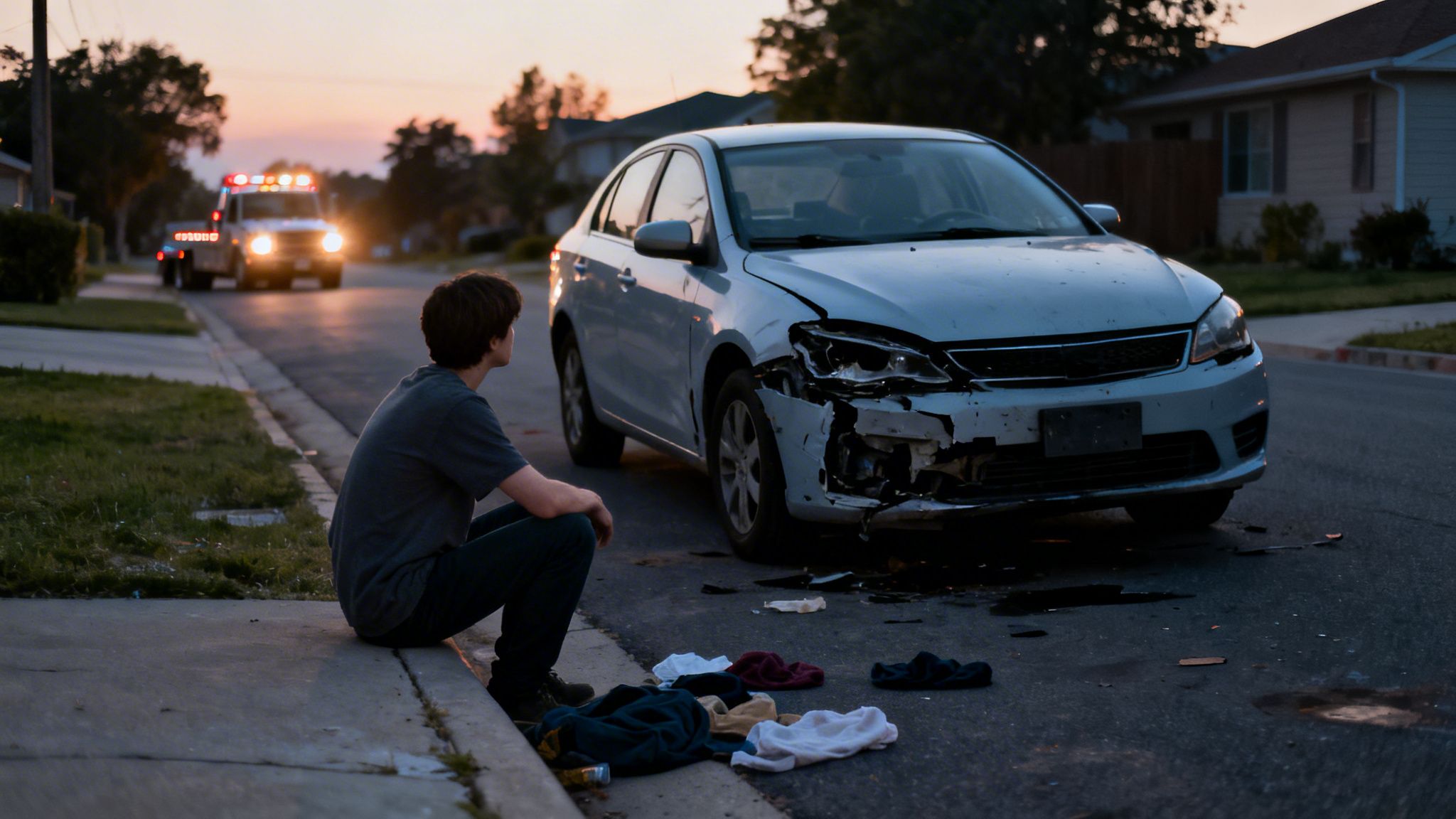
A serious accident can change your life in seconds—but you don’t have to face it alone. The screech of tires, the sickening crunch of metal—in a split second, a drunk driver's reckless choice shatters your world. The shock, pain, and overwhelming confusion you're feeling are completely understandable. Being hit by a drunk driver isn't just a car accident; it's a violent crime that leaves you to deal with physical, emotional, and financial burdens you never deserved.
A Drunk Driver Changed Your Life. What Happens Now?
Whether you were on a busy Houston freeway or a quiet neighborhood street, the chaos after the crash makes it almost impossible to think clearly. Adrenaline can easily mask the severity of your injuries, while the emotional trauma can feel paralyzing. We are here to cut through that fog and give you a clear path forward, starting right now, to protect both your health and your legal rights here in Texas.
Understanding Your Rights as a Victim of a Drunk Driving Accident
It's critical to understand that you aren't just dealing with a typical car wreck. You are the victim of a crime. Under Texas law, that distinction matters—a lot.
The driver who hit you will likely face criminal charges, such as Driving While Intoxicated (DWI). However, their criminal case is completely separate from your right to pursue justice and financial recovery through a civil personal injury claim.
A civil claim is your opportunity to hold the drunk driver accountable for the harm they’ve caused you and your family. This is where the legal concept of negligence takes center stage.
- Proving Negligence: In a typical personal injury case, you must show the other person had a duty to drive safely, they breached that duty, their failure caused your injuries, and you suffered damages as a result.
- Drunk Driving Is Negligence Per Se: Here’s the key advantage for you. Because the other driver broke the law by driving while intoxicated, their actions are automatically considered negligent under a Texas legal principle called “negligence per se.” This gives your claim a powerful head start.
This legal advantage is a huge help, but it doesn't guarantee a fair settlement. Insurance companies are notorious for trying to downplay injuries or push for a quick, lowball offer. Knowing your rights is the first step to fighting back and protecting your future.
You are not alone in this. Texas law provides a clear path to hold the responsible driver accountable for the pain, the medical bills, and the lost income they forced upon you and your family.
How Long Do You Have to File a Claim in Texas?
It's also incredibly important to know that your time to take legal action is limited. In Texas, the statute of limitations for personal injury claims is generally just two years from the date of the accident.
That might sound like plenty of time, but building a strong case requires extensive evidence gathering and preparation. Missing that deadline means losing your right to sue forever. To make sure you're protected, check out our guide on the Texas statute of limitations for personal injury.
At The Law Office of Bryan Fagan, PLLC, we’ve seen firsthand the devastation these accidents cause. Our experienced Houston car accident attorneys are here to take the legal weight off your shoulders so you can focus on the one thing that truly matters: your recovery. We will fight to get you the compensation you deserve for your medical treatment, lost wages, and the immense pain and suffering you’ve been forced to endure. Recovery is possible, and legal help is available. Schedule your free consultation today.
Critical Actions to Take at the Accident Scene
The moments after a drunk driver hits you are chaotic. You’re disoriented, frightened, and likely in pain. What you do next can make a huge difference in both your physical recovery and your fight for justice. Your first priority is always your safety and the safety of anyone in the car with you.
If you’re able, try to move your vehicle to the shoulder or another safe spot away from traffic. But if your car is too damaged or you’re seriously injured, stay put unless there's an immediate threat like a fire. A car can be replaced; you can’t.
Prioritize Safety and Call for Help
The single most important thing you can do is call 911 immediately. This one call gets two critical things in motion: it brings paramedics for medical care and police to secure the scene and document the crash.
When you speak to the 911 dispatcher, provide your location and report any injuries you're aware of. Here’s a crucial piece of advice: if you suspect the other driver is intoxicated, say so. This detail ensures officers arrive prepared to conduct a DWI investigation, which is vital for your future case.
Even if you feel okay, you must get checked out by a medical professional. The adrenaline surging through your body after a crash can easily mask symptoms of serious internal injuries, a concussion, or whiplash. Seeing a paramedic or going to the ER creates an official medical record connecting your injuries directly to the accident—a piece of evidence that is absolutely essential for your claim.
Document Everything You Can
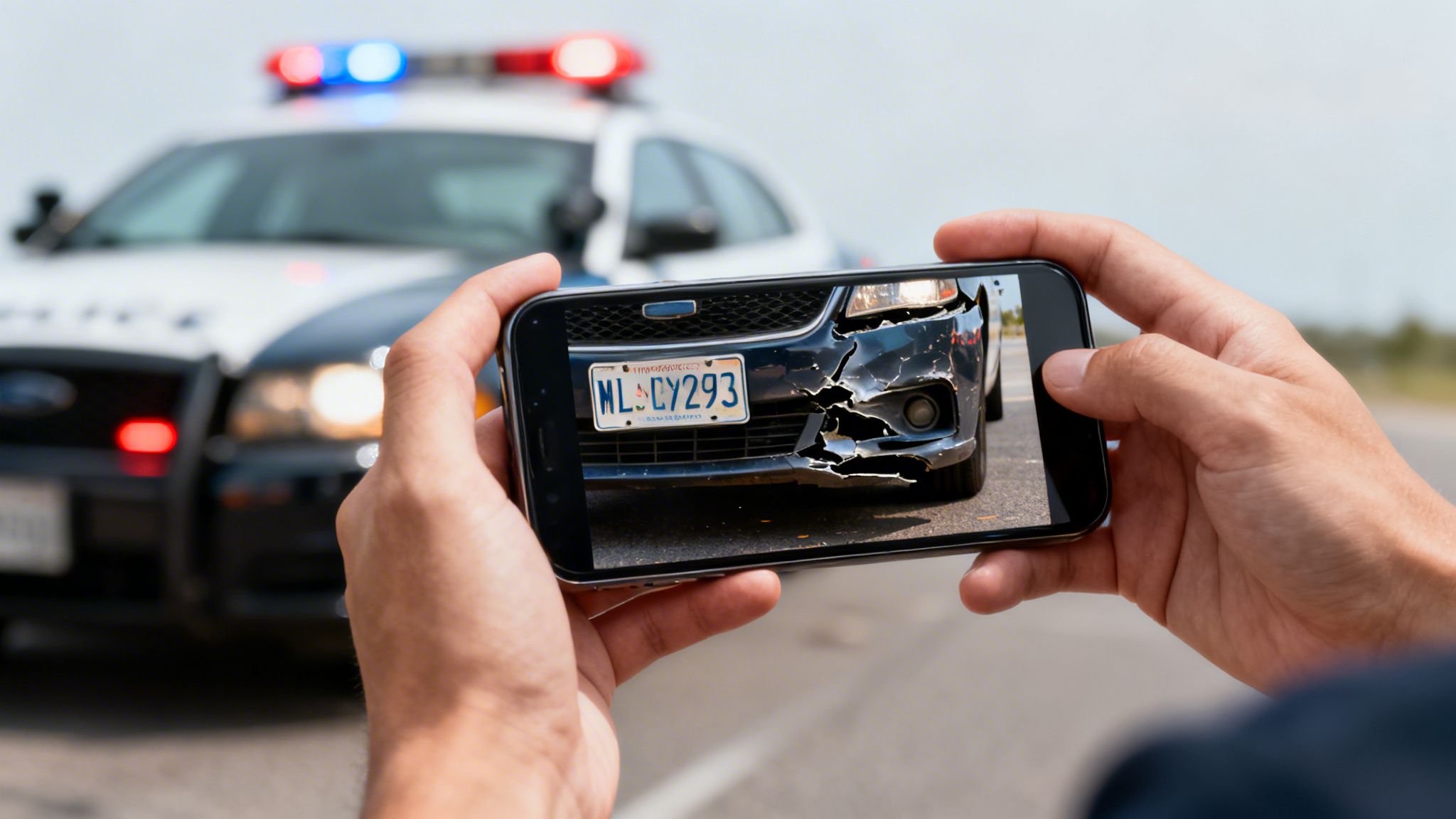
If you are physically able and it’s safe to do so, start gathering evidence while you wait for help to arrive. Your smartphone is your most valuable tool at this moment. Every photo and note you capture will help your Texas personal injury lawyer piece together what happened and build a rock-solid case.
Focus on capturing these key details:
- Vehicle Damage: Get wide shots of the entire scene, then take close-ups of the damage to every vehicle involved.
- License Plates and Insurance: Snap clear photos of the other driver's license plate and their insurance card if they provide it.
- The Crash Scene: Photograph any skid marks on the road, scattered debris, traffic signals, and anything else that helps tell the story of how the crash unfolded.
- Your Injuries: Take pictures of any cuts, bruises, or scrapes you or your passengers have.
This visual evidence is priceless. It freezes the immediate aftermath in time, creating a record that is incredibly difficult for the other side to dispute later.
Interact Carefully with the Other Driver
It's completely normal to feel a storm of emotions, especially anger. But it’s vital that you avoid a confrontation with the intoxicated driver. Their judgment is impaired, and their behavior could be unpredictable or even aggressive. It is much safer to keep your distance and observe their behavior.
When the police arrive, calmly and clearly tell them everything you observed. Mention any slurred speech, the smell of alcohol, erratic driving before the crash, or if you saw them trying to hide containers. Your statement provides crucial context for their official report.
Your interaction with the other driver should be limited to exchanging your name, contact information, and insurance details. Do not discuss who was at fault, and never apologize or say anything that could be twisted to sound like you're admitting responsibility. A firm "I'm not going to discuss the accident" is all you need to say.
If there were any witnesses, politely ask for their names and phone numbers. An independent account from a third party can be incredibly powerful in backing up your version of events. For example, after a Houston freeway crash, a witness's testimony about seeing a car swerving across lanes can be the key to proving gross negligence.
Every piece of information you gather at the scene helps build the foundation for holding the drunk driver accountable. Once you are safe, your very next call should be to an experienced legal team. The attorneys at The Law Office of Bryan Fagan, PLLC are here to guide you through the complex process that follows a drunk driving accident, so you can focus on healing. Recovery is possible, and we are ready to help you achieve it. Schedule your free consultation today.
Building Your Case Against the Drunk Driver
As the initial shock of the drunk driving accident begins to fade, your focus will naturally shift to holding the responsible driver accountable. While they face criminal proceedings, you have a separate, parallel civil claim. This is your path to securing the financial compensation you need to start rebuilding your life.
It's a process of building a powerful, undeniable case that proves the driver’s negligence and demonstrates the true extent of the harm they caused you and your family.

Here in Texas, the fact that the driver was intoxicated provides a powerful legal advantage. As mentioned, the legal doctrine of negligence per se means their fault is automatically assumed in a civil case because they broke a safety law.
This gives you a significant head start, but it’s just the beginning. A strong case requires much more evidence.
The Foundation of Your Claim: Official Documentation
The first layer of proof comes from official reports created by law enforcement and the criminal justice system. Your attorney will immediately move to secure these documents, which often become the bedrock of your personal injury claim.
These critical pieces of evidence include:
- The Police Report: This is the officer’s official narrative of the crash. It often includes notes on signs of intoxication, such as slurred speech, the smell of alcohol, or failed field sobriety tests.
- Criminal Court Records: Any paperwork from the driver’s DWI arrest and subsequent charges provides powerful proof of their illegal actions at the time they hit you.
- Toxicology Reports: A lab report showing the driver's blood alcohol concentration (BAC) is scientific, irrefutable evidence of their impairment.
These documents establish the driver's recklessness in a way that is incredibly difficult for their insurance company to dispute.
Expanding the Investigation: Who Else Is Responsible?
A thorough investigation, however, doesn't stop with the driver. In many cases, another party shares the blame. For instance, if a bar, restaurant, or even a social host knowingly served alcohol to someone who was already obviously intoxicated, they can also be held financially responsible for the harm that person caused.
This is made possible by Texas's Dram Shop laws. An experienced attorney will dig into this by hunting for evidence like bar tabs, credit card receipts, and statements from witnesses—like bartenders or other patrons—who saw the drunk driver being over-served.
Holding a negligent business accountable can provide an additional, and often crucial, source of recovery for your damages. You can learn more about how Dram Shop laws work in Texas in our detailed guide.
Proving a Dram Shop case requires moving fast to preserve evidence before it disappears. This is one of the most important reasons to contact a skilled Texas personal injury lawyer as soon as possible after a crash.
The need for this level of accountability is underscored by a tragic reality. Despite decades of public awareness campaigns, drunk driving remains a persistent threat. In 2023 alone, 12,429 lives were lost to drunk driving crashes across the U.S.—that’s about one-third of all traffic fatalities.
Texas is consistently one of the hardest-hit states. The data is a stark reminder of the urgent need for justice in our communities.
Your Role in Documenting the Aftermath
While your legal team gathers official evidence, the story of how this accident has turned your life upside down is a story only you can tell. Capturing this experience is just as important as collecting police reports.
Start a simple journal. Use a notebook or the notes app on your phone. Every day, take a few minutes to write down:
- Your physical pain on a scale of 1 to 10.
- The emotional and mental toll, such as anxiety, depression, or sleeplessness.
- Specific things you can no longer do, whether it's playing with your kids, going to work, or enjoying your hobbies.
This personal record creates a powerful human narrative that goes far beyond what a medical chart can show. At the same time, keep every single expense related to the crash. Keep a folder for receipts from prescriptions, co-pays, medical equipment, and even your mileage for trips to and from doctor's appointments.
In the most heartbreaking cases where a drunk driving accident leads to a fatality, a wrongful death lawyer in Texas can guide your family through the process of building a claim. In these devastating situations, understanding the potential role of private autopsies for wrongful death claims can sometimes be essential for establishing a clear cause of death and cementing the case against the negligent driver.
Calculating the Full Value of Your Drunk Driving Claim
When you're hit by a drunk driver, the medical bills start piling up almost immediately. It’s easy to focus only on those immediate costs, but accepting a quick settlement based just on what you owe right now is one of the biggest mistakes a victim can make. A fair claim must account for everything you’ve lost—and everything you will lose in the future.
The drunk driver’s insurance company knows this. Their strategy is often built around getting you to accept a fast, lowball offer before you have a chance to understand the true, lifelong impact of your injuries. To protect yourself, you need to know the different types of compensation, or damages, you are entitled to under Texas law.
Economic Damages: The Tangible Costs
This first category is the most straightforward. It covers every financial loss you’ve suffered because of the drunk driver's actions. These are the costs that come with a receipt or an invoice. Our job is to painstakingly document every penny to make sure nothing is overlooked.
We build a complete financial picture of your life before and after the crash. This evidence includes:
- All Medical Bills: This isn’t just the hospital stay. It’s the ambulance ride, ER visit, surgeries, prescriptions, and follow-up appointments.
- Future Medical Needs: A catastrophic injury often demands a lifetime of care. We work with medical and life-care planning experts to project the costs of future physical therapy, additional surgeries, in-home assistance, and necessary medical equipment.
- Lost Wages: We calculate every dollar of income you lost while you were out of work recovering.
- Diminished Earning Capacity: If your injuries prevent you from returning to your old job or working at the same level, you deserve compensation for that lost future income. We fight to recover it.
Non-Economic Damages: The Human Cost
This category is just as critical, but it’s designed to compensate you for losses that don't have a clear price tag. Non-economic damages address the profound and personal toll the crash takes on your life—the daily physical pain and emotional anguish you are forced to endure.
Imagine a construction worker in Dallas who suffers a spinal cord injury. He doesn't just lose his ability to earn a living; he may lose the joy of coaching his son's Little League team. Or a mother in San Antonio who sustains severe burns and now faces years of painful skin grafts and deep emotional trauma. These are devastating, life-altering losses, and Texas law rightly recognizes that you deserve to be compensated for them. You can learn more about how pain and suffering is calculated in our article.
"My dad was hit by an intoxicated driver…and the crash caused a traumatic brain injury so severe that he lost the ability to walk, talk, eat, or move on his own. Overnight, my father, who had been our family’s strength…was fighting for survival."
- Mahi, MADD Teen Influencer, sharing her family's story.
Here is a simple breakdown of the different types of compensation you can pursue after being hit by a drunk driver in Texas.
Types of Compensation in a Texas Drunk Driving Claim
| Type of Damage | What It Covers | Example |
|---|---|---|
| Economic | All tangible, out-of-pocket financial losses. | Hospital bills, lost paychecks, cost of future surgeries, vehicle repair. |
| Non-Economic | The intangible, human cost of the crash. | Physical pain, emotional distress, PTSD, loss of enjoyment of life. |
| Punitive | Damages meant to punish extreme negligence. | An extra award designed to deter the driver and others from drunk driving. |
Understanding what each of these damage types covers is the first step toward building a case that reflects the true, full value of your claim.
Punitive Damages: Punishing Gross Negligence
In a typical car wreck case, damages are usually limited to your economic and non-economic losses. Drunk driving accidents are different. Because getting behind the wheel while intoxicated is an act of gross negligence—a conscious and reckless disregard for the safety of others—Texas law allows victims to demand punitive damages.
These damages aren't about compensating you for a specific loss. Their sole purpose is to punish the drunk driver for their outrageous behavior and to send a powerful message to the community that this conduct will not be tolerated.
An award for punitive damages can dramatically increase the total value of your claim, but it requires a very high standard of proof that your attorney must skillfully present. The heartbreaking reality is that these crashes happen with sickening frequency. In 2023, 34 people in the United States were killed in drunk driving crashes every single day—that’s one preventable death every 42 minutes. You can review the full NHTSA data on drunk driving fatalities to see the devastating scale of this problem.
Why an Experienced Lawyer Is Your Strongest Ally
Trying to navigate the aftermath of a drunk driving accident on your own is an overwhelming battle. You’re trying to recover from both physical injuries and emotional trauma, but suddenly you’re also expected to deal with a complex legal system and an insurance company whose only goal is to pay you as little as possible. This is where an experienced Texas personal injury lawyer becomes your most critical partner.

Make no mistake, insurance adjusters are highly trained negotiators. They may sound friendly and concerned on the phone, but their job is to protect their company’s bottom line. They often push victims to give recorded statements that can be twisted and used against them, question the severity of injuries, or offer a quick, lowball settlement before you even know the full extent of your damages.
Having a dedicated legal advocate on your side completely changes this dynamic. As soon as you hire an attorney, all communication from the insurance company is routed through our office. This creates a powerful shield, giving you the space to focus entirely on your medical treatment and recovery without the constant stress of dealing with adjusters.
Leveling the Playing Field
An experienced lawyer does much more than field phone calls. We immediately launch a comprehensive investigation into your drunk driving accident, working to gather and preserve every piece of crucial evidence.
Our team takes immediate, decisive action. This includes:
- Securing Official Reports: We pull the police crash report, the at-fault driver's criminal DWI records, and the official toxicology results showing their blood alcohol concentration.
- Interviewing Key Witnesses: We track down and interview anyone who saw the crash or observed the driver's intoxicated state, locking in their testimony while their memories are still fresh.
- Documenting the Scene: If needed, we bring in accident reconstruction experts to analyze the physical evidence and create a scientific breakdown of exactly how the collision happened.
- Investigating All Liable Parties: We look beyond just the driver. Was a bar or restaurant over-serving them? This could open up a "Dram Shop" claim to secure additional compensation for your losses.
Having a legal professional in your corner sends a clear, powerful message to the insurance company: you will not be intimidated or taken advantage of. It’s about ensuring you are treated fairly and that your voice is heard.
This diligent work is especially vital given the ongoing crisis on Texas roads. The latest data reveals a disturbing trend: drivers aged 21-24 are involved in 29% of fatal alcohol-impaired crashes, with those aged 25-34 right behind them at 28%. Recent Texas figures showed 2,159 alcohol-related deaths out of 4,408 total traffic fatalities. The need for aggressive legal advocacy has never been greater. You can read more about these alarming drunk driving fatality trends and see for yourself why holding negligent drivers accountable is so critical.
Navigating the Complexities of Texas Law
Beyond the investigation, your attorney is your guide through the intricate legal process. We make sure every deadline is met, especially Texas's strict two-year statute of limitations for filing a personal injury lawsuit. If you miss this deadline, you lose your right to seek compensation forever.
For example, after a serious crash on I-45 in Houston, your injuries may require multiple surgeries and months of physical therapy. While you’re focused on healing, we are busy building your case, calculating your total damages—including future medical bills and lost earning potential—and negotiating forcefully with the insurer. If they refuse to offer a fair settlement that covers everything you've lost, a seasoned truck crash lawyer Houston families trust is fully prepared to take your fight to the courtroom.
The same expertise is just as vital in the heartbreaking event of a fatal accident. A dedicated wrongful death lawyer Texas families rely on can help navigate the unique legal challenges of proving the full financial and emotional loss after a loved one has been taken from you.
We handle all personal injury and wrongful death cases on a contingency fee basis. This means you pay absolutely nothing upfront. We cover all the costs of building and fighting your case, and we only collect a fee if and when we win a settlement or verdict for you. If we don’t recover compensation for you, you owe us nothing.
Hiring an experienced attorney isn’t about being confrontational; it’s about ensuring you have a champion who will fight for the justice and financial security you and your family deserve. Your recovery is possible, and expert legal help is within reach. Don’t face the insurance companies alone. Contact The Law Office of Bryan Fagan, PLLC, today for a free, confidential consultation. Let us take on the legal burden so you can focus on what matters most: healing.
Frequently Asked Questions After a DWI Accident
After a wreck involving a drunk driver, your head is spinning with questions. The path forward feels overwhelming and confusing, but you don't have to figure it out alone. Here are clear, practical answers to some of the questions we hear most often from victims and their families across Texas.
How Long Do I Have to File a Drunk Driving Accident Lawsuit in Texas?
In Texas, the clock starts ticking the moment the accident happens. The law, known as the statute of limitations, generally gives you two years from the date of the crash to file a personal injury lawsuit.
Two years might sound like a long time, but it disappears quickly when you're juggling doctor's appointments, treatments, and trying to get your life back on track. Missing this deadline is catastrophic for your case. If you do, the court will almost certainly dismiss your claim, and you’ll lose the right to pursue compensation forever.
This is why it's so important to speak with a Texas personal injury lawyer early on. We can make sure crucial evidence is preserved and all legal deadlines are met, protecting your right to recovery.
What if the Drunk Driver Was Uninsured or Underinsured?
It’s a frustrating scenario we see far too often, but it does not mean you are out of options. If the driver who hit you has no insurance or not enough to cover the true cost of your injuries, the first place we look is your own auto policy.
This is exactly why you pay for Uninsured/Underinsured Motorist (UM/UIM) coverage. We can immediately file a claim with your own insurance company to help cover the gap left by the at-fault driver’s policy. Our investigation also doesn't stop there. We’ll dig deeper to find any other potential source of recovery, like pursuing a Dram Shop claim against a bar or restaurant that knowingly over-served the driver.
Can I Still Recover Damages if the Driver Avoids a DWI Conviction?
Yes, absolutely. This is a critical point that many victims don't realize. The criminal case against the drunk driver and your civil claim for damages are two entirely separate legal proceedings.
A criminal court needs to prove the driver is guilty "beyond a reasonable doubt"—a very high standard. To win your civil case, we only need to show it was "more likely than not" that the driver's negligence caused your injuries—a much lower burden of proof.
Because the standard is lower in a civil case, we can—and often do—win compensation for our clients even if the driver is acquitted of the DWI charge. We use the police report, breathalyzer results, witness testimony, and accident reconstruction to build a powerful case proving their carelessness caused your suffering.
How Much Does It Cost to Hire a Drunk Driving Accident Lawyer?
We firmly believe that your financial situation should never be a barrier to seeking justice. That’s why we handle all drunk driving accident cases on a contingency fee basis.
This means you pay zero dollars upfront. We cover all the costs of investigating your case, hiring experts, and litigating if necessary. Our firm only receives a fee if we successfully recover money for you through a settlement or a court verdict.
If we don’t win your case, you owe us nothing. It’s that simple. For those impacted by a drunk driving incident, understanding the broader legal context can be helpful, including information on the legal implications of court-mandated treatment for offenders.
A serious accident can change your life in seconds—but you don’t have to face the aftermath alone. The compassionate and experienced attorneys at The Law Office of Bryan Fagan, PLLC are here to lift the legal burden from your shoulders so you can focus on healing.
We are ready to fight for the justice you and your family deserve. Recovery is possible, and legal help is available. Contact us today for a free, no-obligation consultation to discuss your case. Let us show you how we can help you on your road to recovery. Visit us at https://texaspersonalinjury.net to get started.