A serious accident can change your life in seconds — but you don’t have to face it alone. The moments right after a serious accident are chaotic and overwhelming. Life can change in a split second, and the path forward is anything but clear. While your first priority is always your health and safety, your next moves are critical for protecting your legal rights—especially when the insurance companies start calling.
Your First Steps After a Serious Texas Accident
Imagine a multi-car pileup on I-10 in Houston. Paramedics are on the scene, traffic is a nightmare, and multiple insurance carriers are about to get involved. Each party will have its own version of what happened, and you can bet the insurance adjusters will move fast to minimize what their company has to pay out.
This is exactly why having a clear plan is essential. Your physical and financial recovery depends on the steps you take in the immediate aftermath.
What to Do Immediately After an Accident
Your actions in the hours and days following an injury are crucial. Sticking to a simple, structured protocol can safeguard your well-being and lay the groundwork for a strong legal claim down the road.
Here’s what you need to focus on:
- Get Medical Attention: This is non-negotiable. Even if you feel okay, get checked out by a doctor. Serious injuries like internal bleeding or traumatic brain injuries don't always show symptoms right away. A medical record also officially links your injuries to the accident.
- Document Everything: Use your phone. Take pictures and videos of the accident scene, your injuries, vehicle damage—everything. If there are witnesses, get their names and phone numbers. Their perspective can be invaluable.
- File a Police Report: Always report the accident to the police. The official report they create is a vital piece of evidence that establishes the basic facts of the incident.
- Watch What You Say: Be very careful here. Do not admit fault or give a recorded statement to any insurance company, even your own, without talking to an attorney first. Adjusters are trained to use your words against you to protect their bottom line.
This simple guide breaks down the essential post-accident protocol into three core actions.
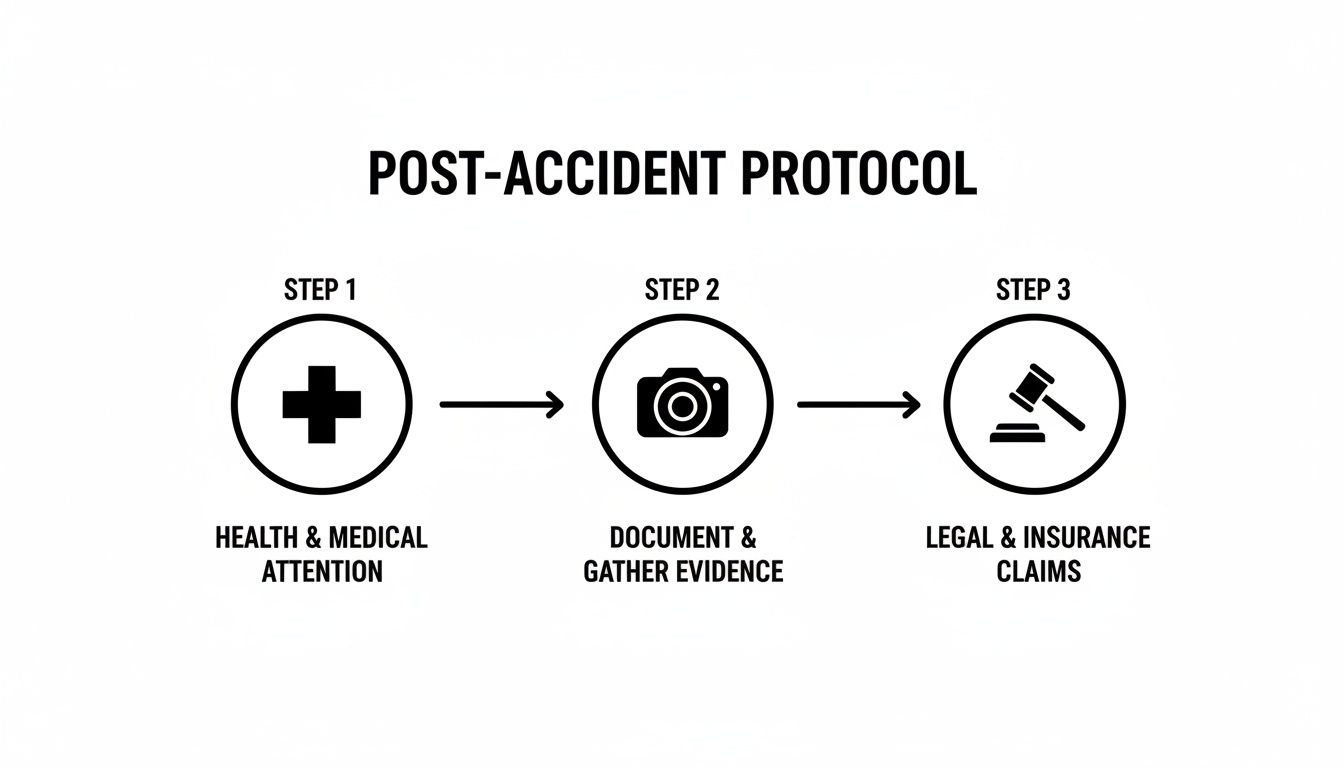
The key takeaway is that your legal protection starts long before you ever file a claim. It begins with prioritizing your health and carefully documenting the facts.
Making the right moves from the start is crucial, which is why understanding exactly when to hire a personal injury lawyer can make all the difference in your case's outcome.
Evaluating a Lawyer's Experience and Track Record
When you're staring down a mountain of medical bills with an uncertain future, the experience of the lawyer you choose isn't just a detail—it's everything. You need more than a catchy slogan from a billboard. You need a real legal advocate with a proven history of winning cases just like yours. A lawyer's track record is the most reliable sign of whether they can truly fight for the compensation you deserve.

This focus on experience is something shared by countless people who have been in your shoes. When picking an attorney, nearly 40% of people say a strong track record is their number one priority. And while it's true that the vast majority of personal injury cases—over 95%—settle before ever seeing a courtroom, an attorney's willingness and ability to go to trial is an incredibly powerful negotiating tool. You can discover more insights about these industry trends.
Look for Specific Case Experience
Here's a critical point: not all personal injury experience is the same. A lawyer who mostly handles simple slip-and-fall cases might not have the specialized knowledge needed to tackle a complex commercial truck accident claim.
Think about it this way: a truck crash lawyer Houston who knows federal trucking regulations inside and out—things like driver hours-of-service rules and vehicle maintenance logs—has a massive advantage. They know exactly where to dig for evidence of negligence that a general practice attorney would likely miss. The same goes for a catastrophic injury claim, which demands a deep understanding of long-term medical needs and life care planning.
When you're looking at a lawyer's website or their case results, search for stories that sound like yours. Do they frequently handle cases involving the same kind of accident or injury you're dealing with? That kind of specialization is often the key to getting the maximum recovery possible.
Settlements vs. Trial Verdicts
An attorney's case results page can tell you a lot if you know what to look for. Pay close attention to the difference between settlements and trial verdicts.
- Settlements: These are negotiated agreements reached with the insurance company outside of court. A long list of high-value settlements shows the firm is a skilled negotiator and can get fair compensation for clients efficiently.
- Trial Verdicts: These are judgments won in a courtroom. They're less common, but a history of successful trial verdicts sends a clear, powerful message to insurance companies: this firm isn't afraid to fight. An attorney known for taking cases to court often gets much better settlement offers because insurers want to avoid the risk and expense of a trial at all costs.
Where to Find This Information
You can size up an attorney's track record by checking a few key places. Start with their firm’s website, focusing on the "Case Results" or "Testimonials" pages.
From there, look for professional awards and peer reviews on legal directories like Avvo or Super Lawyers. These sites can give you a more objective look at an attorney’s reputation in the legal community. By doing this homework, you can see past the marketing hype and choose a Texas personal injury lawyer with a documented history of winning for their clients. This diligence is what ensures you partner with a firm that not only gets what you're going through but has the proven skill to secure your future.
Investigating an Attorney's Reputation and Client Reviews
An attorney’s resume tells you what they’ve done. Their reputation tells you who they are. When you’re dealing with the aftermath of a serious accident, a law firm’s reputation is a direct reflection of how they treat people during the most difficult times of their lives. It's about looking beyond simple star ratings to find out who will truly go to bat for you.

Let's be honest—reviews and reputation matter more than ever. Think about it: nearly 90% of people won't even consider hiring a firm with less than a four-star rating. A recent survey of over 1,200 consumers found that online reputation was the second biggest factor in picking a lawyer, right behind their experience. This kind of social proof builds the trust you need to feel good about your decision. You can dig into more of these findings on consumer preferences if you're curious.
Reading Between the Lines of Reviews
When you start scrolling through client testimonials, you need to look for specifics, not just generic praise. A review that says, “They got me a great settlement,” is nice, but it doesn't tell you much.
A review that describes how a wrongful death lawyer Texas guided a family with real empathy and kept them in the loop every step of the way? That’s powerful. That tells a story.
Look for patterns in what people are saying. Do you see clients mentioning the same things over and over?
- Compassionate Support: Did the attorney and their team actually show that they cared?
- Clear Communication: Were clients constantly updated, or did they have to chase down the firm for information?
- Strong Advocacy: Do the reviews talk about a lawyer who was a bulldog against the insurance companies?
A detailed story about how an attorney helped someone navigate the chaos after a devastating wreck is a much better indicator of the kind of experience you can expect.
Where to Find Trustworthy Information
To get the full picture of a lawyer’s reputation, you need to check a few different places. Each source gives you another piece of the puzzle.
Start with independent sites like Google and Avvo, where you can read raw, unfiltered client feedback. After that, take a minute to visit the State Bar of Texas website. You can confirm the attorney is in good standing and see if they have any public disciplinary actions against them. It’s a simple check that ensures you’re dealing with a credible, ethical professional.
When you're looking at online feedback, it helps to know how businesses handle bad comments. Learning how to dispute a Google review can give you a better sense of whether negative feedback is legitimate or just noise.
By combining what past clients are saying with official professional records, you can build a solid understanding of who an attorney really is. This extra legwork ensures the legal team you choose is not only skilled but also someone you can truly trust with your family's future.
Essential Questions to Ask During Your Consultation
A free consultation isn't just a casual chat; it’s your chance to interview a potential legal partner. This meeting is where you figure out who has the grit and experience to handle your case and fight for your family’s future.
To make the right choice, you need to ask questions that dig deeper than the surface. Good questions will reveal a lawyer's real strategy, their communication style, and how dedicated they actually are to their clients. Coming prepared can make all the difference and helps you see past the sales pitch to how the firm truly operates.
Questions About Your Case and Their Strategy
First, you need to get a feel for the lawyer's specific experience with cases like yours and hear their initial thoughts on a legal strategy. If you get vague, canned answers here, that's a major red flag.
- Based on what I've told you, what do you see as the strengths and weaknesses of my case? A sharp attorney should be able to give you an honest, preliminary assessment right then and there.
- Have you handled cases with a catastrophic injury like mine before? You want someone who has been in the trenches with these specific situations, whether it's a commercial truck wreck on a Houston freeway or a complex wrongful death claim.
- What's your firm's general approach to a case like this? Do they prepare every case like it’s going to trial, or are they looking for a quick, lowball settlement? Their philosophy is everything.
An experienced Texas personal injury lawyer won't hesitate to walk you through their thought process, pointing out potential challenges and explaining exactly how they'd plan to tackle them.
Understanding Communication and Caseload
One of the biggest complaints clients have about their attorneys is feeling ignored or left in the dark. You have to know exactly how your case will be managed day-to-day and who you'll actually be talking to.
The lawyer you meet in the initial consultation might not be the one handling the bulk of your case. It’s critical to clarify everyone's roles from day one so you get the attention you deserve.
Ask these questions to set clear expectations from the start:
- Who will be my day-to-day contact at the firm? Will you be speaking with the attorney in the room, a different associate, or a paralegal?
- How often can I expect to get updates on my case? A good firm will have a clear system for keeping clients in the loop, whether it's through regular phone calls, emails, or scheduled meetings.
- What’s the best way to reach you if I have an urgent question? Their answer will tell you a lot about how accessible and committed they really are.
Clarifying Fees and Costs
Finally, you must have a perfectly clear understanding of the fee structure before you sign a single piece of paper. Most personal injury firms in Texas work on a contingency fee basis, which means they only get paid if they win your case. But the devil is always in the details.
Make sure you ask directly:
- What is your contingency fee percentage?
- Does that percentage go up if the case has to go to trial?
- Who is on the hook for case expenses—like court filing fees or expert witness costs—if we lose?
Feeling confident in your choice is non-negotiable. For a more detailed breakdown of the costs, you can learn more about how personal injury attorneys charge for their services in our guide. An attorney who dodges these questions or pressures you to sign immediately is not the right partner for your recovery journey.
Key Texas Personal Injury Laws You Should Know
Understanding your rights is the first step toward reclaiming control after an accident. You don't need to be a legal expert, but knowing the basic rules that govern personal injury claims in Texas can empower you to make smarter decisions. It also highlights just how critical a skilled attorney is to your case.

These laws are the foundation of your case. They influence everything from who can be held responsible to how much compensation you can actually recover. Let's break down the core concepts you'll come up against.
The Concept of Negligence (Fault)
In Texas, almost every personal injury case hinges on one legal idea: negligence. Simply put, negligence means someone had a responsibility to act with reasonable care, they failed to do so, and that failure directly caused your injuries. This is often referred to as establishing "fault."
Think about it this way: a driver has a duty to pay attention to the road. If they look down to send a text and slam into the back of your car on a Houston freeway, they've breached that duty. Their careless act is the direct cause of the crash and any harm you suffer.
Texas's Modified Comparative Responsibility Rule
So, what happens if the insurance company tries to say you were partially at fault for the accident? This is where Texas's "modified comparative responsibility" rule comes into play, also known as the 51% Bar Rule.
Here’s how it works:
- If you are found to be 50% or less at fault, you can still recover damages. Your total compensation will just be reduced by your percentage of fault.
- But if you are found to be 51% or more at fault, you are barred from recovering any compensation. Nothing.
You can bet the insurance adjuster will try to shift as much blame onto you as possible to reduce or deny your claim. A skilled Texas personal injury lawyer knows how to fight back against these tactics and protect your right to a fair recovery.
For example, after a Houston freeway crash, a jury might decide you were 10% at fault for changing lanes without a perfect signal, while the other driver was 90% at fault for speeding excessively. If your total damages are $100,000, you could still recover $90,000.
How Long Do You Have to File a Claim in Texas?
This is arguably the most critical deadline you need to know. In Texas, you generally have just two years from the date of the accident to file a personal injury lawsuit. This deadline is called the statute of limitations.
If you miss it, you will almost certainly lose your right to seek compensation forever, no matter how strong your case is. This is why it's absolutely essential to act quickly. Building a strong case takes time, evidence can disappear, and memories fade. For a deeper dive into this crucial deadline, you can learn more about how long you have to claim an injury after an accident in our detailed guide.
Common Questions About Choosing a Texas Injury Lawyer
When you’re trying to recover from a serious injury, your mind is probably racing with questions. That’s completely normal. Getting straightforward answers is the first step toward getting your life back on track.
Here are a few of the most common questions we hear from people who are in the exact same position you are right now.
How Much Does It Cost to Hire a Personal Injury Lawyer?
This is almost always the first question, and the answer should put your mind at ease. Any credible personal injury attorney in Texas—including our firm—works on a contingency fee basis.
What does that mean for you? You pay absolutely nothing up front. Zero. Your lawyer’s fee is simply a percentage of the money they recover for you, whether that’s from a settlement or a jury verdict.
If your lawyer doesn’t win your case, you owe them nothing in attorney's fees. It’s that simple. This system ensures that anyone, regardless of their financial situation, can get a top-tier lawyer to fight for them.
What Should I Bring to My First Consultation?
The more information you can share during your free consultation, the better. A good lawyer can get a much clearer picture of your case and give you more specific advice right from the start.
Don't stress if you don't have every single document, but try to pull together what you can:
- The Police Report: If you have a copy, this document is a fantastic starting point.
- Medical Records: Any paperwork from your hospital visit, doctor's appointments, physical therapy, or prescriptions related to the accident.
- Photos and Videos: These are incredibly powerful. Pictures of the accident scene, damage to your vehicle, and your injuries can tell a story that words alone can't.
- Insurance Information: Your own policy information and any letters, emails, or notes from conversations you’ve had with any insurance company.
Bringing these items helps the lawyer understand the full scope of what happened and start mapping out a strategy.
Will My Case Go to Trial?
It's highly unlikely, but you absolutely need a lawyer who is ready and willing to go there. The reality is that more than 95% of personal injury cases are settled out of court. Negotiations are where most battles are won.
But here’s the critical part: an attorney’s reputation as a skilled trial lawyer is their single biggest piece of leverage. Insurance companies keep tabs on law firms. They know who will settle for a lowball offer to avoid a fight and who will take a case all the way to a jury verdict if necessary.
Hiring a trial-ready Houston car accident attorney often results in a much better settlement offer precisely because the insurance company wants to avoid facing them in court.
While hiring a lawyer for an injury case has its own specifics, the core principles of vetting an expert are universal. You can find some good general tips for selecting a professional service that reinforce this idea. The bottom line is always finding someone with proven expertise who is committed to getting you the best possible result.
The road to recovery can be long, but you don't have to walk it alone. The right legal team can lift the burden of dealing with insurance companies, allowing you to focus on what truly matters: your health and your family. At The Law Office of Bryan Fagan, PLLC, we are committed to providing compassionate, experienced guidance to accident victims across Texas. If you're ready to take the next step, we invite you to schedule a free, no-obligation consultation to discuss your rights. Recovery is possible, and we are here to help.