A serious accident can change your life in seconds — but you don’t have to face it alone. If you've just been hit by a car, the two most critical things you need to do are seek immediate medical attention and call the police to file an official report. Even if you think you’re fine, these steps are non-negotiable for protecting both your health and your legal right to compensation here in Texas.
Your Life Changed in a Moment
One second you're crossing a quiet street in a Houston suburb or a busy Dallas crosswalk, and the next, you're on the ground dealing with the shock, pain, and confusion of a collision. It's a life-altering event. The path forward can feel completely overwhelming, especially when medical bills start showing up and you're suddenly unable to work.
This guide is your practical roadmap. We'll walk you through exactly what to do, what to avoid, and how to protect your rights. Knowing these next steps is the first move toward regaining control and getting the justice you deserve.
The Sobering Reality for Pedestrians
Unfortunately, what happened to you is an all-too-common tragedy. The United States is in the middle of a pedestrian safety crisis that has gotten significantly worse over the past decade. Pedestrian deaths have shot up by a staggering 78% since 2009, and they now account for 18% of all crash fatalities nationwide. This trend is alarming and highlights just how vulnerable pedestrians are on our roads. You can find more details in the complete pedestrian safety report.
You are not just another statistic. Your story matters, and holding the responsible driver accountable is crucial—not just for your own recovery, but for making our communities safer for everyone.
Immediate Actions to Protect Yourself
When you're disoriented and in pain, thinking clearly is almost impossible. The steps below are the most critical actions to take right after an accident. They are designed to ensure your immediate safety and, just as importantly, to preserve the evidence you'll need for your claim.
Here’s a quick-reference guide for those first few overwhelming moments.
Immediate Actions After Being Hit by a Car in Texas
| Action | Why It's Critical | Pro Tip |
|---|---|---|
| Seek Medical Care | Adrenaline can hide serious injuries like concussions or internal bleeding. A medical record creates a direct, undeniable link between the crash and your injuries. | Go to an ER or urgent care clinic immediately, even for what feels like minor pain. Make sure you tell the doctor, "I was hit by a car." |
| Call the Police | An official police report is a powerful piece of evidence. It documents the facts, witness information, and the officer’s initial assessment of what happened. | Insist on a report, even if the driver tries to talk you out of it. Get the officer's name and the police report number before you leave. |
| Gather Evidence | Memories fade and the scene will be cleaned up quickly. Photos of your injuries, the car, the license plate, and the surrounding area (skid marks, traffic signs) are invaluable. | Use your phone to take pictures and videos from every possible angle. Also, get clear photos of the driver's license and their insurance card. |
| Collect Witness Info | Independent witnesses provide unbiased accounts of what happened. Their testimony can be a game-changer if the driver tries to deny fault later. | Politely ask for names and phone numbers. A simple, "Did you see what happened?" is a good way to start the conversation. |
| Avoid Admitting Fault | Never say "I'm sorry" or "I'm okay." Insurance companies are experts at twisting these simple statements to deny or reduce your claim. | Stick to the facts when talking to the driver or police. Let your attorney be the one to discuss fault and liability. |
Following these steps in the chaotic moments after an accident can make a monumental difference in the outcome of your case. It's about protecting yourself physically, financially, and legally from the very beginning.
Navigating the First 24 Hours After the Accident
The moments, hours, and even the full day after being hit by a car are often a blur of shock, pain, and confusion. Your immediate health is obviously the top priority, but the actions you take in this critical 24-hour window can make or break your physical recovery and your ability to get fair compensation. This is when you're most vulnerable, but it's also when you have to be your own best advocate.
After a Houston freeway crash, a pedestrian gets hit crossing a street. The driver is apologetic, and the pedestrian, running on pure adrenaline, says something like, "I'm okay, don't worry about it." That one seemingly innocent statement can be devastating later on. You can bet the insurance adjuster will latch onto those words to argue your injuries weren't serious, even if you later find out you have a herniated disc or a concussion.
This is exactly why every single step you take matters.
The chart below lays out the essential protocol to follow right after being hit by a car, focusing on your safety, getting official documentation, and seeking a medical evaluation.
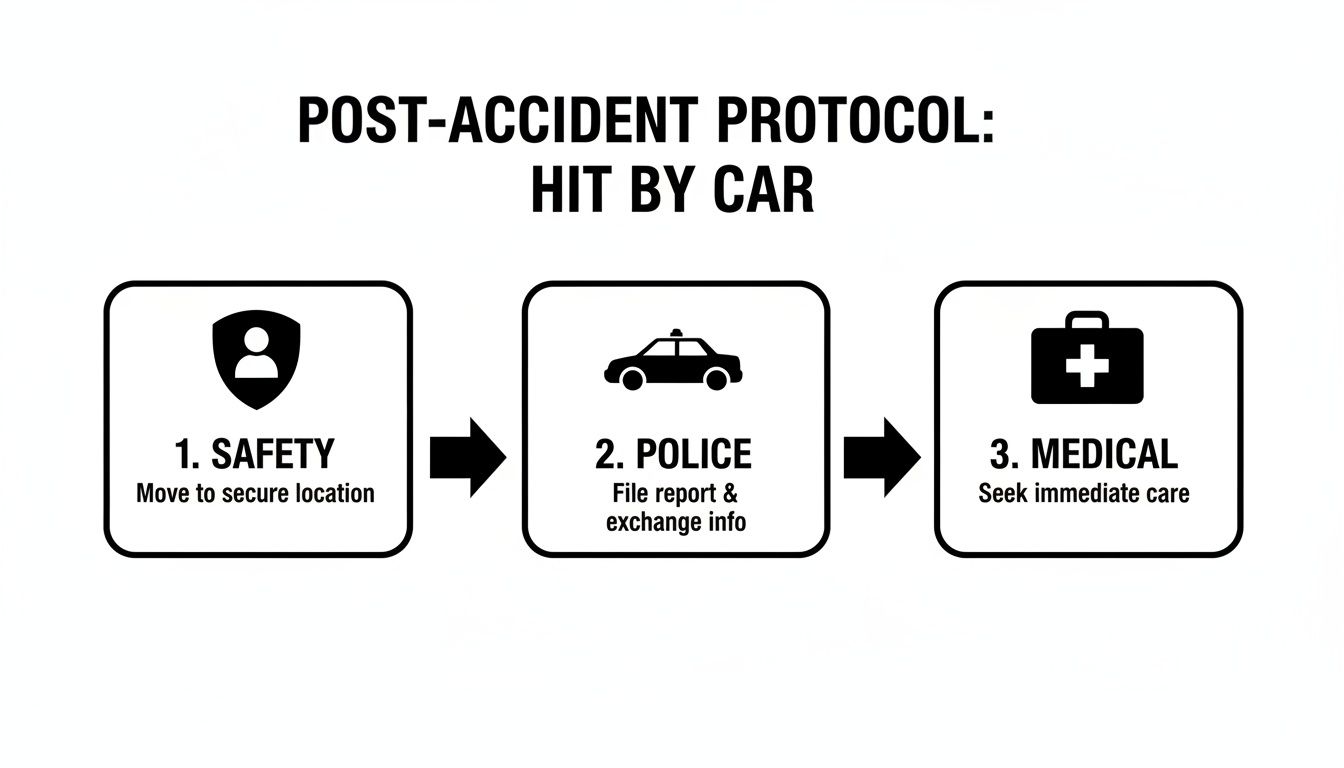
Think of these three pillars—safety, law enforcement, and medical care—as the unshakable foundation for your personal injury claim.
Your Health Comes First. Always.
After a collision, your body is flooded with adrenaline. It's a powerful hormone that can completely mask pain and serious injury. You might feel shaken but otherwise fine, only to wake up the next day in agony. That’s why you must seek medical attention immediately, no matter how minor you think your injuries are.
Going to an emergency room or an urgent care clinic creates an official medical record. This document becomes a cornerstone of your injury claim because it establishes a direct, undeniable timeline between the accident and the injuries you sustained. Without it, the insurance company will almost certainly fight you on the validity of your claim.
Document Everything and Speak Carefully
If you are physically able to, use your phone to become a meticulous record-keeper right there at the scene. Take photos and videos of everything:
- The car that hit you, especially its license plate and any damage.
- Your injuries, no matter how small they seem.
- The accident scene itself—look for traffic signals, crosswalks, and any skid marks.
- The driver’s license and insurance card.
When you speak to the driver, stay calm and stick to the facts. Exchange your names, contact info, and insurance details. Do not apologize or admit any fault. A simple "I'm sorry" can easily be twisted into an admission of guilt.
Crucial Takeaway: You are not legally required to give a recorded statement to the at-fault driver's insurance company. Politely decline and tell them your attorney will be in touch. They are not calling to help you; they are calling to find reasons to deny your claim.
What if the Driver Flees the Scene?
A hit-and-run is both terrifying and criminal. If this happens, your first call is to 911. Give them every detail you can remember—the car's color, make, model, or even just a partial license plate number. This information is vital for the police report and for your own potential insurance claim.
For a deeper look into your rights in this difficult situation, you can learn more about what to do after a Texas hit-and-run accident in our detailed guide. An experienced Texas injury lawyer can help you explore your options, including making a claim through your own Uninsured/Underinsured Motorist (UM/UIM) coverage.
Taking these deliberate, careful steps in the first 24 hours gives you the protection you need to focus on what truly matters: your recovery.
How Texas Law Defines Fault in Pedestrian Accidents
When you've been hit by a car, figuring out who is legally responsible is the first step toward getting the justice you deserve. In Texas, the entire personal injury system is built around one central concept: negligence.
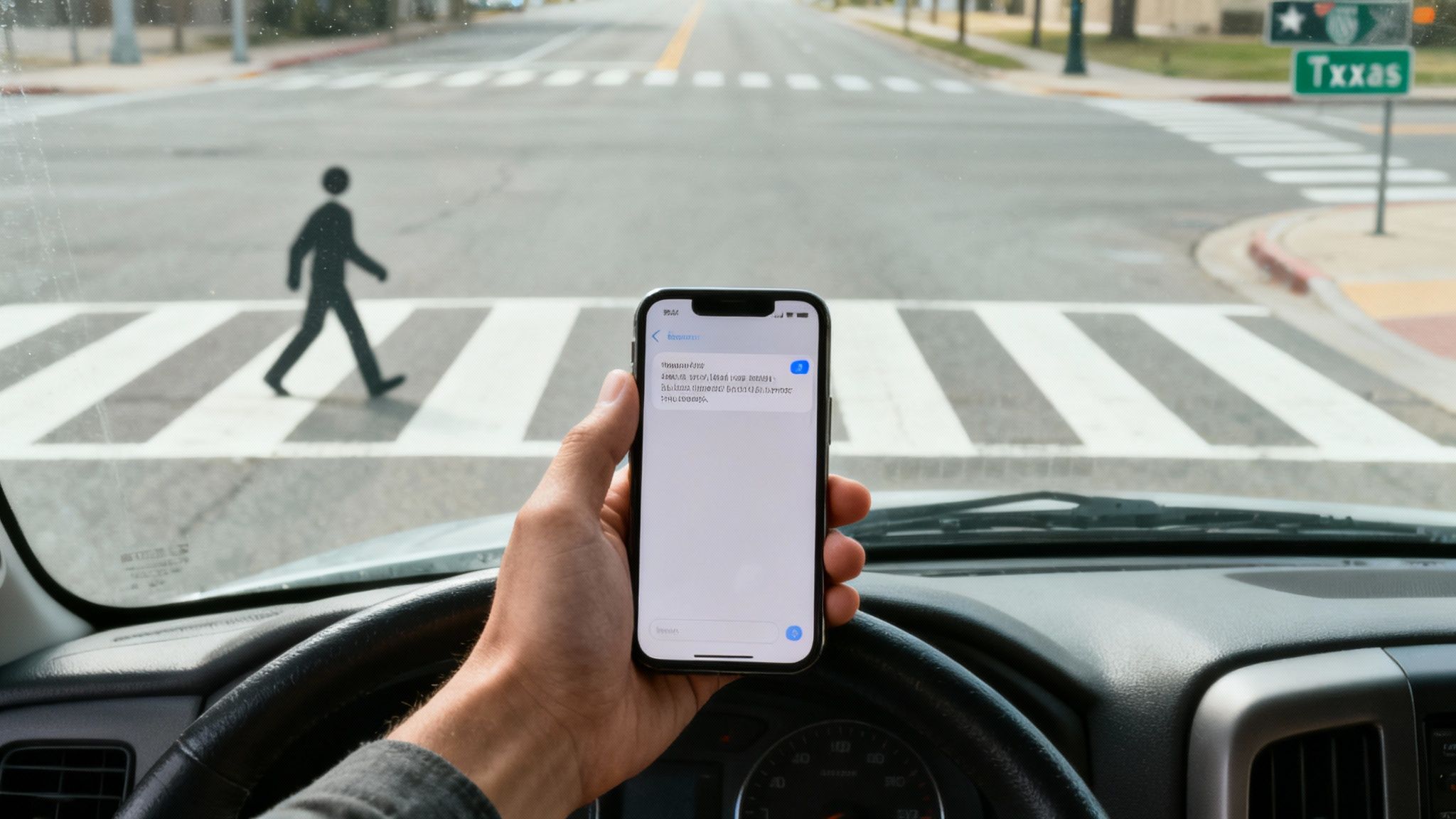
At its core, negligence means that someone had a duty to act with reasonable care, they failed in that duty, and their failure directly caused your injuries. Think of it this way: every single driver on the road has a duty to pay attention. If someone is texting while turning into a busy Dallas intersection and hits you in the crosswalk, that's a clear breach of their duty. Their decision to text and drive makes them legally "at fault" for the harm they caused.
Proving negligence is the foundation of your claim. This is where a skilled Texas personal injury lawyer gathers evidence—police reports, witness statements, traffic camera footage—to build a rock-solid case that shows the driver was being careless.
Understanding Comparative Responsibility in Texas
Real-world accidents are rarely black and white. You can bet the insurance company will try to argue that you, the pedestrian, were somehow partially to blame. This is where a critical Texas law called modified comparative responsibility comes into play. You might also hear it called the 51% bar rule.
This law states that fault can be shared. A judge or jury will look at what happened and assign a percentage of fault to everyone involved. That percentage has a direct impact on how much money you can recover.
- If you're found 50% or less at fault, you can still get compensation, but your final award is reduced by your share of the blame.
- But if you're found 51% or more at fault, Texas law completely bars you from recovering a single penny.
For example, let’s say you were hit while crossing a street mid-block in Austin, away from a designated crosswalk. The driver was definitely speeding, which is negligent. The insurance company, however, might argue you were 20% at fault for not using the crosswalk. If your total damages were calculated at $100,000, that 20% fault would reduce your award to $80,000. This is exactly why it's so critical to fight back against any attempt to unfairly shift blame onto you.
The Critical Role of Driver Speed
A driver’s speed is almost always a central factor in proving how negligent they were. It’s not just a number on a police report; it directly correlates to how severe the injuries are.
The risk of life-altering injury or death for a pedestrian skyrockets with even small increases in speed. According to the World Health Organization, a pedestrian hit by a car going 65 km/h is 4.5 times more likely to die than someone hit at 50 km/h. That statistic creates a powerful legal link between a driver's choice to speed and the devastating consequences, making your case that much stronger. You can read more about how crash factors impact traumatic injuries.
An experienced Houston car accident attorney knows how to use evidence of speeding, distracted driving, or other negligent acts to prove the driver was at fault and fight back against insurance company tactics.
How Long Do You Have to File a Claim in Texas?
This is incredibly important: you do not have forever to seek justice. Texas has a strict deadline for filing a personal injury lawsuit, known as the statute of limitations. For most cases, you have only two years from the date of the accident to file.
If you miss that two-year window, you will almost certainly lose your right to recover any compensation for your injuries, no matter how strong your case is. Two years might sound like a long time, but investigating an accident, gathering all the evidence, and dealing with insurance companies can eat up that time surprisingly fast.
This deadline is one of the most compelling reasons to contact an attorney as soon as you can after being hit. Acting quickly ensures crucial evidence is preserved and your legal rights are fully protected before it's too late.
Calculating the Full Cost of Your Injuries

When you’ve been hit by a car, the initial emergency room bill is just the tip of the iceberg. The real cost of your injuries unfolds over weeks, months, and even years.
A fair settlement isn't just about covering today's expenses; it must account for every single way this crash has impacted your life, both financially and personally. Insurance adjusters know this, which is why they often try to rush you into a quick, lowball settlement before you even grasp the full extent of what you’re facing.
Your lawyer’s job is to calculate the total value of your losses. We make sure you have the resources needed to truly rebuild, not just get by. In Texas, the law organizes these losses into two main categories: economic and non-economic damages.
Economic Damages: The Tangible Costs
Economic damages are the straightforward, calculable financial losses you’ve suffered because someone else was negligent. Think of them as the losses that come with a price tag—the bills, receipts, and pay stubs that show the direct financial hit you've taken.
A thorough claim should always include:
- Current Medical Bills: This covers everything from the ambulance ride and ER visit to surgeries, hospital stays, prescriptions, and physical therapy.
- Future Medical Expenses: Serious injuries often require long-term care. This could mean more surgeries down the road, ongoing physical therapy, chronic pain management, or medical equipment like a wheelchair.
- Lost Wages: This is the income you lost because you couldn’t work while recovering.
- Loss of Earning Capacity: If your injuries mean you can no longer do your old job or work at the same level, you deserve compensation for this diminished future income.
Imagine a construction worker in Austin gets hit by a car and suffers a permanent back injury. His initial lost paychecks are just the start. We’d bring in vocational and economic experts to project the future income he can no longer earn over his entire career. That long-term financial devastation has to be reflected in his settlement.
Non-Economic Damages: The Human Cost
Non-economic damages are much harder to put a number on, but they are every bit as real and just as important. This is compensation for the intangible, personal suffering you've been forced to endure.
These are the losses that don't come with a receipt but can have the most profound impact on your life. They acknowledge the human cost of a driver's negligence.
This category is designed to compensate you for:
- Pain and Suffering: The physical pain, discomfort, and limitations your injuries have caused.
- Mental and Emotional Anguish: The trauma of being hit by a car can trigger anxiety, depression, PTSD, and sleepless nights.
- Physical Impairment and Disfigurement: Compensation for permanent disabilities, scarring, or the loss of a limb.
- Loss of Enjoyment of Life: This addresses your inability to participate in the hobbies, activities, and family life that once brought you joy.
Pedestrian accidents are almost always severe. Medical data confirms that it's incredibly rare for someone struck by a vehicle to just walk away with minor scrapes. Tragically, the World Health Organization reports that pedestrians and other vulnerable road users make up more than half of the 1.19 million road traffic deaths globally each year. This is why fighting for full compensation for every part of your recovery is absolutely critical.
What if the Driver Has No Insurance?
It’s a nightmare scenario: the driver who hit you either has no insurance or not enough to cover the massive cost of your injuries. This is where your own insurance policy can be a lifeline, specifically your Uninsured/Underinsured Motorist (UM/UIM) coverage.
This is coverage you pay for to protect yourself in exactly this situation. A UM/UIM claim lets you seek compensation from your own insurance company to cover the damages the at-fault driver can’t pay. It can get complicated, though, because you’re suddenly in an adversarial position with your own insurer.
Beyond the immediate medical care, managing long-term issues like nerve pain is a major part of recovery. There are many effective nerve pain treatment options available, and an experienced attorney will make sure the projected costs for this kind of ongoing care are included in your demand.
For a more detailed breakdown, check out our guide on how compensation is determined when a pedestrian is hit by a car. It offers a deeper look into what it takes to build a strong claim for your future.
Why You Need a Texas Injury Lawyer on Your Side
After being hit by a car, the idea of a legal battle is probably the last thing on your mind. It’s completely overwhelming. You might even think you can handle the insurance claim on your own, especially if it seems obvious the other driver was at fault.
But here’s something you need to understand right away: insurance companies are not on your side. Their goal is simple—protect their profits by paying out the absolute minimum on every single claim.
Trying to go up against their team of experienced adjusters and lawyers by yourself is a huge mistake. These adjusters are trained professionals whose job is to downplay your injuries, find ways to blame you, and push you into a quick, lowball settlement before you even know how bad things really are. This is where a seasoned Houston car accident attorney becomes your greatest ally.
Leveling the Playing Field
Hiring an experienced lawyer immediately levels the playing field. The second you retain our firm, the insurance company has to stop contacting you directly. All communication goes through us. This puts an end to the constant, harassing phone calls and protects you from accidentally saying something they can twist and use against you.
We take over everything so you can put all your energy into your medical treatment and recovery.
Our first job is to build an undeniable case for you. This means launching a deep investigation that goes far beyond what’s in the initial police report.
We will:
- Gather Critical Evidence: We move fast to secure evidence that can vanish, like traffic camera footage, recordings from nearby security cameras, and witness statements while their memories are still fresh.
- Handle All Communications: We manage every single phone call, email, and piece of paperwork from adjusters, your doctors, and the other side’s attorneys.
- Establish Clear Liability: We use the evidence to construct a powerful argument that proves the other driver’s negligence is the sole reason for your injuries.
Calculating the True Value of Your Claim
One of the most important things we do is calculate the full value of your claim. Insurance adjusters love to make quick offers that might cover your first few medical bills, but they almost always ignore the devastating long-term consequences of your injuries.
An initial settlement offer is rarely a fair one. It's a calculated business tactic designed to close your case as cheaply and quickly as possible, often before the true costs are known.
We work with a network of medical, vocational, and economic experts to make sure every single loss is accounted for. This includes future surgeries and physical therapy, lost earning capacity if you can’t return to your old job, and the very real non-economic damages like your pain and suffering. We leave no stone unturned. For a closer look, our guide on a pedestrian accident injury lawyer's role breaks down this process in more detail.
Fighting for You with No Upfront Costs
We know the last thing you need after getting hit by a car is another bill. That’s why The Law Office of Bryan Fagan works on a contingency fee basis.
What does that mean? You pay absolutely nothing out of your own pocket. We front all the costs of investigating and building your case, from hiring experts to paying court filing fees. We only get paid if we win you a settlement or verdict, and our payment is just a percentage of that recovery.
It’s simple: If we don’t win your case, you owe us nothing.
This arrangement takes all the financial risk off your shoulders and gives you access to top-tier legal help when you need it most. It aligns our goals directly with yours—to get the best possible outcome for you and your family. Having a dedicated Texas injury lawyer fighting for you gives you the strength and expertise to stand up to the big insurance companies and demand the justice you deserve.
Answering Your Questions After a Texas Pedestrian Accident
When you've just been hit by a car, your mind is probably spinning. The stress of not knowing what comes next—for your health, your job, and your family—can feel completely overwhelming. Let's walk through some of the most pressing questions we hear from clients in your exact situation.
The Other Driver's Insurance Adjuster Wants a Recorded Statement. What Do I Do?
Do not give one. You are under no legal obligation to provide a recorded statement to the at-fault driver's insurance company, and we strongly recommend you don't until you've spoken with a lawyer.
Insurance adjusters are trained professionals, and their goal is to minimize the company's payout. They know how to ask seemingly innocent questions designed to trap you. For instance, they'll ask, "How are you feeling?" If you politely say, "A little better, thanks," they will absolutely use that against you later as "proof" your injuries weren't that serious.
The best response is to politely decline and tell them your attorney will be in contact. This single move is one of the most important things you can do to protect your claim.
Pro Tip: Never, ever sign documents or cash a check from an insurance company without a lawyer reviewing it first. Early settlement offers are almost always lowball amounts that include fine print signing away your right to any future compensation—even if you discover your injuries are much worse down the road.
What If the Driver Who Hit Me Took Off?
A hit-and-run is a nightmare scenario, leaving you feeling helpless and angry. But in Texas, you still have options for financial recovery. The very first thing you need to do is call the police and report the accident. Give them every detail you can remember about the vehicle or the driver, no matter how insignificant it seems.
This is precisely the situation your own car insurance is for. Your Uninsured/Underinsured Motorist (UM/UIM) coverage is designed to step in and cover your medical bills and other losses when the at-fault driver is nowhere to be found.
Filing a UM claim can be tricky, though. Suddenly, you're in a fight with your own insurance company, who may try to deny or lowball your claim just like any other insurer would. A Texas personal injury lawyer can take over this entire process, from investigating the crash to forcing your insurance company to honor the policy you’ve paid for.
How Long Is This Personal Injury Case Going to Take?
That's the million-dollar question, and the honest answer is: it depends. Every case moves at its own pace, but the timeline is usually dictated by a few key things:
- How Badly You're Hurt: A case with straightforward injuries and clear fault might settle in a few months.
- How Complicated the Crash Was: If fault is disputed or there are multiple parties involved, things will naturally take longer.
- How the Insurance Company Behaves: If the insurer makes a fair offer early on, it can be over quickly. If they decide to fight you tooth and nail, it could lead to a lawsuit.
One of the most critical points in any injury claim is when you reach Maximum Medical Improvement (MMI). This is the stage where your doctors say you've recovered as much as you're ever going to.
We can't even think about settling your case until you've reached MMI because, until then, we don't know the full extent of your damages. We need to calculate all of your past and future medical bills, lost income, and other costs. Rushing for a quick payout is a huge mistake. Our goal isn't the fastest settlement—it's getting you the maximum compensation you deserve for everything you've been through.
Getting hit by a car can derail your entire life, but you don't have to navigate the aftermath by yourself. At The Law Office of Bryan Fagan, PLLC, our team is here to offer the support, guidance, and aggressive legal representation you need to get back on your feet. We understand that recovery is possible, and we are here to provide the legal help you need to achieve it.
For a free, no-obligation consultation to go over your case and your rights, contact us today. Let us handle the fight so you can focus on healing.
Schedule Your Free Consultation at The Law Office of Bryan Fagan, PLLC