A serious accident can change your life in seconds—but you don’t have to face it alone. Before you start searching for a “personal injury lawyer near me,” the most critical moves happen in the moments right after an accident. What you do on the scene can significantly impact your ability to get fair compensation later. The absolute essentials are to get medical help, document everything, and do not speak to the other driver’s insurance adjuster before consulting an attorney.
These first actions lay the groundwork for a strong claim. Let’s walk through what you need to do to protect your rights.
Your First Steps After a Texas Accident

A serious crash can throw your world into chaos. It’s overwhelming, and your first instinct might be to just get home. But the steps you take in this critical window can have a massive impact on your physical recovery and your financial future.
Your top priority, no matter what, is your health. You should get checked out by a doctor immediately, even if you think you’re fine. Adrenaline is a powerful painkiller, and serious injuries like whiplash, internal bleeding, or even a concussion might not show symptoms for hours or days. Having a medical record from right after the incident creates a direct, undeniable link between your injuries and the accident—powerful evidence for your case.
Document Everything at the Scene
If you are physically able, it’s time to become your own investigator. The evidence you gather now might disappear by tomorrow.
Think of it as building your case from the ground up. You’ll want to collect:
- Photos and Videos: Use your phone to capture everything. Get shots of all vehicles involved, the damage, skid marks on the road, traffic signals, and any visible injuries.
- Contact Information: Exchange names, phone numbers, and insurance information with the other drivers. If there are witnesses, get their names and numbers, too. Their testimony can be incredibly valuable later on.
- Official Report: Always call the police. An official accident report is a key piece of evidence that documents the facts of the crash from a neutral party’s perspective.
For a more detailed rundown, check out our guide on what to do after a car accident. This preparation is the first real step toward protecting yourself.
Be Cautious with Insurance Companies
It won’t take long for the other party’s insurance adjuster to call you. It is absolutely crucial that you do not give them a recorded statement or accept a quick settlement offer before you’ve spoken with a lawyer.
Insurance adjusters are trained negotiators whose job is to minimize their company’s payout. Their goal is to protect their company’s profits, not your well-being. Anything you say can be twisted to hurt your claim.
For example, after a Houston freeway crash, an adjuster might call and ask, “How are you feeling?” A simple, polite answer like, “I’m okay,” can be used later to argue your injuries aren’t serious. The best response is to politely decline to provide a statement and tell them your attorney will be in touch.
How Long Do You Have to File a Claim in Texas?
In Texas, the clock starts ticking immediately. The law gives you a limited window to file a personal injury lawsuit, known as the statute of limitations. For most cases, you have just two years from the date of the injury to file a claim.
If you miss that deadline, your right to seek compensation is lost forever. That’s why it’s so important to act quickly. Taking these initial steps and contacting a Texas personal injury lawyer right away protects your rights and puts you on the path to a successful recovery.
Finding a Lawyer with Proven Trial Experience

When you’re recovering from a serious injury, you need an experienced advocate, not a lawyer learning on the job. Texas personal injury law is a complex field of rules, deadlines, and strategies that only a specialist can navigate effectively. This is not the time to hire a general practitioner who dabbles in different legal areas.
You need an attorney who lives and breathes this work—someone who is a dedicated Texas personal injury lawyer.
A lawyer who focuses their practice on cases just like yours—whether it’s a devastating truck crash on I-10 or a wrongful death claim in Dallas—brings a powerful advantage. They have seen the tactics insurance companies use and know exactly what evidence is needed to prove fault in a Texas courtroom.
Why Specialization Matters
Think of it this way: if you needed heart surgery, you wouldn’t go to your family doctor. You’d find the best cardiologist available. The same logic applies here. An attorney who dedicates their practice to personal injury knows how to build a powerful case from day one.
This specialization is even more critical in complex claims. For example, a Houston truck crash lawyer is intimately familiar with the specific federal and state regulations governing the trucking industry, from driver hour logs to vehicle maintenance records. An attorney handling a catastrophic injury case knows how to calculate the true, long-term costs of your recovery, including future medical treatments and lost earning potential.
A dedicated personal injury attorney doesn’t just know the law; they know the opposition. They have a history of facing the same insurance carriers and defense lawyers, giving them invaluable insight into how to best position your case for a successful outcome.
Choosing a lawyer with the right experience is one of the most important decisions you will make. It’s a conclusion shared by many accident victims; one survey found that nearly 40% of clients rank a lawyer’s experience and track record as their top factor when making a choice. With over 164,000 personal injury attorneys in the U.S., focusing on proven success is the best way to cut through the noise. You can explore the key factors clients consider when choosing a personal injury lawyer to learn more.
Verifying an Attorney’s Track Record
So, how do you know if a lawyer truly has the experience they claim? You have to look for concrete proof. Do your own homework.
Here are a few places to start your investigation:
- Firm Website: Look for a “Case Results” or “Verdicts and Settlements” page. This shows you the types of cases they’ve handled and the outcomes they have secured for past clients.
- State Bar of Texas: You can use their website to verify an attorney is in good standing and check for any public disciplinary history. Board certification in Personal Injury Trial Law is a strong indicator of true expertise.
- Legal Directories: Websites like Avvo and Martindale-Hubbell provide peer reviews and client testimonials that offer a real-world picture of an attorney’s reputation and skill.
I’ve put together a quick checklist to help you evaluate potential attorneys based on these critical credentials.
Key Credentials to Look For in a Texas Personal Injury Lawyer
| Credential or Quality | Why It Matters for Your Case | Where to Find This Information |
|---|---|---|
| Board Certification in Personal Injury Trial Law | This is the gold standard. It means the lawyer has extensive trial experience and has passed a rigorous exam, proving their expertise. | The attorney’s website bio or the State Bar of Texas directory. |
| A Strong “Case Results” Page | This shows a history of success in cases similar to yours. Look for results in your specific type of accident (e.g., car wreck, slip and fall). | On the law firm’s official website. |
| Positive Client Testimonials and Reviews | These provide insight into the client experience, communication, and how the firm treats people. | Google, Avvo, Martindale-Hubbell, and the firm’s website. |
| Focus on Personal Injury Law | You want a specialist, not a generalist. Their practice should be at least 90% dedicated to personal injury cases. | The “Practice Areas” section of their website. |
| No Public Disciplinary Actions | Ensures the lawyer is in good standing and has a clean ethical record. | The State Bar of Texas website. |
Using this table as a guide will help you quickly vet lawyers and focus on those with the proven experience your case demands.
While the vast majority of personal injury cases—around 95-96%—settle before going to trial, the best settlements are won by lawyers who aren’t afraid to step into a courtroom. Insurance companies know which attorneys will actually take a case to a jury and which ones will settle for a lowball offer. Hiring a proven trial lawyer sends a powerful message: you’re serious about getting full and fair compensation.
Evaluating an Attorney’s Reputation and Reviews
Once you’ve confirmed a lawyer has real trial experience, it’s time to dig into their reputation. A lawyer’s courtroom record is critical, but what former clients say about them tells the other half of the story—their communication, compassion, and professionalism when it matters most.
A lawyer’s reputation is their currency. It’s what separates a true advocate from someone just processing cases. Insurance companies know which attorneys will fight tooth and nail and which ones will accept a quick, low settlement. That reputation alone can dramatically shift the starting point of negotiations.
Looking Beyond the Star Rating
When you start digging into reviews on Google, Avvo, or Martindale-Hubbell, it’s easy to focus only on the star rating. But the real value is in the comments. You’re searching for patterns in what people are saying, both good and bad.
Pay close attention to reviews that mention:
- Communication: Did the client feel like they were kept informed? Did the attorney and their team return phone calls and emails?
- Respect and Compassion: Did the legal team show they cared? This is absolutely essential for families navigating a devastating wrongful death claim.
- Professionalism: Did the client feel the firm handled their case with integrity and skill?
- Results: While exact settlement amounts are often private, do clients seem satisfied with the outcome? Do they feel justice was served?
A single bad review isn’t always a deal-breaker, but a consistent pattern of complaints about being ignored or poor communication is a major red flag.
The Power of a Strong Reputation in Negotiations
A lawyer’s reputation isn’t just for show; it’s a tool in negotiations. Insurance adjusters work with the same law firms repeatedly. They know who will take a lowball offer and who is ready and willing to go to trial to get what’s right.
When an insurance company receives a demand letter from a firm known for being trial-ready and meticulously prepared, they’re far more likely to negotiate in good faith from the start. That leverage can mean a much better settlement offer for you without ever seeing the inside of a courtroom.
Reputation and client feedback are non-negotiable. One survey of over 1,200 people found that right after experience, clients care most about ethics, honesty, and communication—all things you’ll find discussed in genuine reviews. Considering that around 95% of personal injury cases are settled before trial, hiring a lawyer with a reputation for being tough is one of the smartest moves you can make. You can discover more insights about these personal injury law statistics to see just how much this matters.
How to Spot Authentic Reviews
In any business, online reviews can be a mixed bag. Understanding the basics of online reputation management for lawyers helps you see which reviews are likely credible.
Here’s how to read between the lines:
- Look for detailed stories, not just generic praise. “They were great” tells you nothing. A review that explains how the firm helped them navigate a complex process is far more telling.
- Check how the firm responds to reviews—especially the negative ones. A professional, empathetic response to criticism is often a sign of a well-run firm.
- Cross-reference everything. Look at reviews on Google, Avvo, and the firm’s own website to get the full picture.
Imagine a family in San Antonio looking for an attorney after a loved one suffered a catastrophic injury. They aren’t just looking for someone who secured a large settlement. They need a team that showed compassion and provided unwavering support during the long, painful recovery process. Choosing a lawyer with a proven record of both skill and genuine client care ensures you have a true fighter in your corner.
Asking the Right Questions in Your Consultation
Think of your free consultation as more than just a chance to tell your side of the story; it’s a two-way interview. You’re there to decide if this lawyer has the right experience, strategy, and approach to handle your case.
Walking in prepared with a list of questions is the best way to make a confident, informed decision. This is your opportunity to move past online reviews and get a real feel for their personality and communication style. You need to feel comfortable entrusting them with your future.
Remember, you’re the one doing the hiring. Take control of the conversation and get the answers you need.
Questions About Experience and Strategy
First, you need to confirm they have a proven track record with cases just like yours. A lawyer who mostly handles minor car accidents may not be the right fit for a complex catastrophic injury claim. Don’t be shy—get specific.
-
“How many cases similar to mine have you personally handled?” You’re looking for an answer that shows they’re intimately familiar with your type of accident, whether it was a multi-vehicle pile-up on a Houston freeway or a wrongful death case in Dallas.
-
“Who will be my primary point of contact at the firm?” It’s common for paralegals and case managers to handle day-to-day updates. That’s fine, but you need to know you can reach the lead attorney when it really matters.
-
“What is your strategy for a case like this?” A good lawyer should be able to outline a general game plan, from the initial investigation all the way through negotiations and, if necessary, trial.
This flowchart boils down the initial decision to the two most critical factors: a history of proven wins and positive feedback from past clients.
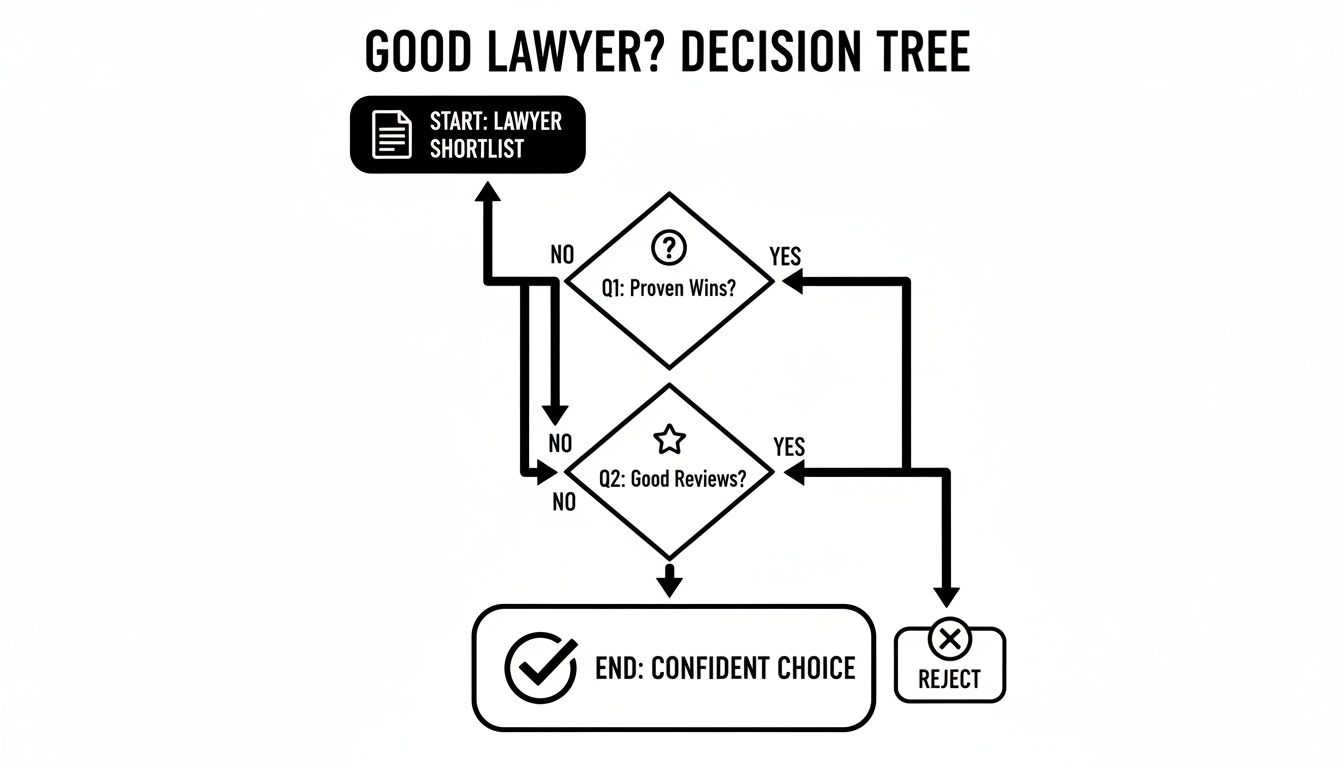
Ultimately, it reinforces the idea that your choice should be a balance between a lawyer’s successful track record and the real-world experiences of the people they’ve helped.
Understanding Texas-Specific Laws
Texas has unique laws that can make or break your case, and your lawyer must know them inside and out. One of the most important is the rule of proportionate responsibility, also known as modified comparative fault or comparative negligence.
This rule states you can still receive compensation even if you were partially to blame for the accident, as long as your share of the fault is 50% or less. Your final award is simply reduced by your percentage of fault. For instance, if you’re found 10% at fault in an accident and awarded $100,000, you will receive $90,000.
You must ask a potential attorney: “How would you approach the issue of proportionate responsibility in my case?” Their answer will tell you everything you need to know about their experience fighting back against insurance companies trying to shift blame.
To help you get the most out of your meeting, here’s a quick guide to some essential questions, what a good response sounds like, and what should be a red flag.
Essential Questions to Ask a Personal Injury Lawyer
| Question Category | What to Ask | Green Flag Answer | Red Flag Answer |
|---|---|---|---|
| Experience | “How many cases like mine have you personally handled and taken to trial?” | “I’ve handled dozens of cases involving commercial truck accidents on I-35. We took three to trial last year and won favorable verdicts in all of them.” | “Our firm handles a lot of personal injury. We have a lot of experience.” (Vague and non-specific) |
| Case Strategy | “What do you see as the biggest challenges in my case, and how would you overcome them?” | “The insurance company will likely argue you were partially at fault. We’ll counter that by hiring an accident reconstructionist and gathering witness statements immediately.” | “We’ll just file the claim and see what they offer. Every case is different.” (Lacks a proactive plan) |
| Communication | “Who will be my main point of contact, and how often can I expect updates?” | “Our paralegal, Maria, will be your main contact for daily updates, but I’m always available for major developments. We provide updates at least every two weeks.” | “Just call the office whenever you have a question. Someone will get back to you.” (No clear process or commitment) |
| Fees & Costs | “Can you walk me through your contingency fee agreement and any case expenses I might be responsible for?” | “Our fee is 33.3% of the settlement before a lawsuit is filed. We cover all upfront costs, like expert fees, and those are reimbursed from the settlement. If we don’t win, you owe nothing.” | “It’s a standard percentage. We’ll go over the paperwork if you decide to hire us.” (Avoids transparency) |
Asking direct questions like these helps you cut through the sales pitch and see how the attorney really operates. A confident, experienced lawyer will welcome them.
Demystifying Fees and Costs
Worries about money should never stop you from seeking justice. That’s why almost every reputable Texas personal injury lawyer works on a contingency fee basis. Make sure you get this crystal clear during your consultation so there are no surprises down the road.
Here’s what a contingency fee agreement means for you:
- You pay zero upfront costs to get your case started.
- The lawyer’s fee is a percentage of the final settlement or verdict they win for you.
- If they don’t win your case, you owe them nothing for their work.
This structure gives your lawyer a powerful incentive to fight for the maximum compensation possible. Always ask for a clear breakdown of their fee percentage and any other potential case expenses, like court filing fees or the cost of hiring expert witnesses. To dig deeper, check out our detailed guide on how personal injury attorney fees are structured in Texas.
By asking these sharp questions about experience, strategy, and fees, you turn that free consultation into a powerful evaluation tool. It helps you pick not just any lawyer, but the right partner to have in your corner.
A Law Firm’s Communication and Technology Matter More Than You Think

In a world where you can track a pizza delivery to your door, you should expect clear and consistent updates from your legal team. How a law firm communicates and uses technology isn’t just a minor detail; it’s a direct reflection of their commitment to you.
The stress of recovering from an injury is draining enough without the added anxiety of feeling left in the dark about your case. You deserve a team that respects your time and keeps you informed—not one you have to chase down for answers.
Modern Tools for a Better Client Experience
A modern, client-focused law firm uses technology to make your life easier. This is especially true when you’re dealing with limited mobility after a serious accident.
Let’s say you were badly hurt in a major truck crash on I-35 near Austin. The last thing you can manage is traveling to a lawyer’s office downtown. A firm that offers virtual consultations and a secure online portal for signing documents isn’t just being convenient—it’s providing an essential service for your recovery.
Look for firms that offer:
- Virtual Meetings: The ability to meet your attorney face-to-face via video call saves you the time, expense, and physical strain of travel.
- Secure Client Portals: These online platforms let you safely upload and view critical documents, like medical records or the accident report, from home.
- Regular Updates: A good firm has a clear system for keeping you informed, whether that’s through scheduled calls, detailed emails, or text message alerts.
Technology does more than just make communication smoother. Tech-savvy firms often use specialized software to organize evidence, create powerful visual aids for negotiations, and present a stronger, more organized case to the insurance company.
This commitment to modern tools shows a firm is investing in efficiency and your satisfaction. That investment can directly impact the outcome of your claim.
Technology and Strategy Are Intertwined
The best law firms adapt to new tools that can sharpen their case preparation. Recent data shows 37% of personal injury attorneys now use generative AI to analyze documents and strengthen case strategies—a rate higher than the legal field’s average. With nearly 38% of clients preferring virtual meetings post-pandemic, a firm’s digital accessibility is a key part of providing top-tier service. You can discover more about personal injury trends and statistics to see just how much technology is shaping modern legal practice.
When you’re interviewing a potential Houston car accident attorney, ask them what tools they use. Their answer will reveal a lot about their approach to both efficiency and client care. A firm that embraces technology is a firm built to serve you effectively, ensuring you’re always connected and informed.
You’ve done the research, interviewed potential lawyers, and asked the hard questions. Now, it’s time to choose the Texas personal injury lawyer who will fight for you. This isn’t just about picking the person with the most impressive resume; it’s a deeply personal decision.
You’re looking for someone who doesn’t just understand the law, but understands you. A serious injury leaves you feeling vulnerable. The right lawyer should give you confidence and hope, not more anxiety.
Trusting Your Gut and Watching for Red Flags
Your intuition is a powerful tool. Think back on your consultations. Who did you feel most comfortable with? Who listened patiently to your story without making you feel rushed? A strong client-attorney relationship is built on trust and mutual respect, and that often starts with a gut feeling.
At the same time, keep an eye out for behaviors that should make you think twice. I would walk away from any lawyer who:
- Guarantees a specific outcome or dollar amount. Every case is different. Making such promises is not only unethical, but it’s also a huge red flag.
- Pressures you to sign a contract on the spot. A good attorney will want you to be sure. They’ll give you the space to make a clear-headed decision.
- Is vague about fees or their experience. Transparency is essential. You need a crystal-clear understanding of their contingency fee structure and their track record with cases like yours.
Choosing your lawyer is the first real step you take in reclaiming control after an accident. It’s a decision that should empower you and mark the beginning of your journey toward justice.
Taking the Next Step Toward Recovery
You’ve done the hard work, and now you’re ready to select a true advocate. Remember, knowing when to hire a personal injury lawyer is often the single most important decision you’ll make. Your attorney will take over the fight—dealing with insurance adjusters, gathering evidence, and building your case—so you can focus completely on your physical and emotional healing.
A serious accident can flip your world upside down, but you don’t have to face what comes next by yourself. Recovery is possible, and the right legal team will be a dedicated partner in fighting for the resources you and your family need to rebuild.
If you’re ready to move forward with a team that puts you first, The Law Office of Bryan Fagan, PLLC is here for you. We invite you to schedule a free, no-obligation consultation to talk about your case and learn how we can help.
Answering Your Top Questions About Hiring an Injury Lawyer
After a serious accident, it’s natural to have a million questions running through your head. The uncertainty can be overwhelming, and trying to figure out the next steps is tough. It’s completely normal to feel lost.
Let’s cut through the noise and get you some clear, straightforward answers to the questions we hear most often from people thinking about hiring a Texas personal injury lawyer. Our goal is to give you the clarity you need to move forward with confidence.
How Much Does a Personal Injury Lawyer Cost?
This is usually the first question people ask, and the answer should bring some relief. Nearly every reputable personal injury lawyer in Texas, including our firm, works on a contingency fee basis.
This is a critical setup designed to protect you. It means you pay absolutely nothing upfront to get us on your side. Our fee is a percentage of the money we recover for you. If we don’t win your case and get you compensation, you don’t owe us a dime. This system ensures that everyone, regardless of their financial situation after a crash, has access to top-tier legal help. Your only job should be focusing on your recovery, not worrying about how to pay for a lawyer.
What if I Was Partially at Fault for the Accident?
This is a huge concern for many people, and it’s a valid one. Texas law has a specific rule to address these situations. The state follows a legal doctrine known as proportionate responsibility, sometimes called modified comparative fault or negligence.
What does this mean for you? You can still recover damages as long as a jury finds you are 50% or less at fault for what happened. Your final compensation will simply be reduced by your percentage of fault. For instance, if you’re awarded $100,000 but found to be 10% responsible, you would receive $90,000.
An experienced Houston car accident attorney knows exactly how to build a case that minimizes any percentage of fault assigned to you. We’ll gather the evidence needed to protect your right to the fairest compensation possible.
As you navigate this process, understanding the field of personal injury law can provide valuable context. An experienced attorney’s role is to apply these legal principles to the specific facts of your case, fighting to ensure your rights are fully protected every step of the way.
The journey to recovery can feel long, but you don’t have to walk it alone. The Law Office of Bryan Fagan, PLLC is here to provide the compassionate support and aggressive advocacy you need. We invite you to schedule a free, no-obligation consultation to discuss your case and learn how we can help. Contact us today at https://texaspersonalinjury.net.